Bottom Handle: Lift from Bottom - Custom Pet Carrier Structure Guide
A bottom handle is a grab point on the underside or lower edge of a pet carrier that lets one person lift the bag from beneath, usually with a second hand on the top. It carries a worse load case than any other handle because the shell is unsupported below, so it needs a reinforcement path into the base board and a pull test at four times the rated pet weight.
Bottom lift handles are specified by the brands that have already had the conversation about how a loaded carrier actually gets moved: out of a car boot, up a flight of steps, onto an examination table. In every one of those moments the natural grip is underneath, and a product without a sanctioned grab point gets lifted by whatever is nearest - a vent, a seam, a mesh edge - which is how damage claims are created. Adding a designed bottom handle converts an uncontrolled lift into a controlled one. The engineering is unglamorous and it is also cheap: a reinforcement path into the base board, an anchor specified in millimetres rather than in adjectives, and five test cases run on a complete unit before anyone books a cutting date.
- Sampling: bottom handle assemblies with alternative reinforcement paths in 6-10 working days.
- Minimums: MOQ 500 units per colourway where custom reinforcement or hardware is specified.
- Schedule: base board and handle development run together; bulk completes in 35-50 days.
- Quality: angled pull, cycle and drop checks, with finished goods inspected to AQL 2.5.
- Terms: T/T 30/70, FOB Xiamen, units packed so base structures are not compressed in transit.
A custom cat carrier is restrained by behaviour rather than by weight, so locking sliders and bound internal seams matter more than load ratings.
Why the underside needs a sanctioned grab point
Every bag has a designed way to be carried and an actual way it gets carried. The gap between the two is where damage happens, and on a pet carrier the gap is widest at the bottom. Nobody plans to lift a loaded shell from underneath; they do it because the bag is in a boot, because it has to go up three steps, or because a second person is helping and the only available handhold is the lower edge.
When there is no sanctioned grab point, people improvise. They take the vent panel. They take the zipper welt. They take the binding at the base seam, which is the single worst choice available because it is the seam most likely to be carrying structural load already. Each of those improvisations produces a predictable damage pattern, and each pattern eventually appears in a returns report as a defect that the brand has to explain rather than a design decision the brand made.
A bottom handle removes the improvisation. It gives the hand an obvious, reinforced place to go, it puts the load into the structure that was designed to take it, and it does so at a cost of a few dollars per unit. For programmes selling above a certain price tier, that is close to free insurance against the most visible class of product failure in the category.
There is a usability argument that matters just as much. Lifting a loaded carrier with two hands - one under the base, one on the top handle - is how most people actually move anything heavy, and it is dramatically easier on the back than a single-handed lift. A carrier that supports that two-handed posture is easier to live with, and customers notice even if they never articulate why. The specification discipline is straightforward once the load path is understood: anchor into structure, test on a complete unit and inspect the underside as a critical area.
Finally, the bottom handle is a quiet quality signal. Almost nobody looks for it, but the people who find it - the ones who move the bag often, who travel with it, who lift it into a car every week - are exactly the heavy users whose opinion ends up in reviews. Designing for them is disproportionate to their number.
The load case: what changes when the shell is unsupported
A top handle pulls up into a shell whose contents rest on the base. A bottom handle pulls up into a shell whose contents rest on the handle itself. That single difference changes the entire load path and it is why bottom handles fail more often than any other handle type when they are specified as if they were top handles.
The first consequence is that the base structure becomes load-bearing in a new way. The base board - the stiffened panel that keeps a carrier from sagging - now has to transfer the entire pet weight into the handle roots, which means the handle cannot be anchored to the outer fabric alone. It has to be anchored to the board, to a frame rail, or to a reinforcement band that is itself attached to the board. This is a pattern-level decision and it has to be made before the base is spec'd, not after.
The second consequence is that the load is distributed across a wide, shallow area rather than a narrow, deep one. A bottom handle is typically wider and flatter than a top handle, because the hand underneath wants surface rather than edge. That changes the reinforcement shape from a tall patch to a broad one, and it changes the stitch pattern from bar-tacks at two points to a distributed seam or a plate.
The third consequence is moment loading. When the bag is lifted from underneath with one hand, the contents shift and the shell tends to rotate; the handle and its reinforcement have to resist not just vertical force but a twisting one. Reinforcement that is adequate for a straight pull can still fail in rotation, which is why the test protocol has to include an off-axis case.
| Load case | What it stresses | Typical specification | Failure if unaddressed |
|---|---|---|---|
| Vertical lift | Handle webbing and root stitch | Pull test at 4x rated load | Root tear-out |
| Two-handed lift | Base board to handle transfer | Broad reinforcement into board | Board delamination |
| Rotational moment | Reinforcement edges, seam ends | Off-axis pull and twist test | Progressive seam peel |
| Dragged lift | Abrasion on underside | Abrasion-resistant base fabric | Worn-through base |
| Set-down impact | Feet, board, handle roots | Drop test from defined height | Cracked board, loose roots |
The practical implication for specification is simple: a bottom handle is a structural component with a textile covering, not a textile component with structural ambition. Everything downstream - material, reinforcement, testing - follows from treating it that way.

Reinforcement architecture: building a path into the base
The engineering question is how to get force from the hand into the base board without tearing through the fabric in between. Four architectures cover almost every programme, and they differ mainly in how much structure the shell already has.
The first is the through-anchor. The handle webbing passes through the base board - or through a reinforced band that wraps the board - and is anchored on the inside. This is the strongest solution and the cleanest load path, because the force never passes through a fabric-to-fabric joint. It requires the board to have a hole or a channel, which is a tooling decision made at the same time as the board itself, and it is the default for any carrier above roughly 8 kg rated load.
The second is the wrap-around band. A webbing or fabric band runs under the base and up both sides, with the handle anchored to it at the underside. This distributes load along the full width of the base and works well on soft shells without a rigid board. The band is usually hidden between the base fabric and the lining, so it costs nothing visually and adds a structural element that also stops the base sagging - a double benefit for a small cost.
The third is the reinforced patch. A broad patch of high-tenacity fabric is bonded or sewn to the underside, and the handle roots are bar-tacked into it. This is the cheapest architecture and adequate for light loads, typically up to about 5 kg of pet. Above that, the patch tends to peel at the edges under repeated rotational loading, which is a slow failure that shows up in month six rather than in the test lab.
The fourth is the moulded frame. A moulded or extruded element on the underside carries both the feet and the handle roots in one part. This is the most expensive option and the one that reads most engineered; it suits technical and travel capsules where the underside is already doing structural work. Where a programme is already considering detachable wheels or a trolley plate, the moulded frame often consolidates several parts into one, which recovers much of its cost.
Whichever architecture is chosen, the specification should name the reinforcement dimensions, the stitch pattern and the attachment method explicitly. Bottom handle roots are almost invisible in finished product photography, which means they are also almost invisible to anyone auditing quality later; writing them down is the only thing that keeps them consistent between the sample and the ten-thousandth unit.
One further consideration belongs in the same document: serviceability. A bottom handle that can be replaced without opening the lining turns a warranty event into a parts shipment, which matters for programmes selling through retailers with repair schemes or through channels where a return is expensive. Designing the reinforcement so a replacement handle can be stitched to the same anchor points costs nothing at concept stage and is impossible to retrofit later, which makes it a decision to take early rather than a nice-to-have to revisit.
Working with the base board, feet and base fabric
A bottom handle cannot be specified independently of the base. The board, the feet and the base fabric all interact with it, and the most common engineering mistake in this area is designing the handle and the base in separate conversations.
The board is the main partner. Its thickness, material and stiffening pattern determine how much load it can transfer and where the handle roots should sit. A board that is stiff near the centre and flexible at the edges will not support a handle anchored at the edge, which is a frequent mismatch: the handle is placed where the ergonomics want it and the board is stiffened where the moulding wants it. Coordinating the two during concept avoids a reinforcement patch that does nothing.
Feet are the second partner and the more interesting one. Feet keep the base off the ground, which protects the base fabric and, critically, keeps a bottom handle from resting on dirty surfaces. They also change how the underside behaves when the bag is set down: with feet, the impact goes into the feet and the board; without them, it goes into the handle and the fabric. Specifying four feet rather than two is a small cost that materially improves both outcomes.
Base fabric is the third partner and the one that absorbs abuse. A bottom lift means dragging contact with boot linings, wet pavement and station floors, so the base fabric should be specified for abrasion and for cleanability rather than for appearance alone. A coated or laminated base fabric wipes clean and resists scuffing; a plain woven one looks better on the shelf and worse after a season. Where the base fabric is also the visual base of the product, the compromise is usually a coated finish that preserves the look.
Water management belongs in the same conversation. An underside that holds water will eventually hold odour, and a bottom handle sewn through a waterproof layer creates a leak path. Specifying a sealed seam or a bonded reinforcement at the handle roots is cheaper than dealing with the consequences, and it is a decision that has to be made before the base is cut.
Testing then covers the assembly rather than the parts: pull, cycle, twist, drop and abrasion, run on a complete unit rather than on a component sample, because the interactions are where failures live.
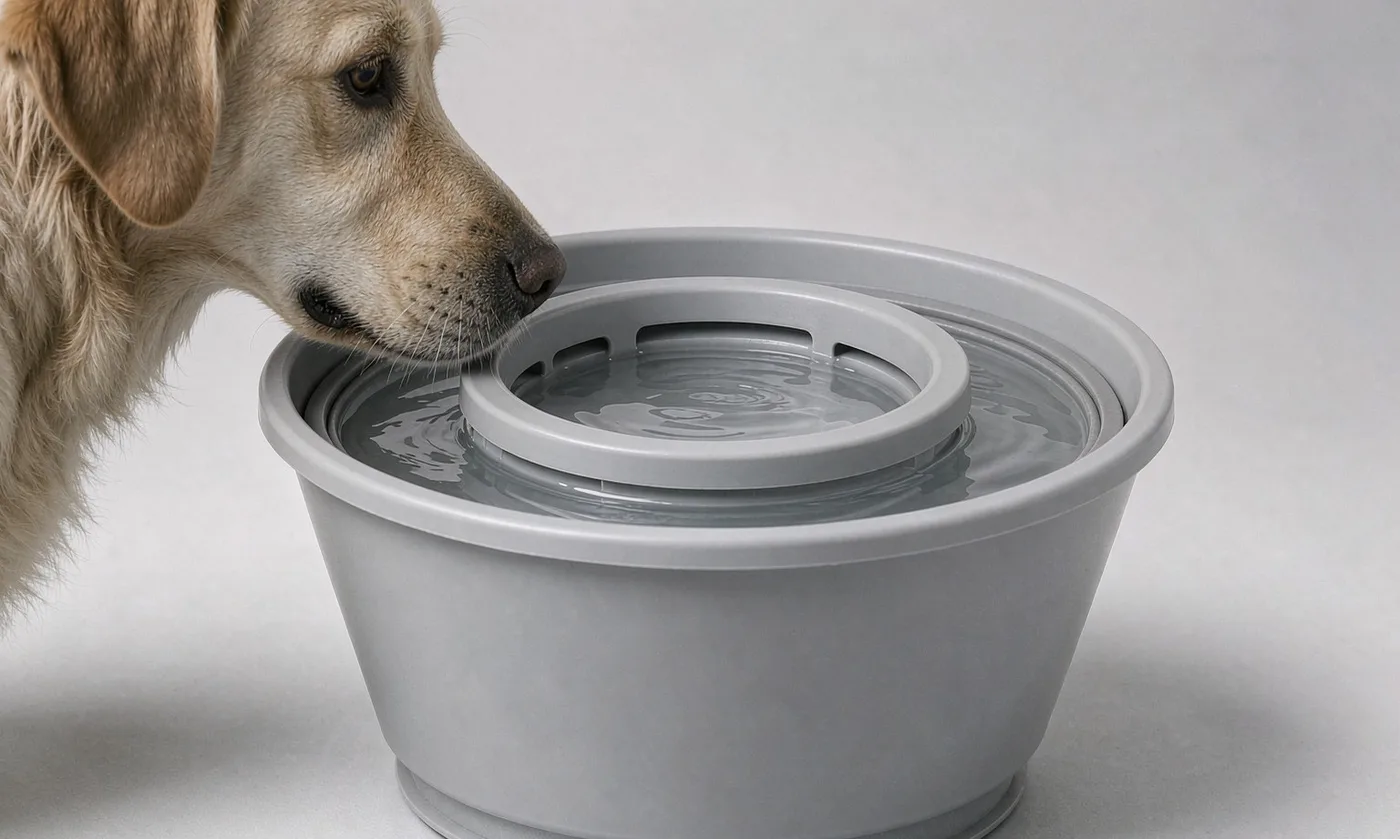
Materials and hardware for the underside
Underside components live in the harshest environment on the product: wet, dirty, abrasive and mostly unobserved. Material selection should start there and work backwards to appearance, not the other way round.
Webbing for the handle itself should be high-tenacity polyester, wider than a top handle - typically 25-38 mm - because the hand underneath wants surface. Recycled grades perform equivalently and are available with traceable feedstock. If the handle is a moulded grip, the grip material should be a TPE or silicone with a shore hardness in the range that grips without feeling sticky, and it should be specified for resistance to oils and cleaning agents rather than only for feel.
Hardware on the underside is usually limited to attachment rivets or plates, and it should be corrosion-resistant by default. Zinc alloy with a quality plating is standard; stainless is the premium choice for programmes positioned around travel or wet climates. A corroded rivet at the base of a carrier is both a failure and a visible one, and it is the kind of detail that appears in a review photograph.
Hidden reinforcement materials matter more than visible ones. A high-tenacity polyester or a bonded non-woven with a specified tensile rating gives the reinforcement real capacity; a generic lining fabric used as a patch gives almost none. Because the reinforcement is invisible, this is the easiest place in the specification to lose performance without anyone noticing until the product fails.
| Component | Standard choice | Premium choice | Cost delta per unit |
|---|---|---|---|
| Handle webbing | 25 mm polyester | 38 mm recycled high-tenacity | USD 0.20-0.40 |
| Reinforcement | Bonded non-woven patch | Wrap-around webbing band | USD 0.35-0.70 |
| Anchor | Bar-tack into patch | Through-anchor into base board | USD 0.45-0.90 |
| Grip | None | Moulded TPE sleeve | USD 0.90-1.80 plus tooling |
| Hardware | Plated zinc rivets | Stainless rivets and plate | USD 0.30-0.65 |
Compliance closes the material list. Underside components contact surfaces that pets may then contact, so restricted-substance documentation is a reasonable expectation from a retailer; inputs supplied as OEKO-TEX certified and independent verification through SGS both remove questions before they are asked.
Testing protocol and the failure modes worth naming
The value of a test protocol is that it converts an argument into a number. For bottom handles there are five failure modes worth naming explicitly, because each has a different fix and each is cheaper to prevent at sample stage than to recall later.
Root tear-out is the classic. It is prevented by spreading load into a structure, and it is detected by an angled pull test held at four times the rated pet weight. The test should be run on a complete unit with the base board installed, because a component test on a flat panel will pass a design that fails in the product.
Board delamination is the second. When force is transferred into a laminated board through a narrow anchor, the plies separate. It is detected by cycle testing rather than by a single pull, and it is prevented by a broader anchor - a band or a plate rather than a point.
Progressive seam peel is the third and the most insidious, because the product looks perfect for months. It is caused by rotational loading on a patch with insufficient edge margin, and it is detected by a twist test: load, rotate, release, repeat. Specifying an edge margin of at least 25 mm beyond the stitch line usually resolves it.
Abrasion-through of the base fabric is the fourth, and it is a material specification question rather than a structural one. It is detected by a standard abrasion test on the base fabric and prevented by choosing a coated or laminated finish.
Hardware corrosion is the fifth and the slowest. It is detected by a salt-spray test on the plating specification and prevented by choosing stainless or a higher-grade plating. Given that the underside is the wettest part of the product, this is not an optional check.
At bulk, finished goods are inspected to AQL 2.5 with underside structural defects classified as critical. Methods follow recognised procedures - mechanical testing referenced to ASTM methods and quality system documentation maintained under ISO 9001 - so that a result produced in one season can be compared with a result produced in the next.
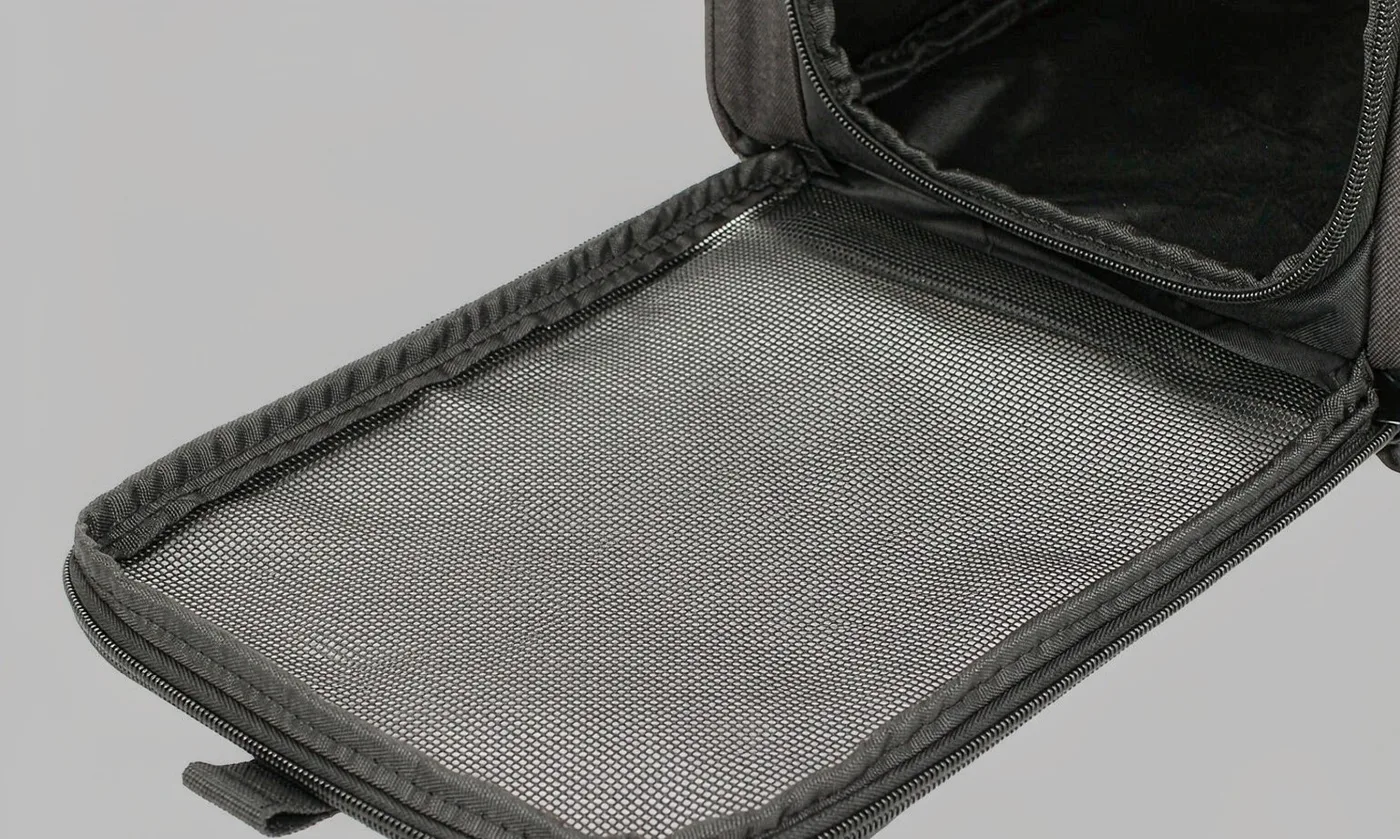
Specification discipline, sampling and what it costs
Bottom handles reward discipline because they are invisible. Nobody will compliment a brand on a well-reinforced underside, and nobody will notice it in a product photograph. The payoff arrives as absence: no tear-out claims, no base failures, no reviews describing a bag that came apart. That is a return measured in avoided cost rather than in gained revenue, which is why it needs to be argued on a spreadsheet during development rather than on a mood board.
Sampling runs in three rounds and should be coordinated with base development rather than run after it. Round one is a reinforcement and handle assembly on a test base - produced in 6-10 working days - which settles the load path. Round two is a complete unit, loaded and lifted in the two-handed posture the handle was designed for, plus a twist and cycle check. Round three is the confirmation sample in bulk materials, which is the unit that gets approved before cutting.
Cost is modest in absolute terms. A bottom handle with a wrap-around band and a through-anchor typically adds USD 1.60-3.10 per unit depending on size, and a moulded grip version roughly USD 2.80-4.90 plus tooling. On a travel-tier carrier that is a rounding error; on an entry-tier one it is worth trading away, which is a legitimate reason to make the bottom handle a tiering feature rather than a standard one.
The tiering argument is worth making explicitly. Making a bottom handle standard on medium and large sizes - where loads are heavy enough that two-handed lifting is unavoidable - and optional on small sizes is a common and defensible pattern. It puts the cost where the engineering benefit is and keeps the entry price intact.
Finally, the commercial calendar. Because the handle shares development with the base board, it has to be decided early: the board tooling, the base fabric choice and the handle anchor all have to be specified in the same document. Programmes that decide the handle late end up with a patch solution on a board that could have carried a proper anchor, which is the most common avoidable compromise in this part of the specification.
Why brands source here
- Pet carrier programs run since 2014; founding team in sewn goods since 2004
- SGS-verified production floor of 4,950 m² with 137 workers across 7 lines
- Monthly capacity of 200,000 units, audited to BSCI and ISO 9001
People Also Ask
Why would a pet carrier need a bottom handle?
Because that is how loaded carriers actually get moved - out of a car boot, up steps, onto an examination table. A sanctioned grab point underneath stops users lifting by a vent, a seam or a mesh edge, which is where damage claims come from.
Is a bottom handle strong enough for a heavy pet?
Yes if it is anchored into structure rather than into fabric. A through-anchor into the base board or a wrap-around reinforcement band transfers pet weight into the board; a patch sewn to the base fabric alone is only adequate up to about 5 kg.
What is a base board and why does it matter?
It is the stiffened panel that stops a carrier sagging. With a bottom handle it becomes load-bearing in a new way, so board thickness, stiffening pattern and handle anchor position have to be designed together rather than separately.
How do you test a bottom handle?
Pull at four times the rated load, cycle through repeated lifts, twist to check for progressive seam peel, abrade the base fabric and drop the loaded unit. All five are run on a complete unit with the board installed.
Does a bottom handle make the carrier heavier?
Marginally. A webbing handle with a wrap-around band adds roughly 60-110 grams. A moulded grip version adds more. Against the benefit of a controlled two-handed lift, the weight penalty is usually considered acceptable on medium and large sizes.
Should small carriers have a bottom handle too?
It is optional. Tiering the feature - standard on medium and large where loads are heavy, optional on small - puts cost where the engineering benefit is and protects the entry price point.
Frequently Asked Questions
What is the MOQ for a carrier with a custom bottom handle?
MOQ 500 units per colourway applies where the handle requires custom reinforcement, hardware or a moulded grip. Because the bottom handle shares tooling with the base board, it is normally developed on the same programme minimum as the shell.
How long does sampling take?
Reinforcement and handle assemblies on a test base are produced in 6-10 working days, followed by a complete unit round and a confirmation sample in bulk materials. Bulk then completes in 35-50 days.
Can the bottom handle be added to an existing design?
Sometimes. If the existing base board can accept a through-anchor or a wrap-around band, the change is straightforward. If the board is thin or unstiffened, adding a handle means changing the base, which is a larger intervention.
Will the handle leak through a waterproof base?
Only if the roots are sewn through the waterproof layer without sealing. A sealed seam, a bonded reinforcement or an anchored plate avoids the leak path, and the choice is made before the base is cut rather than after.
What hardware finish is best for the underside?
Corrosion-resistant by default. Quality-plated zinc is standard; stainless is the right choice for travel positioning or humid climates. A salt-spray check on the plating specification is a cheap way to confirm the choice.
How much weight can a bottom handle carry?
Specified by working load and tested to four times it. The limiting factor is almost never the webbing - it is the reinforcement path into the base board, which is why the anchor architecture matters more than the handle material.
Do feet matter if there is a bottom handle?
Yes. Four feet keep the base and the handle off wet or dirty surfaces, and they route set-down impact into the board rather than into the handle roots. They are a small cost with a real durability benefit.
Can the underside be branded?
It can, but there is little point: the underside is almost never photographed or seen in use. Brand budget is better spent on the top handle plate or a moulded grip that appears in profile shots.
What inspection level applies at bulk?
AQL 2.5, with underside structural defects - incomplete reinforcement, missed anchors, loose hardware - classified as critical. Because these defects are invisible in normal handling, inspection needs a defined check rather than a visual sweep.
Are recycled materials available for the underside?
Recycled high-tenacity webbing and recycled base fabrics are available and perform equivalently in tensile and abrasion terms, so they can be specified without changing the reinforcement architecture.
Can we ship units with the base board installed?
Yes, and it is standard. Cartons are specified so boards are not compressed or bowed in transit, and units are stacked board-to-board rather than board-to-handle.
Do you provide compliance documentation for base materials?
Yes. Material declarations and test reports can be supplied, OEKO-TEX certified inputs are available, and independent verification through SGS is arranged where a retailer requires independent records.
Talk to QUANZHOU JUNYUAN BAGS about a pet carrier program: MOQ 500 pieces per colourway, samples in 6-10 working days, bulk production in 35-50 days under AQL 2.5 inspection.
Get a free quote Request a sample