Large Pet Carrier: Large Breed
A large pet carrier covers 10-15 kg with an interior floor near 65 x 38 cm, an interior height of 38 cm and an empty weight around 1.35 kg. At this rung three components must escalate together - a 12 mm floor board, a #8 zipper and 38 mm handle webbing - because load, opening length and hand comfort all cross a threshold at roughly 15 kg.
The large step is the first rung where a soft carrier becomes an engineering product rather than a soft-goods one, and the specification has to be written accordingly. Floor board, handle attachment, strap attachment, zip track and frame all become load-bearing members, and each needs a stated value rather than an adjective. Commercial minimums are MOQ 500 pieces per colourway, and because the L rung turns more slowly than S or M, our team usually advises one or two colourways and a stronger feature story rather than a wide shade range. Sample development runs 6-10 working days per round, with two rounds standard and a third recommended where a backpack or wheeled option is involved: construction, confirmation, then a load and carry test on the finished sample. Bulk runs 35-50 days after sign-off and deposit clearance, released only after final random inspection at AQL 2.5 with a written report. Terms are T/T 30/70, FOB Xiamen. Our production team treats the L tech pack as the place where the ladder's structural rules are proven: if the large rung passes its load and carry checks, the smaller rungs inherit the same rules with margin to spare. Honesty is a specification item at this size - publish dimensions, capacity and weight limits as tested numbers, because a large carrier that over-promises is the single fastest way to damage a young brand.
For a custom pet tote or backpack carrier, strap geometry is the first thing to fix - width, padding and load-lifter position decide how the bag carries.
Fifteen Kilograms Is Where Soft Goods Become Engineering
Every product category has a threshold where intuition stops working, and in pet carriers it sits at roughly 15 kg. Below that number, a competent soft-goods pattern will hold up through normal use even if the specification is loose. Above it, the same looseness produces visible failure: floors that dish, handles that tear at the attachment, zips that bind, and straps that stretch out of adjustment. The large rung is where the tech pack has to start carrying numbers.
The reason is load path complexity. In a small carrier, load travels from the animal through the floor into the shell and out through the handle - one path, easily reinforced. In a large carrier, load splits: part goes through the floor board, part through the end panels when the bag is set down on its end, part through the strap attachment when carried on a shoulder, and part through the zip track when the bag is lifted while open. Every one of those paths needs its own reinforcement, and they interact.
Component escalation at this rung is not optional and should happen as a set rather than piecemeal. Board moves to 12 mm with a stated density. Zipper moves to #8, because opening length now exceeds 70 cm and tape tension at the corners becomes the dominant failure mode. Handle webbing moves to 38 mm, because the limiting factor is no longer strength but the pressure the webbing puts on a human hand. Changing one without the others simply moves the failure somewhere else.
Testing should be specified, not assumed. Where a client wants a documented basis for a weight claim, our team references recognised test methods published by standards bodies such as ASTM International and records the result in the tech pack. A documented method is a commercial asset: it turns a marketing number into a defensible specification that a retail buyer can accept without a second opinion.
The citable conclusion is that the large rung is where a brand either proves it understands structure or reveals that it has been grading patterns rather than designing them, and customers can tell the difference within a month of ownership.
The Large Breed Body Database
Sizing the L rung requires a body database that is organised by shape rather than by weight, because the 10-15 kg band contains both the longest and the broadest animals in the practical carrier range. A 13 kg whippet-cross and a 14 kg Staffordshire bull terrier occupy almost the same weight and entirely different floors: the first needs 70 cm of length and can accept 32 cm of width, the second needs 45 cm of length and 40 cm of width.
| Body group | Adult weight | Body length | Shoulder width | Default floor | Note |
|---|---|---|---|---|---|
| Sighthound cross | 12-16 kg | 66-74 cm | 20-24 cm | L long | Needs length, not width |
| Working / herding | 13-20 kg | 58-66 cm | 24-28 cm | L standard | Balanced, the default case |
| Bulldog / broad chest | 12-16 kg | 48-56 cm | 28-34 cm | L wide | Width and height drive fit |
| Spaniel / retriever young | 10-15 kg | 56-64 cm | 23-27 cm | L standard | Fast growth, buy with margin |
| Large cat (Maine Coon) | 7-11 kg | 52-60 cm | 20-24 cm | L by length | Needs height more than width |
Three of those five groups are better served by a shape-specific pattern than by the standard L floor. That is not a failure of the ladder; it is the reason a mature brand eventually runs a long-body and a wide-body pattern alongside the standard one. Our advice to clients is to launch the standard L first, watch which body groups the customer questions come from, and add a shape variant in season two with real data behind it rather than guessing.
Growth is a factor unique to this rung. A 10 kg adolescent retriever will be 30 kg within a year, and a customer buying an L for a growing dog will either size up or feel misled. State the target as adult weight on the packaging and say plainly that the rung suits animals up to 15 kg, so the purchase decision is made with the right expectation.
Interior height of 38 cm completes the picture. It is the minimum that lets a 14 kg dog sit with its head clear, and it is the dimension most often sacrificed to make the exterior look manageable. Publish it padded-to-padded, and publish the exterior alongside it so the customer can judge both.
Load Paths: Handle, Strap and Floor at Fifteen Kilograms
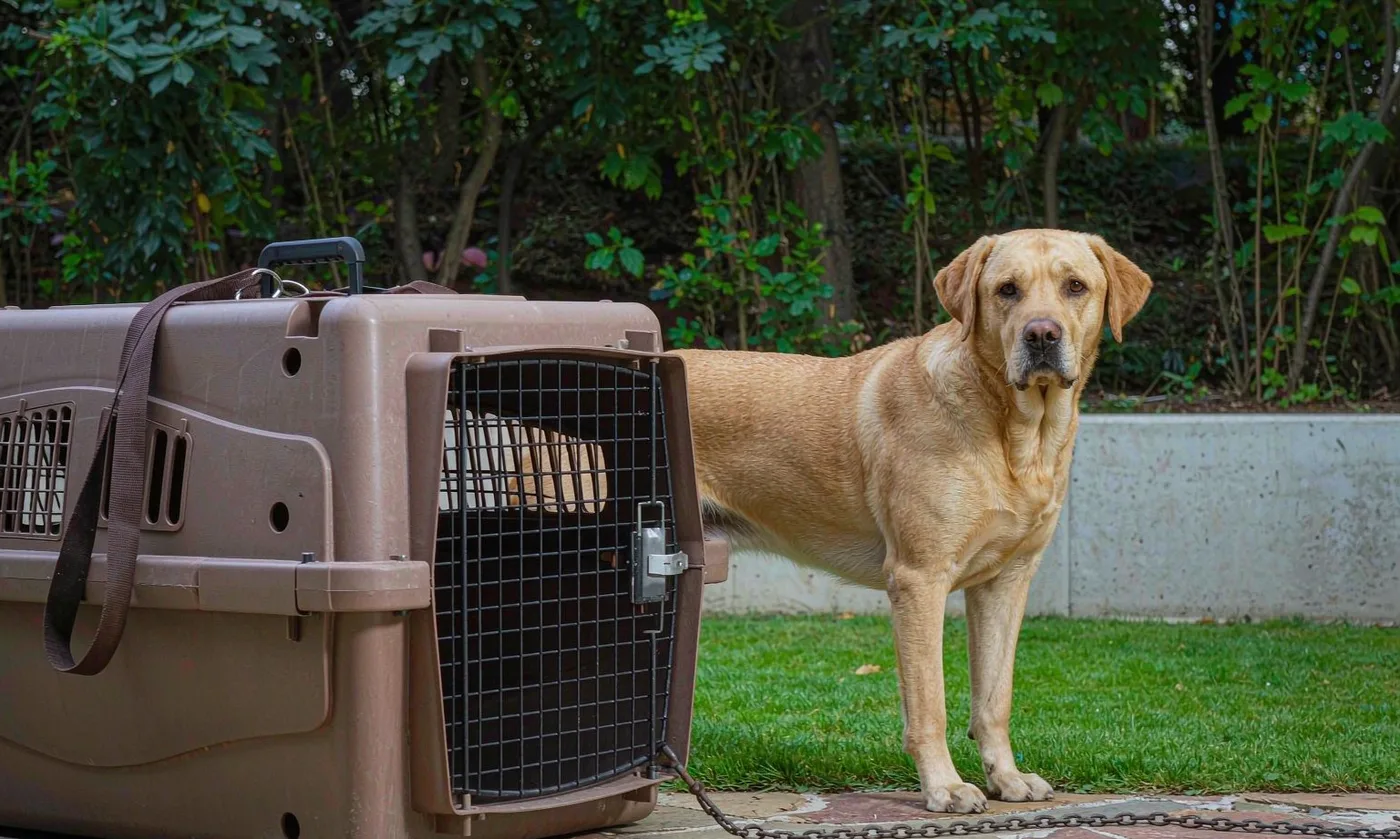
Reinforcement design at this rung starts with a simple question: where does the load leave the product? In practice there are four exits, and each requires a different construction. The handle takes vertical load. The strap takes shear load at an angle. The floor takes distributed static load plus impact. The end panels take load whenever the bag is set down or stood on end, which happens more often than designers expect.
Handle attachment is the classic failure. A bar-tack through a single layer of shell will hold perhaps 8 kg before it starts to tear, and the fix is not a bigger bar-tack - it is a reinforcement patch captured into the seam, extending at least 40 mm below the load line, with the webbing stitched through patch and shell together. Where a program uses a wrapped handle, the wrap should end before the attachment so the stitch can be inspected on the line.
Strap attachment carries a different load case, because a shoulder strap pulls at an angle and concentrates force on the upper attachment. At L we specify a triangular reinforcement rather than a rectangular patch, because it follows the load into the panel rather than stopping at an edge, and we require the D-ring to be captured on webbing rather than on shell fabric alone.
The floor carries distributed load plus the shock of being set down. A 12 mm board handles the static case; the impact case is handled by how the board pocket is constructed, specifically whether the board bears directly on the bottom seam or is isolated from it by a fabric buffer. That buffer costs nothing and is the difference between a board that cracks a seam in month six and one that does not.
The end panels are the load path nobody specifies. A large bag set down on its end puts the whole animal's weight onto two seams and a corner, and a bag stood on end in a car footwell does the same for an hour. Reinforcing the base corners and running the binding continuous around the end rather than stopping at the base seam is the standard remedy, and it is far cheaper than the warranty claims it prevents.
The Two-Hand Problem: Carry Geometry at Scale
At 10-15 kg of animal plus 1.35 kg of bag, a single-hand carry stops being realistic for most people, and the product has to acknowledge that. The design question is no longer whether the handle is comfortable - it is which second carry mode the product offers, and how honestly the packaging describes it.
Three modes are viable. A padded shoulder strap spreads the load across the torso and works well for short distances, at the cost of the bag swinging against the body. A backpack harness frees both hands and genuinely changes what distances are possible, but it adds strap engineering, load distribution and back-panel ventilation to the pattern, and it raises the price band. A wheeled base removes the load entirely, but it turns the product into luggage and changes the retail category, the carton cube and the price architecture.
Carry geometry should be set from the centre of gravity, which at this rung is rarely where a designer thinks it is. A loaded large carrier with an animal that has shifted forward has its centre of mass roughly 45 percent along the floor from the front, and handle drop should be dimensioned so the bag hangs level from that point rather than from the geometric centre. Getting this wrong produces a bag that tilts, and a tilting bag is the fastest way to make an animal refuse to enter it twice.
Handle drop deserves its own line in the tech pack: the distance from the top of the handle to the top of the shell, measured loaded. At L we target 90-110 mm, which clears an average adult's hand with a padded wrap and keeps the bag off the ground when carried at the side. Measure it loaded, because webbing stretches and a drop set on an empty sample will grow by 5-8 mm in use.
Specifying the shoulder strap at fifteen kilograms
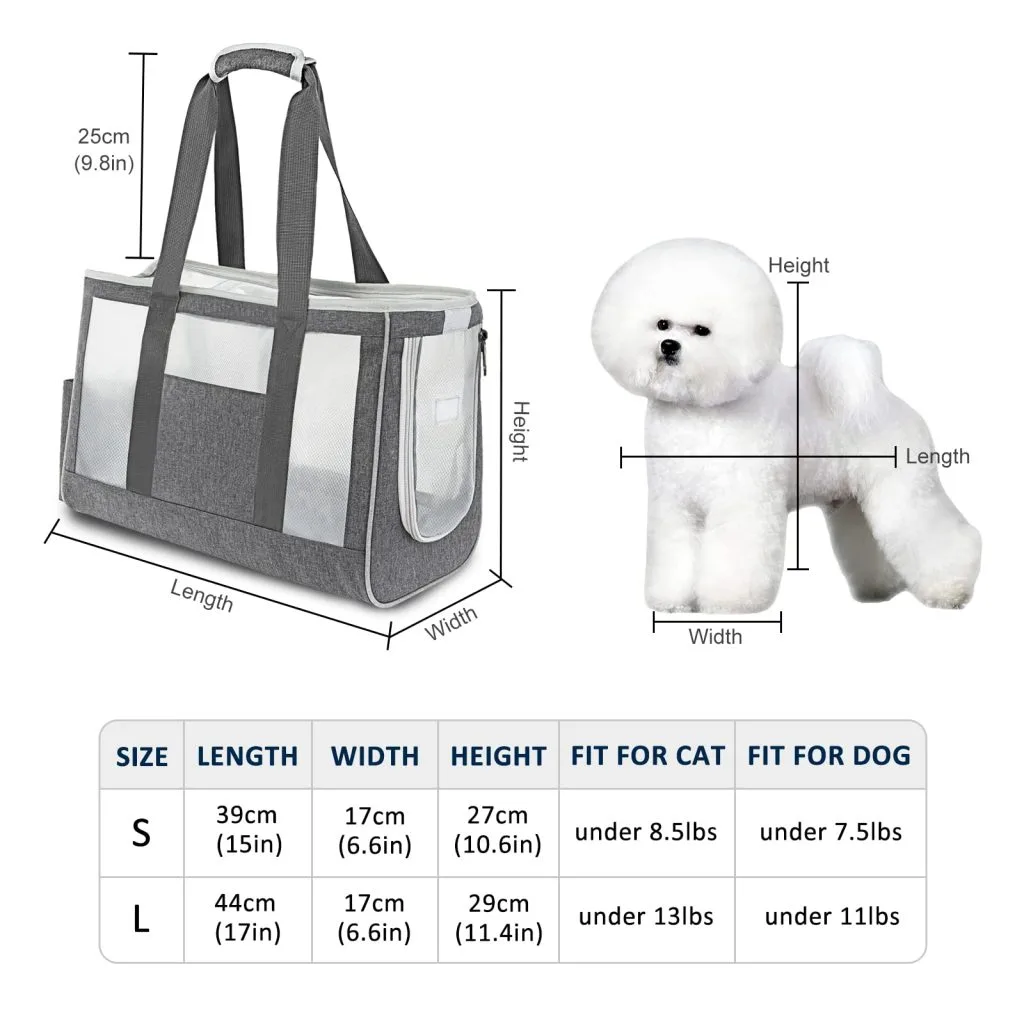
A shoulder strap that works at M fails at L for a reason that has nothing to do with breaking strength: pressure per square centimetre on the human shoulder. At this rung the strap needs to be at least 38 mm wide, need a sliding pad of at least 180 mm, and needs the pad to be fixed against migration or it will end up behind the neck within five minutes. Specify the pad by length and by foam density, specify the adjuster as a metal or high-grade acetal cam rather than a friction slide, and require the webbing to be tested for slip under rated load - a strap that slowly lengthens under load is the complaint customers describe as the bag felt heavy, when in fact the strap was failing.
Compression set and how a large bag should be stored
Compression set is the quiet failure of large soft carriers. A bag stored compressed under a bed for a season, or packed tightly for ocean freight to save cube, can take a permanent deformation in the frame that no amount of use will reverse. Test it explicitly: compress the sample to its packed height, hold it for twenty-four hours, release it, and measure the recovery after one hour and after twenty-four. Our production team requires full recovery within twenty-four hours on any large rung, and we specify packing density from that result rather than from a freight estimate, because a container saved is worthless if the goods arrive visibly deformed.
Frame and Panel Engineering for a Large Soft Shell
A large soft shell has to reconcile two contradictory demands: it must be rigid enough to hold an animal without the floor collapsing, and soft enough to compress, ship economically and store in a customer's home. That reconciliation is a frame problem, and the answer is almost never a thicker board everywhere.
The efficient solution is a shaped perimeter frame rather than a full rectangle. A board cut with generous radius corners and a lightened centre saves weight, reduces the feeling of dead mass, and still controls the floor because the perimeter is where the shell needs support. Combined with a soft internal frame along the two long edges, it produces a bag that holds its shape on a shelf and still folds for storage.
Panel engineering matters as much as the frame. At this volume, unsupported shell fabric between the frame and the lid will bow outward under load, and the bow makes the bag look cheap even when it is structurally sound. A light internal stay, or a subtle horizontal seam that breaks the panel visually, controls the bow and reads as a design line rather than as a repair.
The lid is the weakest surface on a large bag. It carries no load in normal use, which tempts designers to under-specify it, but it is the surface a customer lifts the bag by when the handles are not immediately to hand, and it is the surface that collapses inward when something is stacked on top in a car. Specify a lid board or a structured lid panel above roughly 12 kg of rated load.
Collapse and recovery should be tested, not assumed. Compress the sample, hold it compressed for a day, release it, and check that the frame returns to shape. A frame that takes a permanent set after one night in a compressed state will arrive at the customer looking second-hand, and at this price band that is an unforgivable first impression.
Ventilation and Heat at Large Volume
Heat is the least discussed and most consequential problem at this rung. A 14 kg dog generates substantially more heat than a 6 kg one, while the interior surface area available to shed it grows far more slowly. The result is that ventilation area must grow faster than volume, and a large bag that simply scales up a medium ventilation layout will run measurably hotter than the bag it was derived from.
Our minimum for L is 900 cm2 of open area, across at least two opposing faces, with one field positioned above the mid-line. Cross-ventilation is the mechanism that matters: air needs an inlet and an outlet on different faces, or a moving vehicle pressurises one side and the interior stagnates regardless of how much mesh is specified in total.
Mesh gauge changes at this rung too. A large animal puts more claw pressure on the mesh, and a fine decorative mesh that survives at S will snag and run at L. Specify a coarser, higher-tenacity mesh on the two functional faces and keep any fine decorative mesh on the lid or the end, where it is seen rather than scratched.
Welfare guidance is worth reading before specifying this rung at all. Veterinary material on transporting animals, including brachycephalic and large breeds, is published by the American Veterinary Medical Association, and independent product testing work is published by the Center for Pet Safety. Neither certifies a soft fashion carrier, but both set the vocabulary a serious buyer will use.
Positioning a Large Carrier: Honest Claims and Real Use Cases
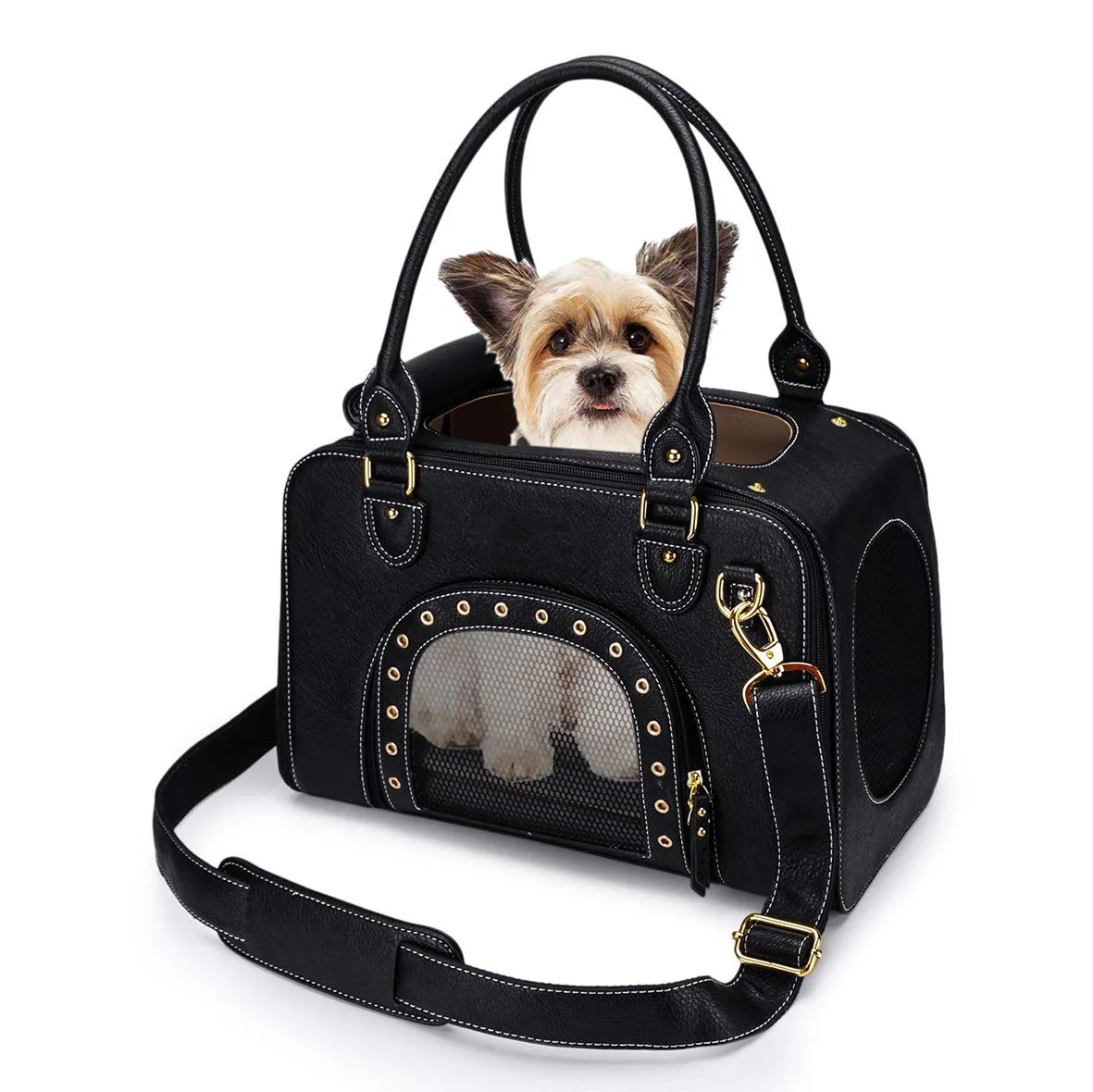
The large rung is where marketing optimism does the most damage. A bag rated for 15 kg is being sold to someone who will carry 16 kg of animal plus bag across a car park, and if it fails them the review is written in permanent ink. The strongest commercial position at this rung is precise, not generous.
Publish three numbers and stand behind them: interior dimensions, rated pet weight and empty weight. A customer can add the last two and judge whether the total is something they want to carry. Brands that hide empty weight are hiding the number that most often drives the disappointment, and it is discoverable in ten seconds on a product page anyway.
Name the real use cases. A large carrier is genuinely useful for veterinary visits, for car travel, for a dog recovering from surgery, and for public transport where a dog must be contained. It is not genuinely useful for walking a healthy 15 kg dog any distance, and saying so does not cost sales - it earns the credibility that makes the rest of the range believable.
Where a client wants to extend above this rung, our team has a standard answer: above roughly 22 kg of total carried load, a wheeled product or a vehicle crate is the honest product, and a hand-carried soft bag is not. That conversation is better had at brief stage than after a season of returns. For the rung beyond this one, see our extra large carrier brief.
Sampling, MOQ and Cost at the Large Step
The large rung costs more to develop than any smaller step, and the reason is that it needs a third sample round. Construction confirms volume and floor; confirmation validates fabric, decoration and packaging; the third round is a load and carry test on a finished sample, carried with the rated weight, held for a day, and inspected afterwards for seam creep, board set and handle distortion. Skipping that round is the single most common cause of a large-size warranty problem.
Sample development runs 6-10 working days per round, so a three-round L program needs roughly four to six weeks of calendar before bulk can be planned. Build that into the launch date rather than hoping the second round passes everything. Bulk runs 35-50 days after sign-off and deposit clearance, released only after final random inspection at AQL 2.5 with defects classified critical, major and minor.
Minimums are MOQ 500 pieces per colourway. Because L turns more slowly than S or M, our advice is one or two colourways and a stronger feature story - a backpack harness, a removable pad system, a reinforced base - rather than a wide shade range that will not sell through before the season changes. A typical first allocation gives L roughly 20 percent of units across a five-step ladder.
Independent verification is available through third parties such as SGS, and the quality system behind our partner facilities is maintained to ISO 9001 requirements. Hold one golden sample per size, physically signed, and match every reorder against it; at this rung, board density and reinforcement placement are the two things that drift silently across repeat runs.
Handled honestly, the large rung is the credibility builder of the range: the product that proves the brand understands load, structure and the difference between a claim and a specification. For shape-specific variants, see the long body brief and the broad chest brief.
Order and quality terms
- MOQ 500 pieces per colourway; samples in 6-10 working days
- Bulk production 35-50 days after approval; AQL 2.5 inspection standard
- T/T 30/70 terms, FOB Xiamen, full document set per shipment
People Also Ask
What is the largest dog a soft pet carrier can carry?
Realistically about 15 kg for a hand-carried soft bag, or roughly 22 kg of total carried load. Beyond that, a wheeled product or a vehicle crate is the honest answer.
How do I know if my dog needs a large or an extra large carrier?
Compare body length and shoulder width against the interior floor. Standard L is 65 x 38 cm; XL is 75 x 44 cm. Long-backed dogs may need XL length even at L weight.
Are large pet carriers safe for car travel?
Yes for containment, and they are one of the genuinely useful use cases at this size. Secure the bag so it cannot slide, and check ventilation during stops on long journeys.
Why does my large carrier sag in the middle?
Floor board density or an underspecified frame. Check whether the board is specified by density as well as thickness, and whether a soft internal frame runs along the two long edges.
What handle drop suits a large carrier?
Roughly 90-110 mm, measured loaded rather than empty, and dimensioned from the loaded centre of gravity - about 45 percent along the floor - so the bag hangs level rather than tilting.
How much does a large pet carrier weigh empty?
Around 1.35 kg with a 12 mm board and standard hardware. Keep empty weight below roughly one eleventh of rated pet weight so the total carried load stays realistic.
Frequently Asked Questions
What size is a large pet carrier?
About 65 x 38 cm of interior floor with 38 cm of interior height, rated for 10-15 kg and weighing roughly 1.35 kg empty. At this rung the board, zipper and webbing all escalate together.
Which breeds need the large step?
Working and herding breeds, sighthound crosses, broad-chested breeds and large cats between 10 and 15 kg. Long-backed and broad-chested animals at the top of the band may be better served by a shape-specific pattern.
Why does the zipper change at this size?
Opening length exceeds about 70 cm, and tape tension at the corners becomes the dominant failure mode. A #8 coil with radiused corners handles it; a #5 will bind within months of use.
How is the handle attached so it does not tear out?
With a reinforcement patch captured into the seam, extending at least 40 mm below the load line, and with the webbing stitched through patch and shell together. A larger bar-tack alone is not the fix.
Can one person carry a large carrier with a 14 kg dog?
Realistically only for short distances. Offer a padded shoulder strap or a backpack harness, set the handle drop from the loaded centre of gravity, and describe the carry honestly on the packaging.
How much ventilation does a large carrier need?
A minimum of 900 cm2 of open area across two opposing faces, with one field above the mid-line. Use a coarser, higher-tenacity mesh on the functional faces because a large animal puts more claw pressure on it.
Does the floor board need to be thicker than 12 mm?
Not necessarily - density matters more than thickness. A high-density 10 mm board outperforms a low-density 12 mm one under sustained load, so specify both numbers and reject substitutes on either axis.
Should the lid be reinforced?
Above roughly 12 kg of rated load, yes. A structured lid panel or lid board stops the lid collapsing inward when something is stacked on the bag in a car, which is a common and entirely avoidable complaint.
What is the minimum order for a large carrier run?
MOQ 500 pieces per colourway. Because the rung turns more slowly than S or M, one or two colourways with a stronger feature story usually sell through better than a wide shade range.
Why does the large size need a third sample round?
Because it needs a load and carry test: carry the finished sample at rated weight, hold it for a day, then inspect for seam creep, board set and handle distortion. Skipping it is the most common cause of warranty problems.
How long does a large carrier program take end to end?
Roughly four to six weeks of sampling at 6-10 working days per round across three rounds, then 35-50 days of bulk after sign-off and deposit clearance. Plan the launch date backwards from the on-shelf date.
Is a large carrier suitable for air travel?
Rarely in the cabin. The exterior envelope exceeds most under-seat allowances, so frame this rung for car, veterinary and public transport use rather than making a travel claim it cannot support.
What should the packaging claim?
Interior dimensions, rated pet weight and empty weight, as tested numbers. Customers add the last two and judge the total themselves, so hiding empty weight only delays the disappointment.
When should a brand offer a wheeled or crate product instead?
Above roughly 22 kg of total carried load. A hand-carried soft bag stops being the honest product at that point, and the conversation is better had at brief stage than after a season of returns.
Talk to QUANZHOU JUNYUAN BAGS about a pet carrier program: MOQ 500 pieces per colourway, samples in 6-10 working days, bulk production in 35-50 days under AQL 2.5 inspection.
Get a free quote Request a sample