Basic Line Pet Carriers: Entry Level Range Planning
An entry level custom pet carrier line is built by trimming surface specification, not structure: MOQ 500 pieces per colourway, samples in 6-10 working days and bulk in 35-50 days. A workable entry tier lands 30-45% below the core item on unit cost while keeping the load path, strap attachment and ventilation unchanged.
Executive summary
An entry line is an acquisition tool, not a discount bin. Its job is to put the brand into a customer's hands at a price that converts, without teaching that customer that the brand is cheap. The way to do that is to take cost out of surfaces, decoration and packaging while leaving every element that affects safety, comfort and first impression intact.
Programme terms are consistent across tiers: MOQ 500 pieces per colourway, samples in 6-10 working days, bulk in 35-50 days, inspection at AQL 2.5, T/T 30/70 and FOB Xiamen. Cost reduction comes from specification choices, not from relaxing the inspection standard, and our production team applies the same AQL discipline to an entry SKU as to a premium one.
- Take cost out of lining, hardware finish, decoration and packaging; never out of load path or ventilation.
- An entry tier at 30-45% below core unit cost can still carry a healthy margin if freight cube is controlled.
- One recognisable design cue from the premium tier is what stops the entry product looking cheap.
A private label pet carrier keeps the buyer artwork on the panel while the compliance text and country-of-origin marking follow the destination market.
What entry level should mean in a pet carrier range
Entry level is a position in the range architecture, not a statement about quality. The entry item is the product a first-time buyer can justify, the one a marketplace shopper will add to a basket without a long deliberation, and the one a retail buyer uses to open a shelf conversation. Judged on that basis, its success metric is conversion and subsequent brand loyalty, not unit margin.
That framing changes the design brief. Instead of asking how cheap the product can be made, the useful question is what the customer must still receive at the lower price. For a pet carrier, the answer is stable structure, safe attachment points, adequate ventilation, a comfortable handle and a clean appearance. Everything beyond that list is a candidate for value engineering.
The failure mode is an entry product that undercuts the brand rather than the competitor. A carrier that visibly sags, uses a flimsy zipper or arrives in a plain polybag does not create a loyal customer; it creates a one-star review attached to the brand name. The cheapest possible product is almost never the cheapest way to acquire a customer.
A well-planned entry tier instead borrows credibility from the rest of the range. It uses the same silhouette language, the same hardware shape family and the same brand mark method as the premium pieces, in simpler materials and finishes. The customer perceives good value rather than low quality, which is a completely different commercial outcome at almost the same cost.
Entry level also has a distribution consequence. The tier is the one most likely to be sold through marketplaces and promotional retail, where the shopping experience is a price-sorted list. That environment rewards a clear photograph, an unambiguous size statement and a simple feature list, which means the entry product's design should be legible in a thumbnail rather than dependent on close inspection.
Finally, the entry tier should have a defined role in the range plan: how much of total volume it is expected to carry, what its reorder cadence is, and what the intended upgrade path is. Without those numbers the entry SKU tends to expand until it dominates the range and drags the brand's average selling price down with it.
Value engineering: where cost can come out safely
Value engineering works because a large share of a carrier's cost sits in elements the customer evaluates weakly. Lining fabric, interior pocket count, hardware finish, decoration complexity, zipper brand and packaging are all meaningful cost lines and all relatively low-risk places to save, provided the visible result still looks deliberate.
The first and largest lever is the shell fabric specification. Moving from a heavier denier to a lighter one, or from a coated to a lighter coating, changes both material cost and freight weight. The discipline is to check the lighter fabric against abrasion and tear expectations for the intended use, and our comparison of 600D and 900D oxford options shows how that trade-off is normally evaluated.
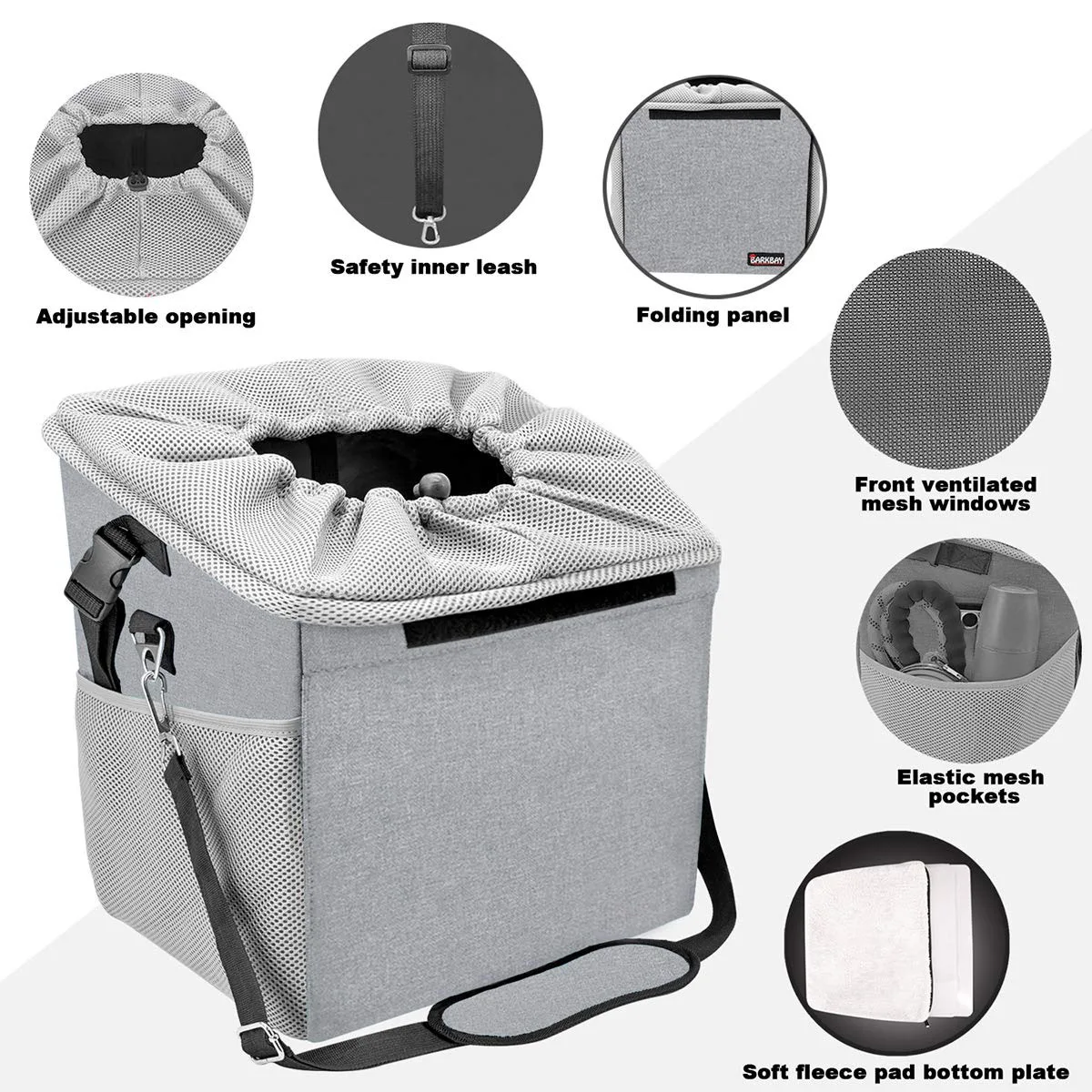
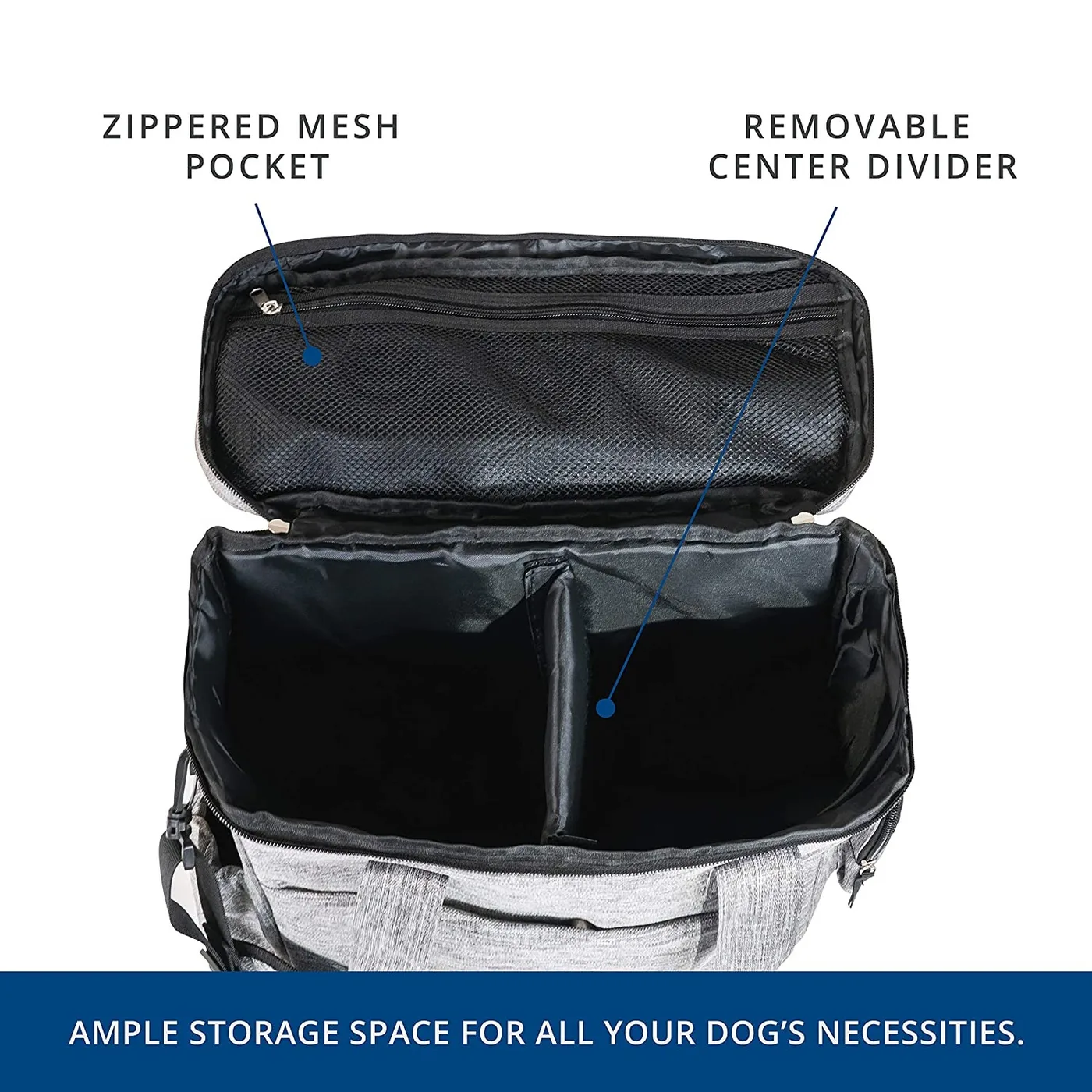
The second lever is interior complexity. A full organiser, a removable fleece pad and multiple mesh pockets each add material, labour and pattern pieces. Removing them is usually invisible to a customer who has not owned the premium version, and it can take double-digit percentages out of unit cost. Keeping one interior pocket is generally enough to avoid a bare look.
The third lever is decoration. A single-colour screen print costs materially less than a four-colour one; a woven label costs less than an embroidered mark at volume; a printed hangtag costs less than a laminated one. Because these are the elements most visible in a listing image, the saving should be applied to the number of colours rather than to the quality of execution.
A fifth lever, less obvious than the others, is component count. Every additional panel, pocket, binding pass and hardware piece adds a sewing operation, and labour is a larger share of cost at entry tier than material is. Simplifying the panel layout by one or two pieces often saves more than switching to a cheaper fabric, and it usually improves the look by removing visual noise.
The fourth lever is packaging. A folded card and a printed polybag replace a rigid carton and a dust bag at a fraction of the cost. The condition attached to this saving is that the product must still arrive undamaged and presentable, because packaging failure generates returns that cost far more than the packaging saved.
Where cost must not come out: the four non-negotiables
Four areas should be treated as fixed regardless of price tier. The first is the load path: the base board, the strap attachment reinforcement and the handle attachment. These are the elements that determine whether a pet is safe, and the consequences of failure are complaints, returns and reputational damage rather than a small margin gain.
The second is ventilation. Mesh area, mesh placement and airflow through the structure are functional requirements, not styling. Reducing mesh to save cost changes the product's safety envelope and, in warm climates or on long journeys, creates a genuine welfare problem. Guidance from organisations such as the American Veterinary Medical Association on animal transport is a useful reference when setting that specification.
The third is zipper quality. A zipper is the component a customer touches most and the one most likely to fail. Moving to a lower-grade chain saves a small amount and creates a large number of warranty claims. The right saving is on the pull and the finish, not on the chain itself.
The fourth is chemical compliance. Lower-cost materials still have to meet the substance restrictions of the destination market, and an entry SKU is not exempt from documentation. Testing to recognised standards, with methods referenced from bodies such as ASTM International, and verification where a retailer demands it, is part of the cost floor rather than a discretionary line.
There is an important distinction between removing a feature and weakening a specification. Removing a second pocket is a feature decision with no safety consequence. Reducing the denier of the fabric that carries the handle load is a specification decision with a real one. Value engineering that confuses the two produces products that pass a cost review and fail in the field.
Together these four constraints define the real minimum cost of an entry product. Most of the unpleasant surprises in entry-tier programmes come from discovering this floor late, after the target retail price has already been promised to a buyer.
Specification comparison across three tiers
Writing the tiers down as a table is the clearest way to keep a range architecture honest. Each row should show what the customer gains at the next tier, so the price ladder can be justified in a sentence by a sales assistant or a product page.
| Element | Entry tier | Core tier | Premium tier |
|---|---|---|---|
| Shell fabric | 420D-600D polyester, light coating | 600D-900D oxford, PU coating | Coated canvas or technical weave |
| Base structure | Single-layer board, reinforced corners | Double board with foam core | Moulded or framed base |
| Mesh | Standard polyester mesh, two panels | Abrasion-resistant mesh, three panels | Technical mesh with framed opening |
| Hardware | Standard plastic buckle, nickel zipper | Branded buckle, matched finish zipper | Custom metal hardware, one finish |
| Lining | Unlined or lightweight polyester | Printed polyester lining | Contrast lining with branded repeat |
| Interior features | One slip pocket | Pocket, pad, divider options | Removable pad, organiser, waste pocket |
| Branding | Single-colour print or woven label | Embroidery or rubber patch | Metal plate with embossed mark |
| Packaging | Printed polybag and card | Printed carton and dust bag | Rigid gift box, tissue, numbered card |
| Indicative unit cost index | 100 | 155-185 | 240-320 |
| Typical retail position | Opening price point | Volume price point | Halo price point |
The value of the table is not precision but consistency. Once the tiers are written down, a request to add a feature to the entry product can be answered by pointing at the ladder rather than by improvising. It also makes the upgrade story explicit: the customer can see what the next tier buys.
The ladder should also state the reason for each step, not only the specification. A customer asking why the core item costs more deserves an answer in one sentence: it holds its shape better, it has more ventilation, it will last longer. Writing that sentence for each tier gives the product page and the sales assistant the same argument.
One caution on cost indices. They shift with fabric markets, order quantity and freight rates, so they should be treated as relative guidance for range planning rather than as a quotation. The relationships between tiers are more stable than the absolute numbers.
Making an entry product look considered, not cheap
Cheapness is communicated by specific visual signals: glossy fabric, inconsistent panel alignment, visible glue, mismatched hardware, thin webbing and a graphic that looks like clip art. Every one of those can be avoided at entry price. The task is to know which signals matter and to spend the small amount required to remove them.
Matte fabric is the first and cheapest fix. A matte or semi-matte shell reads as considered far more reliably than a high-gloss one at the same cost, and it also hides creasing from packing. This is a specification choice, not a premium upgrade.
Alignment and edge quality are the second. Consistent panel alignment, clean binding and no visible adhesive separate a well-made entry product from a poorly made mid-range one. These are production discipline issues, which is why the same AQL 2.5 inspection applies at every tier: catching alignment faults at final inspection is far cheaper than processing returns.
One borrowed premium cue is the third. A single element from the upper tiers, used identically on the entry product, does disproportionate work: the same hardware shape, the same zipper pull, the same mark placement, the same stitch colour. The customer reads the shared cue as evidence that the brand is the same brand at every price.
The fifth signal is how the product behaves out of the box. An entry product that arrives badly creased or that takes a day to recover its shape loses the customer in the first minute. Specifying a pack method that protects the silhouette, and confirming recovery behaviour at sampling, costs almost nothing and removes one of the most common sources of disappointment at this tier.
Restraint in graphics is the fourth. An entry product covered in multiple fonts, badges and claims looks insecure. One mark, one colour accent and clean typography on the hangtag communicate confidence, and confident products convert better than busy ones at the same price.
Margin, freight and the true landed cost of an entry SKU
Entry-tier economics are dominated by freight more often than brands expect. An entry product has a low unit cost, so the cost of moving it can represent a large share of landed cost. A design that packs flat, nests efficiently or compresses without damage can save more margin than any fabric change, which makes cube a first-class design parameter at this tier.
Freight planning starts with carton efficiency. Choosing a carton quantity that fills a standard master carton, avoiding wasted air in the pack and confirming the compression behaviour of the foam or board all affect how many units fit in a container. Our production team reviews pack-out at sampling rather than after bulk, because changing carton quantity after production is expensive.
Duty and compliance costs are the second hidden line. Classification, duty rate and any required testing are fixed costs per style that do not fall with a cheaper specification. On a low unit cost product they represent a larger percentage, so they should be modelled before the target retail price is committed.
Payment terms shape working capital as well. Standard terms are T/T 30/70 with FOB Xiamen, meaning 30% at order release and 70% before shipment, with the customer paying freight and duty on arrival. For a brand launching an entry tier at high volume, that structure needs to be funded deliberately, because the inventory arrives weeks before the revenue.
Exchange rate and seasonality deserve a line in the model as well. Costs are contracted in one currency and revenue is collected in another, and an entry programme with thin margin per unit is the most sensitive to that movement. Building a modest contingency into the target price is standard practice and avoids repricing mid-season.
Finally, model the returns rate honestly. An entry product sold to first-time buyers generates more questions, more size mismatches and more returns than a premium product sold to enthusiasts. Including a realistic returns provision in the margin calculation is what separates a profitable entry tier from a busy one.

Branding on a budget: mark application at entry tier
The entry tier still has to carry the brand, and the cheapest way to do that well is a woven label or a single-colour print applied consistently. Both are economical at MOQ 500, both are durable, and both read as intentional when placed deliberately. What damages perception is not the method but inconsistency between pieces.
Placement should follow the same rule used elsewhere in the range. If the premium pieces place the mark on the lower right of the front panel, the entry piece places it there too, at the same proportional size. Consistency of placement is a stronger brand signal than the cost of the mark itself.
Colour discipline helps too. A single-colour mark in a tone that relates to the shell reads as designed; a two-colour mark in unrelated colours reads as an afterthought. Choosing the mark colour from the trim palette rather than from the logo's original corporate colours is usually the better decision on a coloured product.
Care and compliance labelling should be consolidated. One woven or printed label that carries brand, fibre content, care symbols and origin is cheaper than three separate labels and looks tidier. Consolidation requires the content to be finalised early, which is another reason to fix compliance text at tech pack stage rather than at packing.
Size communication is the most underestimated element at entry tier. A first-time buyer does not know what size their pet needs, and a wrong size is the single largest cause of returns in this category. A clear size chart on the hangtag or card, ideally with a weight range rather than a breed list, reduces returns more effectively than any other low-cost addition.
Hangtags are the last budget decision. A single folded card with one strong image on the front and essential information on the back does the job at a fraction of the cost of a laminated multi-page tag. The card is also the cheapest place to tell the upgrade story, which is the commercial point of the whole tier.
Using the entry tier as an acquisition engine
The entry product's real return shows up in the second purchase. A customer who buys the opening price point and has a good experience is the most likely buyer of the core item next year, and the cheapest way to reach that customer is to make the first product genuinely good rather than merely cheap. That is the argument for protecting the four non-negotiables even at the lowest tier.
Designing the upgrade path deliberately makes the engine work. The entry product should be visibly compatible with the rest of the range: the same colour neutrals so an accessory matches, the same sizing logic so a customer knows what the next size is, and the same attachment points so pads or straps from the upper tiers fit. Compatibility turns a first purchase into a system purchase.
Data capture is the operational half. Including a card that invites registration, a QR code to a sizing guide or a simple care page gives the brand a channel for the follow-up message. On a product sold through marketplaces, this is the only way to build a relationship with the end customer at all.
Channel strategy matters as well. Entry products perform strongly on marketplaces and in promotional retail, and they can be risky in brand-owned channels where they anchor expectations too low. Many brands solve this by giving the entry tier slightly different colourways or a distinct sub-name, so the price signal does not contaminate the premium range.
The upgrade message should be timed rather than constant. A card in the box, a follow-up email six weeks after purchase and a seasonal accessory offer are usually enough. Repeated upgrade messaging to a customer who has just bought the cheapest product reads as pressure rather than as service, and it undercuts the goodwill the entry product was meant to build.
Reviewed annually, the entry tier should be measured on three numbers: conversion rate, repeat purchase rate into the core range, and return rate. If the first two are healthy and the third is controlled, the tier is doing its job. If only the volume number is growing, the brand is buying revenue at the expense of position.
The four questions to answer before costing an entry SKU
Before a target price is set, answer four questions: what is the minimum safe specification, what is the pack-out cube, what are the duty and testing costs per style, and what returns rate should be assumed. Answering them in that order produces a price that survives contact with the real cost structure.
Why brands source here
- Pet carrier programs run since 2014; founding team in sewn goods since 2004
- SGS-verified production floor of 4,950 m² with 137 workers across 7 lines
- Monthly capacity of 200,000 units, audited to BSCI and ISO 9001
People Also Ask
What is an entry level product line?
The lowest price tier in a range, designed to convert first-time buyers while retaining the brand's design language and safety specification.
How do you reduce product cost without reducing quality?
Remove cost from lining, interior features, decoration and packaging, and protect the load path, ventilation, zipper chain and chemical compliance.
What makes a cheap product look expensive?
A matte shell, consistent panel alignment, clean edges, restrained graphics and one shared design cue from the premium tier.
Should a brand have a budget product line?
Yes, if it is planned as an acquisition engine with a defined upgrade path and measured on repeat purchase rather than on volume alone.
What is the minimum safe specification for a pet carrier?
A reinforced base and strap attachment, adequate mesh ventilation on at least two sides, a reliable zipper chain and compliant materials.
How much should an entry product cost to make?
Relative cost planning works better than absolutes: an entry tier typically indexes at 100 against 155-185 for a core item and 240-320 for a premium one.
Do budget pet carriers need safety testing?
Yes. Safety and substance compliance apply at every price point and are a fixed cost per style that does not fall with a cheaper specification.
Frequently Asked Questions
What is the MOQ for an entry level custom pet carrier?
MOQ is 500 pieces per colourway, the same as any other tier. Entry status affects specification, not the minimum run.
How much cheaper can an entry tier be than the core item?
Typically 30-45% lower on unit cost, achieved by simplifying lining, interior features, hardware finish, decoration and packaging rather than by reducing structure.
Can we cut the base board to save cost?
Not below a safe minimum. The base, strap attachment and handle attachment form the load path, and those are treated as non-negotiable at every price tier.
Does the entry tier still get AQL 2.5 inspection?
Yes. The same inspection standard applies to every tier, because alignment and finishing faults are what make a low-cost product look cheap.
What fabric suits an entry level carrier?
A 420D to 600D polyester with a light coating is the usual choice, selected after checking abrasion and tear expectations against the intended use.
How does packaging change at entry tier?
A printed polybag and a folded card typically replace a printed carton and dust bag. The product must still arrive undamaged and presentable.
Can the entry product use the same hardware as the premium one?
The same shape family should be used, in a simpler finish or material. Consistency of shape is a stronger brand cue than the cost of the component.
How long does an entry line take from brief to delivery?
Sampling takes 6-10 working days after approval and bulk production 35-50 days, plus ocean transit. Entry status does not shorten the schedule.
Are compliance tests required for a cheaper product?
Yes. Substance restrictions and safety expectations apply at every price point, and testing costs should be modelled before the target retail price is set.
How do we stop the entry tier damaging brand perception?
Borrow one visible cue from the premium tier, keep mark placement and colour neutrals consistent, and use restrained graphics rather than multiple badges and claims.
Should the entry tier be sold in our own channels?
Many brands use distinct colourways or a sub-name for the entry tier so the price signal does not anchor expectations for the premium range.
What is the freight impact of an entry SKU?
Freight is a larger share of landed cost on a low unit price, so pack-out cube and carton quantity should be reviewed at sampling rather than after bulk.
Can entry products share accessories with the core range?
Yes, and they should. Shared colour neutrals, sizing logic and attachment points turn a first purchase into the start of a system.
Talk to QUANZHOU JUNYUAN BAGS about a pet carrier program: MOQ 500 pieces per colourway, samples in 6-10 working days, bulk production in 35-50 days under AQL 2.5 inspection.
Get a free quote Request a sample