Premium Line Pet Carriers: Luxury Collection Planning
A premium luxury custom pet carrier collection is built on material hand feel, hardware finish and finishing tolerance, and it can be produced at MOQ 500 pieces per colourway with samples in 6-10 working days and bulk in 35-50 days. Expect unit cost to index at roughly 240-320 against an entry tier at 100.
Executive summary
Premium is not the same as expensive materials. It is the visible absence of compromise: a heavier hand, a matched hardware finish, edges that are clean under close inspection, a lining that is worth seeing and packaging that prepares the customer for the price. Customers read those signals in seconds, and they read them mostly on surfaces and edges rather than on structure.
Programme terms remain: MOQ 500 pieces per colourway, samples in 6-10 working days, bulk in 35-50 days, final inspection at AQL 2.5, T/T 30/70 and FOB Xiamen. What changes is tolerance. Our production team works to tighter alignment and finishing limits at this tier, and the reference sample is held as the standard for every re-order.
- Spend the premium budget on hand feel, hardware, edge finishing and packaging before spending it on structure.
- Substantiate every material claim; certification is part of the premium promise, not an optional extra.
- The halo effect is the commercial point: the premium piece raises what customers will pay for the core range.
Private label pet carrier reorders depend on dye-lot control: the reference is held for twelve months so a repeat matches the approved sample.
What premium actually buys the customer
At the premium tier the customer is not buying additional function. The pet inside the carrier experiences much the same product whether the shell costs three dollars or fifteen. What changes is the owner's experience: the weight in the hand, the sound of the zipper, the way the lining looks when the bag is opened, and the confidence that the object will still look good in three years. Premium is bought for the owner, and it should be designed for the owner.
That reframing determines where the budget goes. Additional functional features are expensive and poorly rewarded at this tier, because the core function is already solved. Surface, edge, hardware and packaging are comparatively cheap and highly rewarded, because they are what the owner touches and photographs. The most common mistake in a first luxury programme is over-engineering the interior and under-finishing the exterior.
Durability is the second thing premium buys, and it is a genuine expectation rather than a perception. A customer paying a premium expects the plating to stay on the hardware, the lining not to pill, the base not to sag and the zipper not to fail. Those expectations are met through specification and testing, not through price alone, which is why the tier still needs a written test list.
The third purchase is reassurance. Premium buyers read labels, ask about materials and look for certification. Providing clear, substantiated information about fabric content, testing and origin is part of the product at this tier, and its absence is noticed more sharply than it would be at entry level.
Premium also buys silence, in the literal sense. A luxury carrier should not rustle, squeak or rattle when carried, and those noises come from specification choices: stiff coatings, loose hardware on split rings, unpadded strap attachments. Testing for sound during sampling costs nothing and removes a defect that no photograph will ever reveal.
Finally, premium buys belonging. A luxury piece should look like part of the owner's world rather than like pet equipment, which usually means restraint in graphics, a palette drawn from interior or fashion references, and a silhouette that reads as a bag first and a carrier second. That design position is what allows the price to be defended without argument.
Material selection for a luxury hand feel
Hand feel is the fastest route to a premium impression, and it is governed by three properties: weight, drape and surface temperature. A fabric that is heavier than expected, that folds rather than creases, and that does not feel cold or plastic will be read as premium before the customer notices anything else. Those properties are measurable, and they should be specified rather than hoped for.
Common routes include heavy coated canvas, technical weaves with a soft finish, coated or milled leather-look materials, and natural fibres blended for stability. Each has a different relationship with abrasion, water and cleaning, so the selection should start from the use case. A bag that lives in an urban apartment has different demands from one that travels.
Lining deserves separate attention because it is the surface the customer sees most often after purchase. A contrast lining in a smooth, densely woven fabric with a subtle repeat reads as considered; a thin shiny polyester lining undermines everything the shell just achieved. Lining is also the cheapest place to put a brand signature, since it is not subject to the abrasion the exterior takes.
Material claims need substantiation at this tier. Certifications such as OEKO-TEX standards for textile safety give a brand a defensible statement about the fabric next to the animal, and independent verification through SGS provides the documentation a retail partner may ask for. Making the claim without the certificate is the fastest way to turn a premium asset into a liability.
Colour depth is a practical constraint on premium palettes. Deep, saturated shades are what most luxury ranges want and are also the most likely to show crocking, dye migration and shade drift between lots. Confirming that the chosen depth is achievable on the chosen substrate, with a stated fastness target, should happen at lab dip stage rather than after bulk.
Ageing behaviour should be part of the selection. Some premium materials look better with use and others simply look worn; knowing which is which determines whether the care instructions promise patina or protection. Deciding this early also prevents the awkward discovery, six months after launch, that the beautiful shell marks permanently.
Hardware, edge finishing and the details that signal craft
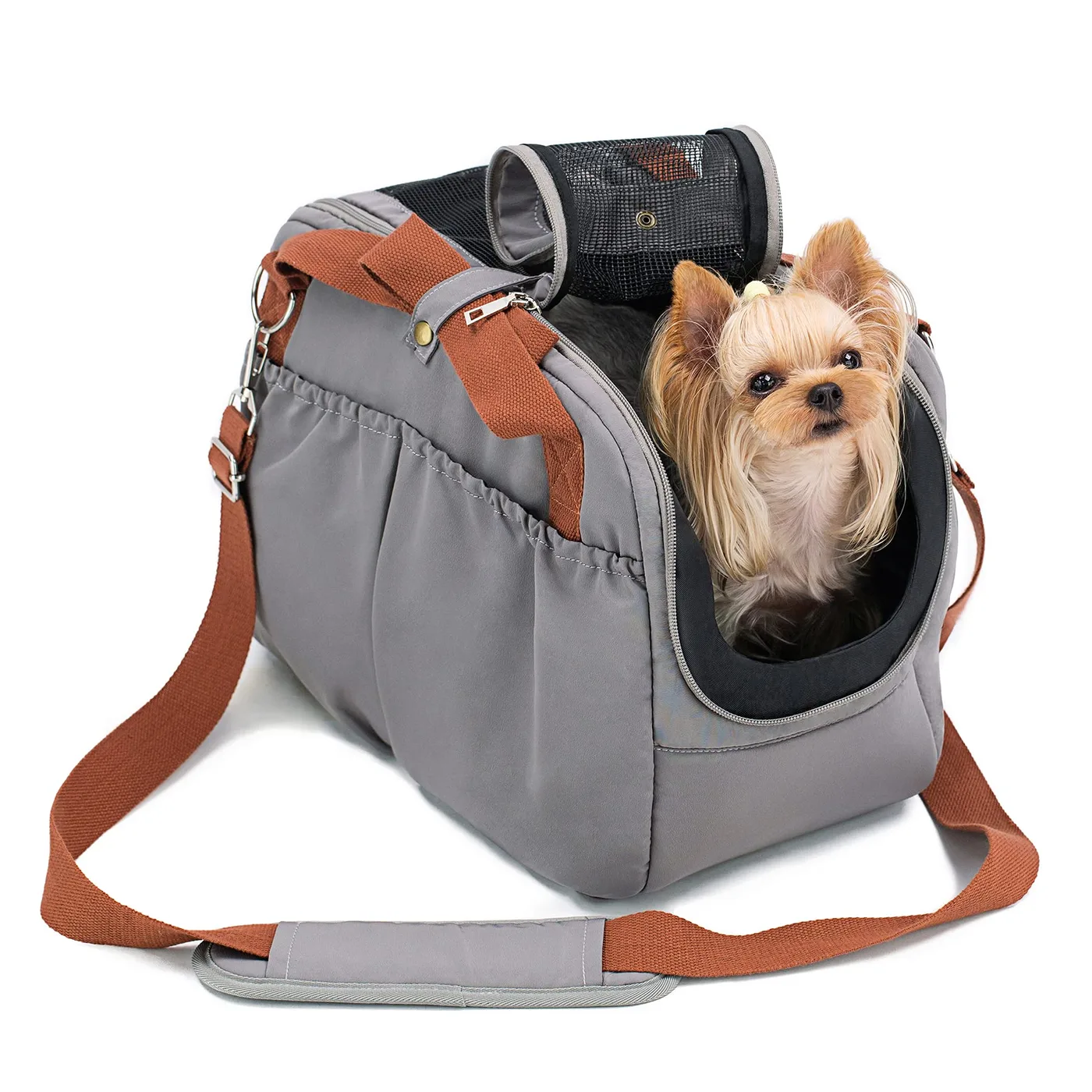
Close inspection is what separates premium from mid-range, and hardware is where close inspection happens. Every metal component should share one finish, and that finish should be specified with a durability standard rather than described in words. Plating that wears at the strap end within a season is the detail a premium customer photographs and posts.
Weight and sound matter as much as appearance. A zipper pull with real mass, a buckle that closes with a defined action and a magnetic closure that seats positively all communicate quality through senses other than sight. These are specification decisions, and they are often achievable by choosing a solid rather than a hollow component at modest additional cost.
| Detail | Upgrade from core | Cost impact | Perception gain | Production note |
|---|---|---|---|---|
| Matched metal finish | All components in one finish | Low to moderate | Very high | Specify plating standard in tech pack |
| Custom zipper pull | Moulded or cast branded pull | Tooling plus unit cost | High | Add 1-2 weeks at sampling |
| Contrast lining with repeat | Printed or jacquard lining | Fabric minimum applies | Very high | Order lining with the shell |
| Painted or turned edges | Edge paint instead of binding | Labour intensive | High | Requires skilled line; check adhesion |
| Embossed or debossed mark | Metal plate or heat-embossed patch | Tooling plus unit cost | High | Reusable tooling across seasons |
| Structured base | Framed or moulded board | Moderate to high | Moderate | Affects pack cube and freight |
| Rigid gift packaging | Rigid box, tissue, card | Moderate | Very high | Own MOQ and lead time |
Edge treatment is the quietest and most reliable signal of craft. A clean, even binding or a well-applied edge paint reads as care; a wavy seam, visible adhesive or a raw edge reads as cheap regardless of the material. Because edges appear everywhere on the product, they are also the area where production discipline shows most clearly, which is why alignment and finishing limits are tightened at this tier.
Symmetry deserves its own tolerance. Customers notice asymmetry on a centred product even when they cannot name it: a handle that sits two millimetres off centre, a pocket that is not equidistant from the seams, a mark that is not aligned to the panel. Stating symmetry limits for the visible elements is the cheapest way to protect a premium impression.
Stitch quality belongs in the same category. Consistent stitch pitch, no skipped stitches, no loose thread ends and correctly tensioned seams are the basics. They cost nothing extra in material and everything in attention, and they are exactly what AQL inspection at 2.5 is designed to protect.
Finally, one detail should be reserved for the premium tier and used nowhere else. A particular hardware finish, a lining repeat or a plate shape that appears only on the luxury pieces gives the tier something to own, and gives the customer a reason to pay for it.
The unboxing sequence as part of the product
At premium price the product experience begins with the carton, and the sequence should be designed as deliberately as the bag. The standard structure is four beats: an outer that protects and announces, an inner wrap that slows the opening, the product itself presented rather than dumped, and a card that explains what was just bought. Each beat has a specification and a cost.
The outer carton should be rigid enough to arrive undamaged and finished enough to photograph. A rigid board box with a single-colour print, a matte laminate and a simple closure does this well. Glossy full-colour printing is not required and often looks less premium than restraint; the material and the fit matter more than the ink coverage.
Inner wrapping is where a small spend earns disproportionate credit. Tissue, a dust bag in a natural or branded fabric, and a simple fold rather than a random stuff all signal care. The dust bag has a second life as storage, which keeps the brand in the customer's home long after the unboxing.
The card carries the substance. It should state the material content, the care method, the testing or certification behind any claim, and a short line about the design. Premium customers read this card, and a vague card is read as a vague promise.
The return experience is part of the unboxing design even though nobody plans for it. A premium product returned in its original packaging, with the dust bag and card intact, can be resold; one returned loose cannot. Including a simple note about keeping the packaging, and designing the box to survive a return shipment, protects the value of the inventory.
Practicalities still apply. Packaging has its own minimum order quantity and lead time, and it is frequently the item that delays a premium launch. Ordering packaging with the bulk order rather than after it, and holding a surplus for re-orders and replacements, avoids the expensive situation of finished bags waiting for boxes.
Specification ladder: where the premium budget goes
A premium programme has a budget that must be allocated deliberately. The largest share usually goes to materials: the shell, the lining and the hardware set account for most of the cost difference between a core and a premium item. Within that, hardware and lining tend to deliver more perceived value per dollar than the shell does.
The second allocation is finishing labour: edge treatment, additional pressing, alignment checks and packing care. This is labour rather than material, and it is the part of the premium proposition that cannot be bought by specifying a more expensive fabric. It is also the part most likely to be lost when a programme is cost-reduced later.
The third is packaging, which at premium tier typically represents a higher share of total cost than at any other tier. It is also the element most visible in user-generated content, which makes it partly a marketing expense. Budgeting it as marketing rather than as packaging usually produces better decisions.
Structure receives what remains, and that is appropriate. A framed base, a more rigid board or a reinforced handle add real durability and a small amount of perceived value. They also add weight and freight cube, so the structural spend should be justified by function rather than by positioning alone.
Serviceability belongs in the budget conversation too. A premium product is the one customers expect to repair rather than replace, which means zipper replacement, strap replacement and lining repair should be possible by design. Specifying accessible construction rather than fully sealed assembly is a small decision that materially extends the life of the product and the goodwill attached to it.
Reorder economics favour concentrating the premium specification in reusable elements. Custom hardware tooling, a lining print and a packaging design are one-time costs that serve multiple seasons; a unique fabric developed for one piece is not. Allocating the budget toward reusable assets is what makes a second premium season affordable.
Certifying and substantiating premium claims
Premium positioning invites scrutiny, and every claim attached to the product should be capable of surviving it. Claims fall into three groups: material content, safety and process. Material content covers fibre composition and any certification such as OEKO-TEX; safety covers substance restrictions and, where relevant, mechanical performance; process covers social and quality systems.
Documentation should be gathered before launch rather than after a challenge. Certificates have scope, expiry and an issuing body, and a certificate that does not cover the specific fabric or component is worse than no certificate. Our team keeps the certificate scope aligned with the material actually used, and confirms validity at the time of each production run.
Quality and social systems are part of the same picture. Partner facilities operate under ISO 9001 quality management with social compliance audited to BSCI, which supports the process claims a premium retailer will ask about. Stating these accurately, and only for what is audited, keeps the brand on solid ground.
Market-specific rules should be checked before the premium palette is frozen. Substance restrictions differ by destination, and a finish or dye that is acceptable in one market may require a warning in another. Checking the destination list at specification stage, rather than at shipment, is what prevents a premium launch from being held at import.
Care instructions are a frequently overlooked claim. If a premium material is described as easy care, the instructions must match what the material can actually survive, and the product should be tested accordingly. A premium bag that cannot be cleaned as described generates the angriest kind of return.
Finally, keep the evidence accessible. A simple folder per style containing the tech pack, the certificates, the test reports, the inspection report and the signed reference sample turns any future question into a lookup rather than an investigation. That folder is also what allows a discontinued premium piece to be revived accurately years later.
Production discipline at premium tier: tolerances and inspection
Premium products fail on small deviations. A mark placed three millimetres off, a lining seam that does not align with the shell seam, a shade variation between panels: each is minor in isolation and fatal to the impression collectively. Managing them requires stated tolerances rather than general instructions to be careful.
Alignment tolerance should be written into the tech pack for the elements where the eye notices it: the mark, the panel seams, the zipper line and the binding. A stated tolerance gives the line a pass or fail and removes the judgement call that otherwise causes disputes between brand and production.
Shade matching between components is the second tolerance. Shell, webbing, zipper tape and lining should be approved together as a set, under a single light source, and recorded as a signed reference. Approving them separately is how a premium product ends up with three slightly different blacks.
Inspection remains at AQL 2.5, which is the standard applied across every tier, but the defect classification at premium tier should treat appearance defects more strictly. A scratch on hardware or a mark on the lining that would pass at entry tier should be a defined defect here, because the customer's expectation is different.
Packing and handling deserve premium-specific instructions. A finished luxury piece can be damaged by the packing operation itself: hardware scuffed against hardware, lint transferred from a packing surface, dust bag inserted carelessly. A short packing standard with gloves, separators and a defined sequence is one of the highest-return documents in a premium programme.
Sampling discipline follows the same logic. The 6-10 working day window holds only if materials and finishes are approved before the build; at premium tier that means approving lab dips, hardware plating samples and lining strike-offs in advance. Building a premium sample with open questions is the most expensive way to spend a week.
Pricing, positioning and the halo effect
A premium piece should sit far enough above the core range to be clearly a different tier and close enough to remain part of the same brand. A retail multiple of roughly two to three times the core item is the range most pet brands can defend, provided the difference is visible in material, hardware and packaging. Beyond that, the product needs a story strong enough to carry it.
The commercial case for the tier is rarely its own margin. The halo effect is the point: a beautiful premium piece raises the perceived value of everything else in the range, makes the core item look reasonably priced, and gives press and retail partners something to feature. Measured only on its own units, the tier will always look marginal.
Channel selection follows the positioning. Premium pieces perform best in brand-owned channels, independent boutiques and department environments where the product can be touched. They perform poorly in channels where the shopping experience is a price-sorted list, because the tier's advantages are tactile and cannot be conveyed in a thumbnail.
Volume expectations should be modest and planned that way. A premium piece sells fewer units at higher margin and slower velocity, which means deeper inventory risk per SKU. Buying to a conservative forecast and holding material for a fast re-order is usually safer than buying heavily and discounting later.
Discount discipline protects the halo more than any design decision. A premium piece discounted heavily in its first season tells every customer who paid full price that the price was negotiable, and it resets expectations for the next launch. Controlled outlet channels and end-of-life timing preserve the tier's value far better than frequent promotion.
Over time the tier should graduate treatments downward. A lining, a hardware finish or a colour introduced at premium can appear in the core range two seasons later, which keeps the core range improving without new development cost. That downward flow is one of the strongest arguments for maintaining a premium tier at all.
Five signals that a premium programme is working
Five signals: customers describe the product using words from the brief, returns cite fit rather than quality, press or retail partners feature the piece without being asked, the core range sells better after the premium launch, and re-orders arrive without a discount request. Fewer than three means the tier is costing more than it is earning.
Production capability
- SGS-verified production space of 4,950 m², 149 machines, 7 assembly lines
- Pet carrier and pet bag output since 2014 from a 137-person team
- 200,000 units shipped monthly under BSCI and ISO 9001 systems
People Also Ask
What makes a product feel luxurious?
Weight, drape and surface temperature in the hand, one matched hardware finish, clean edges under close inspection and packaging that prepares the customer for the price.
How do you design a luxury product line?
Decide which details the tier owns, allocate budget to hardware, lining and packaging before structure, and set tighter alignment and shade tolerances than the core range.
Is premium packaging worth the extra cost?
At premium tier, yes. It is the most photographed element of the product and functions partly as marketing spend.
What is the halo effect in product pricing?
A premium piece raises the perceived value of the whole range, making the core item look reasonably priced and giving retail partners something to feature.
How much should a luxury version cost?
Commonly two to three times the core retail price, provided the difference is visible in material, hardware and packaging rather than only in marketing language.
Do luxury products need better quality control?
The same AQL 2.5 inspection applies, but appearance defects are classified more strictly because premium customers inspect more closely and complain more publicly.
Can a small brand launch a premium line?
Yes at MOQ 500 pieces per colourway, provided the premium spend concentrates on reusable assets such as custom hardware and packaging rather than on one-off fabrics.
Frequently Asked Questions
What is the MOQ for a premium luxury pet carrier?
MOQ is 500 pieces per colourway. Premium specification raises unit cost and finishing tolerance but does not change the minimum run.
How much more does a premium carrier cost to produce?
Unit cost typically indexes at 240-320 against an entry tier at 100, with most of the difference in materials, hardware, finishing labour and packaging.
Which upgrade delivers the most perceived value?
Matched hardware finish and a contrast lining usually deliver more perceived value per dollar than a more expensive shell fabric.
Do premium materials need certification?
Any claim should be substantiated. Fabric safety certifications and independent test reports are part of the premium promise and should be in hand before launch.
How long does a premium collection take to develop?
Sampling takes 6-10 working days once materials and finishes are approved, and bulk takes 35-50 days. Custom hardware and packaging add their own lead time.
Can custom hardware be developed for a single piece?
Yes, and the tooling is reusable across seasons and across the series, which is why custom hardware is usually a better investment than a unique fabric.
What inspection standard applies at premium tier?
AQL 2.5 final inspection, with appearance defects classified more strictly than at entry tier because customer expectations are higher.
How do you keep shade consistent across components?
Approve shell, webbing, zipper tape and lining together as a set under one light source, and hold the approved set as a signed reference.
Is rigid gift packaging worth the cost?
Usually yes at this tier. It is the element most visible in user-generated content and should be budgeted partly as marketing rather than as packaging.
Can premium treatments move into the core range later?
Yes. Graduating a lining, hardware finish or colour into the core range two seasons later is one of the strongest arguments for maintaining a premium tier.
How should a premium piece be priced?
A retail multiple of roughly two to three times the core item is typically defensible, provided the difference is visible in material, hardware and packaging.
Where do premium products sell best?
Brand-owned channels, independent boutiques and department environments where the product can be touched, rather than price-sorted marketplaces.
How much inventory should a premium launch carry?
A conservative forecast plus reserved material for a fast re-order is usually safer than a deep buy followed by discounting.
Talk to QUANZHOU JUNYUAN BAGS about a pet carrier program: MOQ 500 pieces per colourway, samples in 6-10 working days, bulk production in 35-50 days under AQL 2.5 inspection.
Get a free quote Request a sample