420D Nylon vs 600D Polyester: Which Is Better
Choose 600D polyester unless your design is built on weight, sheen or deep saturated colour. A PU-coated 600D polyester costs roughly 25-40% less per metre, accepts dye-sublimation cleanly, resists ultraviolet yellowing better, and its dye lots are easier to repeat. Choose 420D nylon ripstop when packability and tear resistance per gram matter more: it is typically 25-35% lighter and stronger at equal weight, but it resists sublimation and demands heat-transfer or patch decoration. Both are stocked at MOQ 500 per colourway.
Executive Summary
This is the most frequently asked material question we field from brands building a first collection, and the honest answer is that neither fibre is superior in the abstract — each is superior for a particular design language. Nylon is the performance story: lighter for the same strength, smoother in the hand, richer in lustre, and it takes dye to deeper saturated shades. Polyester is the commercial story: cheaper, more colour-stable outdoors, sublimation-friendly, and available in a far wider range of stock constructions.
Below we compare them across weight, tear and abrasion behaviour, dyeing routes, print compatibility, water and ultraviolet performance, then translate all of it into concrete recommendations for entry, core and signature tiers. We also cover what each fibre means for your sampling calendar and for reorders in year three, because material decisions made for one season tend to outlive the season. Terms are identical for both: MOQ 500 units per colourway, pre-production samples in 6-10 working days, bulk production in 35-50 days, and final random inspection to AQL 2.5. Our production team develops both through SGS-verified partner facilities, with colour and physical testing available to documented standard methods.
Private label pet bags and carrier programmes share one packaging standard here, so a mixed order does not add a second carton size or handling charge.
The Decision, Framed by Design Intent Rather Than Spec
Material comparisons usually go wrong because they begin with numbers instead of intent. Before comparing grammage figures, ask what the product has to do visually and commercially. If your catalogue photographs products folded flat into mailer boxes, and your brand voice is technical — words like lightweight, packable, performance — nylon supports that story structurally. If your catalogue relies on full-panel printed graphics, seasonal collections with many colourways, and tight entry pricing, polyester is almost always the correct base.
Consider who carries the product and where. A sling carrier worn against the body for long periods rewards every gram removed, and here nylon's advantage compounds across panels, webbing and lining. A structured tote carried occasionally from car to appointment does not reward that saving nearly as much as it rewards a lower unit cost and a more forgiving print surface.
Consider also how many colourways you plan. Polyester's supply base is broader and its stock shade cards deeper, so running eight colours is straightforward and economical. Nylon in eight custom colours means eight dye lots with their own minimums, more lab dips, and greater risk that the third reorder no longer matches the first campaign photographs. That is a real brand cost, even though it never appears on a material quote.
- Nylon fits: technical positioning, ultralight claims, deep saturated palettes, folded retail packaging, patch-based identity
- Polyester fits: printed artwork, many colourways, outdoor or Sun Belt distribution, promotional price points, long reorder horizons
- Either fails when: the brand asks for a property the fibre cannot give, most often sublimation on nylon or ultralight weight on heavy polyester
Finally, ask whether your team can live with the fibre's care characteristics. Neither fibre should be machine-dried hot, but nylon is more sensitive to heat creasing and polyester more prone to retaining oily stains. Owners will ignore both rules; materials that fail gracefully matter more than materials with the best theoretical specification.
Fibre Chemistry in Plain Language
Nylon is a polyamide; polyester in this category is polyethylene terephthalate. Both are melt-spun synthetic filaments, and both are extraordinarily consistent compared with natural fibres. The differences practitioners care about come from four properties: density, moisture regain, tensile behaviour and dye affinity.
Nylon absorbs more atmospheric moisture than polyester — several percent by weight against well under one percent. That makes it slightly more pliable in humid conditions, marginally slower to dry, and a touch more variable in dimension across a wet-dry cycle. In most pet carrier applications none of this is functionally significant, but it does affect how dye lots behave and how a product measurements held to tight tolerance will behave after shipping in humid conditions.
Tensile strength per unit weight favours nylon. A 420D nylon ripstop can match or beat the tear resistance of considerably heavier polyester constructions, which is the entire basis of the lightweight argument. The ripstop grid — heavier reinforcement yarns spaced every few millimetres — is what converts that fibre advantage into real tear-stopping behaviour, preventing a small nick from running across a panel.
Dye affinity is where the visible difference begins. Nylon takes acid dyes readily and produces deep, saturated, slightly luminous colour, especially in blacks, navies and jewel tones. Polyester takes disperse dyes at high temperature and produces excellent, very stable colour but often with a marginally flatter appearance. Neither is deficient; they simply render palettes differently, which matters a great deal if your brand guidelines were authored on screen.
One practical implication concerns matching existing product ranges. Adding a nylon piece to a polyester-dominated collection — or the reverse — almost always means the same Pantone reference reads differently between them, because the surface structure of the fibre alters perceived lightness. Approving those differences physically, panel to panel, is faster than trying to argue them away with a colourimeter reading alone.
Weight, Packability and What Grams Become
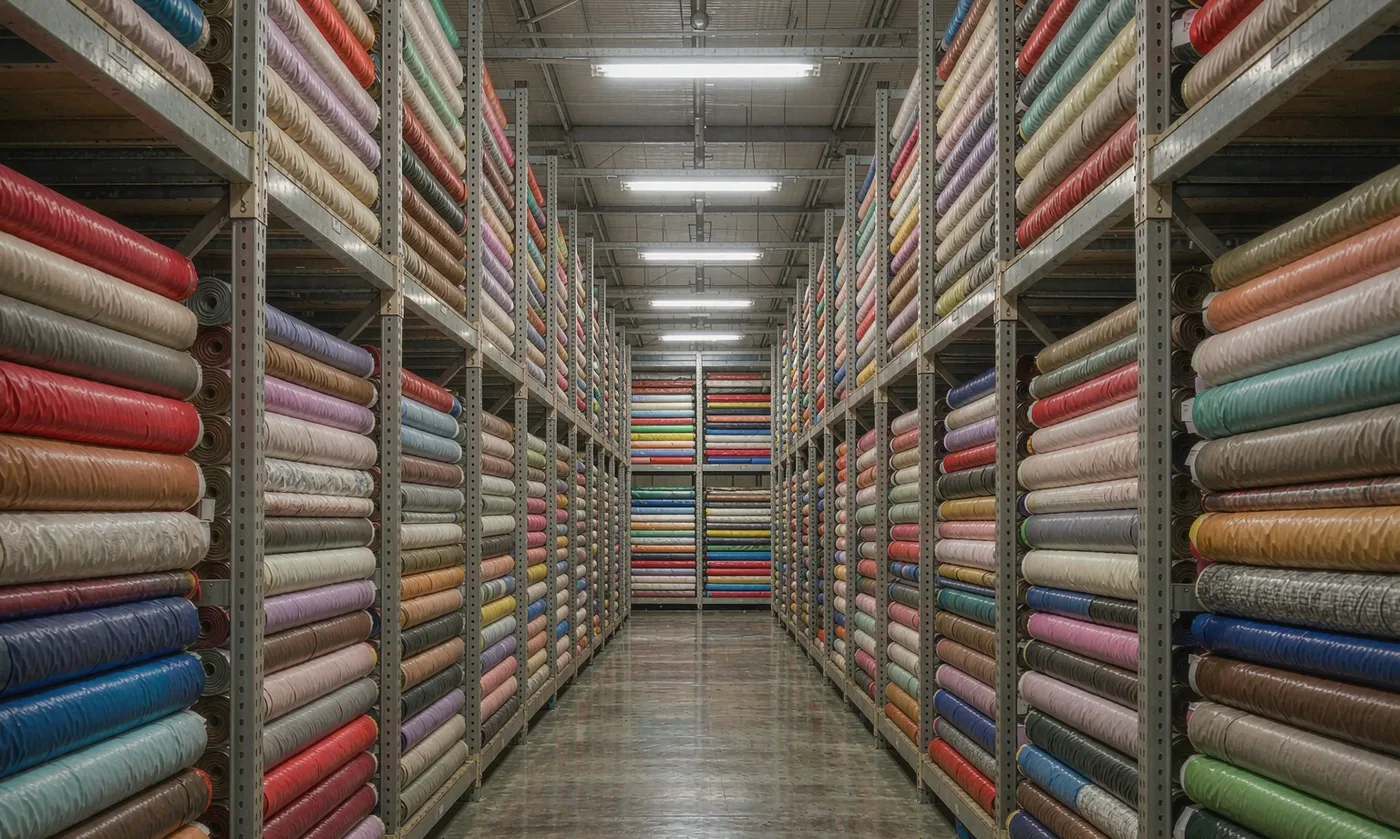
Lightweight claims are marketing until somebody actually carries the product, at which point they become reviews. A typical soft carrier consumes roughly 1.2 linear metres of shell fabric; at a realistic width, moving from a coated 600D polyester at around 260 GSM to a 420D nylon ripstop at roughly 170 GSM saves approximately 110 grams per unit before linings and hardware. That sounds small, but it is measurable in the hand and it is 110 grams the customer carries every single time.
| Property | 420D nylon ripstop | 600D polyester, PU coated | Practical consequence |
|---|---|---|---|
| Finished grammage | 150-200 GSM | 240-300 GSM | Noticeable carried weight difference on every use |
| Tear strength | 35-55 N | 25-40 N | Claw nicks are less likely to propagate into failures |
| Abrasion, Martindale | 20,000-30,000 cycles | 15,000-25,000 cycles | Nylon holds acceptable cosmetic life at lighter weight |
| Moisture regain | 3-4% | 0.4% or less | Polyester dries faster and holds dimension better |
| Sublimation print | Poor without special coating | Excellent | Decides whether full-colour artwork is possible at all |
| Ultraviolet stability | Yellows sooner unless treated | Better natural resistance | Matters for outdoor positioning and sunny climates |
| Cost index | 1.3-1.5 | 1.0 | Polyester protects entry-tier pricing |
Packability is the second consequence and arguably the more commercially relevant one. Lower mass usually accompanies greater compressibility, so a nylon shell folds into a smaller retail carton and reduces parcel shipping dimensions for e-commerce brands. That carton saving often partially offsets the higher fabric price, and it is the kind of second-order effect teams miss when comparing fabric quotes line by line.
There is a structural qualifier. Lighter fabric does not hold shape by itself, so lightweight nylon programmes almost always need internal stiffening at the base and often at the window surrounds to keep the product from looking collapsed on a shelf. Budget for that framing; otherwise the very weight saving you pursued reads visually as flimsiness, which is the opposite of the intended message.
Colour: Saturation, Depth and Repeatability
Colour is where designers fall in love with nylon and operations teams learn to be careful. Because nylon accepts acid dyes so readily, it renders saturated shades with a depth that polyester struggles to match, and it produces blacks that stay black rather than drifting grey. If your identity depends on a deep signature shade, nylon may be the only way to hit it convincingly.
Repeatability is the counterweight. Nylon lots vary more between dyeings, and process conditions during finishing influence the final shade noticeably. Polyester — particularly solution-dyed polyester, where pigment is introduced before the filament is extruded — delivers exceptional consistency across years of production and outstanding light fastness. For a signature colourway intended to anchor a collection for several seasons, solution-dyed polyester is often the safer foundation even accepting slightly less depth.
The standard practice is a physical approval loop: a laboratory dip produced to your reference, evaluated under controlled lighting, revised, then confirmed before bulk dyeing begins. This adds roughly five working days to a sampling calendar and it is not optional if two panels made from different materials are expected to agree. Relying on a printed Pantone chip alone is how mismatched panels reach bulk.
Metamerism deserves a mention here, since it catches even experienced teams. Some shade combinations match under store lighting and separate badly under daylight or warm domestic light, particularly where two different fibres are involved. Evaluating approvals under two or three light sources is a five-minute safeguard that prevents a very visible failure mode from reaching retail.
Fastness claims should always reference a specific procedure. Colour fastness to rubbing, to light and to laundering are distinct properties tested by distinct methods, published and maintained by bodies such as the American Association of Textile Chemists and Colorists. Asking which method number was used converts a vague assurance into a verifiable requirement, and it gives you grounds to reject a lot rather than argue about it later.
Print Compatibility: The Hard Constraint
Of everything in this comparison, decoration compatibility is the least negotiable. Dye-sublimation — the technique that produces photographic, edge-to-edge, permanently bonded colour — requires polyester. It does not work reliably on standard nylon at commercial production temperatures, because the dye sublimation window and nylon's thermal behaviour do not align, and attempts typically produce fugitive colour that migrates or fades.
- Sublimation: polyester only, and the reason most graphic-led private-label programmes run 600D
- Heat-transfer film: works on both, though adhesion on silicone-finished nylon requires testing
- Screen printing: works on both; nylon often needs a specific ink system and lower cure temperature
- Embroidery: both acceptable; loose ripstop requires a stabiliser to avoid puckering
- Woven label, rubber patch, metal badge: unrestricted by fibre choice
This single constraint explains most of the market's distribution. Brands selling personality through illustration, patterns, seasonal prints or licensed artwork overwhelmingly specify polyester. Brands selling restraint — a tonal wordmark on a fine technical shell — can use nylon freely, and often do, because their identity is carried by form rather than by surface graphics.
There is a workaround worth knowing: specially coated nylon designed to accept sublimation exists, but it carries a premium and often slightly dulls the lustre that made nylon attractive in the first place. In our experience, when a client asks for sublimated nylon, what they actually want is either printed polyester or nylon with a transfer — both of which are cheaper and more repeatable. See our note on full-colour dye-sublimation for how the process behaves across constructions.
Field Durability: Tears, Scuffs and Claws
Durability in this category has a specific profile that differs from luggage or outdoor gear. The dominant failure mode is not catastrophic overload; it is accumulated cosmetic damage plus puncture-style damage from claws. Claws create localised high stress rather than distributed load, which means tear initiation and tear propagation matter far more than ultimate tensile strength.
Nylon's advantage here is genuine. Higher strength per unit weight, combined with a ripstop grid that arrests propagation, means a claw nick in 420D nylon is less likely to become a running tear than one in a comparable polyester. For owners of large or anxious animals, that difference is real, even though it is invisible in a showroom.
Polyester's advantage is different: it resists ultraviolet degradation better and retains a more consistent appearance under sun exposure. A carrier used repeatedly on a patio or left in a vehicle will show the difference over a season. Polyester also tends to resist oily soiling marginally better, which counts for something given how often these products meet pet hair and skin oils.
Practical recommendation: if your product is a larger carrier for heavier animals, prioritise tear behaviour and consider nylon on the interior panels where claws act. If your product is a small-breed carry bag used briefly and predominantly indoors, prioritise appearance retention and cost, and specify polyester. Many of the strongest programmes combine them rather than choosing.
One further test is worth requesting during development regardless of fibre: a simple claw-snag assessment on the actual lining and window materials, since those are the surfaces animals contact rather than the shell. Martindale figures on the outer fabric tell you almost nothing about whether the mesh will survive a determined cat, and replacing a window after launch costs far more than specifying the right mesh construction at sample stage.
Water, Weather and Sun: Both Need Specification
Neither fibre is waterproof without help. Water resistance comes from coating and construction, not from the base polymer, so any comparison of these two should treat finishing as a separate decision with its own budget line. A PU coating at a defined application weight gives predictable water column performance on either fibre; a durable water-repellent topical finish adds temporary beading that wears off with abrasion and cleaning.
Where the base fibre does matter is weather. Nylon absorbs more moisture, so it takes longer to dry after soaking and changes dimension slightly when wet — relevant if your construction includes tight tolerances, laminated panels or bonded seams. Polyester sheds water faster and holds its shape more predictably through wet-dry cycles, which is why it dominates outdoor categories despite nylon's strength advantage.
Ultraviolet exposure is the sharper distinction. Untreated nylon yellows and loses strength under prolonged sun exposure measurably faster than polyester. Both can be protected with UV inhibitors and both benefit from solution-dyed constructions where pigment sits inside the filament rather than only on its surface, but polyester starts from a better place and costs less to reach an acceptable result.
For brands distributing into Sun Belt or Southern Hemisphere markets specifically, or for anything positioned around hiking, beaches and patios, put a light fastness requirement on the development sheet and ask for results against a documented method rather than accepting good colour stability as a description.
Storage conditions are the other half of this story and are far less discussed. Containers crossing equatorial routes can reach temperatures that soften coatings and accelerate any chemical finish migration, so brands shipping long distances should specify higher coating stability than strictly necessary for use. It costs very little and prevents the arrival defects that are impossible to attribute after the fact.
Cost, Lead Time and Year-Three Supply Risk
Nylon carries a material premium, typically 30-50% above comparable polyester depending on grade and count, and the gap widens for speciality constructions such as silicone-finished ripstop. That premium buys real performance, but it has to be paid for either through a higher retail price or through savings elsewhere — most often in reduced freight from lower weight, which recovers part but rarely all of it.
Lead time differences are modest. Both fibres are stocked by our partner mills in common counts, so a pre-production sample in 6-10 working days holds for either, and bulk production of 35-50 days applies equally. Where time does diverge is colour development: unusual nylon shades sometimes require an extra round of laboratory dips, adding a few days and occasionally a small fee.
Supply risk deserves more attention than it usually receives. Polyester's supply base is broad, so a price shock or quality problem at one source is generally absorbed. Nylon is produced by fewer mills with more concentration, particularly in technical grades, meaning disruption propagates further. If your programme depends on a single unusual nylon, identify a second source during development rather than after a shortage.
Because chemical compliance questions recur across this comparison, many retailers now ask for documented proof rather than declarations. Textile articles assessed against the criteria maintained by OEKO-TEX answer a large part of that request in one report, and arranging it during sampling is considerably cheaper than retrofitting it later when a buyer requests documentation with a submission deadline attached.
Finally, plan for consistency across years. A construction can be sourced today and disappear in eighteen months when a mill rationalises its line. Confirming continuity with the mill at specification stage, and recording the full stack down to coating weight in writing, is the practical defence.
Where Each Fibre Belongs Across a Tiered Collection
Rather than declaring a winner, most effective collections allocate the two fibres deliberately. Nylon earns its premium at the top of the ladder and in specific functional zones; polyester carries volume, breadth of colour and price accessibility. The result is a range that reads coherent while being costed honestly.
- Entry tier: 600D polyester throughout, two or three colourways, screen or sublimation identity, promotional pricing protected
- Core tier: polyester body with nylon ripstop lining in high-claw zones, four colourways, printed plus patch identity
- Signature tier: 420D silicone-finished nylon shell, tonal debossed patch, limited seasonal palette, highest price point
The framework to apply is simple: spend material budget where the customer can feel it, and save it where they cannot. An interior panel nobody sees should be the least expensive acceptable material; the surface that meets the hand and the camera should justify every cent. Most first collections get this inverted, spending on visible decoration and economising on structure.
Sequencing matters just as much as allocation. Launch the core tier in polyester, prove sell-through with real return data, then introduce the nylon signature piece once actual margin and price elasticity are known. Doing it the other way round — leading with the expensive material — is how brands discover that customers were buying the accessible version all along, an expensive finding once tooling and photography are already committed.
Finally, write the allocation into a one-page material strategy document shared with everyone involved in the programme. Whenever a new colourway or size is proposed, that page answers whether it follows nylon logic or polyester logic, and decisions stop being re-litigated season after season.
Whatever allocation you choose, hold the whole thing together with a shared colour story. Two fibres rendering the same signature shade slightly differently is not a defect if it is anticipated, approved physically and documented. It becomes a defect the moment it is discovered on the production line. See our wider fabric options guide for how these fibres sit alongside the rest of the palette.
Order and quality terms
- MOQ 500 pieces per colourway; samples in 6-10 working days
- Bulk production 35-50 days after approval; AQL 2.5 inspection standard
- T/T 30/70 terms, FOB Xiamen, full document set per shipment
People Also Ask
Is nylon stronger than polyester for pet carriers?
Per unit weight, yes. Nylon has higher tensile strength and better tear resistance at equal mass, which is why a 420D nylon ripstop often outperforms heavier polyester in tear propagation. Polyester wins on ultraviolet stability and dimensional consistency rather than raw strength.
Which takes colour better, nylon or polyester?
Nylon produces deeper, more saturated shades and truer blacks because of its dye affinity. Polyester produces excellent but slightly flatter colour and repeats more consistently across lots. Solution-dyed polyester offers the best light fastness of all three options.
Can you sublimate print on nylon?
Not reliably at commercial temperatures. Dye-sublimation requires polyester substrate, so nylon programmes must use heat-transfer film, screen printing, embroidery or attached patches for identity instead of full-colour sublimated artwork.
Which fabric dries faster if it gets wet?
Polyester. Its moisture regain is under 1% versus roughly 3-4% for nylon, so it absorbs far less water, dries faster and holds dimensions better through wet-dry cycles. This matters for construction with tight tolerances or bonded seams.
Why does nylon cost more?
Nylon raw polymer is more expensive and fewer mills produce technical grades, so supply is more concentrated. Expect a 30-50% premium over comparable polyester, partly recoverable through lower freight and smaller cartons from reduced weight.
Which is better for dark colourways?
Nylon renders deep blacks and jewel tones more richly, though it holds dust and hair visibly on dark surfaces just as polyester does. Polyester in dark shades resists ultraviolet fading better, which usually makes it the safer choice for outdoor-positioned products.
Do both fabrics pass the same inspection standard?
Yes. Whichever fibre you select, finished goods are inspected to AQL 2.5 for major defects before shipment, with shading between panels, coating faults and seam quality evaluated against agreed reference samples.
Frequently Asked Questions
What is the minimum order quantity per colourway?
MOQ is 500 units per colourway for both 420D nylon and 600D polyester. Both constructions are stocked by our partner mills in common counts, so ordering either does not change the commercial threshold you need to reach.
How long do samples take for each material?
Pre-production samples are built in 6-10 working days for both fibres. If a custom laboratory dip is needed for a signature shade, add roughly five working days for each dip round, since physical approval under controlled lighting precedes bulk dyeing.
What is the bulk production lead time?
Bulk production runs 35-50 days following sample approval and deposit. Standard colours in either fibre usually complete at the shorter end; custom-dyed nylon occasionally requires an additional week if a second laboratory dip is requested.
Can both fibres be tested to published standards?
Yes. We arrange third-party testing for abrasion, tear strength, tensile strength and colour fastness using documented methods, so results are reproducible and comparable if you later move production or add a second source.
Is either fibre recycled available?
Both are. Recycled polyester from post-consumer bottles is widely available at modest premium and performs close to virgin material. Recycled nylon, often from recovered fishing nets, is available but commands a higher premium and a longer colour development window.
Which resists pet odours better?
Odour retention is governed mostly by the coating and how cleanable a surface is rather than by base fibre. Polyester's lower moisture absorption gives it a slight advantage, but specifying a wipe-clean interior laminate matters far more than choosing between the two.
Can I use both fibres in one product?
Yes, and it is common. A polyester exterior for print fidelity paired with nylon ripstop interior panels delivers both benefits. The two must be colour-matched in the same dye lot and physically approved together before production.
Does nylon crease during shipping?
It can. Nylon is more sensitive to heat creasing, particularly in warm container conditions. We recommend loose rolling or flat packing with internal tissue and verifying pack-out with a test shipment during development.
Which is better for embroidery?
600D polyester generally supports embroidery more easily because it is more stable under needle penetration. Lightweight nylon ripstop can pucker under dense stitch fills and typically requires a cutaway stabiliser, which adds cost and stiffness at the logo area.
How should I set up a colour standard?
Supply a physical reference rather than a screen value, approve a laboratory dip under controlled lighting, and record the approved dip as the production reference. Repeating those physical references season to season is what keeps collections looking consistent across years.
Is a water-repellent finish necessary?
For most programmes a PU or PVC coating is more durable than a topical finish. Water-repellent sprays wear off with abrasion and cleaning within months, whereas a structural coating lasts for the practical life of the product.
Are there chemical restrictions to consider?
Yes, particularly for coatings and finishes used on either fibre. Declaration requirements vary by destination market, and our quotations include compliant chemistry by default rather than as a later upgrade, which avoids re-testing costs.
What happens if my construction is discontinued?
We identify an alternate mill and submit a replacement for physical approval before production. Holding a written specification down to coating weight and construction detail is what makes substitution practical rather than starting development again.
Do you support mixed-material sampling in one round?
Yes. Because the pattern and tooling are identical, building the same design in both fibres costs no additional calendar time and is the most reliable way to settle what is otherwise a subjective decision.
Talk to QUANZHOU JUNYUAN BAGS about a pet carrier program: MOQ 500 pieces per colourway, samples in 6-10 working days, bulk production in 35-50 days under AQL 2.5 inspection.
Get a free quote Request a sample