PVC Coated vs PU Coated: Waterproof Comparison
Choose PU coating for hand feel and cold-weather flexibility, and PVC backing for maximum waterproofness at the lowest cost. A commercial PU finish typically reaches a 1,000-1,500 mm water column and stays supple to roughly -20°C; a PVC backing reaches 2,000-3,000 mm or higher, costs about 20% less per metre, but stiffens noticeably in cold conditions and adds 10-15% weight. Most private-label programmes specify PU on visible panels and phthalate-free PVC at the base only. Minimums run at MOQ 500 per colourway.
Executive Summary
Coating is the invisible half of a shell fabric. Two fabrics with identical denier and identical weave can perform completely differently once finish is applied, and most of the properties customers actually notice — water shedding, wipe-clean behaviour, stiffness, how loudly the material rustles, whether the surface goes chalky after a season — originate in the coating rather than the cloth beneath it.
This guide separates the two dominant chemistries. Polyurethane coatings are thinner, softer, quieter and perform better across temperature extremes; polyvinyl chloride backings are thicker, cheaper, more impermeable and more rigid. We examine water column figures, cold-flex behaviour, hydrolysis resistance, delamination risk, regulatory exposure around plasticisers, and what each does to unit cost, carton weight and perceived quality. We close with a recommended hybrid placement and the tests worth requesting before approval. Every option runs on the same calendar: MOQ 500 units per colourway, pre-production samples in 6-10 working days, bulk at 35-50 days, and final random inspection to AQL 2.5. Development happens with our production team at SGS-verified partner facilities operating under BSCI and ISO 9001 process frameworks.
A bespoke pet carrier brief is built from a tech pack: dimensions, fabric, hardware finish and the test standard the finished bag has to meet.
What a Coating Actually Is and Where It Sits
A coating is a polymer layer applied to one face of a woven cloth, most often the reverse, so the visible face remains textile while the hidden side carries the functional load. It is applied either by knife-over-roll coating, where a blade meters polymer onto the fabric, or by lamination, where a pre-formed film is bonded to the cloth. The distinction matters: coating penetrates and flexes with the weave, while lamination sits on top and is more prone to edge peel at seams.
Understanding which process you are buying prevents confusion later. A "PU-coated 600D" could be a genuine applied coating or a PU film laminate, and the two behave differently at seam fold points and in long-term flex testing. We always state the application method explicitly on development sheets so that a reorder cannot quietly substitute one for the other, because that substitution is invisible until the product starts returning.
Coating weight is measured in grams per square metre applied, and typical figures run from around 20 GSM for a light water-resistant treatment to well over 100 GSM for heavy-duty waterproof backings. Application weight generally correlates with performance and always correlates with stiffness, so the specification process is essentially a search for the minimum weight that satisfies the functional requirement.
- Light treatment, 15-30 GSM: water resistance rather than proofing; preserves almost all fabric hand
- Standard coating, 40-70 GSM: the everyday commercial specification for carriers; wipe-clean and shower-proof
- Heavy backing, 80-120 GSM: genuine waterproofing; noticeably stiffer, suitable for base panels
- Film laminate: highest impermeability and a technical aesthetic; watch edge peel at seams
The single most useful habit for brands is to treat coating as a line item on the specification rather than a property implied by the fabric name. Doing so makes quoting comparable between suppliers and prevents the slow drift toward lower-cost finishes that erodes product quality over repeated seasons without anyone formally deciding it.
There is also a design-side argument for paying attention here. Coatings change how light behaves on a surface: the same base cloth reads matte and absorbent uncoated, slightly deeper and more saturated with a light PU application, and faintly glossy with a heavy PVC backing. Your palette was presumably chosen in a specific finish, so approving colour after coating — never before — is what keeps identity consistent between the first sample and the tenth reorder.
Water Column: How Much Resistance Do You Need?
Water resistance is reported as hydrostatic head, expressed in millimetres: the height of a water column a fabric can support before the first droplets penetrate. It is a genuinely useful figure precisely because it is standardised, but like any number it invites over-specification. A rain jacket needs several thousand millimetres. A pet carrier does not.
Consider what the product actually encounters. A damp floor, a spilled water bowl, condensation in a vehicle, a light shower between car and building, and periodic wipe-down cleaning. None of these impose sustained hydrostatic pressure. Even a moderately coated fabric handles all of them comfortably, which means specifying a 5,000 mm material is paying for performance that will never be exercised — and paying for it in stiffness that customers will notice immediately.
| Specification | PU coating | PVC backing | Recommended use in a carrier programme |
|---|---|---|---|
| Application weight | 30-70 GSM typical | 60-120 GSM typical | Lighter where flexibility matters, heavier at the base |
| Hydrostatic head | 1,000-1,500 mm | 2,000-3,000 mm or higher | Either is more than adequate for normal pet use |
| Cold flexibility | Remains supple near -20°C | Stiffens below roughly 5°C | Critical for winter markets and cold-climate storage |
| Hand feel | Soft, quiet, textile-like | Firmer, plasticky, noisier | PU supports premium positioning and quieter handling |
| Stain resistance | Good | Very good | PVC slightly better against oily soiling |
| Weight penalty | Low | 10-15% higher | Matters at parcel weight breakpoints |
| Cost index | 1.0 | 0.8-0.9 | PVC saves a little; often spent again elsewhere |
| Regulatory watch points | Solvent residues | Plasticisers, heavy metals | Always specify phthalate-free and request declarations |
A practical target: around 1,000 mm for general panels and higher at the base, where standing water and rough surfaces concentrate. Anything above that is insurance you are unlikely to claim. We would rather see clients spend the difference on a better interior laminate, which addresses the cleaning problem owners actually complain about.
Hand Feel: The Property That Decides Repurchase
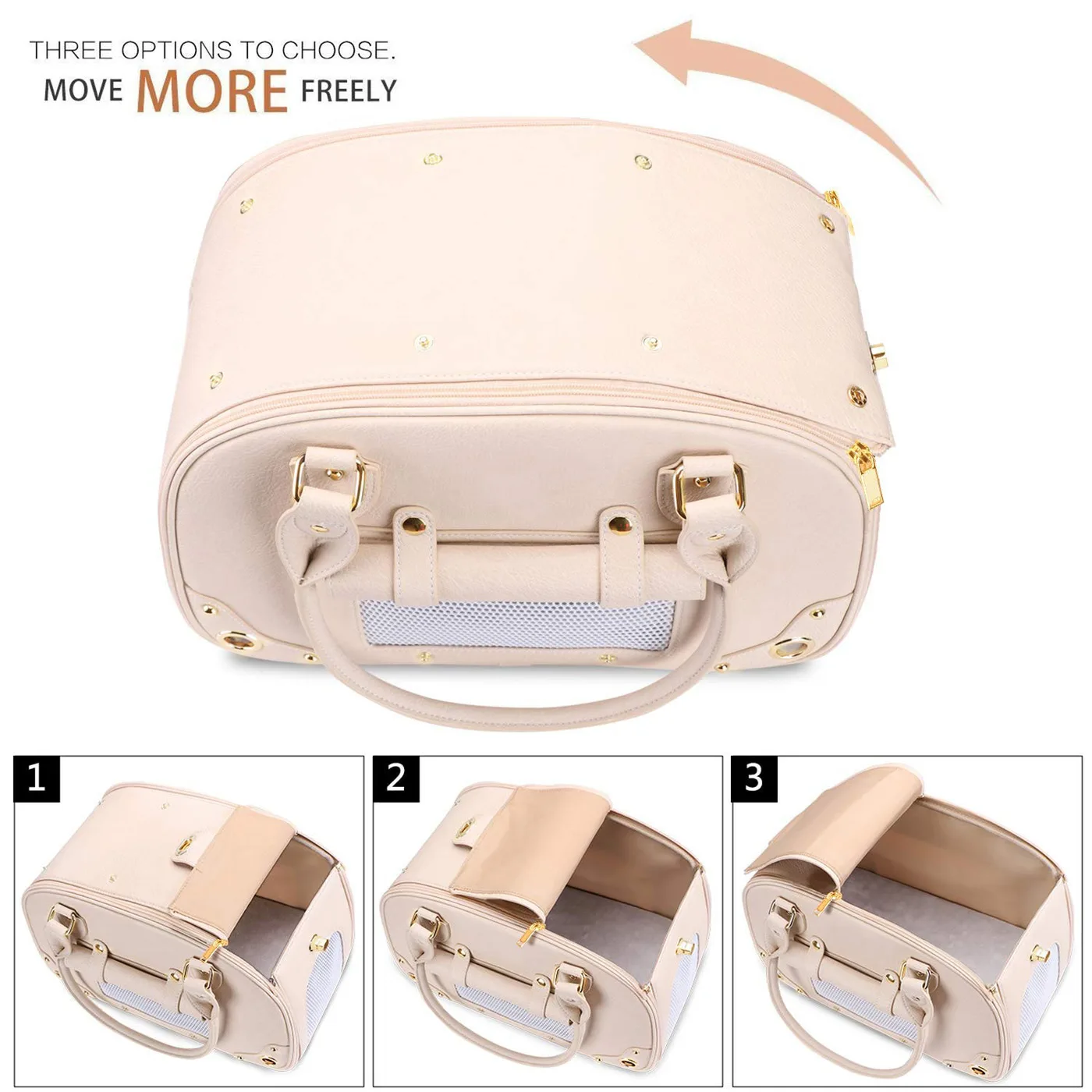
Hand feel is unfashionable to discuss because it resists measurement, yet it is the property most strongly associated with quality perception in soft goods. Coating determines most of it. A polyurethane finish leaves the fabric recognisable as fabric: it bends quietly, it drapes, it warms quickly in the hand. A PVC backing converts it toward a plastic sheet: stiffer, cooler to touch initially, and prone to the distinctive rustle that microphones exaggerate and customers associate with cheaper products.
This is not simply a matter of snobbery. Softer coated fabric conforms better to the animal inside and to the owner's body when carried, which is functional. It also folds more forgivingly into retail packaging and recovers better from compression. Customers rarely articulate any of it; they simply describe the product as nice, or as cheap, and the difference shows up in return rates rather than in surveys.
Tactility also governs how the material ages in appearance. Softer coatings tend to abrade by gradual matting, which reads as wear in a way customers accept, almost like leather softening. Rigid coatings abrade by cracking and whitening at fold lines, which reads very differently — as failure. Two products can have identical abrasion test results and completely different three-month-old appearances because of this.
A simple evaluation helps here: handle a coated swatch for thirty seconds, fold it sharply along its length, then open it and look at the fold under raking light. A good coating recovers with little more than a soft line; a poor one shows frosting almost immediately. It is not a substitute for laboratory testing, but it predicts appearance complaints remarkably well.
For brands investing in video content, record the material in use during sampling. Fabric noise and stiffness translate surprisingly vividly through a camera, and it is far easier to change a coating in round one than to explain a disappointing unboxing experience after production.
Temperature Behaviour: Cold, Heat and the Shipping Route
Temperature is where the two coatings diverge most sharply, and it is routinely overlooked because sampling usually happens in moderate conditions. Polyurethane remains flexible well below freezing. Polyvinyl chloride stiffens progressively as temperature drops, becoming board-like somewhere below about 5°C and developing a real risk of permanent creasing if folded while cold. Nothing about that shows up in a Bangkok sample room in March.
That behaviour has supply chain consequences. Carriers shipped in winter to northern markets may arrive folded and cold, and the creases formed in transit can persist for days after unpacking. Specifying PU for programmes with cold-climate distribution removes the issue entirely; where PVC is retained for waterproofing, we switch to loose-rolled packing and higher minimum storage temperature guidance.
Heat introduces the opposite failure mode. In extended high temperatures — a container crossing equatorial routes, or a warehouse without climate control — coatings soften, plasticisers migrate, and adjacent surfaces can mark or block. This is one reason we prefer phthalate-free systems and why we test lay-flat adhesive behaviour at elevated temperature for any programme shipping long distances.
The clean practice is to specify the cold-flex temperature explicitly. It is a standard test parameter, it costs nothing to state, and it converts a vague concern about winter performance into something a supplier either meets or does not.
One further caution around transit arrives every winter and catches new programmes out: goods stored in unheated warehouses after customs clearance behave exactly as goods shipped cold do, so guidance should cover the destination as well as the route. A short storage instruction printed on the polybag costs nothing and prevents an avoidable wave of appearance complaints.
Service Life: Hydrolysis, Delamination and Chalking
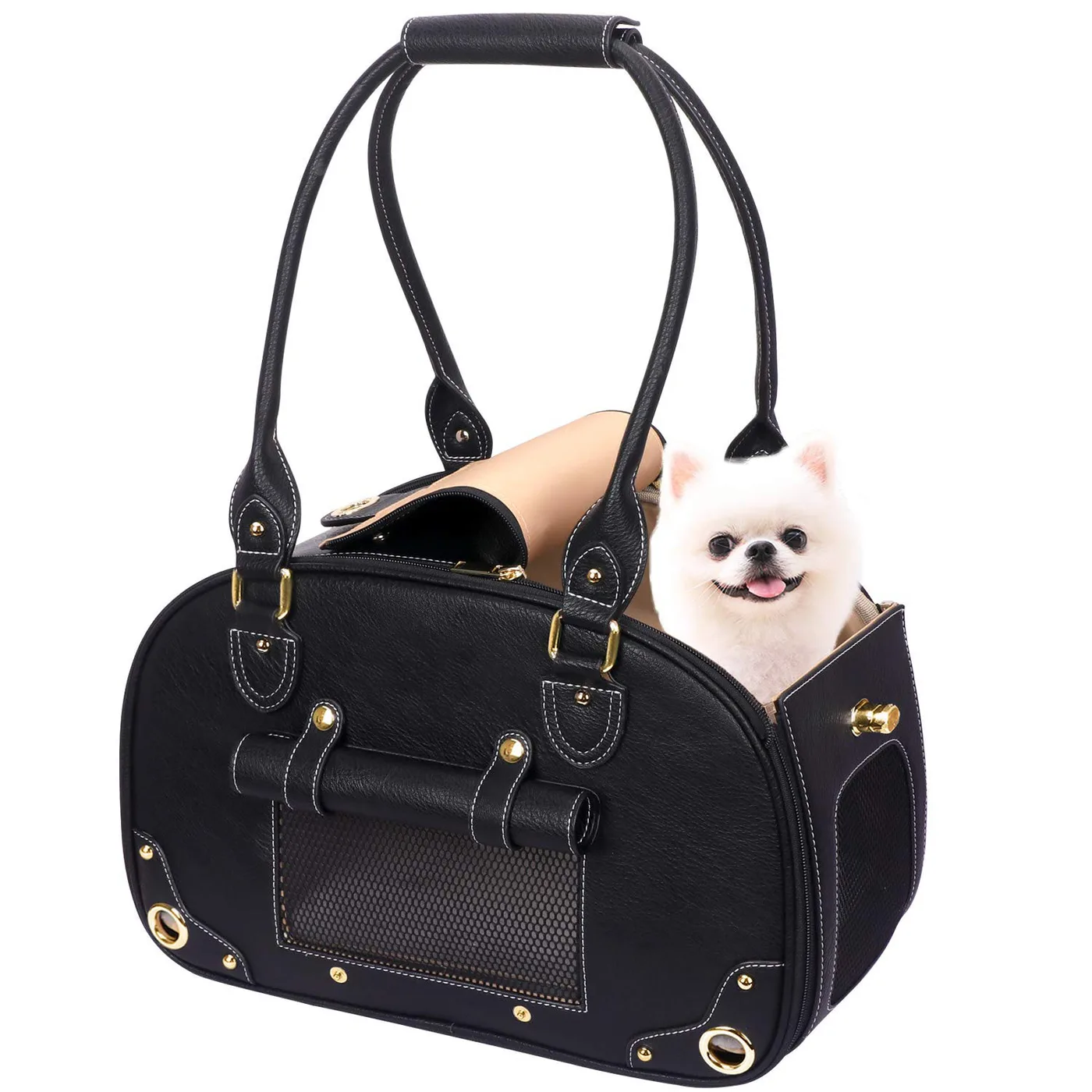
Coatings fail in three characteristic ways, and recognising them during sampling prevents product-looking-old problems later. The first is hydrolysis: chemical breakdown initiated by moisture and warmth, most relevant to certain polyurethane grades in humid climates. It manifests as a sticky surface, then a powdery one, and eventually as coating transfer onto whatever the product touches. Specifying hydrolysis-resistant grades costs slightly more and is standard for products distributed in tropical markets.
The second is delamination, or separation of the coating from the base cloth. It shows as bubbling or flaking, usually initiated at a stress point such as a tight seam fold or along a bonded edge. Delamination risk rises with heavier application weights and with lamination rather than true coating, which is another reason to know which process you are buying.
The third is chalking — surface whitening where the polymer has oxidised, most often accelerated by ultraviolet exposure. Both chemistries can exhibit it; PVC systems frequently incorporate stabilisers to slow it, while PU typically relies more on the base polymer's inherent resistance.
- Hydrolysis: specify resistant grades for humid climates; watch for tacky then powdery surfaces
- Delamination: watch seam folds and bonded edges; prefer true coating where flex is high
- Chalking: request ultraviolet-stabilised formulations for outdoor-positioned programmes
- Blocking: surfaces sticking together after warm storage; test before committing to a finish
None of these appear immediately, which is precisely the danger. A coating problem that manifests at month nine reaches reviews at month twelve, by which time inventory decisions have already been made on the basis of a successful launch.
Affordable accelerated testing exists for all three failure modes and belongs in the development budget rather than the contingency budget. A few days of ageing chamber time during sampling is a fraction of the cost of a single returned container, and it converts the whole question of coating longevity from optimism into evidence you can show a buyer.
Chemistry, Compliance and Restricted Substances
Coatings are where most chemical compliance exposure in a textile programme originates, not the base fabric. Both chemistries can be formulated responsibly, and both can be formulated cheaply with substances that create market access problems. The difference between them is therefore less about which is safer in the abstract than about which questions to ask.
For PVC systems the recurring question is plasticisers. Phthalates used to impart flexibility are restricted in several markets for certain applications, and the substance restrictions administered by the European Chemicals Agency define what may be placed on the EU market. Phthalate-free PVC using alternative plasticisers is widely available at modest premium, and specifying it at development removes a question that otherwise resurfaces with every new customer.
For PU systems, the equivalent watch points are residual solvents, particularly dimethylformamide, and in some formulations free isocyanates. Again, compliant low-residue systems are standard among competent mills and are what we quote by default rather than as an upgrade.
Documentation deserves planning. Buyers increasingly ask for a certificate or laboratory report rather than a statement, and textile assessments such as those offered through OEKO-TEX answer a large share of those requests in one document. Arranging it during sampling is inexpensive; arranging it under a listing deadline is not. Building that documentation into the development calendar and the cost becomes trivial.
Keep a compliance file per programme containing every declaration, every test report and its date of issue. When a buyer asks for substantiation three seasons later, the answer is usually a folder rather than a new round of testing, and it demonstrates the operational maturity that distinguishes established brands from hopeful listings.
Cost, Weight and Where Each Coating Belongs
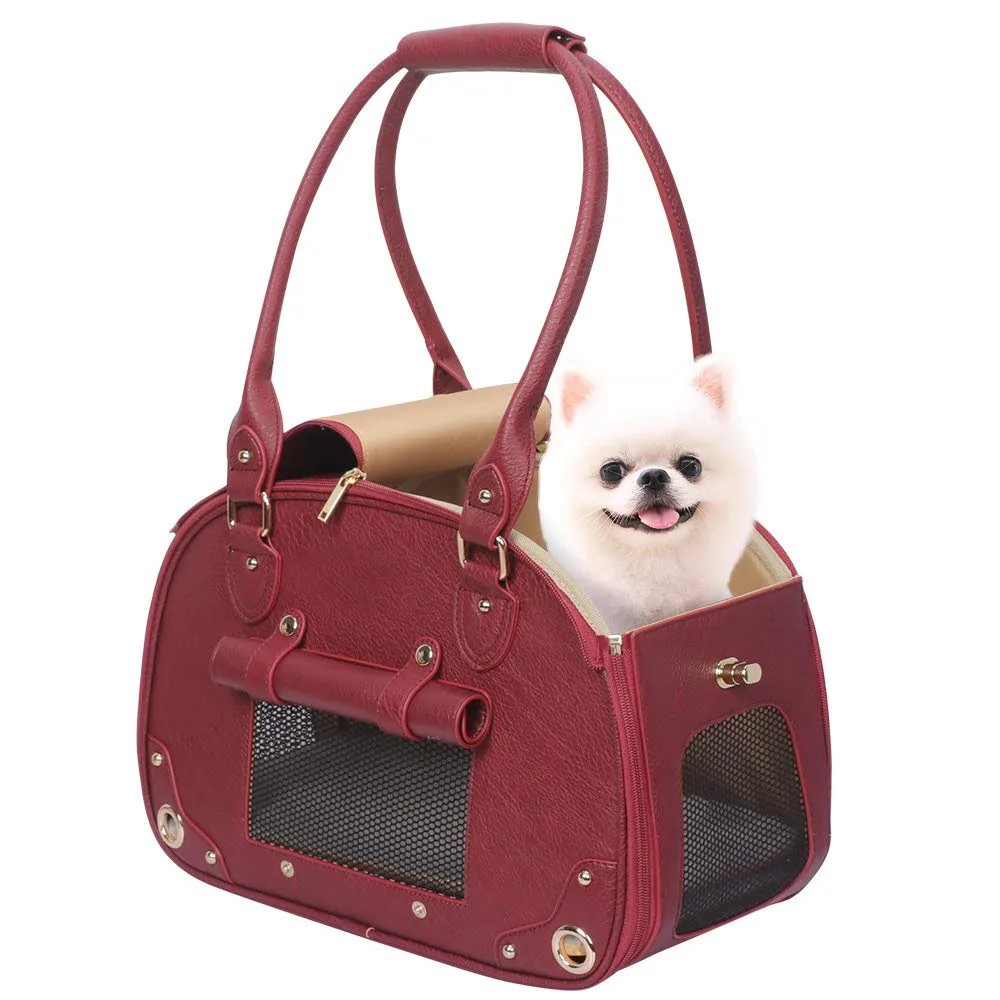
PVC is cheaper per metre, typically by 10-20% at equivalent application weight, and it delivers superior impermeability. PU costs more and delivers better hand, better temperature behaviour and lower weight. On a spreadsheet PVC wins; in the hand PU wins; and the right answer is usually to use both in different zones of the same product, which is the specification most of our brand clients ship.
The standard hybrid assigns a heavy phthalate-free PVC backing only to the base panel and the lower band of the side walls — the zones that meet wet ground, rough surfaces and cleaning — and PU everywhere the hand touches or the camera sees. The seam that joins them becomes a natural design line, and many programmes colour-block it deliberately, turning a performance decision into a visual feature.
Weight matters more than the cost saving suggests. Heavier backings add 10-15% to fabric mass, which is felt carried and appears again in freight and parcel tiers. Once those second-order costs are included, the PVC advantage often shrinks to a rounding error, and sometimes reverses completely if the saving pushed a unit across a shipping weight breakpoint.
Cost the whole thing before deciding. We routinely prepare both specifications side by side, including interlining changes and estimated freight, because the answer frequently surprises teams who assumed the cheaper material would stay cheaper once everything downstream was counted.
It is worth adding one retail-specific consideration. Buyers in pet specialty channels often handle samples personally, and their tactile read of a product influences listing decisions more than any datasheet will. Of the many specifications a brand can economise on, coating is among the worst, because it is the element a buyer evaluates first with their hands.
Specifying and Verifying Coatings Before Approval
Two disciplines convert coating from a gamble into a controlled variable: writing it down completely, and testing it against standard methods. A complete coating specification states the chemistry, the application process, the application weight in GSM with tolerance, the achievable hydrostatic head, the cold-flex temperature, any stabiliser requirements, and the phthalate-free or low-residue requirement where applicable.
Testing then verifies it. Water column results should reference a recognised procedure; abrasion results should state the method and endpoint; hydrolysis resistance can be assessed by accelerated ageing. None of these tests are expensive individually, and requesting them during development — with results retained as the reference for future lots — is what makes quality stable over years rather than one production run.
- Request the actual test report, not a summary — the report tells you which method was used and what the endpoint meant
- Keep an approved physical swatch from the bulk fabric, signed and dated, as the reference for dispute resolution
- Confirm whether the finish is applied coating or film lamination, in writing, before approving
- Re-test annually even on unchanged specifications, because mill formulations change quietly over time
Finally, tie it to the commercial calendar rather than treating it as a laboratory exercise. Samples are produced in 6-10 working days, bulk follows sample approval in 35-50 days, and finished goods clear AQL 2.5 inspection before release. Fit backwards from your launch date, leaving room for one additional laboratory dip or a replacement material if a test falls short.
Most importantly, write the verification requirement into the purchase order rather than leaving it implicit. A specification nobody checks against is decoration; a specification attached to a release condition is what actually keeps quality stable when production pressure increases and someone is tempted to substitute a cheaper finish.
How Coating Choices Differ by Product Type
Coating specification should follow product role rather than be applied uniformly across a catalogue, because the functional demands of a small sling and a large structured carrier are genuinely different. Treating them the same guarantees that at least one of them is over- or under-specified.
For small-breed slings and soft totes carried against the body, comfort dominates. These products spend most of their life in contact with clothing and skin, so a light PU application that keeps the fabric quiet, soft and warm to the touch is the correct choice, even at some cost in absolute impermeability. Owners rarely expose these to standing water, and when they do, an interior liner handles the consequence.
For structured carriers with a rigid base, the reverse applies. The base takes a genuine beating — set down on wet pavement, dragged across rough surfaces, scrubbed after accidents — so a heavy PVC or thick PU backing is justified there. Its stiffness is a benefit rather than a penalty when the goal is a flat, stable footprint that does not sag under load.
For travel-oriented designs sold against airline and road-trip narratives, cleanability is the governing requirement. Here the coating matters less than the interior laminate, and the correct move is often to spend modestly on the shell and generously on the wipe-clean base, reserving budget for radio-frequency welded seams that eliminate stitch holes entirely.
Whatever the product type, resist the temptation to standardise everything for the sake of simplicity. A catalogue where each item's coating matches its role costs marginally more to document and performs vastly better in customer hands, which is where the return is actually realised.
Why brands source here
- Pet carrier programs run since 2014; founding team in sewn goods since 2004
- SGS-verified production floor of 4,950 m² with 137 workers across 7 lines
- Monthly capacity of 200,000 units, audited to BSCI and ISO 9001
People Also Ask
Is PU coating better than PVC coating?
PU is better for hand feel, cold flexibility and lower weight, staying supple near -20°C. PVC is better for maximum impermeability and lower cost, reaching a higher hydrostatic head at 10-20% less per metre. Neither dominates, which is why most programmes combine them by zone.
How waterproof does a pet carrier need to be?
Around 1,000 mm hydrostatic head is sufficient for general panels, higher at the base where standing water concentrates. Anything above roughly 2,000 mm buys performance the product will never exercise while adding stiffness customers notice immediately in handling.
Which coating lasts longer?
Both last well when correctly formulated. PVC risks plasticiser migration and chalking over time; PU risks hydrolysis in hot humid climates unless a hydrolysis-resistant grade is specified. Either way, review formulation annually because mill chemistry can change without notice.
Does coating affect how the bag feels and sounds?
Yes, substantially. PU leaves the material textile-like, quiet and soft; PVC produces a firmer, cooler, more audible plastic character. Record the material in use during sampling, since video exaggerates both stiffness and handling noise.
Are PVC coatings restricted in Europe?
Certain plasticisers used in PVC are restricted, which is why phthalate-free formulations should be specified from the start. Confirming this at development avoids re-testing later and keeps every subsequent season free of the same recurring compliance question.
Can one product use both coatings?
Yes, and it is the most common premium specification: phthalate-free PVC at the base and lower side walls, PU across visible and handled panels. The seam between them often becomes a deliberate colour-blocked design line.
Frequently Asked Questions
What is the minimum order quantity?
MOQ is 500 units per colourway for both PU-coated and PVC-backed fabrics. Because both finishes are applied to stock base cloth, selecting either does not change your minimum order commitment.
How quickly can I see a coated sample?
Pre-production samples are produced in 6-10 working days once the coating specification and colour reference are agreed. Requesting two coating variants side by side costs no additional calendar time and is the fastest way to compare hand feel.
What is the bulk lead time for coated fabrics?
Bulk production runs 35-50 days following sample approval and deposit. Standard finishes sit at the shorter end; coating to a custom application weight or a speciality phthalate-free system may extend the schedule modestly.
How are coated panels inspected before shipment?
Final random inspection is performed to AQL 2.5 for major defects. Coating-specific checks include delamination or bubbling, uneven application, visible strike-through, stiffness variation between panels and shading against the approved reference swatch.
Do you supply phthalate-free PVC?
Yes, and it is our default recommendation wherever PVC is specified. The cost premium is modest and it removes restricted-substance questions from every future reorder rather than leaving them to be answered repeatedly by each new buyer.
Will the coating crack in cold weather?
PVC-backed material stiffens below roughly 5°C and can crease permanently if folded while cold. PU remains flexible well below freezing. If your distribution includes cold-climate markets, specify PU on handled and visible panels as a precaution.
What causes a coating to go sticky or powdery?
That is hydrolysis, a moisture-driven chemical breakdown most common in warm humid conditions. Specifying a hydrolysis-resistant PU grade prevents it and is standard practice for programmes distributed in tropical or subtropical markets.
How much weight does coating add?
A PU application typically contributes less than a heavy backing, while PVC adds roughly 10-15% to fabric mass. The effect appears again in freight and parcel shipping tiers, where it can move a unit across a weight breakpoint.
Can you test the water resistance you claim?
Yes. We arrange hydrostatic head testing against published standard methods and supply the report with method and endpoint stated, so the figure is verifiable rather than promotional and can be referenced in future disputes.
Is a film laminate better than an applied coating?
Laminates offer higher impermeability and a technical look, but they are more prone to edge peel at seams and under repeated flex. Applied coatings penetrate the weave and generally survive long-term folding better.
Do you use a third-party laboratory?
Yes. Physical and chemical testing is arranged through independent laboratories, and additional verification through SGS is available where a programme or retailer requires it specifically.
Will the coating change the colour of my fabric?
Coatings can shift perceived shade slightly, usually darkening it a little and sometimes increasing gloss. Always approve a swatch in its finished coated state rather than approving the base cloth colour and discovering the change after bulk.
Can you replace a coating if a mill changes it?
We re-test annually and flag any formulation change before it reaches production. Holding a signed bulk reference swatch from the original approval is the most effective defence, since nobody can argue with a physical standard.
What should I write into my specification?
Record chemistry, application process, weight in GSM with tolerance, hydrostatic head target, cold-flex requirement, any stabiliser needs, and the phthalate-free or low-residue requirement. That single paragraph prevents the most common sources of quality drift.
Talk to QUANZHOU JUNYUAN BAGS about a pet carrier program: MOQ 500 pieces per colourway, samples in 6-10 working days, bulk production in 35-50 days under AQL 2.5 inspection.
Get a free quote Request a sample