Pineapple Leather (Pinatex): A Byproduct Material for Custom Carriers
Yes. Pineapple leather is made from the fibre of pineapple leaves left over after harvest: the leaves are decorticated, the fibre is formed into a felt, and the felt is finished with a resin coating to give a 0.6-1.4 mm sheet with a visible woven mesh. It is breathable, holds screen print and heat transfer well, and works at MOQ 500 units per colourway.
Executive summary. Pineapple leaf fibre is the most structured of the plant-based leather alternatives, and that structure should drive the design rather than follow it. The visible mesh is the material's signature, so plan panel layouts that let it run uninterrupted and avoid heavy quilting or dense topstitching that fights the weave. Performance is mid-range: good breathability and tensile behaviour, moderate abrasion that depends heavily on the resin finish, and poor resistance to sustained soaking. Commercial terms are stable at MOQ 500 pieces per colourway, with sampling in 6-10 working days once the felt weight and finish are fixed, bulk in 35-50 days after approval, and final inspection at AQL 2.5. Extend the defect list to include resin build-up in the weave, fibre shedding at cut edges, and finish sheen variation between panels. Prepare OEKO-TEX documentation on the finish, REACH and Prop 65 declarations, and a written statement of the fibre and resin system before approaching retail buyers.
Custom pet bag orders are quoted by unit and by filled container, because carton cubage decides the landed cost more often than the fabric does.
Where Pineapple Leather Comes From: A Byproduct With a Second Life
Pineapple leather begins with a waste problem. After the fruit is harvested, the leaves are normally burned or left to rot, and a single harvest leaves a very large volume of fibrous material behind. That leaf waste is decorticated, a mechanical process that separates the long fibre from the pulp, and the fibre is washed, dried and formed into a non-woven felt. The felt is then finished, usually with a resin coating, to produce a sheet that can be cut and sewn.
The byproduct story is unusually strong, and it is worth stating precisely because it is the main commercial argument. Nothing is grown for the material; the fibre exists whether or not anyone uses it, and using it displaces a disposal problem rather than adding an agricultural footprint. That is a materially different claim from a crop grown specifically for fibre, and it is the sentence a retail buyer will remember.
What reaches the cutting table is a sheet with a distinctly visible structure. The fibre felt has a directional, mesh-like appearance that reads as woven even though it is not, and no finishing process fully hides it. Depending on grade, thickness runs from roughly 0.6 to 1.4 mm, with the heavier grades feeling closer to a stiff canvas than to a soft leather.
For a pet carrier brand, the appeal is threefold. The sustainability narrative is one sentence long and verifiable. The material is breathable in a way coated synthetics are not, which matters for an animal enclosure. And the visible texture gives a product a crafted, natural-market look that is difficult to fake with a printed pattern.
The limitations are equally clear, and they should be acknowledged in the brief rather than discovered in sampling. Pineapple fibre is stiffer than cork or apple leather, it does not drape over tight curves, and its abrasion resistance is entirely dependent on the resin finish. Design to those constraints and the material performs well; fight them and the sample rounds multiply. One practical test before committing: ask for a flat sheet and fold it by hand around a 10 mm radius. If the surface whitens or the resin cracks at the crease, every tight fold in your pattern needs a binding, and you should plan for that before the first sample rather than discovering it on the third.
Spec Sheet: Fibre Felt, Resin Finish and the Numbers That Matter
Because the base is a felt and the performance comes largely from the finish, a pineapple leather specification has to cover both. Suppliers in this category differ more in finishing than in fibre, and two grades with identical felt weights can behave very differently on a finished carrier.
| Parameter | Typical range | Design consequence |
|---|---|---|
| Thickness | 0.6 - 1.4 mm | Above 1.0 mm the sheet resists tight folds and needs binding |
| Felt weight | 300 - 600 g/m² | Heavier felt is stronger but visibly coarser |
| Tensile strength | 15 - 40 N/mm² | Adequate for panels, not for load-bearing strap anchorage |
| Tear strength | 20 - 50 N | Decides whether stitch lines hold under load |
| Abrasion (Martindale) | 15,000 - 40,000 cycles | Resin-dependent; below 20,000 is a risk on base panels |
| Breathability | High relative to coated synthetics | Genuine advantage for an animal enclosure |
| Water resistance | Spray resistant only | Requires a separate liner and honest care copy |
Abrasion is the number that separates a successful program from a returns problem, and it is almost entirely a function of the resin. A light, matte finish preserves the natural look and the breathability but scuffs; a heavier finish protects the surface, adds sheen, and reduces the tactile character that justified the material in the first place. Ask for the Martindale figure for the exact finish you are buying, not for the felt.
Tear strength is the second number to insist on, for the same reason it matters with any fibrous sheet: a seam is a row of closely spaced perforations, and tear resistance is what decides whether that row holds when the panel is loaded. Where a seam will carry real load, reinforce it with a woven tape on the inside.
Finally, confirm sheet or roll dimensions before the pattern is frozen. Fibre felts are produced in defined widths and, depending on the grade, may be shorter than a synthetic roll, which limits the largest continuous panel you can cut. Ask for the usable dimensions rather than the nominal roll width, and have the production team run a marker on the real pattern, because the difference between nominal and usable width is usually where the unit-cost estimate goes wrong.
Reading the Weave: Why Structure Should Drive the Design
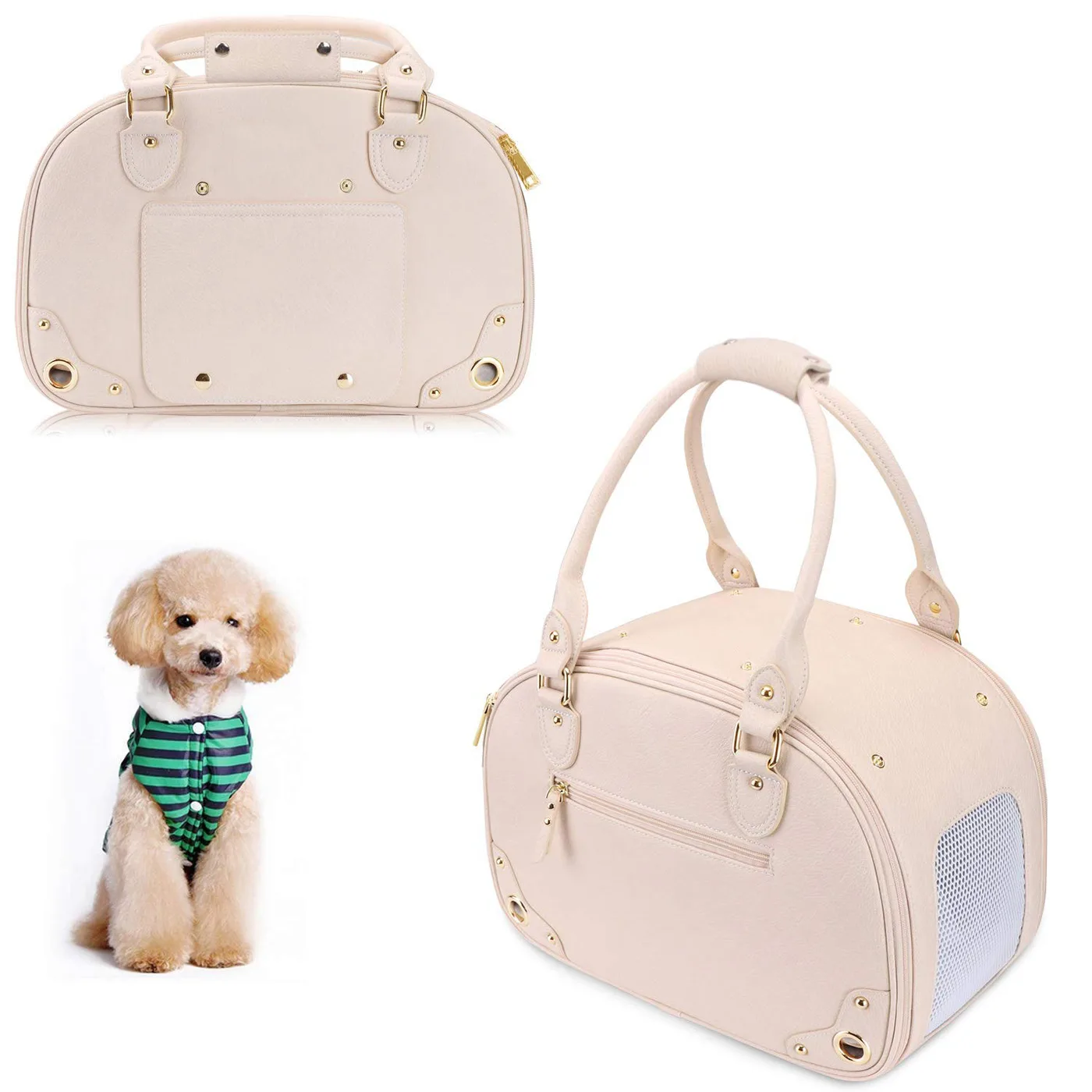
The visible mesh is the reason to choose this material, and it should dictate panel layout, seam placement and the amount of surface decoration you allow yourself. Because the structure is directional, panels cut at different angles from the same sheet will not read identically under light, and that is either a deliberate design feature or a visible inconsistency.
The most reliable approach is to treat grain direction as a specification. State it on the pattern, cut all visible panels on the same axis, and inspect for it during approval. This costs nothing at the cutting stage and prevents the most common visual defect in the category: a carrier whose front panel and lid appear to be made from two different materials.
Surface decoration should be restrained. Heavy quilting, dense topstitching and multiple applied pockets all fight the mesh and make a naturally interesting surface look busy. The strongest pineapple leather designs tend to be simple: large uninterrupted panels, one or two clean seam lines, and a single branding placement. That restraint also happens to reduce labour cost, which is a useful coincidence when the material itself carries a premium.
Where you want visual interest, get it from contrast rather than from decoration. A binding tape in a saturated brand colour against the natural fibre reads as designed, costs little, and gives you a colour placement that does not require dyeing the material. Contrast webbing, zipper tape and lining do the same work across the rest of the product. The same logic applies to hardware: a warm brass or antique finish sits naturally against the fibre, while a bright chrome reads as a mismatch. Choosing hardware to complement the material is free, and it does more for the perceived quality of the finished carrier than any amount of additional surface decoration.
Logo Methods on a Resin-Finished Fibre Surface
Pineapple leather is more forgiving than cork and less forgiving than apple leather. The resin finish gives print something to adhere to, but the fibrous structure underneath means edges are never perfectly crisp and fine detail can disappear into the weave.
- Screen print. The workhorse method for this material, and the one most suppliers have proven. Specify an ink compatible with the resin system and ask for a cross-hatch adhesion result on the actual grade.
- Heat transfer. Good for multi-colour marks, but test temperature carefully; too much heat can glaze the resin and change the sheen locally, leaving a visible halo around the logo.
- Emboss and deboss. Possible, though the fibrous felt does not hold a pressed impression as crisply as a cast film. Effective for a large, simple mark; unreliable for fine detail.
- Woven label and rubber patch. The safest route when brand identity depends on fine lettering, and the method I would default to for a first program.
Minimum sizes are larger than on a smooth synthetic. As a working rule, keep printed lettering above 6 mm cap height and debossed lettering above 9 mm, because anything smaller bridges across the fibre bundles. If the brand mark is a small wordmark, put it on a label rather than pressing it into the surface.
Placement should avoid the cut edges and the tightest curves. Resin finishes crack at a hard fold, and a logo sitting on or near one will age badly even if it looks correct on the sample. Keep branding at least 25 mm away from any edge binding or structural fold. It is also worth testing the logo after a short flex cycle rather than only on a flat sample: fold the printed panel gently a hundred times and check for ink cracking. Marks that pass a flat adhesion test can still fail once the resin moves underneath them, and this takes minutes to check.
Colour, Sheen and the Finishing Options Worth Paying For
Pineapple fibre accepts pigment, but the natural base is a warm mid-tone and heavily saturated colours tend to read muted. That suits an earthy or resort palette well and fights a high-chroma brand identity badly. Plan the range around what the material does naturally rather than asking it to impersonate a dyed polyester.
Sheen is the more interesting design lever. Finishes run from a dry matte that leaves the fibre clearly visible to a satin that smooths the surface and deepens the colour. Matte reads as natural and crafted; satin reads as more finished and more commercial. Sampling both on the same felt weight is cheap and usually settles the debate quickly, because the difference is far more obvious in the hand than in a photograph.
For colour-critical elements, work to a Pantone target with an agreed tolerance. Pantone colour standards give the brand team and the finishing line a shared reference, and putting the reference number on the sample approval form prevents the most common dispute in this category. Confirm the match on the production finish, because sheen shifts perceived colour by as much as half a shade.
Colour fastness deserves its own line in the specification. Test to published AATCC colour fastness methods for rubbing and light, and pay particular attention to wet rubbing on darker finishes. A carrier interior is a wet-rubbing environment by default, and this is where most dark natural-fibre finishes fail. If the brand palette demands a deep tone on the exterior, consider carrying it on a smooth accent panel or on the webbing instead, and keep the fibre panels in a mid-tone where any rub transfer is far less visible. That single decision prevents most of the colour complaints that surface after the first month of use.
Pattern and Structure: Working With a Stiff, Breathable Fibre
Pineapple leather is stiffer than the other plant-based alternatives and it does not drape. That is not a defect, but it does mean the pattern has to be built around flat or gently curved panels rather than around soft gathers and rolled tops.
Set a conservative minimum bend radius, around 12 mm for a 1.0 mm sheet, and bind or pipe any fold tighter than that. Seam allowance should be generous, in the 12 to 15 mm range, and stitch length slightly longer than you would use on a woven synthetic, because a tight stitch perforates the felt and creates a tear line. Where a seam carries load, add a woven reinforcement tape behind it.
Cut edges are the other structural issue. A fibrous felt will shed at an unfinished edge, so every edge needs to be bound, turned, or covered with a trim. Binding is the cheapest and cleanest option, and choosing a contrast colour turns a necessity into a design line.
Breathability is a genuine functional advantage here and should be used deliberately. Because the material passes air, it suits ventilation zones on a carrier where a coated synthetic would not. Placing pineapple fibre panels adjacent to a mesh gusset gives you an airflow argument that is true rather than marketing, which matters on a product category where airline compliance is judged partly on ventilation.
Structurally, keep the material off load paths. Strap anchorage, the base panel and any internal frame attachment should sit on a proven woven, with the pineapple fibre carrying the visible exterior. That hybrid pattern is repeated across every successful bio-material program for the same reason: it puts the story where customers see it and the engineering where the load actually is.
Cost Positioning and Where the Material Fits in a Range
Pineapple leather sits in the middle of the plant-based group. It is generally more accessible than mycelium, comparable to or slightly above cork, and meaningfully above a standard PU. The fibre is cheap and abundant; the cost sits in decortication, felt formation and finishing.
| Material | Relative cost | Best fit in a range |
|---|---|---|
| PU leather | 1.0x baseline | Entry tier, price-led SKUs |
| Recycled PET woven | 0.9x baseline | Eco entry tier |
| Pineapple fibre | 2.0x baseline | Mid-premium, natural-positioned series |
| Cork fabric | 2.4x baseline | Premium lightweight series |
| Mycelium sheet | 3.5x baseline | Limited capsule drop |
Within a range, the material's natural affinity is with warm-weather and resort positioning. The texture, the colour family and the visible fibre all read as summer product, and a carrier line built around travel, outdoor use and warm climates will find the material easier to merchandise than a technical or urban one.
The cost engineering levers are the familiar ones, and they work well here. Zone the material to the face panels and lid, move the base and gusset to a coated woven, consolidate to one felt weight and one finish across the series to clear MOQ 500 per colourway cleanly, and keep the panel layout simple to protect nesting yield. Those four moves typically remove a fifth to a quarter of the material cost without changing what the customer sees. One further lever is worth considering at the range level rather than the product level: use the same felt weight and finish across two or three unrelated SKUs, so that a single finishing lot covers the whole series. That consolidates the purchase, protects nesting yield through shared panel shapes, and makes the second season far easier to reorder.
Compliance, Claims and the Documentation Retail Buyers Expect
The claim set for pineapple leather is strong and, importantly, easy to document, which makes the compliance conversation shorter than for most bio-materials. The fibre is a genuine agricultural byproduct, and suppliers can usually evidence it.
The chemistry still needs its paperwork. Ask for an OEKO-TEX certificate covering the finish and any backing, REACH SVHC declarations for the EU, and a Prop 65 assessment for California. The resin system is the component most likely to raise questions, so ask specifically what it is and whether it contains any substance on a current restricted list.
Then write the claim carefully. "Made from pineapple leaf fibre, a byproduct of the fruit harvest" is accurate and compelling. "Plastic-free" is usually not, because the finish is a resin. "Waterproof" is not, and a pet carrier that claims it will generate returns. "Biodegradable" should be avoided for an assembled product with hardware, lining and webbing, regardless of what is true of the fibre alone.
Independent verification shortens retail review cycles. SGS testing and verification services are widely recognised, and a test report attached to the first submission answers questions before they are asked.
Finally, extend the inspection standard to this material's specific failure modes. Inspection runs at AQL 2.5 against a signed golden sample, and the defect list should name resin build-up in the weave, fibre shedding at cut edges, sheen variation between panels, and grain direction inconsistency, none of which appear on a generic bag checklist. Agree that list with the production team before bulk rather than during inspection, and attach physical reference photographs to each defect category. A written defect that depends on interpretation will be argued at the worst possible moment; a photograph settles it in seconds.
From Sampling to Shelf: A Timeline for a Pineapple Fibre Program
A pineapple fibre program runs on the same calendar as any custom carrier project, with one addition: the felt and finish are usually made to order, so the material reservation belongs on the critical path ahead of sampling.
Work backwards from the floor date. Reserve the felt weight and finish first, then run sampling in 6-10 working days once those are confirmed, then bulk in 35-50 days after sample approval. For a seasonal launch, add two to three weeks of contingency, because a finish that misses the approved sheen target requires a re-approval cycle rather than a quick adjustment.
Structure the sample rounds so each answers one question. Round one selects the felt and finish: two weights, two finishes, with Martindale and tear data attached, evaluated as flat sheets rather than as a sewn product. Round two tests the logo on the chosen finish at three placements. Round three is the first sewn prototype in production colours, checked for edge shedding, grain direction consistency and fold cracking. Only round three output should become the golden sample.
Plan the second colourway in parallel with the first if you intend to offer one. Finishing lots are most consistent when run together, and sequential sampling is the usual cause of a visible difference between two colourways of the same product on the same shelf.
Finally, brief the merchandising early. This material's advantage is tactile and visual, so the product page, the hang tag and any retail display should all let a customer see the weave up close. A sealed sample in a plain poly bag sells none of it. Two details do most of the work: a hang tag with a small window or a fibre swatch attached, and one product photograph shot close enough that the weave is visible on a phone screen. Both cost very little and both convert the material's texture into a reason to buy rather than an abstract claim.
Production capability
- SGS-verified production space of 4,950 m², 149 machines, 7 assembly lines
- Pet carrier and pet bag output since 2014 from a 137-person team
- 200,000 units shipped monthly under BSCI and ISO 9001 systems
People Also Ask
Is pineapple leather the same as Pinatex?
Pinatex is the best-known brand name for pineapple leaf fibre material, and it has become a generic shorthand in the trade. Other producers supply equivalent felt and finish constructions, so specify the parameters rather than the name.
Why use pineapple leaves for material?
Leaves are a harvest byproduct that would otherwise be burned or left to rot. Using them displaces a disposal problem and adds farm income without any additional land or water footprint.
Does pineapple leather stretch over time?
It creeps less than a soft PU but more than a woven synthetic. Reinforce load-bearing seams with a woven tape and keep the material off strap anchorage to avoid long-term distortion.
Can pineapple leather be washed?
No. Wipe with a damp cloth and mild soap. Machine washing will damage the resin finish and the felt structure, and the care card should state this explicitly.
How heavy is pineapple leather?
A finished sheet typically weighs more than cork and less than full-grain leather of comparable thickness. The felt weight specification is the number to check against your airline weight budget.
Is pineapple leather scratch resistant?
Moderately. The resin finish protects against light abrasion but claws will mark it. Keep the material off interior floor and door panels where claw contact is concentrated.
Frequently Asked Questions
What is pineapple leather made from?
It is made from the fibre of pineapple leaves left after the fruit harvest. The leaves are decorticated to separate the fibre, which is washed, dried and formed into a non-woven felt, then finished with a resin coating to make it durable enough to sew.
Is pineapple leather durable enough for a pet carrier?
Yes for exterior panels with a suitable finish. Specify a grade at 25,000 Martindale cycles or better and move the base panel to a coated woven, since abrasion resistance is the material's weakest property.
Is pineapple leather waterproof?
No. The finished sheet is spray resistant but will soak through under sustained contact with water. A carrier intended to contain moisture should specify a TPU or PEVA liner, and the care copy should say so.
Does pineapple leather breathe?
Yes, and more than any coated synthetic. That is a genuine functional advantage for an animal enclosure and is worth designing around by placing fibre panels near ventilation zones.
Can pineapple leather be printed with a brand logo?
Screen print is the proven method and heat transfer works well for multi-colour marks. Keep lettering above about 6 mm cap height, because fine detail bridges across the fibre bundles.
What is the MOQ for a pineapple leather carrier program?
MOQ is 500 pieces per colourway. Consolidating the series onto one felt weight and one finish is the simplest way to keep every SKU above the floor without splitting finishing lots.
Does the material look the same across panels?
Not exactly. The fibre structure is directional, so panels cut on different axes read differently under light. Specify grain direction on the pattern and cut all visible panels on the same axis.
Is pineapple leather vegan?
Yes, it contains no animal-derived material. Note that the finish is a resin, so the accurate description is a plant-fibre material with a synthetic finish rather than a fully natural one.
How does pineapple leather compare with cork fabric?
Pineapple fibre is stiffer, heavier and more breathable, with a visible directional weave. Cork is lighter, softer in the hand and better at holding a debossed mark. Both sit in a similar cost band.
Can the material be dyed to a brand Pantone?
Muted and earthy tones work well; saturated colours read muted against the natural base. Confirm any match on the production finish, since sheen shifts perceived colour by as much as half a shade.
What certifications should I request?
Ask for OEKO-TEX on the finish and backing, REACH SVHC declarations for the EU and a Prop 65 assessment for California. Request documentation per production lot and keep it tied to your purchase orders.
What inspection standard applies to a pineapple fibre run?
Inspection runs at AQL 2.5 against a signed golden sample. Extend the defect list to include resin build-up in the weave, fibre shedding at cut edges, sheen variation and grain direction inconsistency.
How long does a full program take?
Sampling runs 6-10 working days once the felt weight and finish are confirmed and bulk lands 35-50 days after approval. Reserve the material before sampling starts, and allow two to three weeks of contingency for a seasonal launch.
Talk to QUANZHOU JUNYUAN BAGS about a pet carrier program: MOQ 500 pieces per colourway, samples in 6-10 working days, bulk production in 35-50 days under AQL 2.5 inspection.
Get a free quote Request a sample