Hemp Fabric Pet Carriers: Eco Friendly Material Guide
Hemp canvas is the strongest natural option for a custom pet carrier shell, running at MOQ 500 pieces per colourway with samples in 6-10 working days and bulk in 35-50 days. The practical specification is a 55% hemp and 45% organic cotton blend at 12-16 oz, which balances abrasion resistance with a workable hand.
Executive summary
Hemp earns its place on performance rather than on story. The fibre is long, strong and naturally resistant to abrasion, mildew and ultraviolet light, which are exactly the properties a carrier exterior needs. It also grows with low water and pesticide input, so the environmental argument supports the functional one rather than replacing it.
The trade-offs are real and manageable. Pure hemp canvas is stiff, creases readily and is harder to dye evenly, which is why most programmes specify a hemp and cotton blend. That blend keeps most of the strength and the story while making the fabric easier to sew, softer in the hand and more predictable in shade.
Programme terms are unchanged: MOQ 500 pieces per colourway, samples in 6-10 working days, bulk in 35-50 days, inspection at AQL 2.5, T/T 30/70 and FOB Xiamen. Our production team confirms fibre declaration and availability before bulk, and holds the safety report against the finished article.
- 55% hemp with 45% organic cotton is the most workable blend for a structured carrier shell.
- Hemp outperforms cotton on abrasion, mildew resistance and UV stability, which suits outdoor and travel use.
- Confirm fabric availability early: hemp constructions are held in less depth than commodity cotton canvas.
A custom cat carrier is restrained by behaviour rather than by weight, so locking sliders and bound internal seams matter more than load ratings.
Why hemp behaves differently from cotton
Hemp and cotton are both cellulosic fibres, but the plants produce fibre of very different length and structure. Hemp yields long bast fibres from the stem, several times longer than cotton staples, with a higher cellulose content and a naturally higher tensile strength. That structural difference is the origin of every practical difference between the two fabrics.
Long fibre translates into strength and abrasion resistance. A hemp canvas of the same weight as a cotton canvas will generally resist tearing, surface wear and seam slippage better. For a product dragged across floors, loaded with a moving animal and carried by a strap, that is the property that determines whether the product lasts.
Hemp is also naturally resistant to mildew and to ultraviolet degradation. Cotton treated for outdoor use needs finishes to achieve what hemp does reasonably well on its own. For a carrier used outdoors, stored damp or left in sunlight, this is a practical advantage rather than a marketing point.
Breathability and moisture handling are strong. Hemp moves moisture well and dries faster than cotton, which reduces odour retention and makes the fabric more forgiving in damp conditions. It also feels cool, which suits warm-weather products.
The stiffness is the honest drawback. Pure hemp canvas has a crisp, papery hand that softens with use but never becomes as supple as cotton. Some brands treat that as character and some as a defect, and the blend ratio is where the decision gets made.
Creasing follows from the same stiffness. Hemp creases and holds the crease, so a hemp product will not look pressed after use. Designing with that in mind, using texture and structure rather than sharp tailored lines, produces a product that looks better with age.
Finally, hemp softens with washing. A fabric that feels stiff at sampling will feel noticeably better after a few cycles, which means the hand should be judged on a washed sample rather than on the loom-state swatch.
Hemp canvas construction and blend ratios
Pure hemp canvas exists but is rarely the right answer for a carrier. It is strong, stiff, hard to dye evenly and expensive in the weights a structured product needs. Blending with cotton is the standard resolution, and the ratio determines where the fabric sits between hemp performance and cotton comfort.
| Blend | Typical weight | Hand feel | Abrasion | Shade predictability | Best application |
|---|---|---|---|---|---|
| 100% hemp canvas | 12-18 oz | Crisp, papery | Very high | Lower, uneven uptake | Base panels, rugged exteriors |
| 70% hemp / 30% cotton | 12-16 oz | Firm with texture | Very high | Moderate | Durable shells, travel pieces |
| 55% hemp / 45% cotton | 12-16 oz | Structured, softening | High | Good | Default shell specification |
| 40% hemp / 60% cotton | 10-14 oz | Softer, cotton-like | Moderate to high | Good | Light shells, linings |
| Hemp / recycled polyester | 12-14 oz | Firm with resilience | Very high | Good | High-wear shells with recycled claim |
| Hemp / linen blend | 10-14 oz | Dry, textured | High | Moderate | Design-led natural ranges |
The 55/45 hemp and cotton blend is the default for good reasons. It retains most of the strength advantage, softens acceptably with use, sews cleanly on standard equipment and takes dye far more predictably than pure hemp. Most programmes that try pure hemp on the first run move to a blend on the second.
Weight selection follows span, as with cotton. Small formats work at 10-12 oz; medium carriers at 12-14 oz; large carriers and base panels at 14-16 oz. Above 16 oz the fabric becomes difficult to fold and bind cleanly, and the product starts to look bulky.
Weave choice matters more with hemp than with cotton because the fibre is less forgiving. A plain weave shows the texture and the slubs; a twill weave drapes better and hides irregularity; a canvas weave gives the most structure. Choosing from a physical swatch is essential.
Slubs and irregularities are part of the material's character. Hemp yarn is less uniform than cotton yarn, and the resulting fabric has visible variation. Specifying that this is acceptable, and stating a tolerance for it, prevents disputes at inspection.
Reinforcement strategy should follow the strength rather than compensate for a weakness. Because hemp is strong, a programme can often use a lighter weight with local reinforcement rather than a heavy weight throughout, which saves cost and freight without losing durability.
Finally, test the blend rather than inferring from the components. Blended fabrics do not behave as a straight average, and abrasion, shrinkage and shade should all be verified on the actual construction before the specification is frozen.
Texture, colour and the natural aesthetic
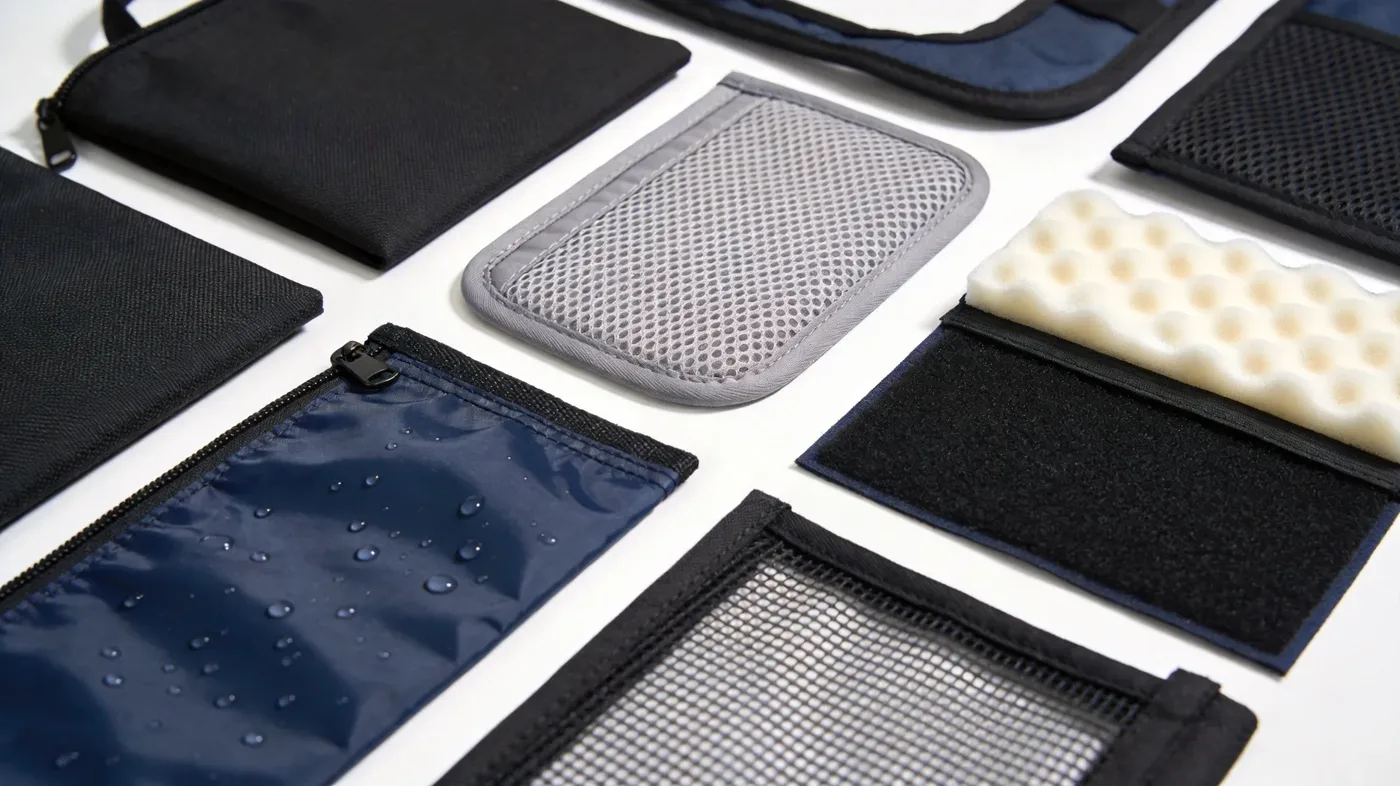
Hemp has a distinctive surface. The weave is visible, the yarn variation shows, and the fabric has a dry, slightly rough hand that becomes supple with use. That texture is the material's main aesthetic asset and it should be designed with rather than against.
Colour behaves differently on hemp than on cotton. The fibre takes dye less evenly and tends toward muted, earthy results, particularly in the lighter shades. Deep saturated colours are achievable but harder, and a bright synthetic-looking shade is usually the wrong ambition for this material.
Natural and undyed tones are the strongest palette. Hemp in its natural state ranges from warm beige to soft grey-green, and those tones communicate the material immediately. Building a palette around them, with one or two low-saturation accents, produces a coherent eco range.
| Element | Works with hemp | Fights hemp | Reason |
|---|---|---|---|
| Hardware finish | Antique brass, matte black, brushed steel | High-polish chrome | Matte finishes match the dry hand |
| Webbing | Natural cotton, undyed, low-saturation | Bright synthetic tape | Colour intensity clashes with the muted shell |
| Branding | Woven label, embossed patch, debossed mark | Large multi-colour print | Print registration on textured fabric is unreliable |
| Lining | Organic cotton, hemp blend, bamboo blend | Glossy synthetic | Material story should stay consistent |
| Edge treatment | Self binding, contrast binding, turned edge | Glossy edge paint | Finish should not look synthetic |
| Photography | Natural light, texture close-ups | High-key studio gloss | Texture is the selling point |
Printing on hemp deserves a caution. The textured surface and the uneven dye uptake make fine registration difficult, and a large multi-colour print will not look crisp. Woven labels, embossed patches and simple single-colour prints perform far better, and they suit the material's character.
Hardware pairing should follow the same logic. Antique brass, matte black and brushed steel sit naturally with hemp; high-polish chrome looks like it belongs to a different product. This is a small decision that determines whether the finished piece reads coherent.
Photography should show the texture. Close-ups in natural light, shots that show the weave and the slubs, and a slightly desaturated grade all sell the material. Trying to make hemp look smooth in post-production removes the reason to choose it.
Finally, plan how the material ages. Hemp softens, develops a subtle patina and may fade slightly in strong sun. Presenting that as character, in the product description and the photography, sets the right expectation and prevents disappointment.
Strength, abrasion and durability performance
Durability is hemp's strongest argument. The fibre has high tensile strength, good abrasion resistance and excellent resistance to seam slippage, which means a hemp shell survives the specific abuses a pet carrier faces: clawing at the interior, dragging along the ground, and repeated loading.
Abrasion resistance at the base corners and the underside is where the advantage shows most. Those are the zones that fail first on cotton products, and a hemp or hemp-rich blend extends their life considerably. Where a programme wants the longest possible service life, this is the material choice that delivers it.
Mildew resistance is a practical benefit in damp climates and in products that get wet. Hemp resists microbial growth better than cotton, which reduces the odour problems that cause carriers to be discarded. Combined with faster drying, this materially extends usable life.
UV resistance is above cotton. A product left in sunlight or used outdoors regularly will degrade more slowly in hemp. For travel products, beach use and outdoor ranges, that is a functional reason to specify it beyond the environmental story.
Seam strength deserves testing at the specification stage. Strong fabric with weak seam construction fails at the seam, and the hemp advantage is lost. Matching thread, stitch density and seam type to the fabric is a standard sampling check.
Verification should be quantitative. Abrasion cycling, tear strength, seam strength and colour fastness should all be tested on the actual construction, using established methods such as those published by ASTM International. Independent verification through SGS produces a report a retailer can file.
Finally, design for the long life the material enables. If the shell will outlast the zipper, specify a zipper that will last as long. Matching component life to fabric life is what converts a durable material into a durable product.
Water, shrinkage and care behaviour
Hemp absorbs water but dries faster than cotton, and it resists the odour and mildew problems that follow damp storage. That combination makes it more forgiving in real use, though it is still not waterproof without a finish.
Coatings and waxes work well on hemp. A waxed hemp canvas gives water resistance, a distinctive hand and a vintage appearance that develops with use, and it suits the material's character better than a synthetic coating does. Waxed finishes do affect the care instructions and the cleaning method.
Shrinkage is typically lower than cotton but not zero. Hemp blends in the 55/45 range usually behave predictably, but dimensional change should still be tested on a washed sample at sampling stage, particularly where a lining of a different fibre is involved.
Creasing is permanent rather than temporary. A hemp shell will carry creases from packing and use, and it will not press out the way cotton does. Designing pack-out to minimise harsh folds, and accepting creasing as character, avoids a mismatch between expectation and reality.
Cleaning should be defined by testing. Hemp tolerates gentle washing and benefits from thorough drying; aggressive washing and high heat are less suitable. Where the product is expected to be wiped rather than washed, the coating or finish has to tolerate that method.
Care labelling should be specific and honest. A natural-fibre product with a wax finish needs different instructions from an untreated one, and the label should describe what the product can actually survive rather than what is convenient to print.
Finally, plan for re-waxing or refinishing where relevant. A waxed hemp product can be refreshed, which extends its life further and gives the brand a service story. Including a short note on refinishing in the packaging is a low-cost way to add value.
Cost, availability and lead-time planning
Hemp costs more than commodity cotton and generally more than recycled polyester, reflecting smaller global production and more limited mill capacity. The premium is real but moderate, and it is usually justified by performance as well as by story. Costing the specific blend and weight is essential, because the spread across constructions is wide.
Availability is the operational constraint. Hemp constructions are held in much less depth than commodity cotton canvas, and a specific blend in a specific weight may need to be made to order. That shifts the schedule, and it is the most common reason a hemp programme slips.
Fabric minimums follow from the same issue. Where a construction must be produced to order, the mill minimum may exceed the fabric quantity needed for 500 pieces. Confirming this before design freeze allows the brand to either choose a held construction or plan for the surplus.
Lead time planning should treat sourcing as a separate phase. The sampling window of 6-10 working days and the bulk window of 35-50 days both start once material is available, and material availability for hemp can add weeks. Building that into the calendar is standard practice in this category.
Reorder planning needs more care than with commodity fabrics. Holding fabric for a second run at the time of the first order, and keeping a signed reference for hand and shade, is usually worthwhile because re-sourcing the same construction later can take as long as the original.
Freight is favourable relative to heavier alternatives because hemp canvas delivers strength at moderate weight. A lighter hemp blend with local reinforcement often weighs less than a heavier cotton equivalent at equal durability, which reduces landed cost.
Finally, model the premium against the price the market will carry. Hemp supports a premium in eco and outdoor channels, and the combination of durability and story usually justifies it. The calculation should include the longer service life, which reduces replacement purchases.

Certification and claim substantiation
Hemp claims are generally simpler than recycled-content claims because they are about the fibre itself. A fibre declaration stating the hemp percentage, supported by a mill document, is the core requirement, and it is straightforward to obtain and to hold.
Organic certification is available for hemp and works on the same principle as organic cotton: a growing standard with a documented chain of custody. Where a programme wants the organic claim, the certificate has to cover the hemp portion and the claim has to state the percentage.
Chemical safety is a separate requirement, as with any natural fibre. Hemp is dyed, finished and sometimes coated, and the finished article should be tested. Textile safety certification such as OEKO-TEX addresses the article the customer receives rather than the fibre it started from.
Environmental statements about cultivation are reasonable but should be proportionate. Hemp generally requires less water and fewer inputs than conventional cotton, and that is a defensible statement. Claims about carbon sequestration or soil remediation are larger assertions that need specific evidence.
Blends need honest labelling. A 55% hemp and 45% cotton blend supports a claim for the hemp content and should state both fibres. Describing a blend as a hemp product without qualification is the kind of imprecision that attracts criticism in this category.
Process documentation completes the file, as it does across the eco range. Partner facilities operate under BSCI social compliance and audited quality systems, and those statements should be made for what is actually audited. Our wider guide to eco line material planning sets out the document set we recommend per production run.
Finally, keep the evidence with the tech pack. Fibre declaration, safety report, inspection report and signed reference sample together answer most retailer questions without further work, and they protect the claim for the life of the product.
Where hemp belongs in the range architecture
Hemp suits the durable and outdoor end of a range better than the luxury end. Its strengths are abrasion, mildew resistance and UV stability, and those matter most in travel pieces, everyday carriers and products used outdoors. That is where the specification earns its cost.
It is a poor fit for the softest premium positioning. Hemp is not a luxurious hand, and a brand building a luxury tier will usually get further with a coated canvas, a technical weave or a leather alternative. Hemp's premium argument is ruggedness and honesty rather than refinement.
Within an eco line, hemp is the natural companion to organic cotton. Cotton carries the softness and the familiar story; hemp carries the durability; a blend of the two carries both and is often the single best specification in the range.
Colourway strategy should accept the material's palette. Building the hemp pieces around natural, undyed and low-saturation tones, and letting the brighter colours live on the synthetic pieces, produces a range where each material is used for what it does best.
| Range position | Suggested material | Reason | Typical premium |
|---|---|---|---|
| Entry tier | Recycled polyester | Cost control with a documented claim | 5-25% over virgin |
| Core tier | Hemp-cotton blend or rPET | Durability with a natural story | 20-60% over entry |
| Outdoor and travel | Hemp-rich or waxed hemp canvas | Abrasion, mildew and UV resistance | 30-80% over entry |
| Comfort tier | Bamboo or organic cotton lining | Hand feel and moisture handling | Lining cost uplift |
| Premium tier | Coated canvas or technical weave | Refined hand and finish | 140-220% over entry |
Accessories are a good entry point. A hemp pouch, a pad cover or a strap wrap lets a brand test the material with customers at low commitment before committing a full shell programme. It also builds the supply relationship before volume is needed.
Reorder and continuity planning should favour standard constructions. Choosing a held blend rather than a bespoke one keeps re-orders fast and keeps the second season consistent with the first, which matters because the hand of the fabric is part of what the customer bought.
Finally, measure the tier on durability outcomes as well as sales. Return rates, warranty claims and customer comments about wear tell a brand whether the hemp specification is delivering the service life it was chosen for, and that data is what justifies the premium at the next range review.
Five checks before releasing a hemp specification
Five checks: blend ratio and weight confirmed on a physical swatch, availability and fabric minimum confirmed with the mill, abrasion and seam strength tested on the construction, dimensional change tested after washing, and fibre declaration plus safety report held. Releasing without all five tends to surface problems at inspection or after the first wash.
Why brands source here
- Pet carrier programs run since 2014; founding team in sewn goods since 2004
- SGS-verified production floor of 4,950 m² with 137 workers across 7 lines
- Monthly capacity of 200,000 units, audited to BSCI and ISO 9001
People Also Ask
What is hemp canvas fabric?
A woven fabric made from hemp bast fibre, usually blended with cotton, specified at 10-16 oz for bag applications and valued for strength, abrasion resistance and low cultivation inputs.
Is hemp stronger than cotton?
Yes. Hemp fibre is longer and higher in tensile strength, giving better abrasion, tear and seam performance at the same weight.
Is hemp fabric sustainable?
The cultivation generally needs less water and fewer inputs than conventional cotton, and the durability extends product life. Processing and finishing still need to be assessed.
Does hemp fabric get softer with use?
Yes. It starts crisp and softens noticeably with washing and handling, which is why the hand should be judged on a washed sample.
What is the best hemp blend for bags?
Around 55% hemp with 45% cotton at 12-16 oz, which balances strength with a workable hand and more predictable dyeing.
Can hemp be used outdoors?
Yes, and it suits outdoor use well because of its resistance to mildew and ultraviolet degradation compared with cotton.
Is hemp worth the extra cost?
Where abrasion, damp conditions or sun exposure will shorten the life of a cotton product, yes. Where softness or refinement matters more, other materials perform better.
Frequently Asked Questions
What is the MOQ for a hemp pet carrier?
MOQ is 500 pieces per colourway. Note that specific hemp constructions may carry a mill fabric minimum, so availability should be confirmed before design freeze.
Is pure hemp canvas better than a blend?
Pure hemp is stronger but stiffer, harder to dye evenly and more expensive. A 55% hemp and 45% cotton blend usually gives the better balance for a structured carrier.
What weight should a hemp carrier shell be?
Between 12 and 16 oz for most carriers, matched to panel span. Small formats work at 10-12 oz and large carriers at 14-16 oz.
Is hemp more durable than cotton?
Yes for abrasion, tear resistance, mildew resistance and UV stability. Those are the properties that determine service life in a carrier.
Does hemp shrink in washing?
Less than cotton but not zero. Dimensional change should be tested on the assembled product, especially where the lining is a different fibre.
Can hemp be made waterproof?
Not untreated. A wax finish or coating provides water resistance, and waxed hemp suits the material's character well while changing the care instructions.
Does hemp crease permanently?
Largely yes. Hemp holds creases rather than pressing out, so the design and the pack method should accept creasing as part of the material's look.
How long does a hemp programme take?
Sampling takes 6-10 working days and bulk 35-50 days once material is available. Sourcing a specific hemp construction can add weeks before either clock starts.
Is hemp fabric more expensive?
Yes, moderately. The premium reflects smaller production and limited mill capacity, and it is usually justified by durability as well as by the environmental story.
Can hemp be certified organic?
Yes, on the same principle as organic cotton, with a growing standard and documented chain of custody covering the hemp portion.
How should hemp be cleaned?
Gentle washing with thorough drying, or wiping if the product is waxed or coated. The care label should reflect what testing showed the fabric survives.
Can we print a logo on hemp canvas?
Simple single-colour prints work; large multi-colour prints do not register well on the textured surface. Woven labels and embossed patches are usually better.
Where does hemp fit best in a range?
In outdoor, travel and everyday durable positions. It is less suited to a soft luxury tier, where a coated canvas or technical weave performs better.
Talk to QUANZHOU JUNYUAN BAGS about a pet carrier program: MOQ 500 pieces per colourway, samples in 6-10 working days, bulk production in 35-50 days under AQL 2.5 inspection.
Get a free quote Request a sample