Modular Pet Carrier: Customize
A modular pet carrier is a core shell built around one standardised attachment interface, so panels, pockets, strap sets and wheel chassis can be added, swapped or branded without re-cutting the bag. It lets a brand offer customisation without custom tooling: MOQ 500 pieces per colourway on the core, 6-10 working days per sample round, and 35-50 days for bulk.
Our design team recommends modular architecture to any brand planning more than one season, because it converts future product changes from a development project into an accessory project. Commercial floor is MOQ 500 pieces per colourway on the core shell; accessories carry their own smaller minimums and their own dye-lot logic. Sample development runs 6-10 working days per round, and a modular program needs a distinct extra round purely for interface verification, because every accessory has to fit every core. Bulk runs 35-50 days after sample approval and deposit clearance, released only after an AQL 2.5 inspection with a written report. Terms are T/T 30/70, FOB Xiamen. The single governing decision is the interface: one webbing width, one clip family, one anchor geometry, one zip gauge. If that standard is held, a brand can launch a new colourway panel, a seasonal pocket or a wheel chassis as a low-cost accessory instead of re-developing a bag. If the standard is broken, the system quietly becomes a set of incompatible parts and the second season costs as much as the first.
Every custom dog carrier we develop is quoted against the same three variables - fabric weight, hardware grade and print method - before the first sample is cut.
What Makes a Carrier Genuinely Modular
Modularity is not a bag with pockets; it is a core plus a standard. A genuinely modular custom pet carrier has a fixed structural core - shell, floor, frame, primary closure, ventilation field - and a published interface by which everything else attaches. If a component cannot be described in terms of that interface, it is not modular, it is sewn on.
The distinction matters commercially because only a real system lets a brand change the product without touching the pattern. A seasonal panel that zips into a standard gauge zip track is an accessory. A seasonal panel that has to be stitched into the shell is a re-development, with all the sampling, minimum quantity and lead-time consequences that follow.
Three tests define a real system. Interchangeability: any accessory fits any core in the range, in any colourway. Removability: an accessory can be taken off in under thirty seconds without tools and without disturbing a structural part. Documentability: the interface is written down with dimensions and ratings, so a second-season supplier or a new partner facility can make a compatible part without reverse-engineering.
There is a design cost, and it should be acknowledged. A modular core is slightly heavier and slightly more expensive than an equivalent fixed bag, because the interface hardware and reinforcement are always present whether or not an accessory is fitted. That premium is recovered across the second and third seasons, not in the first.
The brands that get the most from modularity are those with a colour or collaboration calendar. If the plan includes seasonal drops, limited runs or licensed graphics, a modular system turns each drop into a panel order rather than a bag order, and the economics of that difference are decisive.
There is a second test worth applying, and it is commercial rather than technical: does the interface let the brand sell something twice? A system where the customer buys the core and then returns for a panel, a strap set or a chassis creates a second transaction from one acquisition. Where the answer is no, the interface premium is being paid for internal manufacturing convenience rather than for customer value, and a fixed product will usually be the better commercial choice.
Designing the Attachment Interface
The interface is the product. Everything else in a modular program is a variation on how well the interface was specified, and the specification has four families to choose from, each with a different cost, strength and customer-experience profile.
Webbing and clip is the workhorse. A standard webbing width - 25 mm for small-breed systems, 38 mm for anything load-bearing above 8 kg - with a single clip family and a defined anchor geometry. It is cheap, strong, easy to inspect, and customers understand it instantly. Its weakness is that a clip is visible, so the system reads technical rather than fashion.
Zip tracks are the fashion answer. A standard gauge zip, in a standard length, at a standard position on two or three faces, lets panels, pockets and even a second shell layer be swapped cleanly. It reads designed rather than technical, and it is the interface our team uses most on mid and upper-tier programs. It needs a defined zip gauge and pull family, and the track has to be reinforced, because it is now load-bearing.
Buckle and ladderlock systems suit strap and harness accessories, where the adjustment range matters more than the appearance. Magnetic or snap interfaces are the newest option, excellent for light panels and pockets where speed of change matters, and unsuitable for anything carrying load.
Whichever family is chosen, the interface must be dimensioned in the tech pack: webbing width and thickness, zip gauge and length, anchor spacing, reinforcement pattern, and the rated load of each attachment. Vague interface specs are how a second-season accessory arrives that technically clips on and functionally does not.
One more rule worth writing into the standard: the interface must be symmetric in position but not necessarily in appearance. Two anchor points at the same height on both faces give the customer freedom without doubling the part count, because the same accessory fits either side.
The Accessory Ecosystem: What to Launch First
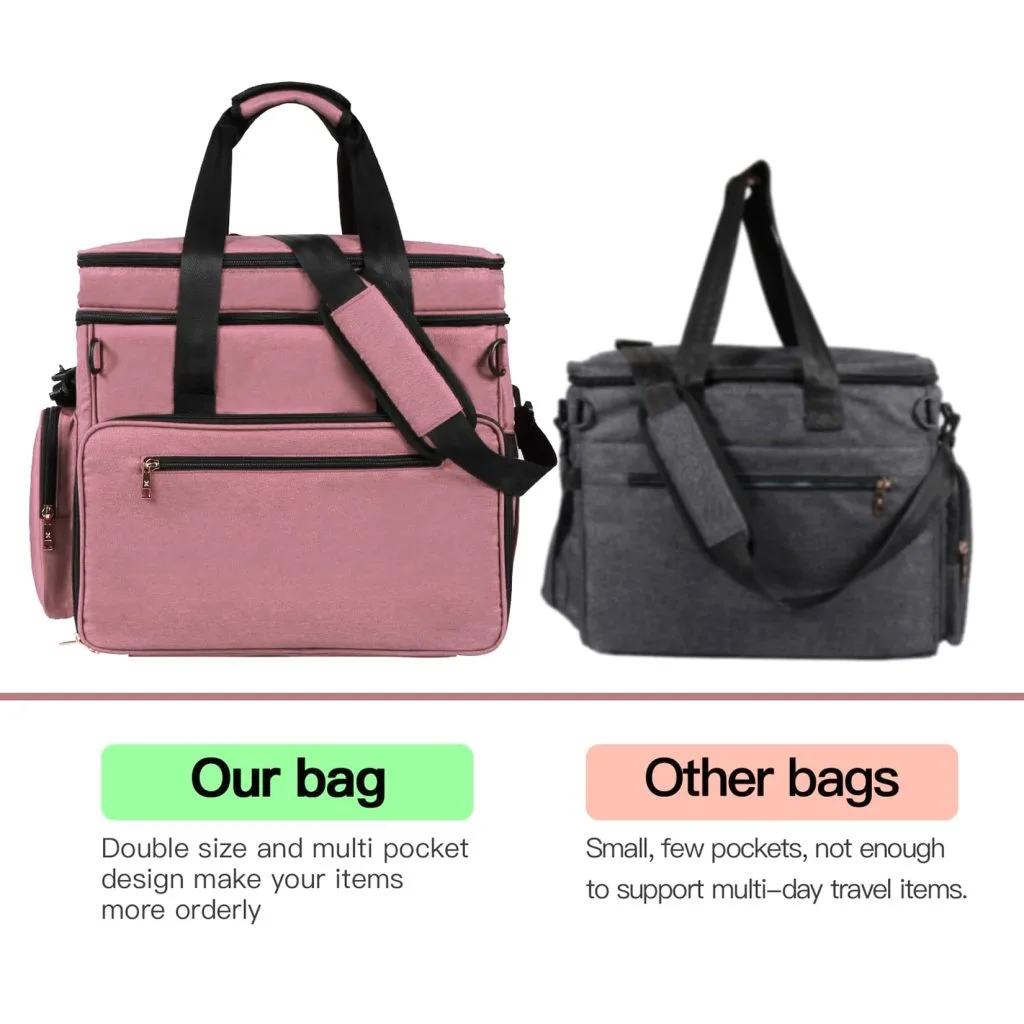
The order in which accessories launch determines whether a modular program feels like a system or like a bag with options. Our team plans the ecosystem as a three-wave release, sequenced by how much each item teaches the customer about the interface.
Wave one should contain exactly two accessories, and one of them should be functional rather than decorative. The strongest pairing is a strap set - backpack or shoulder - plus a pocket or pouch. The strap set demonstrates that parts carry load and can be changed; the pocket demonstrates that capacity can be customised. Two items, two ideas, no confusion.
Wave two, typically one season later, adds the structural accessory: a wheel chassis, a bed insert, or a second shell layer. This is the wave that changes the price architecture, because it lets a customer buy into a higher-use product without replacing the core. It is also the wave where the interface gets its real stress test.
Wave three is where brand expression lives: colour panels, seasonal graphics, licensed prints, collaboration patches. Because these ride on the standard interface they carry low minimums and short development, which is exactly what a limited-run or collaboration calendar needs.
Two discipline notes. First, resist launching more than three accessories in a wave; each one adds a packing combination, an instruction variant and an inspection item, and customers read a long accessory list as complexity. Second, name the interface on the packaging. If the system has a name - a rail, a track, a dock - the customer learns it once and then understands every future accessory automatically.
Customisation Levers a Modular System Opens
For a private label or OEM brand, the reason to build modular is the set of customisation levers it unlocks, most of which are unavailable or expensive in a fixed product. The table below maps the main levers against what they cost and what they allow.
| Customisation lever | Fixed product | Modular system | Development cost | Speed to market |
|---|---|---|---|---|
| Seasonal colourway | New dye lot, full MOQ | Panel or cover swap | Low | One accessory cycle |
| Collaboration graphic | Re-develop the bag | Printed panel on interface | Low | Shortest of any lever |
| Carry mode change | New pattern and shell | Strap or chassis accessory | Medium | One to two cycles |
| Capacity change | New size in the ladder | Extension or pocket module | Medium | One cycle |
| Retail exclusives | Separate SKU per retailer | Same core, different panel | Low | Fastest route to exclusives |
| Logo refresh | New shell or new print set-up | Swap the branded panel or patch | Very low | Same season possible |
The retail-exclusive row is the one buyers respond to. A modular core lets a brand give two different retailers visibly different products while producing one bag, which is a negotiation asset far more valuable than the small cost of an extra panel.
The logo-refresh row is the one brand managers appreciate later. A brand that changes its mark, or that runs a limited logo treatment for an anniversary, can do it on a panel rather than on a shell, which means no re-tooling, no new fabric booking and no minimum-quantity problem.
Sizing is the one lever modularity does not solve well. A modular system can change function and appearance cheaply, but it cannot change interior volume, so the size ladder still has to be developed as separate cores. Plan the ladder first and the modules second, in that order.
Cost, Inventory and Reorder Economics
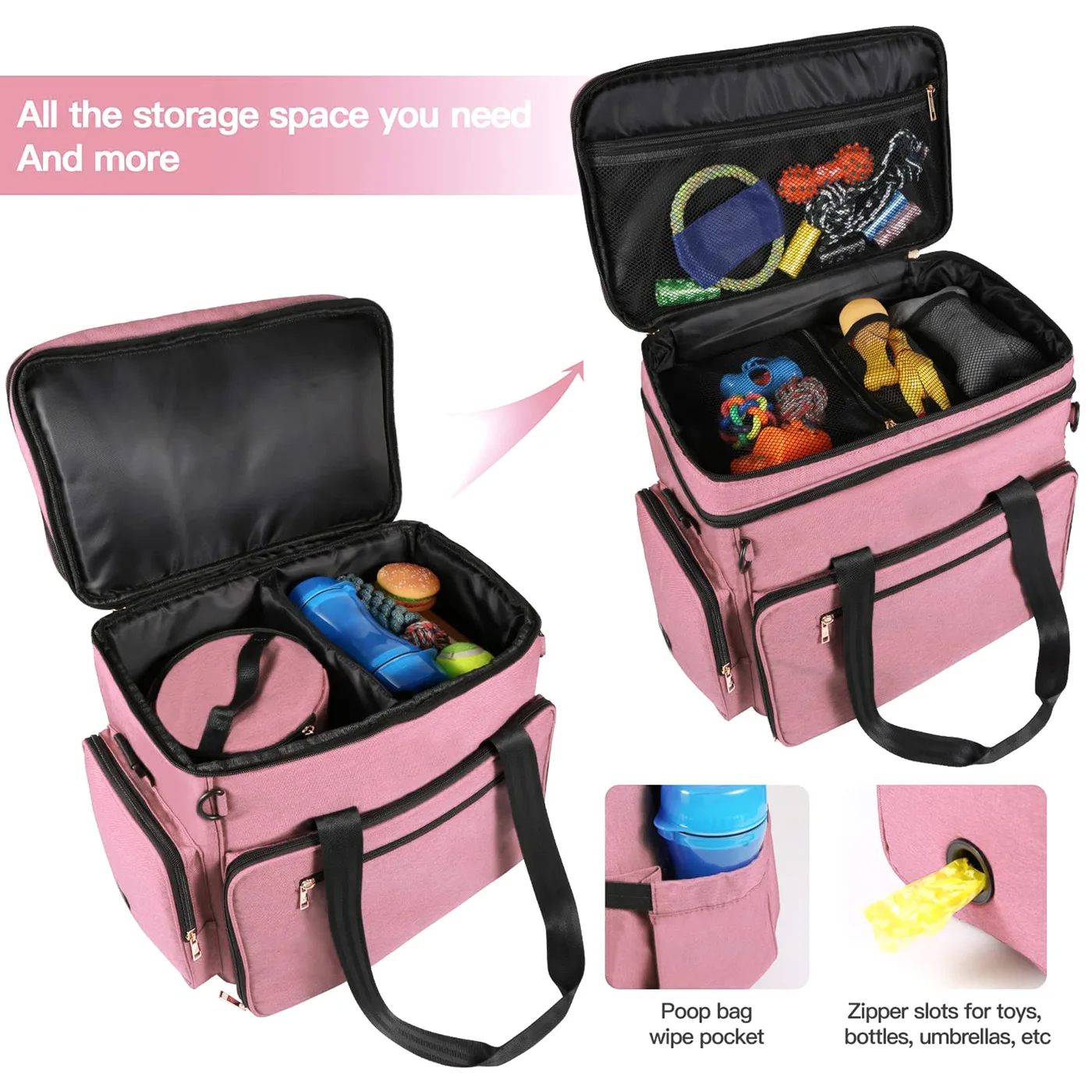
Modular programs shift cost from the first season into the accessory line, and they shift inventory risk in the same direction. Understanding both shifts is what makes the business case work, because the first-season unit cost is genuinely higher and a brand needs to know that going in.
Core cost carries the interface premium: reinforcement patches, standard hardware at every anchor, and a slightly heavier shell to carry the attachment loads. In practice that is 8-15 percent above an equivalent fixed bag. Accessories then carry their own cost, but they are optional revenue rather than baked-in cost.
Inventory is where the model pays. A brand selling three colourways of a fixed product holds three finished-goods lines. The same brand with a modular core holds one core line and three panel lines, and panels are cheaper to hold, cheaper to write off, and far cheaper to discontinue when a colour fails.
Reorder economics improve for the same reason. A reorder of a modular core is a single line item with a single specification, and a reorder of a sold-out colourway is a panel order rather than a full bag order. Over three seasons this consistently beats the fixed model on working capital even where the unit cost is higher.
The counterweight is complexity in the packing line. Every combination of core and accessory is a packing variant, and variants are where packing errors live. Our team handles this by specifying a single default ship configuration, with every other combination fulfilled from a marked accessory bin and a clear packing instruction sheet.
Packaging, Merchandising and the System Story
A modular system has to be explained at shelf, and the explanation has to fit on a box front. This is the hardest communication problem in the category, because the customer is being asked to understand a platform rather than a product, and platform stories are harder to tell than feature stories.
The solution our designers use is a three-icon system on the box front: core, one accessory shown attached, and a plus sign implying more. Three icons communicate an ecosystem; six icons communicate confusion. The full range belongs on the side panel and on the product page, not on the front.
Packaging structure should also anticipate the accessory business. A retail box designed for the core alone cannot later hold a core plus two accessories, and re-cutting a dieline costs more than designing the larger box in the first place. Size the box for the wave-two configuration from the start and use a filler panel for wave one.
Merchandising in store benefits from one deliberate choice: display the core with the most photogenic accessory attached, and hang the remaining accessories beside it. Customers buy the combination they can see, and an accessory in a polybag on a hook sells at a fraction of the rate of the same accessory shown fitted.
Material consistency holds the system together visually. A core in one shell fabric with panels in a second fabric can look like two products; the same shell fabric with a contrast binding reads as one designed family. Where a panel carries a print, keep the base cloth identical to the core so that shade and hand match under retail lighting, and approve both together against a documented textile standard such as OEKO-TEX where the retail buyer requires one.
Colour and Finish Consistency Across Core and Modules
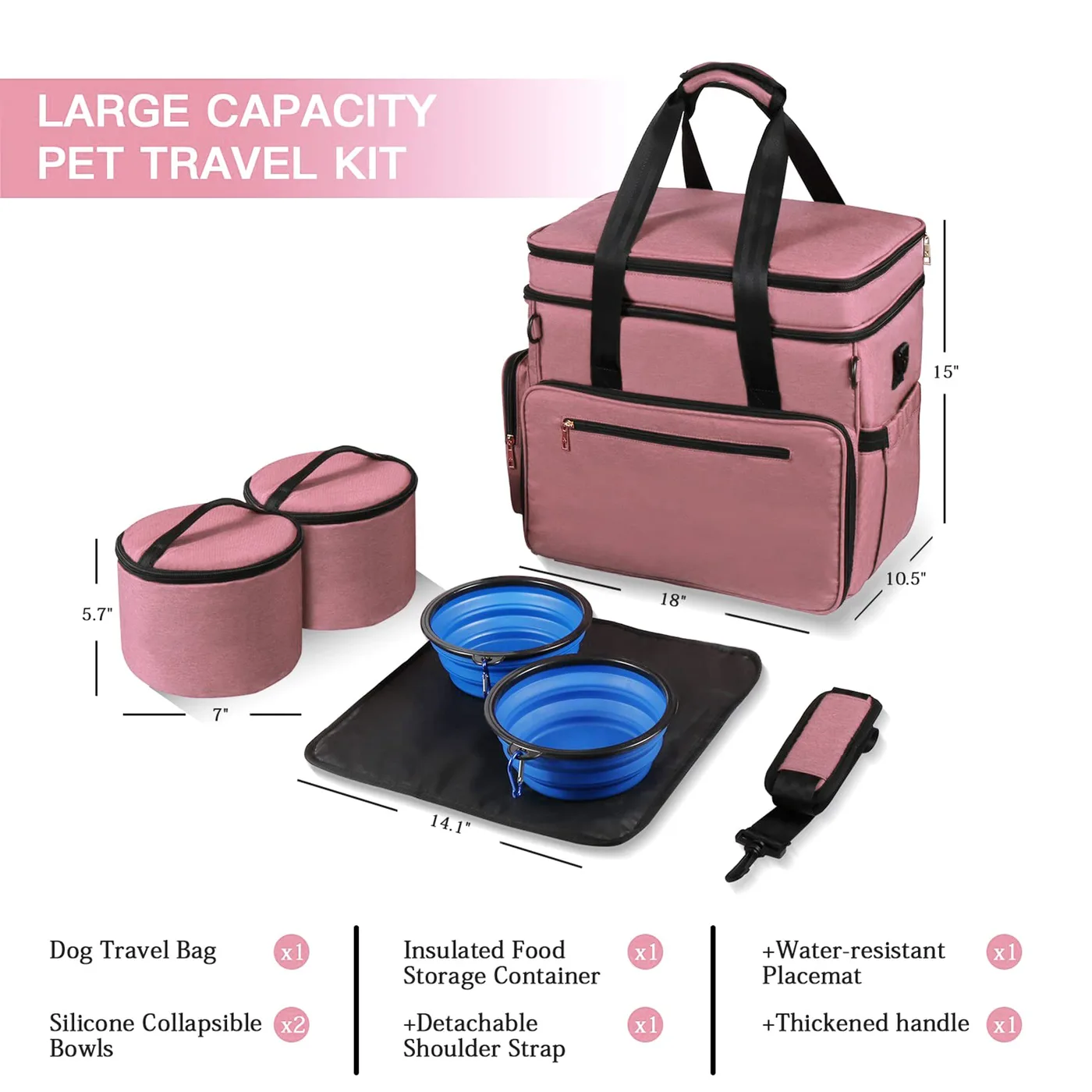
A modular system puts dyed shell fabric next to dyed panels next to moulded hardware next to printed labels, and the risk of visible disagreement scales with every module added. Colour discipline is therefore a system-level activity rather than a per-product one, and it starts with a short core palette that every module is approved against.
Three to five shades is the workable range. One hero shade for the core shell, one neutral for linings and bindings, one accent for pulls, webbing and stitch, and one or two seasonal shades that ride on panels rather than on the shell. Keeping seasonal colour on modules is what makes a limited run economically possible, because a seasonal panel is a small order while a seasonal shell is a full dye lot.
Approval should always be physical and always comparative. Approve the core and every module together under at least two light sources, because metamerism between a moulded part and a dyed fabric is the most common shade dispute in modular programs and it is invisible until the two are side by side in daylight.
Reference the shade to a physical standard rather than to a screen value. Industry practice is to issue approvals against Pantone codes, and to state a numeric tolerance so that a falling dye lot is re-approved rather than negotiated after the goods have shipped.
Finish consistency matters as much as colour. One hardware finish family across the core and every module - black nickel, light gold or gunmetal - is what makes a modular range read as one brand. Mixing finishes between the core and its accessories is the fastest way to make a considered system look like a set of unrelated purchases.
Where a module carries a print, keep the base cloth identical to the core so that hand, sheen and shade match under retail lighting. A printed panel on a different base cloth will always read as a different product, however well the artwork matches, because the surface reflects light differently in a store.
Building the Size Ladder on One Core Interface
Modularity solves function and appearance cheaply, but it does not solve volume, so a modular range still needs a size ladder built from separate cores. The design work is to make those cores share as much as possible - interface, hardware, materials, colourways - so the ladder costs less than three independent products.
Start with the interface and hold it absolutely constant across every size. The same webbing width, the same clip family, the same anchor geometry on the small, medium and large core. That single decision is what lets one accessory serve the whole ladder, and it is what makes the accessory business viable at all.
Share the material palette across the ladder for the same reason. One shell fabric, one lining and one hardware finish in three sizes means one dye-lot negotiation, one set of fastness tests and one approval cycle, instead of three. The saving is not in unit cost but in development time and in the risk of a shade mismatch between sizes sitting next to each other on a shelf.
Keep the component count flat as sizes grow. A large core should not have twice the parts of a small one; it should have the same parts at larger dimensions, plus whatever reinforcement the higher load requires. Where a larger size genuinely needs a different component - a heavier frame, a wider strap - that should be a documented variant rather than a quiet substitution.
Packaging scales with the ladder, and this is where modular programs most often overspend. Three core sizes plus accessories can mean a large number of packing combinations. Specify one default ship configuration per size, keep every other combination as a fulfilment variant, and the packing line stays manageable as the range grows.
The commercial payoff of a ladder built this way is that the second season can add a size, or add a module to the whole ladder, at a fraction of the original development cost - which is the entire argument for building modular in the first place.
Sampling, Interface Verification and Bulk Release
Modular programs need one sampling activity that fixed products do not: interface verification, run as its own round. Its job is to confirm that every accessory fits every core, in every colourway, with the rated load applied. That sounds obvious and it is routinely skipped, with the result that a wave-two accessory arrives that fits the sample and not the production run.
Round one is the core: silhouette, floor, ventilation, closure and the interface reinforcement. Judge it as a standalone product first, because a core that only works with accessories fitted is a weak core. Round two is the interface round, and it should include at least two physical samples of each accessory so that fit variation between units is visible rather than assumed.
Round three covers decoration, packaging and the wave-one accessory in final materials. Where a wave-two structural accessory such as a wheel chassis is already scoped, our team recommends a partial verification round for it in the same window, because its interface loads are the highest in the system.
Durability verification focuses on the interface rather than the bag: repeated attach-detach cycles, load applied through the accessory in its worst-case orientation, and abrasion on the interface contact points. Test methods published by AATCC cover the textile abrasion and colour-fastness side, and third-party verification is available through SGS.
Bulk release follows the range standard - pre-production check, inline checks, and final random inspection to the AQL 2.5 sampling plan with critical, major and minor classes - with one addition: every accessory is inspected for interface fit against a production core, not against a golden sample core, because that is where interchangeability actually fails.
Holding the standard across seasons
A modular system decays when the interface is allowed to drift. Write the interface dimensions into a standalone specification document separate from any individual product tech pack, and require any new accessory to be checked against that document before it is quoted. A single accessory released with an off-standard clip or anchor spacing will break interchangeability for everything that follows, and the repair is always more expensive than the discipline.
Order and quality terms
- MOQ 500 pieces per colourway; samples in 6-10 working days
- Bulk production 35-50 days after approval; AQL 2.5 inspection standard
- T/T 30/70 terms, FOB Xiamen, full document set per shipment
People Also Ask
Why build a modular pet carrier instead of a fixed one?
Because future changes become accessory orders rather than development projects. Seasonal colourways, collaboration graphics and retailer exclusives all ride on the interface at low minimums and short lead times.
What is an attachment interface in bag design?
The published standard by which accessories connect: webbing width, clip family, zip gauge and length, anchor spacing, reinforcement pattern and rated load. Everything in a modular program is a variation on how well that standard is specified.
Can modular accessories carry the pet's weight?
Yes for webbing, clip and buckle interfaces when rated above the loaded weight with a safety factor. Magnetic and snap interfaces suit decorative panels and pockets only, not load-bearing parts.
How do modular systems affect inventory risk?
Favourably. One core line plus panel lines replaces three finished-goods lines, and panels are cheaper to hold, write off and discontinue when a colourway underperforms.
Should each accessory have its own packaging?
Yes, and display the most photogenic accessory fitted to the core in store. An accessory shown attached sells at a multiple of the same item in a polybag on a hook.
How do I test that an accessory will fit future production?
Verify fit against at least two production cores rather than a single golden sample, run repeated attach-detach cycles, and apply load through the accessory in its worst-case orientation before release.
Frequently Asked Questions
What makes a pet carrier modular?
A fixed structural core plus a published attachment interface, so panels, pockets, strap sets and chassis can be added or swapped without re-cutting the bag. Three tests define it: interchangeability, removability in under thirty seconds, and documentability.
Which attachment interface should I choose?
Webbing and clip for technical and load-bearing systems, a standard-gauge zip track for fashion-led programs where the interface should be invisible, buckles for adjustable strap accessories, and magnetic or snap closures for light decorative panels only.
Does a modular core cost more than a fixed bag?
Yes, typically 8-15 percent more, because reinforcement, standard hardware and a slightly heavier shell are always present. The premium is recovered across the second and third seasons rather than in the first.
What is the MOQ for a modular program?
MOQ 500 pieces per colourway on the core shell. Accessories carry their own smaller minimums and their own dye-lot logic, which is what makes seasonal panels and collaboration runs economically viable.
How many accessories should launch in the first wave?
Two, and one should be functional rather than decorative. A strap set plus a pocket teaches the customer both ideas - that parts carry load and that capacity is customisable - without reading as complexity.
How many sample rounds does a modular program need?
Three plus a dedicated interface verification activity: core as a standalone product, interface fit across at least two samples of each accessory, then decoration, packaging and wave-one accessories in final materials.
What is the bulk lead time?
35-50 days after sample approval and deposit clearance, on T/T 30/70 terms, FOB Xiamen. Accessories are booked separately and arrive on their own schedules, so a missing accessory family can push a program to the full 50 days.
Can a modular system change the size of the carrier?
Not meaningfully. Modularity changes function and appearance cheaply but not interior volume, so the size ladder still has to be developed as separate cores. Plan the ladder first and the modules second.
How should a modular system be shown on packaging?
Three icons on the box front - core, one accessory attached, and a plus sign implying more - with the full range on the side panel. Size the dieline for the wave-two configuration from the start and use a filler panel for wave one.
How do I keep accessories compatible across seasons?
Hold the interface in a standalone specification document separate from any product tech pack, and check every new accessory against it before quoting. One off-standard clip breaks interchangeability for everything that follows.
What inspection standard applies to modular carriers?
Final random inspection follows the AQL 2.5 sampling plan with critical, major and minor classes. Every accessory should additionally be fit-checked against a production core rather than against a golden sample, because that is where interchangeability fails.
Is modularity right for a first-season brand?
Only if a second season is already planned. A brand launching one product and stopping pays the interface premium with nothing to recover it against; a brand with a seasonal or collaboration calendar recovers it within two drops.
Talk to QUANZHOU JUNYUAN BAGS about a pet carrier program: MOQ 500 pieces per colourway, samples in 6-10 working days, bulk production in 35-50 days under AQL 2.5 inspection.
Get a free quote Request a sample