Detachable Pet Carrier: Separate Parts Architecture Guide
A detachable pet carrier is built from two or more separable assemblies - typically a rigid base pod, a soft shell and a strap set - joined by zips, cam buckles or slide connectors so any part can be removed, replaced or sold alone. At MOQ 500 the connector and interface engineering adds roughly USD 2.20-4.80 per unit, and it opens a spare-part and accessory revenue line that a one-piece product cannot support.
Separability is a business model disguised as a feature. Once a carrier splits into parts, the brand can sell replacement shells in new seasonal colours, offer a washable liner as an add-on, and service a damaged component instead of replacing the whole product - each of which is a second purchase from the same customer. The engineering cost is interface discipline: every joint has to be strong enough to carry a live animal, simple enough to operate one-handed, and consistent enough that parts from different production runs still fit.
- Sampling: separable prototypes built with production connector hardware in 6-10 working days.
- Minimums: MOQ 500 units per colourway for complete carriers; individual spare parts carry their own lower component minimums.
- Schedule: bulk production in 35-50 days after sample approval and deposit.
- Quality: connector engagement, seam strength at each interface and interchangeability are inspected to AQL 2.5.
- Terms: T/T 30/70, FOB Xiamen, parts bagged and labelled by sub-assembly code for after-sales picking.
A personalized pet carrier programme needs the artwork file and the variable data list locked before sampling, otherwise the first shipment slips a full cycle.
What separable architecture actually buys the brand
There is a temptation to treat detachability as a convenience feature - easier to wash, easier to store - and to stop there. That undersells it badly. The more valuable consequence is that a separable product converts a single transaction into a relationship, because the parts that wear out are the parts the customer will buy again.
Consider what actually fails or fades on a pet carrier over two years. The shell takes the abrasion and the sunlight, so it fades and scuffs first. The liner takes the accidents, so it is the part that needs washing most often and eventually needs replacing. The strap set takes the load and the sweat. In a one-piece product, any one of those ending is the end of the product. In a separable product, each is a reorder - at a lower price point, at a much higher margin than the original sale, and with a customer who has already decided they like the brand.
That changes how the range should be planned. If shells are separable and interchangeable, a seasonal colour drop no longer requires new tooling or a new SKU in the full sense - it requires a shell run. Our production team has seen brands cut the working capital tied up in seasonal launches substantially with this approach, because the expensive structural parts are produced once and only the visible, fashionable part is produced per season.
There is also a retail argument. Separable products photograph well because they can be shown exploded - all the parts laid out - and that image communicates engineering effort and completeness in a way a single bag shot cannot. For a brand pitching to a buyer who is comparing five similar-looking carriers on a spreadsheet, the exploded view is a genuine differentiator, and it costs nothing beyond a photography setup.
Deciding where the product separates
The split lines are the whole design. Get them right and the product feels modular and clever; get them wrong and it feels like it might come apart at the wrong moment. There are three sensible places to cut.
The most common and usually the most useful split is base pod from shell. The pod carries structure, the floor board, the feet and often the ventilation base panel; the shell carries the fabric, the openings and the brand surface. This split pays off three ways: the pod can be rigid and wipe-clean while the shell is soft and washable, the shell can be changed seasonally without touching the structure, and a damaged shell no longer condemns the expensive structural part.
The second split is liner from shell. A removable, washable liner is the single most requested feature in the category, and separating it turns a cleaning problem into a spare-part sale. The engineering is trivial - a zip or a set of snap tabs around the interior perimeter - but the specification matters: the liner must be captive enough that a pet cannot burrow under it, and the attachment points must survive repeated removal and laundering.
The third split is strap set from body. This is the most commercially interesting and the most structurally demanding, because the straps carry the entire dynamic load. It is covered in depth elsewhere in this series, but the relevant point here is that a detachable strap set turns a carry-system decision into a purchase decision - a customer can start with a shoulder strap and add a backpack harness later, which is exactly the kind of upgrade path that builds attachment to a brand.
One principle should govern all three: never put a split line through a load path without a mechanical backup. A zip that carries pet weight will eventually open. If a joint is structural, it gets a buckle, a cam or a slide connector, and the zip becomes the cosmetic closure over it rather than the thing holding the animal in.
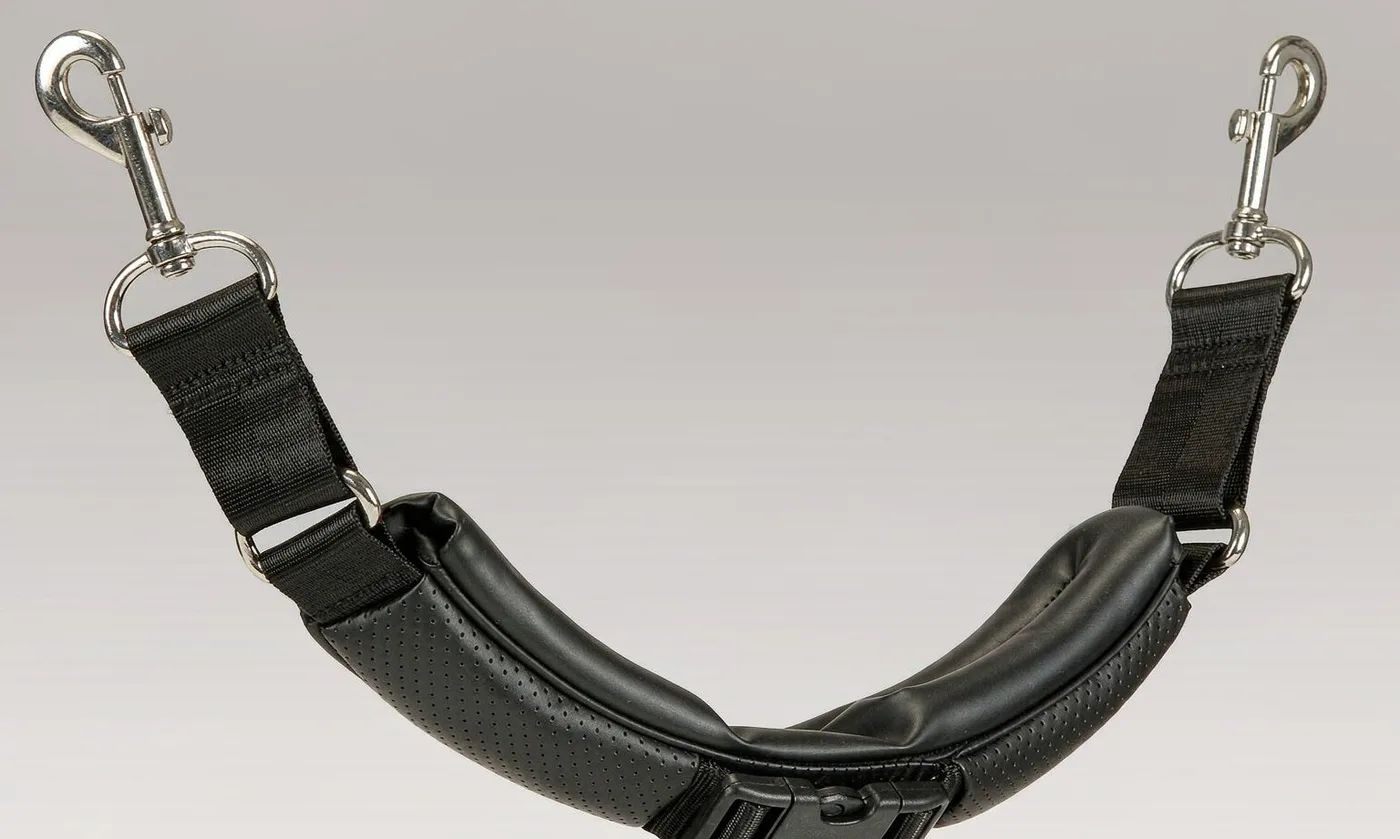
Connector hardware: zips, cam buckles and slide locks
Choosing the connector is choosing the user experience of separation, because it determines how much effort and how much confidence the customer feels when taking the product apart. The three families behave very differently.
Zips are the cheapest, the flattest and the most familiar. A quality coil zip with a branded pull separates a shell from a pod in one smooth motion and disappears visually when closed. Their limit is load: a zip is a closure, not a structural connector. Used for a liner or a non-load-bearing shell panel, they are ideal. Used where the animal's weight transfers across the joint, they are a liability. When zips are used on a separable carrier, our production team specifies a locking slider or a secondary snap tab at the terminus so the zip cannot creep open under vibration.
Cam buckles and side-release buckles are the workhorses for load-bearing separation. They carry real force, they give audible and tactile confirmation, and they can be operated one-handed with a pet in the other arm. The cost is bulk - a buckle assembly adds roughly 10-16 mm at the joint - and a slightly technical appearance. Both can be mitigated: low-profile cams sit flatter, and a fabric flap over the buckle keeps the line clean while remaining easy to lift.
Slide connectors - interlocking moulded profiles that engage by lateral movement - are the premium answer and the one that reads as most engineered. They distribute load along the whole joint rather than at discrete points, they hide completely inside a welt or seam, and they separate with a deliberate motion that feels secure rather than accidental. Cost at MOQ 500 runs roughly USD 1.40-2.60 per joint, and they demand tighter tolerance control, which is a real consideration when parts are made in different runs.
Whichever is chosen, the connector should be colour-stable across parts. A pod produced in one run and a shell in another must not arrive in visibly different shades, which is why every separable programme is approved against Pantone reference standards and re-checked at goods-in against the master standard rather than against the previous shipment.
Interchangeability: the tolerance problem nobody budgets for
Separability creates an obligation that one-piece products do not have: a part made in March must fit a part made in September. This sounds obvious and is routinely underestimated, because tolerance is cumulative and fabric moves.
Metal and moulded parts are the easy half. A moulded pod shell holds its dimensions within a few tenths of a millimetre across a production run, and a simple go/no-go gauge at inspection confirms it. The difficulty is soft goods. A fabric shell with a zipper perimeter will vary by several millimetres depending on seam allowance, fabric relaxation and humidity at the time of sewing, and that variation is enough to turn an easy fit into a fight.
The mitigation is to design the interface with accommodation rather than precision. A shell that must meet a pod exactly will fight; a shell with a 6-10 mm overlap, a slight ease, and a closure that tolerates variation will assemble smoothly every time. Practically, this means specifying the joint as a range - the shell perimeter sits somewhere within a tolerance band - and designing the closure so the band is invisible once assembled.
The second mitigation is a physical interchangeability check at inspection. Our production team pulls random pods and shells from different cartons and different production dates and assembles them, because that is the only test that actually proves the promise made to the customer. It takes minutes, it is included in the AQL 2.5 inspection plan for separable programmes, and it catches the one failure mode that would otherwise only be discovered by an end user trying to fit a replacement shell.
Worth stating plainly for planning purposes: interchangeability is why separable products should not be sourced part-by-part from different suppliers. Pods from one facility and shells from another will drift apart. Keeping the whole system within a single coordinated production programme is what makes the promise hold.
After-sales economics: spare parts as a revenue line
Once parts are separable and interchangeable, after-sales stops being a cost centre and starts being a channel. This is where a brand team should spend real thought, because the margin structure is unusually attractive: the customer is already acquired, the product design already exists, and the order size can be small.
The practical model has three tiers. Consumables - liners, pads, washable inserts - are bought repeatedly and should be priced for volume rather than for margin, because their job is to keep the customer in the ecosystem. Replacement parts - shells, strap sets, floor boards - are bought occasionally in response to damage or fading and carry healthy margin. Upgrade parts - a backpack harness for a carrier that shipped with a shoulder strap, a winter liner, a premium pod - are the most profitable because the customer is buying aspiration rather than necessity.
Two operational decisions determine whether this works. The first is coding: every sub-assembly needs a part code printed or labelled on the part itself, not only on the packaging, so a customer service team can identify what is needed from a photograph. The second is packing for picking: parts should be bagged and labelled by code inside the master carton, and spare-part inventory should be planned at the same time as the first production run rather than scrambled together when the first request arrives.
The commercial argument to bring to a retail buyer is also stronger for a separable product, because it reduces returns. A stained liner is currently one of the most common reasons a pet carrier comes back to a retailer, and a separable liner converts that return into a wash. Framing the feature in return-rate terms rather than convenience terms is usually what gets it onto the shelf.
Interface specification and cost comparison
The table below sets out the main interface options with the properties that matter at specification stage. It is worth reading the load column first: it determines which options are even available for a given joint, and everything else is a consequence.
| Connector | Load capacity | Separation effort | Visual bulk | Added cost at MOQ 500 |
|---|---|---|---|---|
| Coil zip with locking slider | Non-structural | One smooth motion | Flat, 3 mm | USD 0.90-1.60 per joint |
| Snap tab array with zip cover | Light structural, to 5 kg | Two-stage | Near flat, 4 mm | USD 1.30-2.10 per joint |
| Low-profile cam buckle | Structural, to 14 kg | One-handed | Moderate, 11 mm | USD 1.80-2.90 per joint |
| Side-release buckle with flap cover | Structural, to 16 kg | One-handed | Moderate, 14 mm | USD 2.10-3.20 per joint |
| Interlocking slide profile, concealed | Structural, to 18 kg | Deliberate lateral motion | Minimal, 5 mm | USD 2.40-4.80 per joint |
The pattern across the table is that concealment costs money. The flattest and most invisible options - the concealed slide profile and the snap tab array - sit at the top of the cost range, while the bulkiest option - the side-release buckle - is among the cheapest. For a design-led private label line, paying for concealment is usually correct, because the joint is what the customer sees when the product is assembled, and a visible buckle on a fashion-positioned carrier reads as outdoor gear.
The other thing to budget is the second joint. Most separable carriers have two or three interfaces, not one, and the costs in the table multiply accordingly. The discipline is to decide which joint carries load and spend there, then use the cheapest acceptable option on the non-structural ones - a zip for the liner, for example, regardless of what the shell uses.

Compliance, testing and the separable product
Separable products face one additional regulatory consideration that one-piece products largely avoid: each separable part is potentially a small part, and small parts attract scrutiny. Any component that can be detached without a tool and is small enough to present a choking or ingestion hazard needs to be assessed as such, particularly for markets with strict child-product rules that get applied broadly to pet accessories sold alongside them.
The practical response is to design detachable elements so they are either too large to be hazardous or require a deliberate two-action release. A strap set that separates with a single button press is more likely to raise questions than one needing a squeeze-and-pull. This is not usually a difficult constraint to meet, but it is much cheaper to design in than to retrofit.
Materials across all separable components are handled under one conformity system rather than per part. Our partner facilities document against REACH requirements for Europe and provide Proposition 65 awareness for California, and textile components are assessed to OEKO-TEX standards where the brand requires it. Because a separable product has more distinct materials, this documentation is slightly more work, and it should be scoped at sampling rather than discovered at shipment.
Mechanical testing focuses on the joint rather than the whole product. Cycle testing - typically 500-1,000 separate-and-rejoin operations - confirms that the connector and its attachment do not degrade, and a pull test to 3-4 times rated pet load at each structural interface confirms the safety margin. Both are run on engineered samples and repeated on production pulls, with results reported against recognised test methods such as those published by ASTM International.
Packaging a separable product so the mechanic is understood
A detachable carrier has a communication problem that a one-piece product does not: the customer cannot tell from a closed box that it comes apart, and if they cannot tell, they will not pay for it. Packaging and photography therefore carry more weight here than in most categories, and they should be briefed at the same time as the product rather than after it.
The most effective device is an exploded view - the parts separated and laid out - on the front or side panel of the box. It communicates engineering, completeness and value in a single glance, and it does something subtler: it tells the customer that replacement parts exist, which plants the seed for the after-sales purchase before the first one is even made. A simple line drawing works; a photographic exploded shot with each part captioned works better and is worth the small additional cost.
The structural core should also be named. If the pod has a name - a chassis, a base unit, a frame - it becomes something the customer can ask for by name later, and naming is what turns a component into a platform. This is standard practice in technical categories and almost unused in pet accessories, which is precisely why it is an available advantage for a brand willing to do it.
Finally, plan in-box documentation for the separation mechanic. A single card showing how to detach and reattach each part, with the part codes printed, does three jobs: it prevents the customer from forcing a connector the wrong way, it reduces the support emails that follow any separable product launch, and it puts the spare-part codes in the customer's hands at the moment they are most likely to need them. It costs a few cents and it materially improves the ownership experience.
Building the separable range: a practical sequence
The sequence below reflects what actually works, and the ordering matters more than any individual step. Teams that start with the visible shell and work backwards toward the structure almost always end up re-engineering, because the structure is what everything else is measured against.
Start with the structural core. Decide what the rigid part is, what it carries, and what its dimensions are, because everything else is designed around it. A pod or base board specified early can serve several shell designs later; the reverse is not true. Get the core right and the range has a foundation to extend from for years.
Next, define the interface standard and freeze it. This is the commitment that makes future parts fit: a documented joint geometry, connector specification and tolerance band that every future shell must meet. Freezing it costs some design freedom later, but it is the only way the interchangeability promise survives contact with real production.
Then design the launch shell and, importantly, the second one. A separable programme launched with only one shell option has paid for the interface engineering and captured none of the commercial upside. Our production team generally recommends launching with two shells - a core neutral and a seasonal statement - so that the accessory mechanic is visible to the customer from day one rather than promised for later.
Finally, plan the spare-part inventory with the first production run. Ordering an additional 3-5% of liners and strap sets alongside the main run costs very little at MOQ 500 and means after-sales requests can be answered immediately rather than triggering a small, expensive reorder later.
One last planning note that saves real money. A separable architecture is only worth its engineering cost if at least two shells or two strap sets are actually produced. A brand that builds the interface, launches one configuration and never extends it has paid for separability and captured none of its return. If the range plan does not genuinely contain a second part within about twelve months, the honest recommendation is a simpler one-piece product, with the connector budget moved into better materials where the customer will actually notice it. Separability is a strategy, and strategies need a second act before they pay.
Production capability
- SGS-verified production space of 4,950 m², 149 machines, 7 assembly lines
- Pet carrier and pet bag output since 2014 from a 137-person team
- 200,000 units shipped monthly under BSCI and ISO 9001 systems
People Also Ask
What is a detachable pet carrier?
A carrier built from separable sub-assemblies - typically base pod, soft shell and strap set - joined by zips, buckles or slide connectors so parts can be removed, replaced, washed or sold individually.
Why would a brand choose a detachable carrier design?
Because separability creates repeat purchase. Replacement shells, washable liners and upgrade strap sets turn one sale into an ongoing relationship at higher margin than the original transaction.
Are detachable parts strong enough to carry a pet safely?
Yes when the load-bearing joint uses a cam buckle, side-release buckle or interlocking slide profile rather than a zip. Structural interfaces are pull tested to 3-4 times rated pet load.
How much does a detachable design cost to develop?
Interface engineering and connector hardware add about USD 2.20-4.80 per unit at MOQ 500. Development is usually recovered through accessory and replacement-part revenue across the life of the range.
Can I buy replacement shells in new colours later?
That is the point of freezing an interface standard. As long as the standard is documented and production stays within one coordinated programme, shells produced later will fit pods produced earlier.
Is a removable liner worth specifying?
It is the highest-value single separable feature. It addresses the most common reason for both product replacement and retail returns, and it creates a low-price repeat purchase with strong customer retention value.
Do detachable carriers fall apart accidentally?
Not when connectors are specified correctly. Structural joints use positive-locking hardware with audible and tactile confirmation, and separation requires a deliberate action rather than incidental pressure.
Frequently Asked Questions
What parts of a pet carrier can realistically be made detachable?
The three practical separations are the rigid base pod from the soft shell, the interior liner from the shell, and the strap set from the body. Each has a different load profile and therefore a different connector requirement.
Is a zip strong enough to hold the parts together?
Not on its own where pet weight transfers across the joint. Zips are closures, not structural connectors; a load-bearing separation needs a cam buckle, side-release buckle or interlocking slide profile, with the zip used as a cosmetic cover.
How do you guarantee replacement parts will fit later?
By freezing a documented interface standard - joint geometry, connector specification and tolerance band - keeping production within one coordinated programme, and running cross-batch interchangeability checks during AQL 2.5 inspection.
Does making a carrier detachable increase the unit cost much?
It adds roughly USD 2.20-4.80 per unit at MOQ 500 depending on connector type and how many joints the design has. The cost is usually recovered through spare-part and accessory sales rather than through the first transaction.
Can separable parts be made in different colours across seasons?
Yes, and that is a principal benefit. Structural parts are produced once while shells run per season, though each shell batch must be approved against the master colour standard so parts from different runs agree.
What is the minimum order for spare parts on their own?
Complete carriers follow MOQ 500 per colourway. Individual spare components carry lower component-level minimums, and we recommend ordering 3-5% additional liners and strap sets with the first production run.
How long does a detachable carrier programme take to develop?
Engineered samples with production connector hardware take 6-10 working days. Bulk production runs 35-50 days after sample approval and deposit, with interface and interchangeability checks included in the inspection plan.
Are detachable small parts a safety concern?
They can be. Components that detach without a tool and are small enough to present an ingestion hazard should be designed either oversized or with a deliberate two-action release, and this is far cheaper to design in than to retrofit.
How many separation cycles should the connectors survive?
500-1,000 separate-and-rejoin operations is the standard target for a consumer product, well above realistic use. The acceptance criterion is that engagement force and seam integrity do not measurably degrade across the test.
Can an existing one-piece carrier design be converted to a detachable one?
Occasionally, but the base panel usually needs re-engineering to accept a structural interface. In most cases developing the separable architecture properly is faster and cheaper than converting an existing pattern.
Does detachability help with cleaning?
Yes, and it is the most cited consumer benefit. A removable liner converts the most common soiling event into a wash rather than a product replacement, which is also why it measurably reduces retail return rates.
How should separable parts be labelled for after-sales?
With a part code on the component itself, not only on the packaging, plus bagging and labelling by sub-assembly inside the master carton so spare-part requests can be picked accurately from a single photograph.
Can the strap set be upgraded after purchase?
Yes, provided the attachment points are specified as a standard from the outset. That upgrade path - shoulder strap to backpack harness, for example - is one of the most profitable after-sales mechanics available in the category.
Talk to QUANZHOU JUNYUAN BAGS about a pet carrier program: MOQ 500 pieces per colourway, samples in 6-10 working days, bulk production in 35-50 days under AQL 2.5 inspection.
Get a free quote Request a sample