Front Handle: Easy Access - Custom Pet Carrier Front Design
A front handle sits on the face of a pet carrier and serves two jobs at once: it gives a hand a place to steady the bag and it occupies the most photographed square centimetres on the product. The working specification is a centred or offset grip of 110-150 mm with a root reinforcement of at least three times its width, because a front panel is usually the least structural surface on the shell.
The front of a carrier is its brand face. It is what appears in the hero image, what faces the aisle on a shelf and what a customer touches when they steady the bag against their body. Putting a handle there is therefore a branding decision before it is an engineering one, and the two have to be reconciled: the handle has to carry load into a panel that is mostly window, mesh and zipper, while looking like the most deliberate detail on the product. Programmes that settle this early get a signature; programmes that settle it late get a compromise repeated across every asset they ever shoot.
- Sampling: front handle assemblies with alternative plates and wraps in 6-10 working days.
- Minimums: MOQ 500 units per colourway for custom plates, wraps or moulded grips.
- Schedule: custom plate tooling runs alongside shell sampling; bulk completes in 35-50 days.
- Quality: pull, cycle and finish checks with finished goods inspected to AQL 2.5.
- Terms: T/T 30/70, FOB Xiamen, front panels masked or sleeved so face materials arrive unmarked.
Custom cat carrier shells come in soft, vacuum-formed and injection-moulded variants, and each one carries its own tooling and MOQ pool.
The front panel is the most expensive real estate on the product
In a carrier range, the front panel does the work that a logo does on a garment. It is the surface that appears in the main product image, the thumbnail in a marketplace grid, the face turned toward the aisle on a shelf and the part a customer points at when they describe the product to someone else. Every design decision on that panel - including whether a handle goes there at all - is therefore a brand decision with engineering consequences.
The tension is structural. A front panel is usually the least load-bearing surface on the shell. It carries a mesh or clear window, one or two zipper lines, possibly a pocket and often a printed or embroidered mark. It is a composite of openings rather than a continuous piece of fabric, and each opening interrupts the load path. A handle anchored into that panel without a plan will either distort the window, pull the zipper out of true, or tear out progressively from the root.
That is not a reason to avoid a front handle - it is a reason to design the panel around it. The clean solution is to define a continuous structural band on the front that runs unbroken from one side seam to the other, and to put the handle roots in that band. The window, the zipper and the pocket all sit within the band rather than cutting across it. This is a pattern decision made at concept stage and it costs nothing once it is drawn; it is expensive to add later, which is why front handle programmes are decided early or compromised permanently.
There is a visibility argument in the other direction as well. A handle on the front is a handle in every photograph. If it is well executed - a clean wrap, a considered plate, consistent stitching - it becomes part of the brand's visual signature and repeats across the range at no marginal cost. If it is an afterthought, it appears in every asset the brand produces for the life of the product, which is a long time to live with a trim decision.
Finally, the front handle answers a real use case. Steadying a loaded carrier against the body while opening a door, paying for something or reaching for a leash is a one-handed action that needs a front-facing grip. Customers perform it constantly and rarely notice, which is the highest compliment a piece of industrial design can receive.
There is a second, quieter use case that only becomes obvious once the product is in the field. When a carrier is set down and opened, the front handle is what a handler grips to keep the bag from sliding away - on a tiled clinic floor, on a car seat, on a check-in counter. A bag with no front grip gets held by an edge or by the opening frame, both of which are the parts least able to take it. Adding a sanctioned grip for that moment costs the same as any other handle and removes a habit that slowly destroys openings and edges.
Reach geometry: what the hand does before the eye looks
A front handle is used without being looked at, which means its geometry has to match an instinctive reach. The hand goes to the centre of the face at roughly chest height on the bag, closes, and pulls inward. Everything about the specification follows from that motion: height, width, standoff and the angle at which the handle meets the panel.
Height is the first variable and the one most often set by a stylist rather than an engineer. Too high and the handle crowds the top seam and fights the zipper; too low and the bag tips when lifted. The working range puts the handle centre in the upper third of the front panel, which is where the hand naturally arrives and where the shell structure is usually strongest because it is closest to the top seam.
Width is the second. A grip of 110-150 mm suits an adult hand with a glove on; narrower than that and the handle becomes a finger loop rather than a handle, wider and it starts to read as a strap. This dimension also sets the reinforcement footprint, because the roots sit at each end and the load spreads outward from them - so a wider handle needs a wider band, not just more webbing.
Standoff matters less here than on a side grab but is not irrelevant. A front handle that lies flat against a mesh window invites the hand to scrape the mesh, and one that stands too proud catches on clothing and on shelf edges. Around 30-45 mm of clearance is the comfortable middle, achieved with a slightly longer loop and a wrap with enough body to hold the arc.
| Dimension | Working range | Consequence of getting it wrong |
|---|---|---|
| Grip width | 110-150 mm | Becomes a finger loop or reads as a strap |
| Height on panel | Upper third | Crowds the zipper or tips the bag |
| Standoff | 30-45 mm | Scrapes the mesh or catches on clothing |
| Root reinforcement | 3x handle width | Progressive tear into the window |
| Plate width | 20-30 mm | Overwhelms or disappears on the grip |
| Structural band | Continuous side seam to side seam | Load path interrupted by openings |
The last variable is symmetry. A centred handle reads calm, formal and symmetrical, and it suits fashion and heritage positioning. An offset handle - typically shifted by 30-60 mm - reads more dynamic and leaves room for a logo block beside it, which suits sport and technical positioning. Both are defensible; the mistake is drifting between them across a collection, which makes a range look assembled rather than designed.
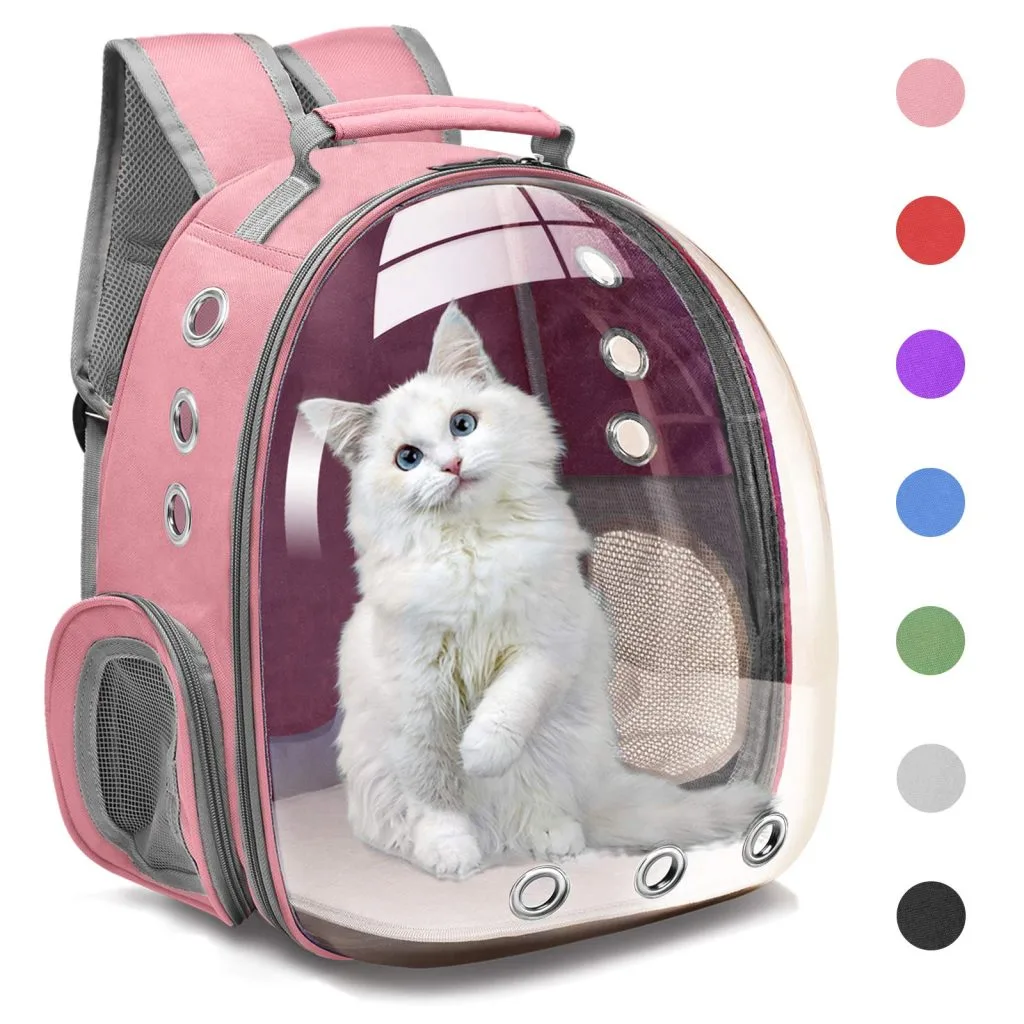
Logo real estate on and around the handle
The front handle and the front logo compete for the same space, and the resolution defines how the product reads. Four arrangements cover most programmes, and the choice is a positioning decision that should be made with the retail price and the competitive set in view rather than in isolation.
The first is the handle as logo: the mark is carried on a plate, a moulded grip or a woven tape on the handle itself, and the rest of the front panel stays clean. This is the most restrained option and the one that reads most expensive, because it trusts a small detail to carry the identity. It suits premium and fashion positioning and it survives close-up photography well.
The second is handle plus adjacent block: the handle sits centred and the mark sits below or beside it, at a defined distance. This is the most common commercial arrangement because it delivers both a visible mark and a design detail, and it gives the brand two shots at being seen in a thumbnail. The discipline is in the spacing - a fixed distance repeated across the range, not a per-SKU judgement.
The third is the logo on the panel and a plain handle. This is the cheapest and the safest, and it is right when the mark is the asset and the handle is utility. The risk is that the front reads busy if the panel also carries a window, a pocket and a zipper, so this arrangement usually works best on clean minimal shells.
The fourth is the handle integrated into a graphic: the wrap or the panel behind the handle carries a print that the handle sits within, so the two read as one composition. This is the most editorial option and the one most often used for capsules and collaborations, where the front is treated as a poster rather than as a spec sheet.
Colour management underpins all four. A plate, a wrap and a panel graphic are three substrates with three different behaviours, and the brand mark has to land at the same shade on each. Approving a physical reference on each substrate under one light source - rather than approving a digital file three times - is the procedural discipline that prevents a mismatched front, and colour standards from Pantone give both sides a shared target to approve against.
One caution applies to all four arrangements: legibility at thumbnail size. A mark carried only on a 22 mm plate may be crisp in a studio image and unreadable in a 200 pixel marketplace grid, which is where most purchase decisions actually happen. The conventional remedy is a two-tier identity - a small mark on the handle for close-up credibility and a larger mark elsewhere on the panel for distance legibility - with the two sized for different viewing distances rather than scaled versions of the same artwork.
Retail: hanging, tags, facings and the shelf conversation
Front handles earn part of their keep at retail. If a programme is destined for peg hanging, the front handle is usually the hanging point, which means it has to hold the loaded product on a hook for a season without creeping, stretching or distorting the panel. That is a different test from a lift test, and it is the one that decides whether a retailer accepts the packaging.
Hanging geometry starts with the hook. Standard peg hooks have a defined diameter and length, and the handle arc has to sit on one without the product leaning forward or back. That usually means a slightly tighter arc than the ergonomic optimum and a firmer wrap, which is a compromise worth sampling explicitly rather than discovering at the fixture.
Creep is the failure mode. A webbing handle hung loaded for weeks slowly elongates, and the product gradually sits lower on the peg until it touches the shelf below. Specifying a low-stretch webbing and testing under sustained load for a defined period is cheap insurance, and it produces a number a buyer can be shown.
Tags are the second retail question. A front handle is the natural home for a hangtag, a care card or a fitting instruction, and it is the only place where those items are read before purchase rather than after. Deciding where the tag threads - through the handle root, around the grip or on a separate loop - is a small decision with an outsized effect on how complete the product looks on a peg.
Facings and shelf presentation are the third. On a shelf rather than a peg, the front panel faces the aisle and the handle becomes part of the facing: if every unit's handle stands at the same angle, the row reads as a deliberate block. That consistency is produced by the wrap stiffness and the packing, both of which are specification items rather than retail luck. Our notes on retail ready display packaging cover the carton side of the same conversation.
Living with an entry opening on the same panel
Most front-handle designs also have an opening on the front panel - a front entry zipper, a mesh window that unzips, or a flap. Sharing a panel between a handle and an opening is the core engineering problem of this configuration, and it is solved by separation rather than by reinforcement.
The rule is straightforward: the handle's load path and the opening's perimeter must not cross. A zipper line that passes under a handle root will eventually distort, because the handle pulls on one side of the zipper and not the other. Moving the zipper line below the handle band, or routing it around the reinforcement rather than through it, resolves the conflict at zero cost if it is decided at pattern stage and at significant cost afterwards.
Windows introduce the second conflict. A clear or mesh window is not structural, so a handle root cannot anchor into it, and the handle cannot press against it when the bag is carried. Reserving a band of solid fabric around the window - typically 25-40 mm - gives the roots somewhere to live and gives the window a defined edge that reads as design rather than as an afterthought.
Pockets are the third occupant. A front pocket under a front handle is awkward to open when the bag is being steadied by that same handle, which is a use conflict rather than a structural one. The usual resolution is lateral: pocket to one side, handle centred or offset away from it, so the two can be used simultaneously.
Where a programme is planning dual or multiple access points, the front handle should be specified alongside the entry strategy rather than after it. Our notes on dual entry architecture and on side entry openings both assume the front band is already defined, because retrofitting a handle into a finished front pattern is the most common source of compromise in this configuration.
Materials, edges and the close-up test
A front handle is photographed at full resolution more than any other component, which means its material specification has to satisfy a close-up test as well as a load test. Seen at three metres, most wraps look fine. Seen at 300 millimetres in a product gallery, stitch consistency, edge finish and plate alignment all become visible, and they become visible permanently.
Wrap material is the first choice. A fabric wrap matching the shell reads cohesive and calm; a contrast wrap reads sporty and gives the brand a second colour to play with; a PU or leather wrap reads premium and shows the stitch detail best. Whichever is chosen, the specification should state thickness and seam position, because a wrap seam that drifts to the front of the grip will be visible in every photograph and felt by every hand.
Edges are the second. A raw webbing edge on a front handle looks unfinished in close-up; a bound or turned edge looks considered. Binding in a contrast tape is a very cheap upgrade that reads as craft, and it also protects the wrap from fraying at the point where hands pass most often.
Plates and hardware are the third and the most photographed. A die-cast plate with a die-struck or laser-etched mark, centred and aligned to the handle axis, is the single strongest quality signal available at this price point. Alignment matters: a plate rotated by three degrees is invisible in a sample photograph and obvious in a product gallery, so the specification should include an alignment reference rather than an instruction to centre it.
Textile behaviour closes the list. Wrap materials should be specified for abrasion and for colour fastness to rubbing, because the front handle meets clothing constantly; methods from AATCC give a reproducible way to express both, and inputs can be supplied as OEKO-TEX certified where a retailer asks for restricted-substance documentation.
The close-up test itself is worth formalising. Our design team reviews front handle samples as macro photographs at the resolution an e-commerce gallery uses, because defects invisible at arm's length - a drifting wrap seam, a plate rotated a few degrees, inconsistent stitch spacing - are exactly what customers zoom into before they buy. Adding half a day of photography to the sample stage is cheaper than discovering the same problems in the first production run, and it produces an asset set the brand can use for approval records.
Cost tiers, sampling and the launch calendar
Front handle cost splits cleanly by tier, and the tier should be chosen against retail price rather than in the abstract. A plain webbing loop with a bound edge and bar-tacked roots is the entry execution; adding a fabric wrap and a woven tape mark moves into the core tier; a plate or a moulded grip moves into signature; and a custom-tooled grip with a metal plate sits at the top.
| Tier | Construction | Added unit cost | Typical retail band |
|---|---|---|---|
| Entry | Webbing loop, bound edge | USD 0.30-0.55 | Under USD 39 |
| Core | Fabric wrap, woven tape mark | USD 0.75-1.30 | USD 39-79 |
| Signature | Wrap plus die-cast plate | USD 1.60-2.80 | USD 79-129 |
| Flagship | Moulded grip plus metal plate | USD 3.20-5.40 plus tooling | USD 129 and above |
Sampling runs in the usual three rounds, with the first - handle assemblies with alternative wraps and plates - produced in 6-10 working days. The important discipline in this configuration is to sample the handle on a real front panel rather than on a flat test swatch, because the panel's window, zipper and curvature all shift how the handle sits. A handle approved flat will behave differently in the product, and the difference shows up in photography before it shows up in returns.
Tooling is the schedule risk whenever a plate or a moulded grip is specified. Tools are cut in parallel with shell sampling rather than after final approval, which is the standard discipline across our programmes and the reason custom hardware rarely delays a season when it is decided early.
Bulk completes in 35-50 days, terms are T/T 30/70 FOB Xiamen, and finished goods are inspected to AQL 2.5 with root reinforcement and plate attachment classified as critical. Mechanical test methods are referenced to ASTM procedures and the quality system is maintained under ISO 9001, so a specification written this season can be audited against next season's production without translation.
Production capability
- SGS-verified production space of 4,950 m², 149 machines, 7 assembly lines
- Pet carrier and pet bag output since 2014 from a 137-person team
- 200,000 units shipped monthly under BSCI and ISO 9001 systems
People Also Ask
Why put a handle on the front of a pet carrier?
Two reasons: it gives a hand an instinctive place to steady a loaded bag against the body, and it occupies the most photographed surface on the product, which makes it a branding asset as well as a functional one.
Can a front handle be added to a panel with a mesh window?
Yes, if a continuous structural band is reserved around the window. Handle roots must anchor into solid fabric, not into mesh, and a 25-40 mm solid margin around the window usually provides it.
Should the front handle be centred or offset?
Centred reads calm and formal and suits fashion positioning; offset by 30-60 mm reads dynamic and leaves room for a logo block. Either is defensible, but drifting between the two across a collection makes a range look assembled.
Will a front handle work for peg hanging?
It can, and it is usually the hanging point. It needs a tighter arc, a firmer wrap and low-stretch webbing, plus a sustained-load creep test, because a hung loaded handle slowly elongates over a season.
How is a front handle reinforced?
Into a continuous structural band running from side seam to side seam, with a reinforcement patch at least three times the handle width and bar-tacked roots, so the load never crosses a zipper line or a window edge.
What does a branded front handle cost?
From roughly USD 0.30 for a plain bound loop to USD 3.20-5.40 plus tooling for a moulded grip with a metal plate. The tier should track the retail price rather than being uniform across the range.
Frequently Asked Questions
What is the MOQ for a custom front handle?
MOQ 500 units per colourway applies where the handle uses a custom plate, a moulded grip or a custom woven mark, because each carries setup or tooling. Stock webbing with a stock wrap can sometimes be placed below that.
How long does a front handle sample take?
Handle assemblies with alternative wraps and plates are produced in 6-10 working days. They should be sampled on a real front panel rather than a flat swatch, because the window and curvature change how the handle sits.
Can the handle interfere with a front zipper?
It can if the load path crosses the zipper line, which eventually distorts the zipper. Routing the opening below the handle band - or around the reinforcement - resolves it at no cost if decided at pattern stage.
Can we match our brand colour across plate, wrap and panel?
Yes, by approving a physical reference on each substrate under one light source rather than approving a single digital file. Pantone targets give both sides a shared language and the approved samples become the bulk reference.
What plate sizes work on a front handle?
Roughly 20-30 mm of plate width for a 110-150 mm grip. Smaller disappears in photography; larger overwhelms the handle. Alignment should be specified with a reference rather than left as an instruction to centre it.
Is a moulded grip worth the tooling cost?
Above about USD 129 retail, usually yes. It reads engineered, holds its shape and gives the brand a repeatable close-up detail. Below that band the tooling amortisation is hard to justify unless the grip is shared across several SKUs.
How do you test hanging performance?
By sustained-load testing on a peg of the specified diameter for a defined period, measuring creep. A hung loaded handle elongates slowly, and the test produces a number a retail buyer can be shown.
Where should the hangtag go?
At the handle root or around the grip, decided at design stage so the geometry allows it. The front handle is the only place branding is read before purchase rather than after, so threading it through fabric as an afterthought wastes the position.
Can one handle design serve the whole collection?
Yes, and it should. A consistent wrap, plate finish and handle position across sizes and carry modes reads as a design language, and it lets one tooling set serve the range with colour and wrap varying by tier.
What inspection level applies at bulk?
AQL 2.5, with root reinforcement, plate attachment and alignment classified as critical. Plate alignment in particular needs a defined check, because a small rotation is invisible in a sample and obvious in a gallery image.
Are recycled or certified materials available?
Recycled webbing with traceable feedstock is available and performs equivalently, and OEKO-TEX certified textiles can be supplied where a retailer requires restricted-substance documentation.
Does a front handle change how the unit is packed?
It can. A standing handle needs carton clearance or a shaped void, and a wrapped handle needs sleeving so it is not marked by carton board. Both belong in the packing specification written alongside the handle.
Talk to QUANZHOU JUNYUAN BAGS about a pet carrier program: MOQ 500 pieces per colourway, samples in 6-10 working days, bulk production in 35-50 days under AQL 2.5 inspection.
Get a free quote Request a sample