Custom Display Box: Retail Ready Packaging Guide
A retail ready display box - also called shelf ready packaging or a PDQ - is a corrugated shipper that converts into the shelf tray in one motion, usually by removing a perforated lid. It removes the double handling of decanting stock, cuts shelf replenishment from minutes to seconds, and costs roughly USD 0.90-2.40 per unit at MOQ 500 depending on format and print.
Retail ready packaging is the rare development that benefits retailer and brand simultaneously, which is why large chains increasingly mandate it. The retailer saves staff minutes per restock and gains shelf availability; the brand gains the argument that earned them the fixture in the first place. Understanding what is being asked for - and specifying it so it actually works - turns packaging from a cost line into a commercial lever that can be argued in the language a category manager is actually judged on: labour saved, availability gained, waste reduced, per store and per season.
- Sampling: unprinted structural shippers in 6-10 working days, tested with real product on a store fixture.
- Minimums: MOQ 500 display units per footprint; printed versions carry plate and die setup.
- Schedule: conversion takes 10-16 days and is planned against the carrier programme's 35-50 days bulk run.
- Quality: perforation strength, tear initiation, board grade and print are checked to AQL 2.5.
- Terms: T/T 30/70, FOB Xiamen, shippers packed flat in bundles with printed setup instructions.
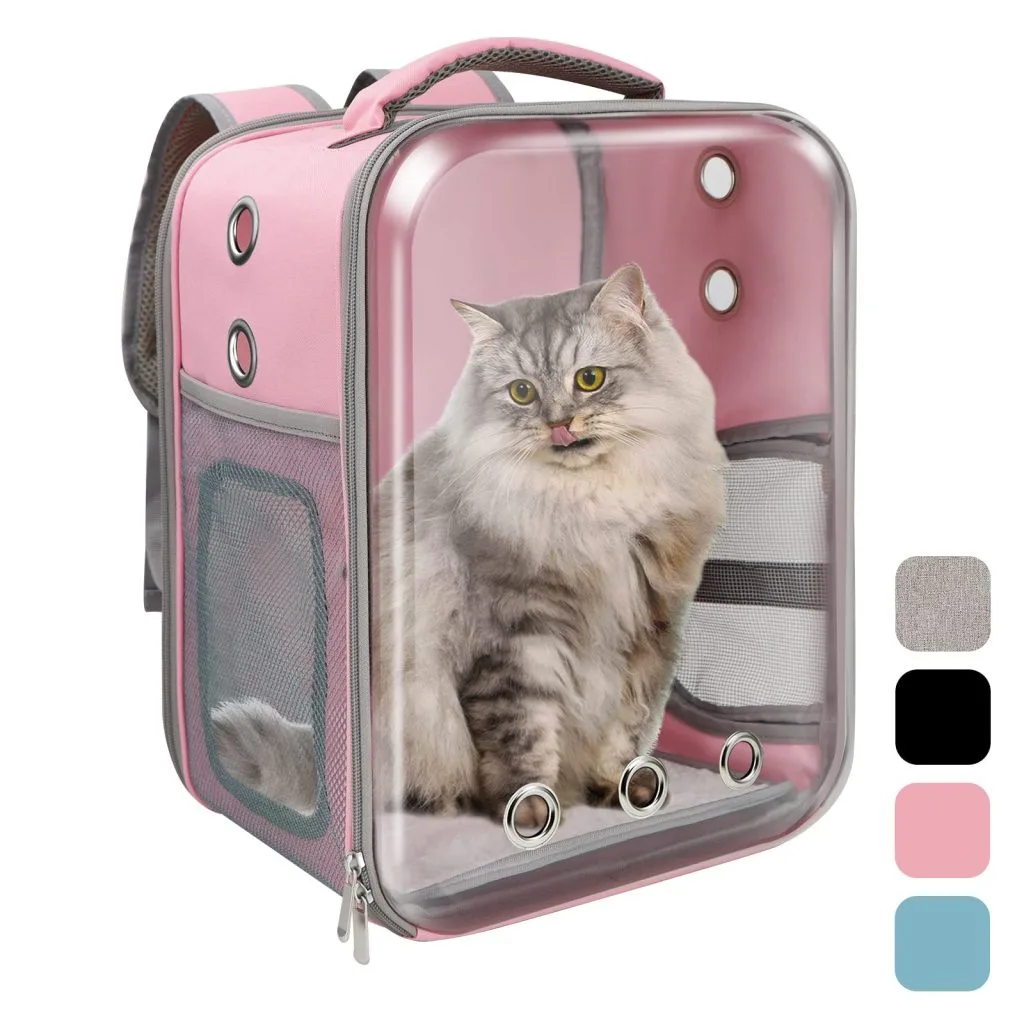
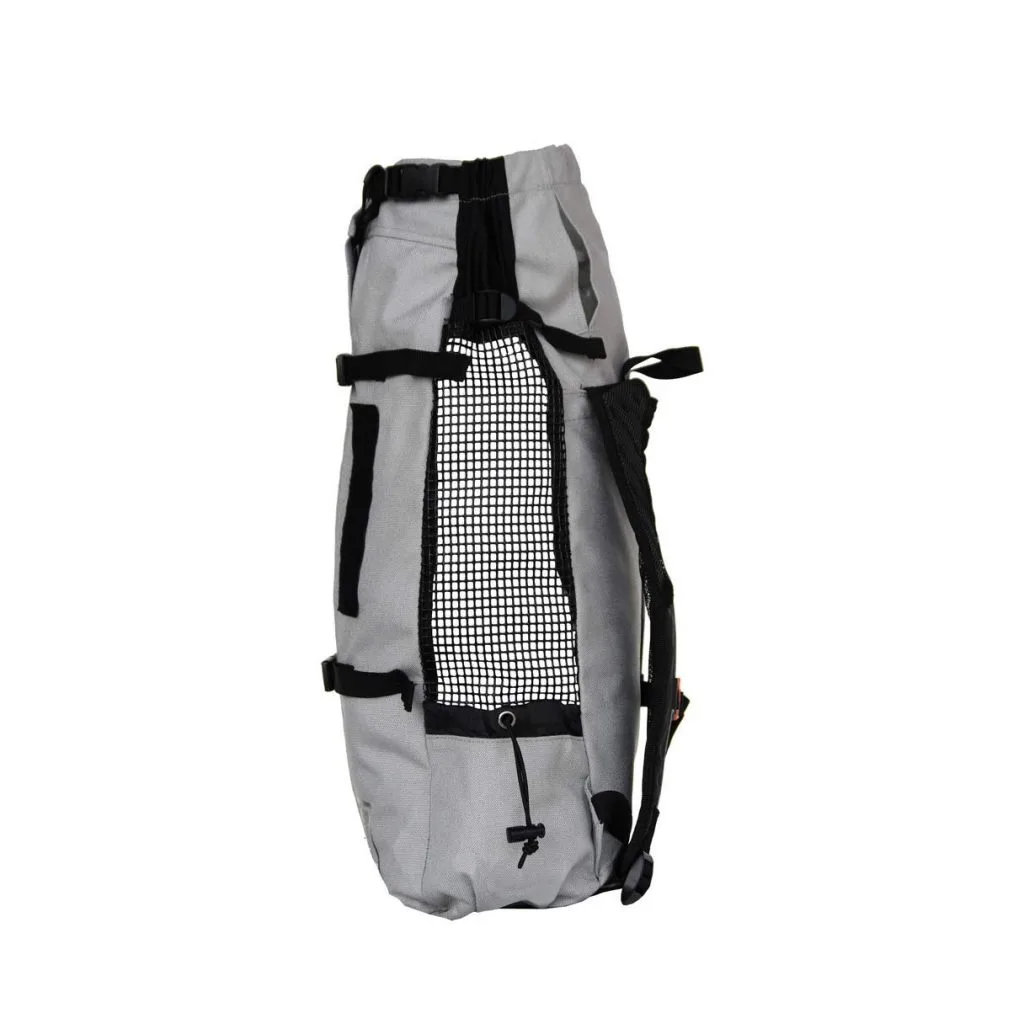
A bespoke pet carrier brief is built from a tech pack: dimensions, fabric, hardware finish and the test standard the finished bag has to meet.
What retailers actually mean by retail ready
The phrase gets used loosely, so it is worth separating the three formats that fall under it. A shelf ready packaging unit, usually shortened to SRP, travels as a sealed shipper and opens into a tray that sits directly on the shelf. A PDQ, from "pretty darn quick," is typically a smaller counter or shelf-edge unit holding fewer units and often lower value impulse lines. A display shipper is a larger floor-standing or pallet-adjacent format used for promotions and seasonal placement.
All three share one principle: the packaging must do two jobs with one object. It protects product through distribution, then becomes merchandising furniture without anyone unpacking the contents. Everything about the specification - board grade, print, perforation, dimensions - is affected by that dual purpose.
The commercial logic behind the format is a labour argument. In a conventional delivery, store staff receive a carton, open it, remove units individually, carry them to the fixture, and face them up - a process that takes several minutes per carton. With a retail ready unit, they set it on the shelf, tear the lid away and walk away in well under a minute. Across hundreds of stores, that difference is real money to a retailer, and it is why these formats get asked for.
Brands gain in three ways: a fixture designed rather than improvised, consistent presentation across stores, and a demonstrable commitment to the retailer's operating costs. That last point carries surprising weight in range reviews, which is where next season's shelf space is decided.
The failure mode to avoid is the pseudo-SRP: a shipper with a tear strip that does not tear cleanly, leaving a ragged lid that staff then complete with a knife. Nothing damages credibility faster than a format created to save labour that actually costs more, because the staff member who meets it forms the brand impression that nobody later gets to correct.
Anticipate that first contact rather than designing around a drawing. Follow one delivery through a real store, watch how the unit is carried from the stockroom, where it is set down, and how many seconds elapse before someone finds the tear tab. Those ninety seconds contain every decision worth making about this format, and most of them are nowhere near a specification sheet.
That observational habit costs a morning and replaces months of assumption. It is also how the arguments in this guide were built, which is why they describe what happens in an aisle rather than what happens in a design review.
The five retailer requirements worth designing to
Most large retailers publish some version of a five-criteria framework, and while wording differs the substance is consistent: easy to identify, easy to open, easy to shelf, easy to shop and easy to dispose of. Designing against each one explicitly produces a specification that passes most technical reviews without iteration.
Easy to identify means the product name, size, quantity and barcode are readable from outside the sealed shipper, in large type on at least two faces. Print position should follow how the unit is likely to be stored - usually identifies and stacks where facing labels read horizontally. It sounds trivial until a stockroom search takes four minutes because nothing identifies itself from the back.
Easy to open means the lid removes in one clean pull with no tools, leaving no sharp edge and no loose pieces. That is achieved with a perforated tear line of specified strength plus a recessed finger grip, and it is the single most tested property in this whole format.
Easy to shelf requires the tray footprint to fit standard shelf dimensions and to be stable when pushed to the back of a shelf - no flexing, no tipping. It also implies handles or cut-outs, since staff cannot always reach the front edge.
Easy to shop means the front panel of the tray falls away or sits low enough that customers can reach product without obstruction, while still carrying enough print to sell. Front heights of 40-70 mm work well: enough for messaging, low enough to reach over.
Easy to dispose of closes the loop. The removed lid should fold flat, the tray should collapse at end of life, and everything must be recyclable without separating mixed materials. Print the instruction on the lid; do not expect anyone to guess.
Economics deserves one line here because it is the argument that survives contact with a buying team. Labour saved per replenishment is small in isolation and enormous in aggregate, so quote the annualised figure per store rather than the per-carton number. Suppliers who present that calculation tend to be remembered at the next range review, and being remembered is most of what shelf allocation actually depends on.
Facings maths and standard footprints
Every chain has fixture conventions, and the display unit must be designed backward from them. Shelf depth matters most: most European grocery shelving runs 400-600 mm deep with 300-400 mm usable for trays, while North American pet aisles frequently use 450-530 mm shelf depth. A tray deeper than half the shelf depth blocks the row behind it.
Facings determine width. Retailers allocate space in facings - typically 50-100 mm increments - so a tray should occupy a whole number of facings rather than an arbitrary width. Two facings at 100 mm is a better selling proposition than one unit at 190 mm, because it fits any planogram slot rather than demanding a specific one.
| Format | Footprint (mm) | Typical capacity | Placement |
|---|---|---|---|
| Shelf tray SRP | 200 x 300 to 300 x 400 | 4-8 units | Standard shelf |
| Counter PDQ | 150 x 200 to 220 x 280 | 3-6 units | Checkout, shelf edge |
| Half pallet display | 800 x 600 | 30-60 units | Aisle end |
| Full pallet display | 1,000 x 1,200 | 60-150 units | Promotional floor space |
Height constraints follow the same principle. A unit taller than the shelf gap will not fit at all, and heights above roughly 300 mm in a stacked PDQ create forward tipping risk. Ask the account for the actual shelf gap dimension rather than assuming: there is no standard, and the ones that matter belong to whoever owns the planogram.
Capacity should be set by sell-through rather than by space. Twelve units of a slow mover sit in the stockroom for a month; six sell through and get reordered. A useful test is to match shipper quantity to roughly two weeks of expected sales at that store type, then let replenishment do the rest.
Shipper format also has to be chosen together with how the product arrives inside it. Units supplied in a bulk poly bag need a lid that keeps dust off during the display period, whereas product issued with a retail header card arrives ready to hang or stack. Deciding both at once avoids discovering the incompatibility at the fixture, which is the most expensive place to discover anything.
Structure choice: tray, hood and tear-away formats
Three constructions cover most requirements, each with distinct trade-offs in cost, protection and presentation.
The classic shelf-ready combination is a corrugated tray with a removable full hood. It protects completely during transit, opens quickly, and leaves a clean low tray front that can be printed. Its weakness is that the hood is pure waste after opening, so it needs to be recyclable and to fold compactly or it will be left on the shelf untidily.
A tear-away or "zip" shipper removes only part of the top and front, leaving the rear and sides as a deeper tray. It uses less material and protects better because less of the structure is removed, but the remaining rear panel can obscure product if it sits too high. Perforation placement is therefore the critical dimension, not overall size.
A tray with a separate printed skirt - a lighter board wrap around a structural corrugate tray - delivers the best print quality because the printed surface is a separate litho-laminated sheet. It costs more and involves more assembly, which suits longer running promotional placements rather than everyday distribution.
Whichever is chosen, the tear line needs engineering rather than decoration. Specify perforation as a tie count per 100 mm and a tie width, then validate: if it tears in transit, the whole unit arrives open; if it resists, staff reach for a knife. Both outcomes lose the format's purpose, and the difference between them is often no more than 20 percent of tie strength.
Finally, add a simple instruction. Three printed words - "tear here," "lift lid," "recycle" - cost nothing and prevent the most common misuse of every format discussed here.
Print and shelf communication
A display unit is seen at roughly two to four metres, competing against a wall of adjacent product. The rules are therefore closer to signage than to pack design: one dominant visual field, a single message, and high contrast between type and background. Anything readable only at arm's length is invisible at the moment it matters.
Billboarding is the core tactic. Repeating one graphic across adjacent units so they compose into a single larger image turns a shelf run into a poster. It requires precise registration to the tray, which in turn requires tray footprints to repeat exactly - another reason not to create arbitrary sizes.
Colour should carry the job. A saturated, single-colour background with reversed-out type reads further than any photographic image at this distance, and it costs less to print. Photography earns its place on the front panel of counter units where viewing distance is short and dwell time is longer - checkout is browsing territory, whereas shelf mid-height is scanning territory.
Keep mandatory content to the back or side panels where it does not compete. Quantity markings, barcodes and disposal instructions all belong out of the primary sight line but still readable at arm's length.
Colour accuracy across corrugate is imperfect by nature, so manage expectations against a recognised standard rather than a screen; our companion articles on colour matching between screen and press cover the practical conversion, and Pantone references remain the reliable way to specify spot colours for flexographic work, while panels reserved for mandatory content can be laid out in whatever space remains rather than competing with the selling message.
Strength and easy opening in tension
The central engineering conflict of this format is that the same perforation line must survive distribution and fail on request. Resolving it means specifying both sides with numbers and testing both, rather than relying on a single fractional requirement.
Distribution strength first. Units must survive stacking in a container, often palletised three or four high, and any part of the tear line near a vertical edge will take load. Keep perforations at least 15 mm away from corners and place vertical tear lines where the double-wall or a folded rim carries the compression instead.
Then opening performance. Specify tie strength in newtons per 100 mm and test initiation force rather than just propagation. A strip that starts easily and then resists partway through is worse than one that opens hard from the beginning, because the half-removed lid is unstable and untidy.
Validation should use the real distribution route. Ten units through standard face, edge and corner drop sequences give most of the answer; recognised procedures are published through ASTM testing standards, and third-party verification is available from laboratories including SGS where an account demands it.
Environmental conditioning matters as much as drops. Corrugate behaves differently after a week at high humidity, and tear strength changes with it. Condition samples before testing and you will see the realistic field result rather than laboratory optimism.
Finally, design the fallback. If the strip does fail, the remaining structure should still allow access without a tool - a secondary score line, or a lid that can be folded back. Nothing should require a blade.

The commercial argument for shelf space
Packaging that reduces retailer labour is among the few investments that can be quantified directly in a range review. Conventional restocking occupies staff for several minutes per carton; a well specified display unit reduces that to well under one minute. Multiply by cartons per delivery, stores in the estate, and deliveries per year, and the number presented to the account is frequently larger than the cost of the packaging itself.
| Format | Cost at 500 (USD) | Cost at 5,000 (USD) | Restock time per unit set |
|---|---|---|---|
| Plain corrugated shipper | 0.45 | 0.28 | 3.5 - 5.0 min |
| Flexo printed SRP tray + hood | 1.10 | 0.62 | 0.5 - 1.0 min |
| Litho laminated display tray | 2.40 | 1.35 | 0.5 - 1.0 min |
| Counter PDQ unit | 1.35 | 0.78 | 0.5 - 1.0 min |
Secondary benefits compound the case. Better on-shelf availability during trading hours raises sales per linear metre, which is the metric category managers are judged on. Consistent presentation protects brand standards across hundreds of stores, and a display cannot be fronted wrongly the way individually decanted units can.
Presenting this in numbers changes the conversation from "our packaging costs more" to "this packaging returns store labour," which is a fundamentally different meeting. Bring the per-store annualised figure, not a percentage.
There is a strategic tail too. Accounts that see a supplier investing in their operating costs tend to grant more fixtures, premium placement, and the benefit of the doubt at the next range review. It is modest, compounding and rarely mentioned in packaging discussions, which is precisely why it is worth being the one brand that mentions it.
Sustainability and end of life at store level
Display units are disposed of in stores, not in homes, which changes both the requirement and the risk. Non-recyclable elements cost the retailer effort and money, so anything combined - foam cores, plastic sheets, metal supports - creates friction at exactly the wrong moment.
The practical rule is single-material construction. A corrugated tray with a corrugated hood, joined by nothing but board tabs, goes straight into the store's bale along with the rest of the cardboard. Introduce a plastic window or a poly-wrapped panel and it must be separated by hand, which means it usually will not be.
Design the removed lid for immediate disposal as well. It should fold in one motion into something flat, and the instruction should be printed where the person holding it can see it. A lid that cannot quickly be flattened gets left behind, on a shelf, in front of the product it was protecting.
The material reduction argument deserves quantification here. Replacing four conventional cartons with one display unit removes three board units from the waste stream per cycle; specifying lighter board in non-structural panels removes more. Both are numbers that can be presented to an account's sustainability team alongside the labour saving, which is a rare instance of a single specification serving two separate scorecards inside one retailer.
Finally, verify claims rather than asserting them. Water-based inks, board from recycled content with documentation, and no laminate together support an honest statement; anything less should be left unsaid. Programmes operated under ISO 9001 frameworks keep those declarations filed, which turns supplier questionnaires into a five-minute administrative task.
Rollout, testing and avoiding the common mistakes
Start with unprinted structural samples built to agreed dimensions, loaded with real product and placed on a real store fixture if possible, or on a shelf board of the correct depth if not. Almost every failure in this category is dimensional rather than graphic: too deep for the shelf, too tall for the gap, too heavy to lift comfortably, or impossible to grip when pushed back.
Then test opening ten times with ten different people. The feedback pattern is revealing - whoever does not immediately grasp the opening mechanism is telling you what store staff will do, and in a busy store nobody studies packaging. Fix grips and instructions at that point, when changes cost almost nothing.
Write the specification so it can be verified: board grade with a mill certificate, External dimensions within +/- 2 mm, perforation tie strength expressed in newtons, print references by plate, and an acceptance criterion for both survival and opening. Incoming lots are then checked to AQL 2.5, with critical defects defined as tear lines that fail in transit, units that will not open cleanly, or dimensions that miss the agreed footprint.
Roll out in stages rather than all accounts at once. Two or three representative stores uncover problems - a shelf lip too deep, a planogram slot of unexpected width - that no drawing would have predicted, and correcting after a pilot is far cheaper than after a full estate rollout.
Then keep the specification frozen for a season. Because this format sits on someone else's shelf, changes ripple into planograms and staff routines; freezing decisions for twelve months respects that, and the programme gains consistency while every other supplier is quietly redesigning. Our production team has run sewn goods programmes since 2014, and the display units that stay unchanged are, almost always, the ones that stay on shelf.
One closing habit separates programmes that improve from those that repeat themselves: photograph every installation. A picture of each unit in each store, taken at install, records fixture fit, shelf fullness and condition, and three seasons of those images tell you more about what genuinely works than any drawing revision ever will, and costs almost nothing to accumulate.
Why brands source here
- Pet carrier programs run since 2014; founding team in sewn goods since 2004
- SGS-verified production floor of 4,950 m² with 137 workers across 7 lines
- Monthly capacity of 200,000 units, audited to BSCI and ISO 9001
People Also Ask
Should every SKU get a display unit?
No. Reserve them for hero lines and launches where presentation drives sell-through; everyday SKUs are better served by conventional shipping cartons.
Why does the tear strip sometimes rip badly?
Usually tie strength set too high or a tear line placed across a load-bearing area. Validate both distribution survival and opening in ten real users before approving.
Is litho lamination worth the extra cost?
For long-running promotional placements yes, where the unit sits for months. For standard shelf rotations flexography at lower cost performs adequately.
Does a display unit really increase sales?
Frequently, because availability improves and presentation stays consistent. The measurable part is fewer out-of-stocks during trading hours, which is directly attributable.
What stops a unit fitting the shelf?
Depth and facings. Keep trays under half the shelf depth and sized in whole facings of 50-100 mm increments to match any planogram slot.
Should the lids be printed too?
Yes, at minimum with disposal instructions. A lid that cannot quickly be flattened gets abandoned on the shelf in front of the product.
Frequently Asked Questions
What is the difference between SRP and PDQ?
SRP is a full shelf-ready shipper opening into a shelf tray; a PDQ is generally a smaller counter or shelf-edge unit. Both convert from transit packaging to merchandising without unpacking individual units.
How much does a retail ready display box cost?
Approximately USD 0.90-2.40 per unit at MOQ 500 depending on format and print method, falling toward USD 0.62 at 5,000 for a standard flexo printed tray and hood.
Why do retailers ask for these formats?
Mainly labour. Replenishment drops from several minutes per carton to under one minute per unit set, which multiplied across an estate is often larger than the packaging cost itself.
How strong should the perforation be?
Specify tie strength per 100 mm in newtons and validate both survival in distribution and initiation force at opening. Keep tear lines at least 15 mm from corners where compression concentrates.
How many units should a display hold?
Roughly two weeks of expected sales at that store type. Overfilling creates stale stock in the stockroom; correct counts drive replenishment instead.
What print method suits corrugated displays?
Flexographic printing for most programmes at USD 45-80 per colour. Litho lamination suits long-running promotional placements where photographic quality matters more than unit cost.
Can these units stay recyclable?
Yes, if single-material. Corrugated tray, corrugated hood, water-based inks and no laminate or plastic components go straight into a store bale.
What should be printed for identification?
Product name, size, quantity and barcode in large type on at least two faces with horizontal barcodes, so stockroom staff can identify a unit without moving it.
How tall should the tray front be?
40-70 mm works well: enough print area to sell from, low enough that customers can reach product without obstruction.
Do I need special testing?
Yes. Face, edge and corner drop sequences against ASTM-referenced procedures, plus conditioned samples after humidity exposure, with the acceptance criterion written before testing begins.
Can one footprint serve several accounts?
Often, if it fits a whole number of standard facings. Arbitrary widths force a specific planogram slot and are the most common reason a unit is rejected late.
How long does development take?
Structural samples within 6-10 working days, then 10-16 days for conversion. Test on a real fixture or correct-depth shelf board before committing to print.
Talk to QUANZHOU JUNYUAN BAGS about a pet carrier program: MOQ 500 pieces per colourway, samples in 6-10 working days, bulk production in 35-50 days under AQL 2.5 inspection.
Get a free quote Request a sample