Side Entry: Side Access - Custom Pet Carrier Opening Design
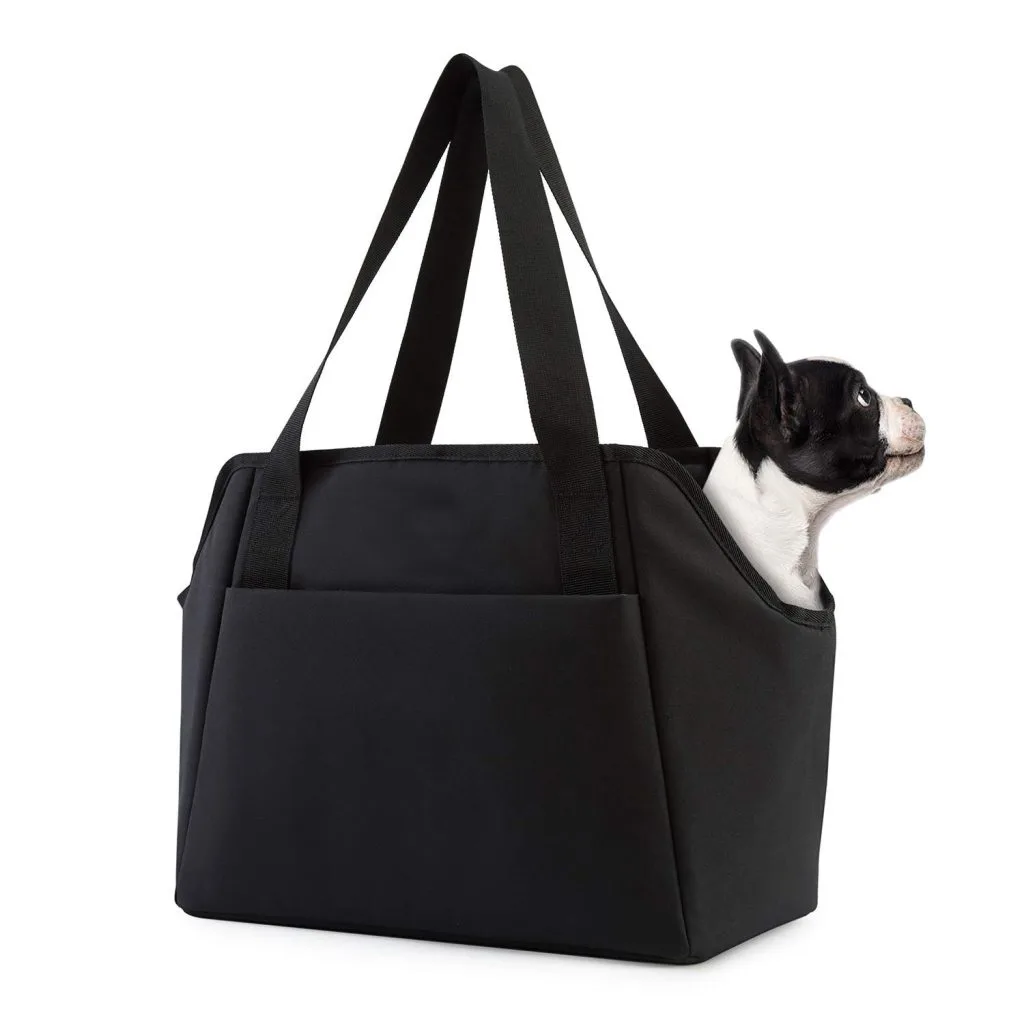
Side entry means the pet goes in and out through an opening in one of the long side panels rather than through the top, and it is the configuration that works best when the carrier is already on the body or standing in a confined space. The specification that governs it is the opening chord: a side aperture needs 60-70 percent of the shell height and a framed perimeter, or it collapses when the zipper is open.
Entry position is the least discussed and most consequential structural decision in a pet carrier programme. It determines how the shell is framed, where the shell can be stiffened, how the product is photographed and how a customer experiences the first thirty seconds of ownership. Side entry in particular rewards early decisions, because an opening in a long panel removes fabric that the structure wanted to use, and the framing that replaces it has to be designed rather than added. Deciding the aperture during concept is what keeps the frame, the base board and the vent layout from competing for the same millimetres later.
- Sampling: opening geometry and zipper options on a test shell in 6-10 working days.
- Minimums: MOQ 500 units per colourway for Pantone-matched zipper tape or custom pullers.
- Schedule: custom puller tooling runs with shell sampling; bulk completes in 35-50 days.
- Quality: zipper cycle, seam strength and framing checks, inspected to AQL 2.5.
- Terms: T/T 30/70, FOB Xiamen, zippers packed open so tape and teeth are not creased.
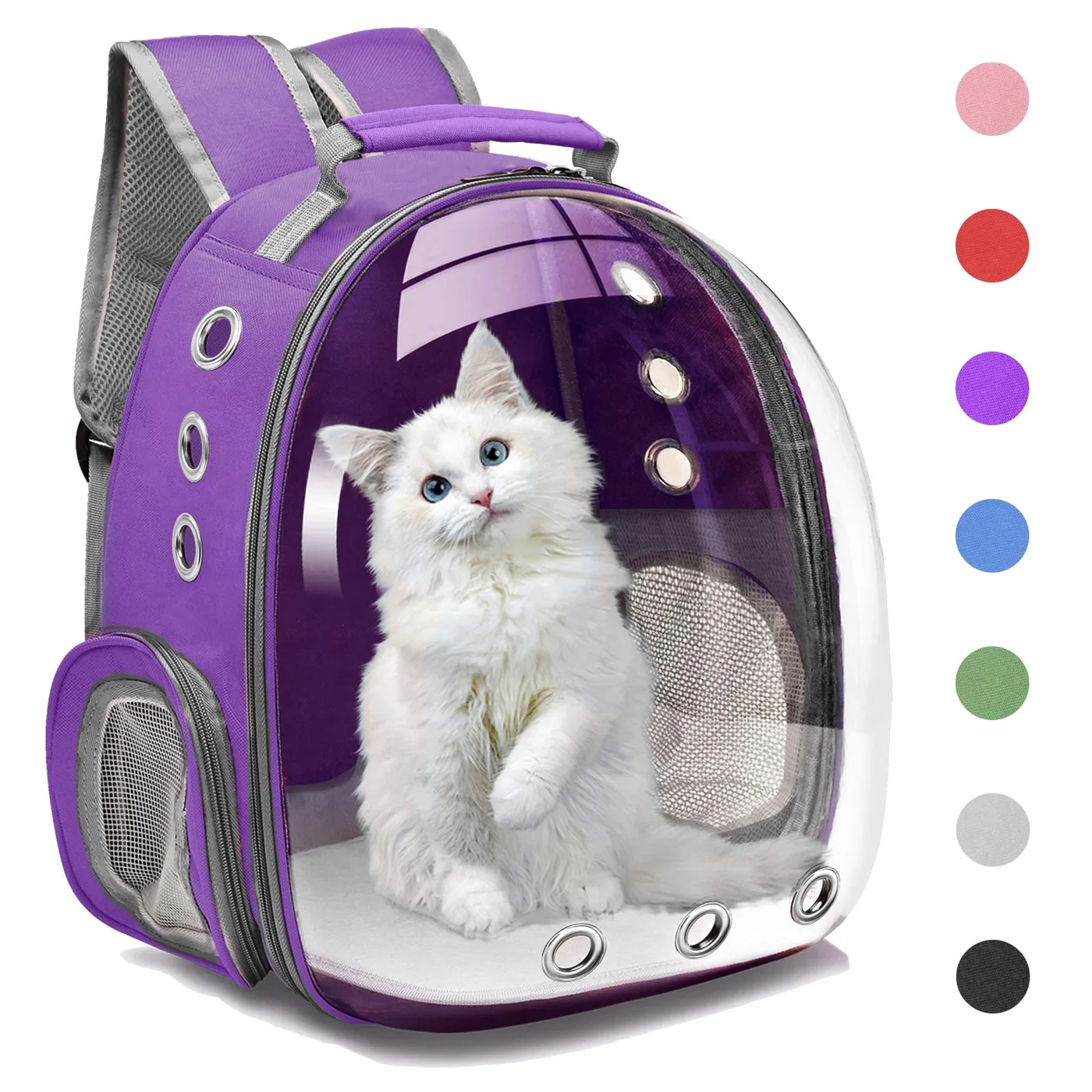
For a custom cat carrier the ventilation question is where the mesh sits, not how much there is: high side panels plus a shaded front zone keeps airflow without visual exposure.
What side entry solves that top entry does not
Top entry assumes the carrier is on the ground or on a table, with clear space above it. That assumption holds in a living room and fails almost everywhere else: in a car footwell, on an aircraft seat, in a vet waiting room with the bag on a lap, or in a hallway where the ceiling is not the constraint but the wall is. Side entry works in all of those because the opening faces outward rather than upward.
The practical difference shows up most clearly when the carrier is being worn. A bag on the back with a top opening cannot be opened at all without taking it off; the same bag with a side opening can be opened while standing, which is the difference between a product that fits into a journey and one that interrupts it. For brands positioning around travel, commuting or any kind of in-motion use, that is not a feature detail, it is the product concept.
There is a handling argument as well, and it is the one veterinary professionals raise first. Loading an animal through the top requires lifting it over an edge, which is the motion most likely to produce resistance. Loading through the side allows the animal to walk in or to be placed in horizontally, which is calmer, easier on the handler and easier on the animal. Guidance published by the American Veterinary Medical Association consistently emphasises low-stress handling, and an opening that supports it is a design decision with professional endorsement behind it.
The cleaning argument is less obvious but commercially real. A side opening that runs low on the panel makes it far easier to reach the interior floor of the carrier - to change a liner, wipe a spill or retrieve a toy from a corner. Products that are easy to clean get used longer and reviewed better, and the reviews usually mention cleaning rather than entry.
None of this makes side entry universally correct. It makes it correct for a specific use profile, and the discipline is to match the opening to the profile rather than to default to whichever shape the previous season used.
The commercial version of the same argument is about where the range is going. A brand whose next twelve months is built on travel, commuting or clinic partnerships should be specifying side apertures now, because opening architecture is the slowest part of a shell to change and the hardest to retrofit once a pattern has been graded across sizes. A brand building on fashion colourways and home use can defer it without penalty. What is expensive is not choosing side entry - it is choosing it late, after the panel layout, the frame and the base board have all been committed to a different configuration.
Opening geometry: D-shape, U-shape and the chord rule
A side opening is defined by three numbers: the chord, the height and the corner radius. The chord is the horizontal distance the opening spans along the panel; the height is how far it runs vertically; the corner radius is how sharply it turns at each end. Those three determine whether an animal can actually get through and whether the shell survives having a hole in it.
The chord rule is the one worth writing down. For a shell intended to admit an animal comfortably, the opening chord should reach roughly 60-70 percent of the shell's internal height, measured at the widest point of the aperture. Below that, the opening becomes a portal the animal has to be threaded through; above it, the remaining panel is too narrow to carry the structure and the shell around the opening starts to deform.
Two shapes dominate. A D-shape - a horizontal run with a vertical drop at one end - leaves a substantial structural band along the top of the panel, which is usually where the shell wants stiffness anyway. It suits structured shells and back-carry units, where the top band is doing real work. A U-shape - a symmetrical arc dropping at both ends - opens wider and looks more generous, and it suits soft shells where the framing is a separate band rather than the panel itself.
Corner radius is the detail that decides durability. A sharp corner concentrates stress at the point where the zipper turns, and it is where zipper failures start: the tape lifts, the teeth misalign, and the slider begins to catch. A radius of 25-40 mm at the turn spreads that stress and lets the slider travel smoothly around the corner. It also reads better - a generous radius looks designed, a tight one looks cost-cut.
| Opening type | Chord as share of height | Suits | Structural note |
|---|---|---|---|
| D-shape, top band retained | 60-65 percent | Structured shells, back carry | Top band carries stiffness |
| U-shape, symmetrical arc | 65-70 percent | Soft shells, shoulder carry | Needs a separate frame band |
| Full-height side panel | 75 percent plus | Travel and clinic units | Requires perimeter framing |
| Low half-opening | 45-55 percent | Small breeds only | Limited cleaning access |
The last consideration is what the opening does to the panel when it is closed. A zipper under tension pulls the panel into a slight curve; over a large aperture that curve becomes visible as a wrinkle or a gap. Specifying a zipper tape with the right flexibility, and a framing band with the right stiffness, keeps the panel flat when closed - which is a photography requirement as much as a quality one.
Framing: replacing the structure the opening removed
Cutting a large aperture out of a load-bearing panel removes material the shell was relying on. The engineering answer is a frame: a band of reinforcement that runs around the perimeter of the opening and transfers load around it rather than through it. Almost every side-entry failure traceable to design - sagging panels, deformed openings, zippers that will not close after a season - is a framing failure wearing a zipper disguise.
Three framing approaches cover the category. The first is a webbing perimeter: a tape sewn around the opening, usually hidden under a binding, which carries tension around the aperture. It is cheap, invisible and adequate for small to medium shells. The second is a stiffened band: a bonded or laminated strip with real flexural stiffness, which resists the panel collapsing inward and is the right choice for medium to large shells. The third is a frame element - a moulded or wire form - which is the premium solution and the one that lets a large opening stay geometrically true under load.
The frame has to be continuous. A band that stops short at a corner, or that is interrupted where it meets a seam, creates a hinge point, and hinge points are where soft shells gradually lose their shape. Specifying the frame as a closed loop, with joins placed away from corners, is a small instruction that prevents a large class of complaints.
Corner reinforcement deserves its own line in the tech pack. The turn is where the frame is most stressed and where the zipper is most likely to misalign, so a corner patch - a second layer carried 40-60 mm past the turn - is standard practice on anything above a small breed shell. It costs cents and it is invisible once installed.
Interaction with the base is the last framing consideration. A side opening that runs low brings the frame close to the base board, and if the two are not coordinated the frame can fight the board and lift the base seam. Deciding the opening's lower edge relative to the board height - typically keeping 30-50 mm of unbroken panel between them - avoids a conflict that is very hard to fix once both parts are cut.
Zipper specification: gauge, tape, slider and colour
The zipper on a side opening is the most-used mechanical component on the product and the one most often specified by habit. Four variables matter, and all four should appear in the tech pack with numbers rather than with descriptions.
Gauge is the size of the teeth, and it should match the duty. A #5 coil is the general-purpose choice for a pet carrier side opening: it runs smoothly around a radius, it is forgiving of misalignment and it is quiet, which matters when the occupant is an animal that reacts to sound. A #8 or #10 gives more strength and a more technical appearance but is stiffer around corners and louder in operation. Metal teeth read premium and are appropriate on heritage positioning, with the usual caveats about weight and corrosion.
Tape is the fabric the teeth are mounted on, and it is where colour lives. A Pantone-matched tape gives the brand a second colour position on the product at almost no cost, and a contrast tape turns the opening into a design line rather than a seam. The caveat is shade stability: tape and shell fabric are different substrates and should be approved against each other under one light source, using colour references from Pantone as the shared target.
Sliders and pullers are the branding opportunity. A custom puller - moulded, cast or woven - is the single cheapest custom hardware item in a carrier programme, it is touched every time the product is used and it appears in every close-up photograph. Tooling is modest and the minimum quantity is usually well below what a shell programme already commits to, which is why branded pullers are the first hardware customisation most programmes should make.
| Element | Standard | Premium | Why it changes |
|---|---|---|---|
| Gauge | #5 coil | #8 or metal | Strength, noise, corner behaviour |
| Tape | Stock colour | Pantone-matched | Second colour position on the shell |
| Slider | Stock pull | Custom moulded puller | Branding at the point of touch |
| Finish | Single slider | Double slider, locking | Partial opening, controlled access |
| Welt | Bound edge | Contrast welt | Defines the opening as design |
Double sliders are worth a specific mention. Two sliders meeting in the middle let a handler open the aperture partially - from one side only, or from the top portion - which is a genuine handling advantage when the occupant is reluctant or when the carrier is in a confined space. The cost is a second slider and a slightly more complex closing ritual, and the benefit is control.
Testing closes the specification: cycle the zipper several hundred times under tension, check for tape lift at the corners, and confirm the slider does not catch at the turn. Methods referenced to ASTM procedures make the numbers comparable season to season.
Branding the opening: welts, pulls and the visual line
An opening is a line drawn across the product, and a line is a design element whether or not anyone intends it to be. A side entry zipper that runs unacknowledged across a panel looks like a necessary seam; the same zipper with a contrast welt, a defined termination and a matching puller looks like a deliberate composition. The difference costs very little and it reads in every photograph.
The welt is the first tool. A binding in a contrast colour, running along the zipper line and terminating cleanly, defines the opening and gives the brand a third colour position. It also protects the zipper tape edge from abrasion, which is a functional benefit attached to a visual decision.
Termination is the second and the most often neglected. Where the zipper ends - how the tape is finished, whether there is a garage or a cover, whether the end is hidden under a flap - is the detail that separates a designed opening from a production necessity. A zipper garage, a simple folded cover at the closed end, costs almost nothing and removes the most common visual complaint about zippered bags.
Pullers are the third and the most tactile. Beyond branding, puller design is an ergonomics decision: a puller that is too small cannot be gripped with a gloved hand or with a leash in the same hand, and one that is too large catches on things. A puller of roughly 40-60 mm of usable grip, with a shape that can be found without looking, is the working range.
Where a programme is building a range, consistency of opening treatment is what makes it read as a collection. The same welt treatment, the same puller, the same termination detail across small, medium and large - with colour the only variable - produces a family resemblance that customers register even when they could not describe what they are seeing.
Colour is the variable worth spending on, because the opening line is the largest continuous visual element on the shell after the body fabric itself. A contrast welt in a seasonal accent, repeated across every size, gives a drop an identity without a new pattern or a new tool. Changing the shell colour instead costs more, takes longer and reads less clearly at distance, which is why seasonal colour is usually better spent on the trim line than on the body.
Compliance, documentation and the travel use case
Side entry is frequently specified by brands positioning around travel, and travel brings documentation requirements that arrive from outside the product itself. Designing for those requirements during development is far cheaper than retrofitting after a retailer or an airline raises a question.
The first document set concerns animal movement rather than bag construction. Requirements for bringing an animal into the United States are set out by the Centers for Disease Control and Prevention, and airline carriage rules sit on top of that. A carrier designed for that use case needs to hold its shape under a seat, to allow visual inspection without full opening, and to keep the occupant contained while a handler reaches in - all of which are opening-design questions.
The second set concerns materials. Pet products sold into major retail channels are routinely asked for restricted-substance documentation, and inputs supplied as OEKO-TEX certified textiles remove a category of question before it is asked. Zipper hardware finishes, coatings on tape and any moulded puller material should all be covered by the same declaration.
The third is product safety and quality process rather than material chemistry: a documented test protocol for the opening, cycle testing on the zipper, and a quality system behind it. Our work runs through an SGS-verified production base operating under ISO 9001, and independent verification through SGS is arranged where a retailer requires a third-party record rather than a supplier declaration.
The practical advice is to treat documentation as a deliverable with a date. Programmes that collect it during development ship on time; programmes that collect it after a buyer asks usually ship late, because the same test that takes four days in a lab takes four weeks when it is on a critical path. Naming the documents in the tech pack at concept stage is the whole discipline, and it costs nothing until the day it saves a season.
Cost, sampling and where side entry sits in a range
A side opening is more expensive than a top opening for a straightforward reason: it needs framing, it needs a longer zipper run and it usually needs corner reinforcement. The incremental cost over a simple top aperture is typically USD 1.80-3.60 per unit depending on shell size and zipper specification, and it rises with a custom puller or a Pantone-matched tape.
That cost is best understood as a positioning decision. Side entry is the configuration that supports in-motion use, low-stress handling and easy cleaning, and those are the attributes a brand sells when it wants to justify a price above the commodity band. A programme that specifies side entry and then markets on price is paying for a feature it is not selling.
Sampling runs in three rounds: an opening geometry sample on a test shell in 6-10 working days, a complete prototype with the production zipper, and a confirmation sample in bulk materials. The round that matters most is the second, because zipper behaviour under tension is the thing that cannot be predicted from a flat sample - and it is also the thing that generates the most returns when it is wrong.
In a range, side entry is usually the mid-to-upper tier configuration. A common architecture is a top-entry entry SKU, a side-entry core SKU and a dual-entry flagship, which gives the brand three price points and three stories from one shell platform. That structure is explored further in our notes on top entry design and on dual entry architecture, both of which assume the side aperture has already been framed correctly.
Bulk completes in 35-50 days on T/T 30/70 FOB Xiamen terms, and finished goods are inspected to AQL 2.5 with zipper function, framing integrity and corner reinforcement classified as critical. Zippers are packed open so tape and teeth are not creased in transit, which is a small packing instruction that prevents a defect class that is otherwise invisible until the customer opens the box.
Order and quality terms
- MOQ 500 pieces per colourway; samples in 6-10 working days
- Bulk production 35-50 days after approval; AQL 2.5 inspection standard
- T/T 30/70 terms, FOB Xiamen, full document set per shipment
People Also Ask
Is side entry better than top entry for a pet carrier?
Side entry wins when the carrier is already being worn or is in a confined space, because the opening faces outward. Top entry wins when the bag is on the ground with clear space above. Travel and commuting programmes usually want the side opening.
How big should a side opening be?
The chord should reach roughly 60-70 percent of the shell's internal height. Below that the animal has to be threaded through; above it the remaining panel is too narrow to carry structure and the shell deforms around the aperture.
Why does my carrier zipper catch at the corner?
Because the corner radius is too tight, which concentrates stress where the slider turns. A radius of 25-40 mm, plus a corner patch carried 40-60 mm past the turn, resolves the catch and prevents progressive tape lift.
What zipper gauge is right for a pet carrier?
A #5 coil is the general-purpose choice: it runs smoothly around a radius and is quiet, which matters with an animal inside. #8 or metal gives more strength and a more technical read at the cost of stiffness and noise.
Can the zipper tape be matched to our brand colour?
Yes. Pantone-matched tape gives a second colour position at low cost, but tape and shell fabric are different substrates, so both should be approved as physical samples under one light source.
Do side openings make the carrier weaker?
They remove load-bearing panel, so they need a perimeter frame to transfer load around the aperture. A continuous webbing or stiffened band, with the join placed away from corners, restores the structure completely.
Should a side entry carrier have two zipper sliders?
Often yes. Two sliders meeting in the middle allow a partial opening, which gives a handler control when the occupant is reluctant or the bag is in a confined space, at the cost of one extra component.
Frequently Asked Questions
What is the MOQ for a custom side entry carrier?
MOQ 500 units per colourway applies where the programme specifies Pantone-matched zipper tape, custom pullers or a bespoke opening geometry. Stock tape and stock pullers on an existing pattern can sometimes be placed lower.
How long does an opening sample take?
Opening geometry samples on a test shell are produced in 6-10 working days, followed by a complete prototype with the production zipper and a confirmation sample in bulk materials. Bulk then completes in 35-50 days.
Can the opening be added to an existing shell design?
Yes if the panel has room for a perimeter frame. The limiting factors are the base board height and the position of any vents or pockets already on the panel, both of which have to be checked before the aperture is drawn.
How do you stop the panel sagging around the opening?
With a continuous frame - a webbing or stiffened band running the full perimeter, joined away from the corners. A band that stops short creates a hinge point, and hinge points are where soft shells lose their shape.
Are custom zipper pullers expensive?
No. They are the cheapest custom hardware item in a carrier programme, with modest tooling and a minimum usually well below what a shell programme already commits to. That is why they are the first hardware customisation we recommend.
What corner radius should we specify?
Typically 25-40 mm at the turn. It spreads the stress where the slider changes direction, lets the zipper travel smoothly and reads as designed rather than cost-cut in photography.
Can the opening be used for ventilation as well?
Partially. A mesh panel inside the aperture works while the zipper is open, but an unzipped opening is not a secure state, so dedicated vents should still be specified separately from the entry aperture.
Is a double slider worth the extra cost?
For travel and clinic positioning, yes. Partial opening gives real handling control. For fashion positioning where the bag is opened at home, a single slider is usually sufficient and reads cleaner.
What compliance documentation can you provide?
Material declarations and test reports, OEKO-TEX certified textile inputs, and independent verification through SGS where a retailer requires a third-party record rather than a supplier declaration.
How is the zipper tested before bulk?
Cycled several hundred times under tension, checked for tape lift at the corners and confirmed for smooth slider travel around the turn, with methods referenced to recognised mechanical test procedures.
Should side entry be the entry-level or premium configuration?
Usually mid to upper tier. It costs more than a top aperture and it supports the in-motion and low-stress-handling stories that justify a price above the commodity band, so it should be sold on those attributes.
How are zippered units packed for shipping?
With zippers open, so tape and teeth are not creased in transit. It is a small packing instruction that prevents a defect class otherwise invisible until the customer opens the box.
Talk to QUANZHOU JUNYUAN BAGS about a pet carrier program: MOQ 500 pieces per colourway, samples in 6-10 working days, bulk production in 35-50 days under AQL 2.5 inspection.
Get a free quote Request a sample