Custom Water Bottle: Hydration
A custom water bottle program runs at MOQ 500 units per colourway and size, with decorated samples in 6-10 working days. The build that earns a permanent place in a travel kit is a 500-750 ml food-grade stainless or Tritan body with a dispensing head that lets an animal drink without a separate bowl, a leak-tested closure, and a laser-etched or wrapped brand mark. Bulk takes 35-50 days after approval.
Executive summary. A water bottle is the accessory that completes a carrier, because every journey longer than an hour needs one and because it is the item most often forgotten until the moment it is needed. Our production team specifies it around dispensing behaviour, leak integrity, and a mark that survives being rattled in a bag. Terms are MOQ 500 per colourway and size, samples 6-10 working days, bulk 35-50 days, release at AQL 2.5.
The design decisions that matter are format and finish. Format decides whether the bottle is genuinely usable one-handed on a pavement with an animal on a lead; finish decides whether the object still looks branded after six months in the bottom of a bag. We test dispensing at a realistic flow rate, pressure-test closures before artwork lock, and specify permanent decoration — laser etching or a wrapped sleeve — because a printed mark on a bottle this size fails faster than the bottle does.
Every custom dog carrier we develop is quoted against the same three variables - fabric weight, hardware grade and print method - before the first sample is cut.
Hydration as the product that completes a carrier
A carrier solves the problem of moving an animal; a water bottle solves the problem of the two hours in the middle. That pairing is why the bottle has the highest natural attach rate of any accessory in a travel range, and why it is the one item that should be designed alongside the bag rather than after it.
Designing alongside means designing to the bag's dimensions. A bottle that fits the carrier's side pocket, that does not press into the animal when the bag is set down, and that can be withdrawn with one hand while the other holds a lead is a bottle that gets used. A bottle chosen from a catalogue because it looked good on a website usually fits none of those conditions.
The commercial argument is repeat exposure with low capital. Bottles are cheap to hold, they ship nested, they are replaced every one to two years when a closure wears out, and they are carried in public constantly. For a brand trying to be seen outside the home, that is a better return than almost any other accessory in the range.
One caution: the bottle category is crowded and undifferentiated. A private-label bottle that is simply a cylinder with a logo will compete on price against everything else on the shelf. The differentiation has to come from the dispensing behaviour, the finish, or the way the object integrates with the rest of the range.
Format: integrated dispenser, separate bowl, or squeeze
Three formats cover the market, and they suit genuinely different trips. An integrated dispenser — a bottle whose cap folds into a trough — is the most convenient in motion: one hand, no spill, no second object to carry, and the animal drinks from the head. It is the right answer for walks, hikes, and airport corridors. A separate collapsible bowl plus a standard bottle is the most flexible: any bottle can be used, the bowl folds flat, and the volume of water offered is larger. A squeeze bottle with a spout is the fastest for a small animal and the least useful for a large one.
The integrated head is where programs succeed or fail, and the failure mode is flow rate. A trough that releases water faster than an animal can lap will overflow onto a pavement within seconds; one that releases too slowly will be abandoned mid-drink. Specify a flow rate and test it with the actual liquid at the actual angle of use, not at a bench with the bottle inverted.
Seal integrity is the second gate. A bottle that leaks inside a bag is not a minor defect; it is an order-value return plus a ruined carrier. Pressure-test closures before artwork lock, specify a silicone rather than a rubber gasket, and require a leak test at inspection rather than a visual seal check.
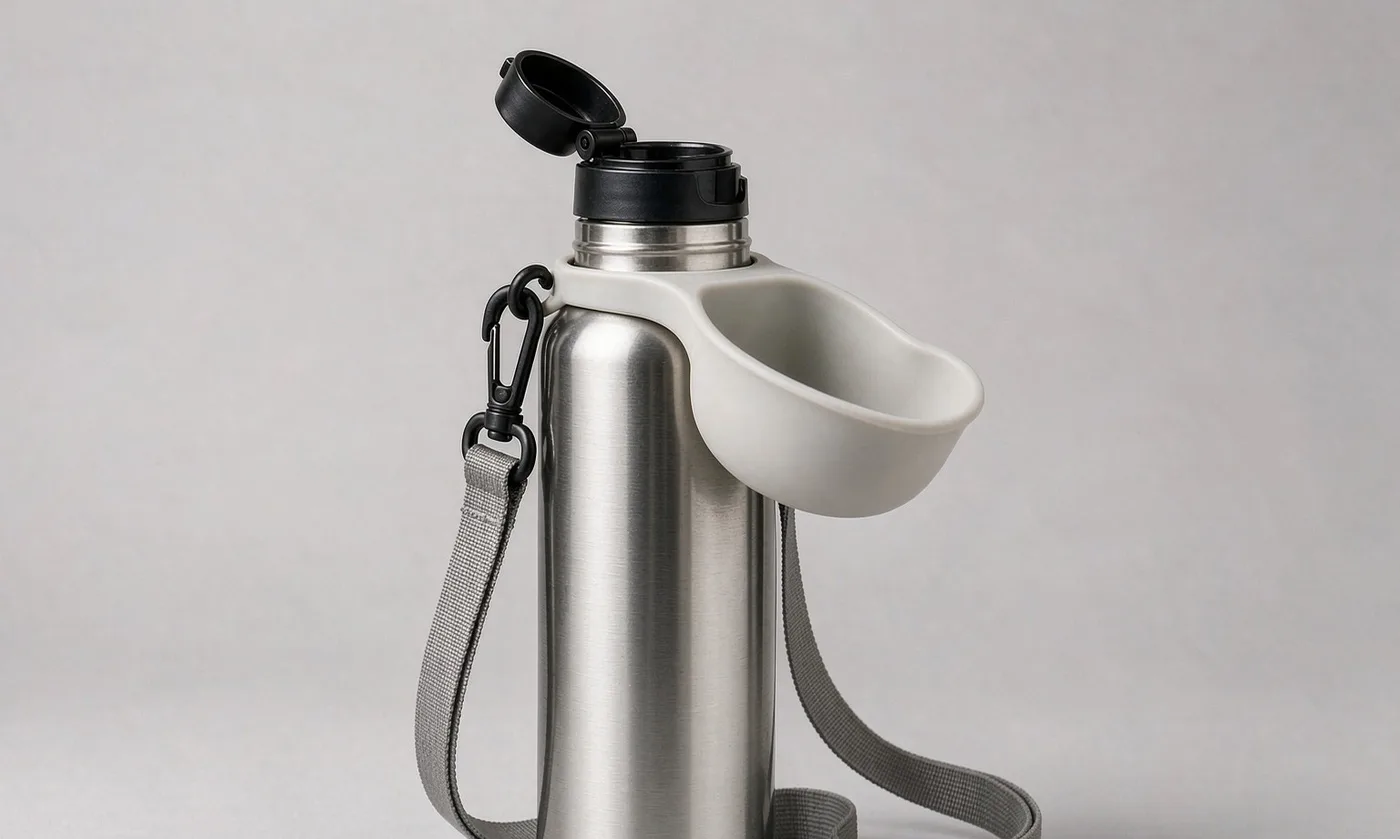
One hand, one lead, one animal
Every format decision should be tested against a single posture: standing, holding a lead, with an animal pulling slightly. If opening the bottle and presenting it requires setting anything down, the format is wrong for a travel range.
Flow rate and valve selection
Flow rate is the specification most treat-bottle programs leave undefined, and it is the one that decides whether the product is usable. Measure it in millilitres per second at a realistic tilt, not inverted on a bench. As a working range, 8-15 ml per second suits a small animal, 15-25 suits a medium one, and above 25 the trough overflows faster than most animals can lap.
The valve is what controls it, and there are two families. A push-button valve gives the handler direct control and works well with a slow lapping animal; a gravity trough with a restricted orifice is simpler, has no moving part to fail, and is the better choice for a product that will be dropped and grit-exposed. A valve with a moving part is a valve that will eventually stick, so if the brand's positioning is rugged, choose the simpler mechanism.
Test the valve with the liquid it will carry and at the temperature it will be carried at. Cold water is more viscous than warm, a sugary or additive-containing drink behaves differently again, and a valve tuned at room temperature with water will behave differently on a cold morning on a hill.
Material: stainless, Tritan, and the food-contact question
Material is a specification decision rather than a taste decision. Food-grade stainless steel gives insulation, exceptional durability, and a surface that takes laser etching permanently; it is heavier, more expensive, and it dents. Tritan or another BPA-free copolyester gives clarity, low weight, a wide colour range, and a lower price; it scratches and it does not insulate. Aluminium is light and cheap but requires an internal liner, and a liner that fails is a contamination problem rather than a cosmetic one.
Insulation is worth specifying when the brand sells into hot or cold climates. A double-wall vacuum body keeps water drinkable in a car in summer, which is a functional benefit an owner will notice and repeat to other people. It roughly doubles unit cost, so it belongs on a premium tier rather than across the whole range.
Whatever the body, the closure components are the compliance-critical parts. Gaskets, spouts, and straws must be specified to a food-contact grade and documented, because the body material is what brands declare and the closure is what regulators and reviewers actually test. Request the food-contact declaration for every component, not just for the bottle.
Insulation and when it pays
Double-wall vacuum construction roughly doubles the unit cost of a bottle, so the question is not whether insulation is nice but which customers will notice it. The answer is the ones in hot climates, the ones who leave water in a car, and the ones on long travel days. Those customers will notice the difference within an hour and will talk about it; a customer using the bottle for a twenty-minute walk will never notice it at all.
That makes insulation a tiering decision rather than a range-wide one. Put it on the largest capacity, where the journey is longest and the price is already highest, and keep single-wall on the everyday size where weight and price matter more. The range then has a good, better, best structure that a customer can navigate without being told how to.
There is one caution. Insulated bodies are heavier and thicker, and they may not fit the carrier pocket the single-wall version was designed for. Check the fit of every capacity against the bag it is meant to accompany before locking the specification, because a bottle that does not fit the pocket is a bottle that gets carried in a hand and eventually left behind.
Capacity ladder and the travel arithmetic
Capacity should be planned against real journeys rather than round numbers. Around 350 ml suits a short urban trip and a small animal; 500-600 ml is the everyday default and fits most carrier pockets; 750 ml to 1 litre suits a hike or a long travel day. Above a litre the filled weight becomes the constraint, because a litre of water is a kilogram that the customer carries all day.
Publish the capacity honestly as usable volume rather than as brim volume. A bottle that holds 600 ml to the brim gives the customer roughly 540 ml in practice once headroom and the dispenser are accounted for, and a customer who measures the difference will say so in a review. Stating the usable figure costs nothing and removes the most avoidable complaint in the category.
Empty bottles travel freely, which is the useful asymmetry in this category: the bottle can be large because it is carried empty through security and filled on the other side. That is why the travel sell is stronger for a bottle than for any filled liquid in the range, and why the copy can legitimately talk about journey length.
For brands selling to customers who fly, the practical reference points are the airline and security rules rather than the product specification. Guidance from the Federal Aviation Administration and the live-animal carriage framework maintained by IATA are the documents a travelling customer will already have read, and packaging copy that aligns with them reads as competent rather than as marketing.
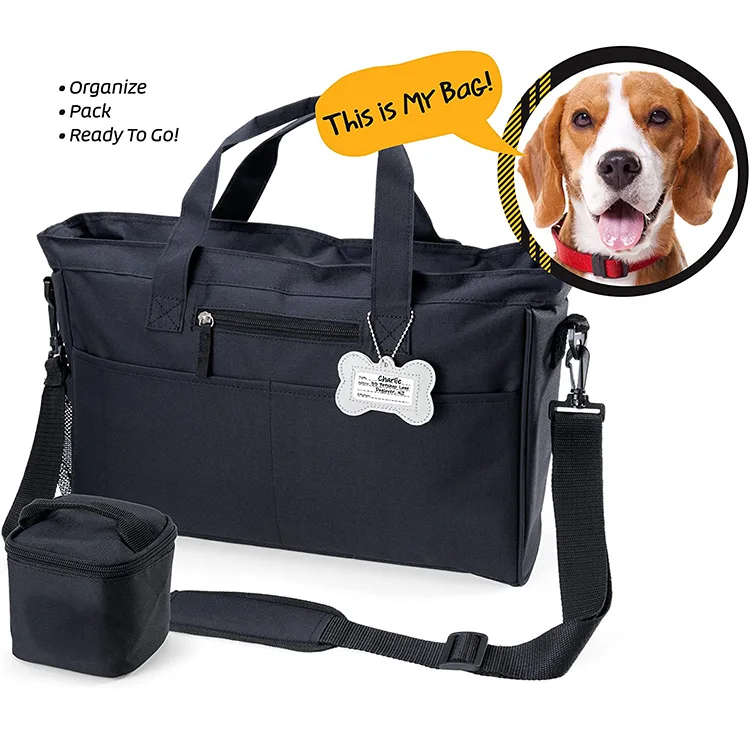
Logo craft on a cylinder
A cylinder punishes artwork that was designed flat. Curvature compresses the visible width, a tapered body distorts vertical proportions, and a seam or a mould line runs through the middle of the panel where the mark wants to be. Design the artwork wrapped, on the actual circumference, and place the mark away from the seam.
Method choice follows the body. Laser etching on stainless is permanent, precise, monochrome, and completely free of consumables, which makes it the best value at any volume above a few hundred units. A wrap print or a heat-transfer sleeve gives full colour on steel or Tritan but is a surface layer that abrades in a bag. Screen printing is the cheapest for a simple one or two-colour mark on a straight-walled body and cracks on a tapered one.
For a travel product, permanent wins. The bottle will be dropped, rattled against keys, and washed; a mark that survives all three is still selling the brand two years later, and a mark that does not is a visible failure on an object the customer carries in public.
Artwork on a tapered body
A tapered bottle flatters the hand and punishes the artwork. Any element that runs vertically appears to lean, any horizontal rule appears to curve, and a rectangular panel drawn flat becomes a trapezoid on the object. The fix is to draw the artwork on the actual taper profile supplied with the bottle drawing, on the true circumference, and to check the seam position before placing anything.
Where the body is tapered, keep the mark inside a straight-walled band if one exists, usually the section just below the shoulder or above the base. A straight band of even thirty millimetres is enough for a wordmark and a small descriptor, and it prints cleanly because the curvature is constant across it.
If there is no straight section at all, reduce the artwork to a single line of type set on the level and accept that it will read as slightly curved. Fighting the geometry with distortion looks like an error; working with it looks like a decision. The brands that get this right are the ones that designed for the body they had rather than the body they wished for.
Water bottle specification matrix
| Spec line | Urban everyday | Travel and flight day | Hike and long day |
|---|---|---|---|
| Capacity | 500 ml | 600 ml, carried empty | 750 ml to 1 litre |
| Body | Single-wall Tritan, BPA-free | Single-wall stainless | Double-wall vacuum stainless |
| Head | Fold-out trough with valve | Fold-out trough, slow-flow valve | Wide trough plus separate cup |
| Gasket | Silicone, documented food grade | Silicone, documented food grade | Silicone, spare gasket supplied |
| Mark | Laser etch or wrap print | Laser etch, permanent | Laser etch on barrel |
| Finish | Matte colour, soft touch | Brushed steel with colour band | Powder coat, high grip |
| Leak test | 100 percent at inspection | 100 percent, plus pressure test in sampling | 100 percent plus drop test |
| Best channel | Direct to consumer | Bundle with carrier | Specialty outdoor |
The shared element across all three columns is the closure specification. Bodies can differ, finishes can differ, and capacities can differ, but one gasket standard, one valve family, and one leak-test protocol keep the range coherent and keep the inspection simple.
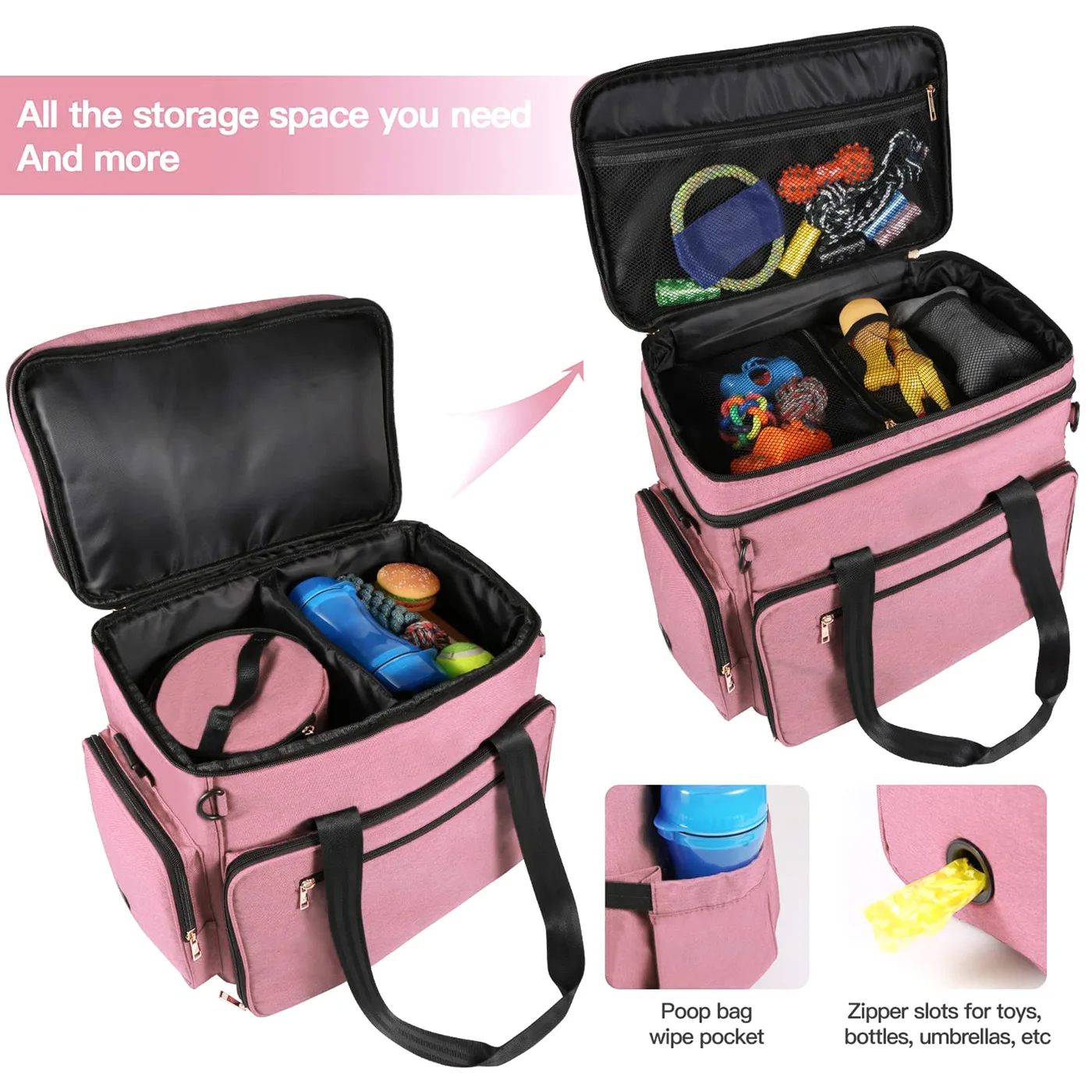
Cleaning the parts customers forget
A bottle with a dispensing head has more cleanable surfaces than a customer expects, and the ones she forgets are the ones that fail. The trough, the valve seat, the gasket groove, and the inside of the cap all hold moisture, and a bottle put away closed after a walk will grow a film in the trough within a day or two.
Design for that with fewer parts and wider openings. A trough that opens fully rather than through a narrow slot can be wiped; a valve seat that is accessible without a brush can be rinsed; a gasket that lifts out of its groove can be dried. Every one of those is a tooling decision made months before the first review is written.
Then say it on the pack. One line instructing the customer to rinse the head, dry it open, and wash the gasket weekly prevents the most common negative review in the category, which is a bottle that smells. A product that is easy to clean and says so will outlast a product that is merely well made.
Colour, finish, and the Pantone discipline
Bottle colour is the most visible brand surface in a travel range, because a bottle is carried in the hand rather than stored in a cupboard. Hold the body, the cap, and any colour band to the same reference, and the range will read as designed from across a street.
Anodised aluminium, powder-coated steel, and tinted Tritan all shift colour differently, so the discipline is to anchor the palette to a reference published by Pantone and then to approve a physical standard per substrate rather than a single chip. Set delta-E tolerance at 2.0 for the hero colour and allow 3.0 on secondary tones, and require a measured drawdown rather than a visual comparison at each reorder.
Finish carries as much identity as hue. A soft-touch matte finish reads premium and shows fingerprints; a brushed steel with a single colour band reads technical and hides wear; a high-gloss finish reads cheap on a bottle that will be scratched. Choose the finish for the object's life, not for the photograph.
The spare-parts question
A bottle is a durable good with consumable parts, and the brands that plan for that keep customers for years. Gaskets and valves wear; bodies do not. Supplying a spare gasket with the bottle, and selling replacements thereafter, costs almost nothing and removes the single most common reason a working bottle is thrown away.
Specify the spare as a standard size. A proprietary gasket that fits only one bottle creates a captive market and an angry customer on the day it is discontinued; a standard-section silicone ring is available anywhere and keeps the product usable regardless of what happens to the brand's own stock.
The commercial logic is worth stating plainly. A customer who buys a replacement gasket has re-engaged with the brand, has a reason to visit again, and is very likely to buy something else while she is there. A customer whose bottle leaked and could not be fixed has a reason never to return, and she will say why.
Compliance, leak testing, and the AQL 2.5 gate
A bottle is a food-contact article with a mechanical failure mode, so the test plan has two halves. The first is materials: a food-contact declaration for the body and for every closure component, a BPA-free statement where a plastic is used, and a migration or leaching test appropriate to the destination market. The second is mechanics: a leak test, a drop test, and a valve cycle test that runs the dispenser through the number of opens a customer will realistically make in a year.
Documentation should be requested at sampling rather than at shipment, because a food-contact certificate that arrives after production has started cannot change anything. Independent verification through a body such as SGS gives a reviewer a third-party document instead of a supplier assertion, and for the United States consumer product obligations are administered by the U.S. Consumer Product Safety Commission.
Release is at AQL 2.5, general inspection level II, with the defect list agreed first. Critical defects are any leak in a filled-and-inverted test, a valve that will not close, a missing or non-compliant gasket, and a sharp edge on a drinking surface. Major defects include a decoration error, a colour outside tolerance, and a cap that cross-threads. Minor defects cover light barrel marks invisible at arm's length.
Launch cadence and the travel capsule
Launch the bottle with the carrier, not after it. The product's strongest sales position is inside the bag at the point of sale, and a bottle introduced six months later has to re-earn attention that the launch moment would have given it for free.
Bundle it deliberately. A carrier, a bottle, and a travel bowl form a journey kit that answers every obvious question a buyer has about taking an animal somewhere, and a kit sells at a price that three separate items do not. Photograph the kit packed rather than the items laid out, because the packed image proves the bottle fits.
Give the bundle one name and one photograph, and resist the urge to sell the pieces separately at launch. A named kit creates a single thing to remember, to review, and to recommend, and a customer who recommends a kit brings a customer for the carrier rather than for the bottle.
Schedule the reorder around valve and gasket lead times rather than around the body. The body is the cheap, fast part; the closure components are the ones that run long and that carry the compliance documentation. Sampling takes 6-10 working days and bulk runs 35-50 days, and the closure should be procured in the same cycle as the body so that they arrive together.
Order and quality terms
- MOQ 500 pieces per colourway; samples in 6-10 working days
- Bulk production 35-50 days after approval; AQL 2.5 inspection standard
- T/T 30/70 terms, FOB Xiamen, full document set per shipment
People Also Ask
What type of water bottle is best for a dog on a walk?
An integrated bottle with a fold-out trough and a metered valve. It is one-handed, needs no separate bowl, and the valve stops the overflow that makes open designs unusable on a pavement.
How much water should I carry for a day out?
500-600 ml covers most day trips and fits a carrier pocket; 750 ml to a litre suits a hike. Remember the bottle travels empty and is filled at the destination, so capacity is not a security constraint.
Is stainless steel worth the extra cost?
For premium, outdoor, and boutique channels, yes — it insulates, survives drops, and takes a permanent laser mark. For price-led direct-to-consumer volume, Tritan usually returns a better margin.
Why do printed bottle logos fail?
Because they are surface layers on an object that is dropped, rattled against keys, and washed. Laser etching on steel is permanent and needs no consumable, which is why it is the better choice above a few hundred units.
What makes a pet water bottle leak?
Almost always the closure: a rubber rather than silicone gasket, a cross-threaded cap, or a valve that does not seat. Specify the gasket, pressure-test in sampling, and leak-test every unit at inspection.
Should a bottle be sold in a travel bundle?
Yes. Carrier, bottle, and travel bowl answer every obvious question about a journey, and photographed packed rather than laid out, the bundle proves the bottle fits.
Frequently Asked Questions
What is the MOQ for a custom water bottle?
MOQ 500 units per colourway and size, covering the body, closure, decoration, and retail pack. Decorated samples are produced in 6-10 working days and bulk runs 35-50 days.
Which format dispenses best on a walk?
An integrated fold-out trough with a metered valve. It is genuinely one-handed, needs no separate bowl, and the valve is what prevents the overflow that makes unmetered designs useless on a pavement.
Should the body be stainless or Tritan?
Stainless for durability, insulation, and a permanent laser mark; Tritan for weight, colour range, and price. Choose by channel: boutique and outdoor for steel, direct-to-consumer volume for Tritan.
What capacity should I offer?
Around 350 ml for short urban trips, 500-600 ml as the everyday default that fits most carrier pockets, and 750 ml to 1 litre for hiking. Above a litre the filled weight becomes the constraint.
Will the logo survive being carried in a bag?
With laser etching on stainless, yes indefinitely. A wrap print or heat-transfer sleeve gives full colour but is a surface layer that abrades against keys and zips over time.
How do you prevent leaks?
Specify a silicone gasket with a documented food-contact grade, pressure-test closures during sampling, and require a 100 percent leak test at inspection on filled, inverted units rather than a visual seal check.
Can the bottle fly?
Empty, yes, which is the useful asymmetry in this category — the bottle can be large because it is carried empty through security and filled afterwards. Travelling customers will already have read the airline and security guidance, so copy should align with it.
What compliance documentation is needed?
A food-contact declaration for the body and for every closure component, a BPA-free statement where a plastic is used, and a migration test appropriate to the market — requested at sampling, not at shipment.
What inspection standard applies?
AQL 2.5, general inspection level II. Critical defects are any leak in a filled inverted test, a valve that will not close, a non-compliant gasket, and a sharp edge on a drinking surface.
Can the bottle match my carrier colour?
Yes. Anchor the palette to a Pantone reference and approve a physical standard per substrate, with delta-E 2.0 for hero colours and 3.0 for secondary tones, verified by measured drawdown at each reorder.
Should the bottle launch with the carrier?
Yes. The strongest sales position is inside the bag at the point of sale, and a later introduction has to re-earn attention the launch moment would have given for free.
What are the commercial terms?
T/T with a 30 percent deposit and a 70 percent balance before shipment, quoted FOB Xiamen.
Talk to QUANZHOU JUNYUAN BAGS about a pet carrier program: MOQ 500 pieces per colourway, samples in 6-10 working days, bulk production in 35-50 days under AQL 2.5 inspection.
Get a free quote Request a sample