Cactus Leather: A Premium Bio-Based Option for Custom Carriers
Yes. Cactus leather is a bio-based composite made from milled nopal cactus, blended into a partially bio-derived polyurethane and cast onto a cotton or polyester backing at roughly 1.0-1.4 mm. It is the closest plant-based match to a soft PU in hand and drape, takes emboss, foil and screen print cleanly, and runs at MOQ 500 units per colourway.
Executive summary. Cactus leather is the safest premium bio-material for a brand that wants a sustainability story without inheriting the inconsistency of a grown or harvested sheet. Its hand, drape and printability are close enough to a good PU that existing patterns translate with only minor adjustments, and the agricultural story is verifiable and easy to communicate. Plan it as the top tier of a range rather than as a universal replacement. Commercial terms hold at MOQ 500 pieces per colourway, with sampling in 6-10 working days once the backing, grain and finish are fixed, bulk production in 35-50 days after approval, and inspection at AQL 2.5. Extend the defect list to cover emboss depth inconsistency, backing telegraphing through thin grades, and coating cracking after flexing. Documentation to prepare before approaching retail: OEKO-TEX on the coating and backing, REACH and Prop 65 declarations, and a written statement of the bio-based percentage.
When a custom pet bag has to ship flat, the pattern changes: removable stiffeners and a fold line that does not crease the coated face.
What Cactus Leather Is and Why the Plant Itself Matters
Cactus leather is made from the nopal cactus, also known as prickly pear, which is grown commercially in Mexico for food. Mature pads are harvested without killing the plant, dried in the sun, milled into a powder, and blended into a binder that is itself partly bio-derived. The mixture is cast as a coating onto a textile backing and finished to produce a sheet that behaves much like a soft synthetic leather.
The agricultural argument is unusually strong on two counts. First, the plant is not irrigated: nopal grows on rainfall and, in the commercial systems used for this material, requires no additional water beyond what the climate supplies. Second, the plantations are typically established on land that is not competing with food crops, and the harvesting cycle leaves the plant in place to regrow. Both points are worth stating on the hang tag, because they are the two facts a customer is most likely to repeat to someone else, and a claim that survives being retold is worth more than one that needs a footnote.
There is a carbon argument as well, and it is worth stating carefully. A mature nopal plantation sequesters carbon, and the material producer's published figures usually account for that sequestration against processing emissions. The honest phrasing is that the cultivation stage is carbon-negative or carbon-neutral depending on the accounting boundary, not that the finished material is. Retail compliance teams read this distinction literally. If your submission needs a single sentence, use the cultivation-stage figure and name the boundary. A claim that is modest and defensible will pass review; one that overreaches will be challenged, and a challenged claim costs more than the conversion it was meant to buy.
What arrives at the cutting table is a smooth, slightly waxy sheet, usually 1.0 to 1.4 mm including backing, with a soft hand and good drape. Unlike cork or pineapple fibre, there is no visible natural texture to design around, which is precisely why many brands prefer it: it behaves like a material rather than like a statement.
That is the material's position in one sentence. Cactus leather is the bio-based option for a brand whose design language depends on clean surfaces, consistent colour and precise branding, and who wants the sustainability claim carried by the composition rather than by the appearance.
Spec Sheet: Bio-Based Content, Backing and Performance
As with every cast bio-composite, three variables define the material: the binder system, the backing cloth, and the surface finish. Quote all three, and ask for the bio-based percentage in writing, because it is the number both your marketing copy and your retail submission will depend on.
| Parameter | Typical range | Design consequence |
|---|---|---|
| Bio-based content | 25 - 45 percent | Higher percentages soften the film and reduce abrasion |
| Thickness | 1.0 - 1.4 mm | Below 1.1 mm the backing weave can telegraph |
| Backing cloth | Cotton, polyester or recycled PET | Recycled backing strengthens the claim at little cost |
| Abrasion (Martindale) | 30,000 - 80,000 cycles | The strongest abrasion figure among plant-based options |
| Tear strength | 30 - 70 N | Supports normal seam construction without reinforcement |
| Hydrolysis resistance | 3 - 6 years | Ask for the test standard, not a verbal assurance |
| Cold crack | -15 °C to -25 °C | Specify if you ship to northern winter markets |
Abrasion is where this material genuinely separates itself from the rest of the plant-based group. A good cactus grade will outperform cork and pineapple fibre substantially and approach a mid-grade microfiber, which makes it viable for higher-wear areas of a carrier than most bio-materials can handle.
Tear strength is similarly comfortable, and that has a practical payoff: standard seam construction works. You do not need to reinforce every seam with tape the way you do with a fibrous sheet, which keeps labour cost down and lets the pattern stay clean.
Hydrolysis is the one figure to push on. The binder is still a polyurethane, and a low-grade binder will fail in a humid warehouse over a few years regardless of how much cactus powder it contains. Ask which test standard the figure was measured against, and ask for the report rather than the summary. If a supplier will not share the hydrolysis report, treat that as a decision made for you and look elsewhere, because this is the failure mode that produces warranty claims two years after the launch has been forgotten.
Hand Feel and Drape: The Closest Plant-Based Match to Soft PU
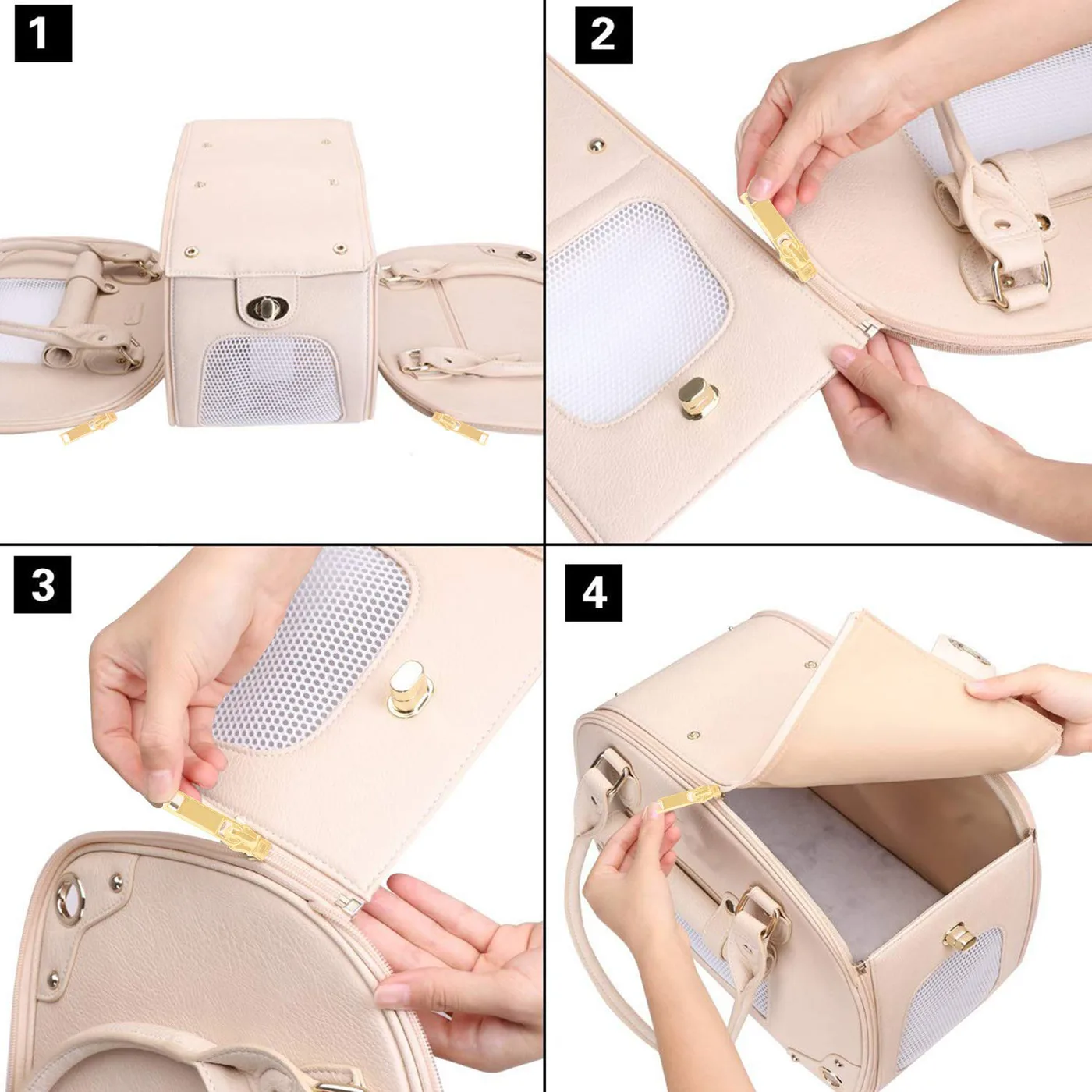
The single most useful thing a designer can know about cactus leather is that it behaves like a material they already understand. The hand is soft, slightly waxy and warm, with a fine break that sits somewhere between a good PU and a milled nappa. It drapes over a curved panel without fighting, it recovers after compression, and it does not have the plastic springiness that cheap synthetics carry.
That familiarity has a direct commercial benefit: pattern translation. If you have an existing carrier design running in PU, moving it to cactus leather is usually a matter of small adjustments rather than a redesign. Seam allowance can stay in the normal range, fold radius does not need to be opened up dramatically, and the assembly sequence does not change. That reduces sampling rounds, which is where most of the hidden cost of a material switch actually sits.
The drape also broadens the design vocabulary. Unlike cork or pineapple fibre, cactus leather will take a soft gather, a rolled top or a gently curved flap without cracking, which opens up closure styles that stiffer bio-materials exclude. For a brand whose identity is built on soft, rounded forms rather than on structured geometry, this is often the deciding factor.
Where it is less convincing is character. There is no visible natural texture, no grain variation, no story written into the surface. A customer who runs a hand over it will feel a nice material but will not know why it is interesting, which means the explanation has to be carried by the hang tag, the product page and the packaging rather than by the object itself. That is a real cost of choosing this material and it should be budgeted: a two-panel hang tag, one product photograph shot close enough to show the surface, and a short origin paragraph on the box insert. Those three elements do more for conversion here than they would for a material that sells itself on sight.
Branding Options on a Smooth Bio-Composite
Because the surface is a cast film, cactus leather accepts the full branding toolkit and does so consistently, which is a significant advantage over any fibrous or grown alternative. This is the material to choose when logo execution is non-negotiable.
- Emboss and deboss. Excellent. The film holds a pressed mark with crisp edges, and a debossed logo reads as more expensive than the same mark printed. Custom grain embossing is also available, usually against tooling cost.
- Foil and heat transfer. Reliable for metallic and multi-colour marks. Confirm temperature and dwell on the sample report, since too much heat will glaze the surface.
- Screen print. The most cost-effective route at volume, and adhesion is generally good. Use a flexible ink so the mark survives folding.
- Embroidery, woven label, rubber patch and metal badge. All viable applied options, and embroidery through the sheet is more forgiving here than on cork or mycelium.
Because the surface is smooth and consistent, minimum sizes are smaller than on textured bio-materials. Printed lettering down to about 4 mm cap height and debossed lettering to about 6 mm remain legible, which matters for brands with a detailed wordmark. That capability also makes the material the safest choice for a licensed or co-branded program, where the partner's identity guidelines usually specify minimum clear space and minimum size that a textured bio-material simply cannot hold.
One caution on emboss depth. A deep deboss thins the coating, and on a material where abrasion resistance is one of the main selling points, an over-deep mark creates a weak point. Set deboss depth from a prototype and record it, rather than letting it drift between production runs. It is also worth testing the mark after a short flex cycle: fold the branded panel gently a hundred times and check for cracking at the mark. Logos that pass a flat adhesion check can still fail once the coating flexes underneath them, and the test takes minutes.
Colour Range and the Case for a Full Colourway Series
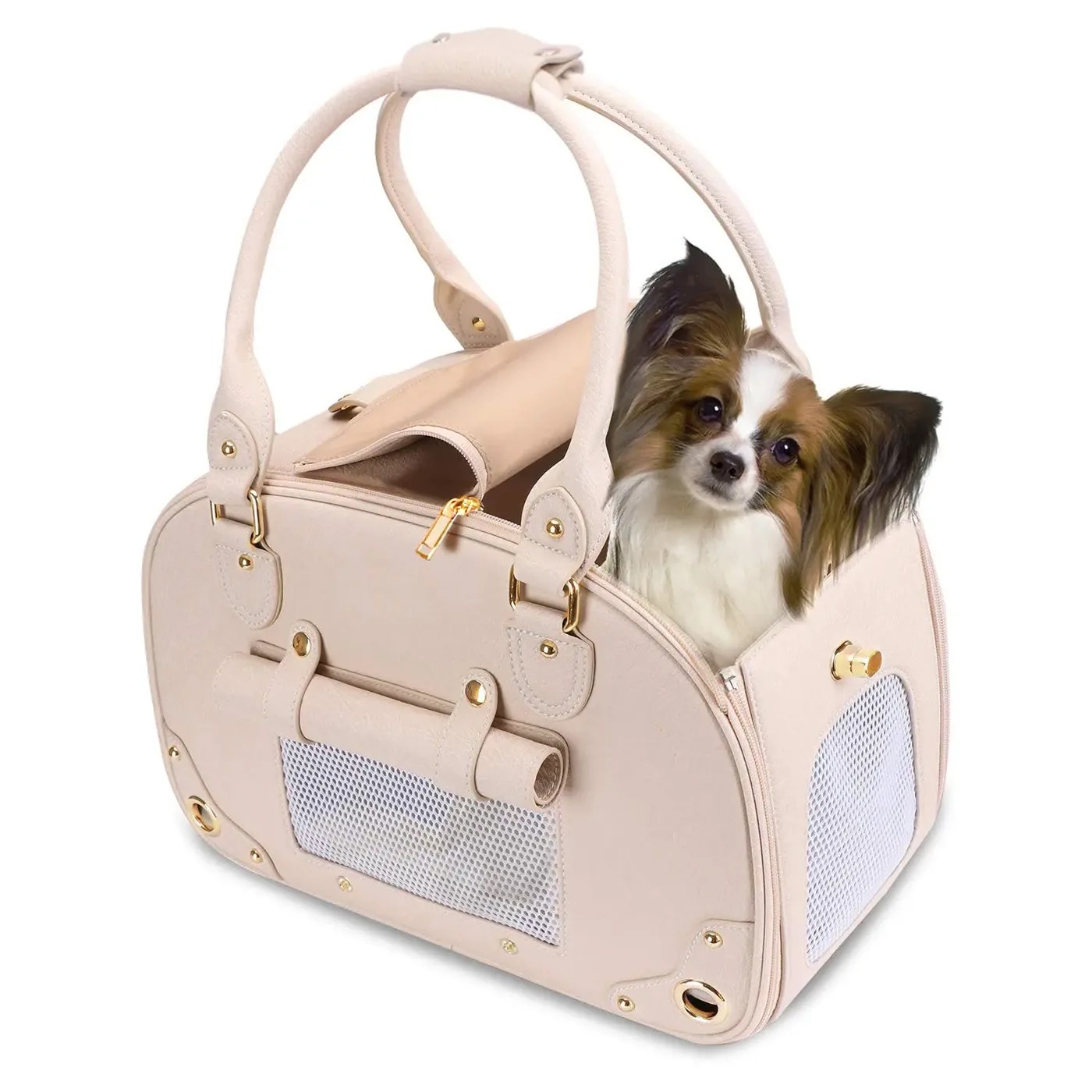
Cactus leather is the one plant-based material where a genuine multi-colourway series is realistic. Because the coating is cast and pigmented rather than natural, colour is repeatable within normal commercial tolerances, and the colour range is far wider than the earthy band that cork, mycelium and pineapple fibre are confined to.
In practice, saturated and cool tones are achievable here in a way they are not elsewhere in the category. A dusty blue, a deep green, a terracotta and a warm grey can sit in the same series and still look like a family, which is exactly what a brand with an established palette needs.
Work to a Pantone target with a stated tolerance and put the reference number on the sample approval form. Pantone colour standards remain the shared vocabulary between a brand team and a coating line, and a written Delta E tolerance turns a subjective argument about whether a colour is right into a measurable one. Confirm the match on the production grain, because emboss texture shifts perceived colour by as much as half a shade, and a colour approved on a smooth lab dip will read differently on the shipped surface.
Colour fastness should still be tested rather than assumed. Published AATCC colour fastness methods for rubbing and light give you a defensible number, and dark saturated coatings remain the usual failure point on wet rub, which is the default condition inside a pet carrier.
The commercial payoff of this colour capability is worth stating plainly: you can run the material across an entire premium tier rather than confining it to a single hero SKU. That is not true of any other plant-based option in this group, and it is the main reason a brand with a real colour system should look at cactus first.
Pattern, Structure and Edge Treatment
Cactus leather sews like a soft synthetic, which means most of the pattern discipline required for cork or mycelium is unnecessary. There are still three things worth specifying deliberately, because they are where this material's specific properties show up.
First, thickness. Below roughly 1.1 mm the backing weave can telegraph through the coating on large flat panels, producing a faint but visible texture that looks like a production fault. If your design has big uninterrupted faces, specify the heavier end of the range or ask for an interlining.
Second, fold behaviour. The material folds cleanly, but a hard crease held for months will leave a permanent line. Design folds to be gentle and, where a panel must fold flat in transit, add a soft interlining so the crease distributes rather than concentrating.
Third, edge treatment. The options are the familiar ones: turn and topstitch, bind with tape, or apply an edge paint matched to the coating. Edge paint is the most premium-looking and the most labour-intensive; binding is the most robust and gives you a second colour placement. For a premium tier, a bound edge in a contrast tone is usually the better commercial choice because it survives handling better.
Structurally, the material is strong enough to carry more than the other plant-based options, but I would still keep the base panel and strap anchorage on a proven woven. The reason is not strength; it is abrasion. A cactus panel will survive a season of normal use on the exterior face and will not survive being dragged across pavement on the base. The same reasoning applies to the interior floor and the inner door panel, where claw contact is concentrated. Line those zones with a tight-weave coated fabric and let the cactus material carry the exterior, where it will look good for far longer.
Cost, Positioning and Building a Premium Tier Around It
Cactus leather sits at the top of the plant-based group on price and comfortably below full-grain bovine leather, with a cost profile close to a good microfiber. The premium is real, and it needs to be justified by positioning rather than argued away.
| Tier | Material strategy | Role in the range |
|---|---|---|
| Eco entry | Recycled PET woven body | Volume and price-led discovery |
| Mid | Cactus panels on a recycled body | The margin tier, where most units sell |
| Premium | Full cactus outer, matched lining, rigid box | Halo SKU and press product |
| Halo | Numbered limited drop | Brand building rather than volume |
The structure that works is a ladder with cactus appearing at two of the four rungs. Used as a panel material on a recycled body, it lifts a mid-tier product enough to support a meaningful price step. Used as the full outer on the premium SKU, it justifies the rigid box, the woven label and the display unit that come with that tier.
Cost engineering is available if you need it. Zone the material to the panels a customer touches, consolidate to fewer colourways to clear MOQ 500 cleanly, use a stock grain for the first season and introduce custom emboss on the reorder when tooling can be amortised, and keep panel shapes simple to protect nesting yield. The lever to resist is thinning the coating below 1.0 mm. It looks like a saving on the material line and it costs more elsewhere, because thin grades telegraph the backing on large panels and force an interlining that removes most of the apparent saving while adding a production step.
Compliance, Certification and Claim Accuracy
Cactus leather's claim set is strong and, if documented properly, survives retailer scrutiny well. The discipline required is the same one that applies to every bio-composite: state what is true, and do not let the marketing team extend it.
On chemistry, prepare OEKO-TEX certification covering the coating and backing, REACH SVHC declarations for the EU, and a Prop 65 assessment for California. Ask for documentation per production lot and keep it tied to purchase order numbers, because a submission eighteen months after launch will be audited against the specific goods shipped, not against a generic certificate.
On claims, three statements are safe and three are not. Safe: made with nopal cactus; contains a stated percentage of bio-based content; grown without irrigation. Unsafe: plastic-free, because the binder is a polyurethane; waterproof, because no coated sheet in this class is; biodegradable, because neither the binder nor the assembled product will break down on any useful timescale.
Independent verification shortens the review cycle. SGS testing and verification services are recognised by most retail compliance teams, and attaching a report to a first submission answers the obvious questions before they are asked.
Finally, extend the inspection standard. Inspection runs at AQL 2.5 against a signed golden sample, and the defect list should be written for this material: emboss depth inconsistency, backing telegraphing on large panels, coating cracking after flexing, and colour drift outside the agreed tolerance. Agree the list with the production team before bulk rather than during inspection, and attach a physical reference photograph to each defect category so that borderline calls are settled against something concrete rather than argued.
Launch and Reorder Planning for a Cactus Leather Series
Because the material behaves predictably, a cactus program can be planned on a conventional calendar. The one addition is the coating lot, which is made to order and should be reserved before sampling begins rather than after approval.
Work backwards from the floor date. Reserve the coating lot first, run sampling in 6-10 working days once backing, grain and finish are confirmed, then bulk in 35-50 days after approval. A multi-colourway launch should add contingency, because each colour is a separate make-ready and a missed tolerance on one colourway can hold the whole drop.
Structure the sample rounds so each answers one question, in the same sequence used for any coating material. Round one selects the laminate, comparing two grades and both backings with abrasion and hydrolysis data attached. Round two tests branding on the chosen grain at three placements. Round three is the first sewn prototype in production colours, checked for telegraphing on large panels, fold marking and colour consistency across panels. Only the output of round three should become the golden sample.
Sample additional colourways in parallel rather than sequentially. Coating lots run together match each other, and sequential sampling is the usual cause of two colourways of the same product looking slightly different on the same shelf, which customers read as a quality problem.
For reorders, hold two signed reference swatches, one with the brand and one with the production team, and make matching to the physical card an explicit condition of the purchase order. That clause is the cheapest insurance available in this category, and it prevents the argument that otherwise surfaces when the replenishment is already on the water. Budget for one more thing before launch: a small over-order of the coating on the first run. Holding material for repairs, replacements and a small second drop costs far less than re-opening a finishing lot at minimum quantity later.
Order and quality terms
- MOQ 500 pieces per colourway; samples in 6-10 working days
- Bulk production 35-50 days after approval; AQL 2.5 inspection standard
- T/T 30/70 terms, FOB Xiamen, full document set per shipment
People Also Ask
Is cactus leather the same as Desserto?
Desserto is the best-known brand name for cactus-based material and is widely used as shorthand in the trade. Equivalent constructions exist from other producers, so specify the bio-based percentage and mechanical figures rather than the name alone.
Does harvesting cactus kill the plant?
No. Mature pads are cut and the plant is left in place to regrow, which is why the cultivation stage can be described as regenerative rather than extractive.
Is cactus leather breathable?
Less so than pineapple fibre or an unfinished mycelium sheet. The coating is largely closed, so ventilation should be engineered through mesh panels rather than expected from the material itself.
How does cactus leather feel compared with real leather?
It is soft, slightly waxy and warm, sitting between a good PU and a milled nappa. It does not develop a patina in the way full-grain leather does.
Is cactus leather expensive?
It sits at the top of the plant-based group on price, roughly comparable to a good microfiber and well below full-grain bovine leather. Panel zoning is the most effective way to manage the premium.
Can cactus leather be used for the whole carrier body?
Yes, and it is one of the few plant-based materials where that is practical. Most programs still move the base panel to a coated woven, but the reason is abrasion against pavement rather than a strength limitation.
Frequently Asked Questions
What is cactus leather made from?
It is made from the nopal cactus, also called prickly pear. Mature pads are harvested without killing the plant, sun-dried, milled into powder, and blended into a partly bio-derived polyurethane binder, then cast onto a textile backing.
How durable is cactus leather compared with other plant-based materials?
It is the most abrasion resistant of the group. Good grades reach 30,000 to 80,000 Martindale cycles, well above cork and pineapple fibre and close to a mid-grade microfiber, which makes it viable for higher-wear areas.
Does cactus leather require irrigation to grow?
No. Nopal grows on rainfall in the commercial systems used for this material, and no additional irrigation water is applied. That is one of the strongest and most verifiable claims available for the material.
What percentage of cactus leather is bio-based?
Commercial grades typically fall between 25 and 45 percent bio-based content, with the remainder a polyurethane binder, a backing cloth and surface finish. Ask for the figure in writing and for the test method behind it.
Can cactus leather be matched to brand colours?
Yes, far better than other plant-based materials. The coating is pigmented rather than natural, so saturated and cool tones are achievable. Work to a Pantone target with a stated Delta E tolerance.
What is the MOQ for a cactus leather carrier program?
MOQ is 500 pieces per colourway. If you plan several colourways, confirm the total across the series when reserving the coating lot, since each colour is a separate make-ready.
Does cactus leather crack or peel?
A well-specified grade does not. Peeling indicates a hydrolysis failure or a lamination problem, both of which are prevented by requesting hydrolysis test data and peel-strength figures before material approval.
Is cactus leather waterproof?
The coating is water-resistant and wipes clean, but seams and stitch lines are not sealed. A carrier intended to contain moisture should still specify a TPU or PEVA liner.
Can you emboss a logo into cactus leather?
Yes, and it is one of the material's strengths. Keep deboss depth moderate and record it, because an over-deep mark thins the coating and creates a weak point in an otherwise abrasion-resistant surface.
Is cactus leather vegan?
Yes, it contains no animal-derived material. It is accurate to describe it as a bio-based vegan composite rather than a fully natural or plastic-free material, because the binder is synthetic.
Which certifications should I request?
Ask for OEKO-TEX on the coating and backing, REACH SVHC declarations for the EU, and a Prop 65 assessment for California. Request documents per production lot and keep them tied to your purchase orders.
What inspection level applies to a cactus leather run?
Inspection runs at AQL 2.5 against a signed golden sample, with the defect list extended to include emboss depth inconsistency, backing telegraphing, coating cracking after flexing and colour drift.
How long does a cactus leather program take?
Sampling takes 6-10 working days once backing, grain and finish are fixed and bulk runs 35-50 days after approval. Reserve the coating lot before sampling starts, and sample additional colourways in parallel.
Talk to QUANZHOU JUNYUAN BAGS about a pet carrier program: MOQ 500 pieces per colourway, samples in 6-10 working days, bulk production in 35-50 days under AQL 2.5 inspection.
Get a free quote Request a sample