Key Clip: Secure Storage Hardware for Custom Pet Carriers
A key clip on a custom pet carrier should be rated to at least 5 kg static load and attached on a 20 mm webbing loop with a box-stitched bar-tack backed by a reinforcement plate. Zinc-alloy swivel snaps cost $0.35-$0.90 each at MOQ 500; laser-etched or enamel-filled branded clips reach $1.20-$1.85.
This executive summary covers key clip selection as a hardware specification inside a private label carrier programme. MOQ 500 pieces per colourway is the standard entry point, set by fabric procurement and the minimum order most hardware suppliers apply to custom plating and engraving tooling. Sampling takes 6-10 working days from approved artwork and should include the clip mounted on the actual webbing and panel it will ship on, since attachment fails more often than the clip itself. Bulk production runs 35-50 days after sample sign-off, with custom plating colours and engraving tooling at the longer end. Finished goods are inspected to AQL 2.5 under documented ISO 9001 procedures at our SGS-verified production base, and shipments move FOB Xiamen on T/T 30/70 terms. Specify the clip by load rating and cycle life, not by appearance, because two clips that look identical can differ by a factor of three in service life. Approve plating on a production sample rather than a hardware catalogue image, since plating colour shifts with batch and light source. Order engraving tooling once and reuse it, because that tooling is the only part of the component whose cost falls sharply on a second season.
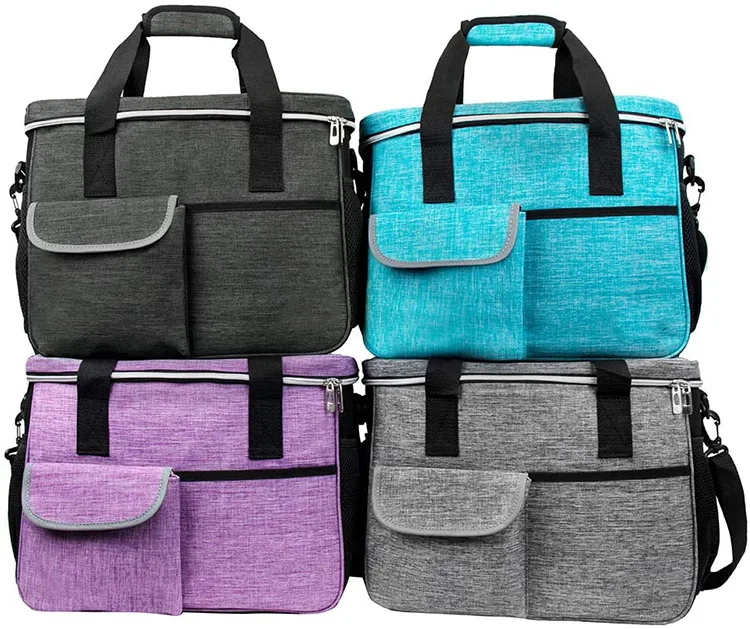
A custom pet bag programme is usually a size ladder rather than a single style, and the ladder is what determines how many colourways you can afford.
The Smallest Component Customers Touch Every Day
A key clip is used dozens of times a week, usually by a hand that is already holding something else, and it is one of the very few components on a carrier that a customer operates deliberately. That combination of high frequency and deliberate handling means the clip is judged more harshly than almost any other part of the product, and a clip that feels cheap will colour the perception of everything around it.
The function is simple and unforgiving. Keys must be reachable without opening the carrier, they must stay attached when the carrier is set down, lifted, and swung, and they must not rattle. Those three requirements pull in slightly different directions, and resolving them is what separates a considered specification from a commodity one.
From a brand perspective, the clip is also a rare opportunity to put the logo on a rigid, permanent, high-touch surface. Fabric logos wear, printed logos fade, and a laser-etched or debossed mark on a metal clip stays legible for the life of the product. It is the most durable branding surface in the entire carrier.
There is a pricing argument as well. A visible, well-finished metal component reads as quality in photography in a way that fabric cannot, and a $0.60 upgrade in hardware can support a retail price difference several times larger. Buyers assess perceived quality from a handful of visible details, and metal is the most legible of them.
The risk is that hardware is the component most likely to be specified late, often selected from a catalogue photograph at the sampling stage. That is where most field failures originate: the clip is fine, the base metal is wrong for the market, and the attachment was never tested to the load the customer will apply.
Where a range already uses strap-mounted hardware, the same specification discipline described in our notes on leash clip attachment hardware applies to the key clip as well.
Clip Types: Swivel Snap, Trigger Hook, Split Ring and D-Ring
Four hardware families cover the key attachment brief, and each has a distinct operating feel that suits a different kind of product.
A swivel snap hook, sometimes called a lobster clasp, is the most common choice. It opens with a thumb lever, closes under spring pressure, and rotates on a swivel base so a bunch of keys can hang without twisting the webbing. It is intuitive, it reads as luggage hardware, and it accepts an engraved or debossed face well. Its weakness is the spring: a light-duty spring loses tension and the clip can open unintentionally under load.
A trigger hook or spring hook has a fixed body with a spring-loaded gate, no swivel, and a slimmer profile. It suits a minimal or fashion-led design where the hardware should not draw attention, and it is less likely to catch on clothing than a swivel snap. It is slightly less convenient to operate one-handed.
A split ring on a webbing loop, or a flat D-ring, is the simplest and the most robust option. There is no spring to fail and nothing to snag, but keys must be threaded on, which is a deliberate rather than a quick action. D-rings work best as an anchor point for a customer's own key ring rather than as a clip.
A carabiner-style clip with a screw or twist gate is the most secure and the most expensive. It suits a travel or outdoor range where the carrier may be stowed and shaken, and it signals seriousness, though it is over-specified for an urban commuting product.
Selection should follow the use case rather than the catalogue. A commuting range wants a swivel snap for one-handed speed; a travel range wants a gate that cannot open by accident; a fashion range wants a low-profile trigger hook that disappears into the design.
Base Metal, Plating and Finish Consistency
Base metal determines strength and weight, plating determines appearance and corrosion behaviour, and the two decisions are independent.
Zinc alloy is the default base for custom-branded clips. It die-casts to fine detail, takes engraving and debossing cleanly, and is inexpensive at volume. Its limitation is that it is brittle compared with steel and can crack under a sharp impact, so it is not the right choice where the clip may be stood on or crushed in transit.
Brass is heavier, stronger and more corrosion resistant, and it takes a beautiful antique finish. It costs roughly two to three times zinc alloy and suits a premium tier. Stainless steel is the strongest and the most corrosion resistant of the three, it cannot be die-cast to fine detail, so branding is usually laser-etched rather than cast, and it suits a range positioned on durability.
Plating finishes should be chosen for how they age, not only for how they look new. Bright nickel and chrome look sharp and show fingerprints and scratches. Gunmetal and black nickel hide wear and suit a technical range but can abrade at contact points over time. Antique brass and brushed finishes disguise wear best of all and are the safest choice for a product that will be handled daily for years.
Plating consistency across batches is the practical problem. Plating colour varies with bath chemistry and thickness, and a clip that matches the zip in one batch may not in the next. The remedy is a retained reference sample and, where the brand is colour-driven, matching to a recognised system such as the one maintained by Pantone with a stated tolerance.
Corrosion testing is worth requesting for any market with high humidity or coastal distribution. A neutral salt spray test over 24 to 48 hours is the standard screening method, and test methods relevant to coated metal components are published by ASTM International.
Attachment: Webbing Loop, Bar-Tack and Backing Plate
More key clips fail at the attachment than at the clip, and the attachment is entirely a specification question. Three elements decide whether it holds.
The webbing loop should be 20 mm wide for a standard key bunch and 25 mm where the range expects a heavy set of keys plus a fob. Narrower webbing looks tidier and fails sooner. The loop should be folded so that the load path runs through a doubled layer rather than a single thickness, which doubles the seam strength for the cost of a few centimetres of tape.
The stitch pattern matters more than the stitch count. A box-stitched bar-tack with a cross pattern distributes load across the webbing width, while a straight run of stitching concentrates it at one line and will tear progressively. Where the panel fabric is light, a bar-tack alone is not enough.
A backing plate or reinforcement patch is the third element and the one most often omitted. A 30 x 30 mm patch of high-tenacity fabric or ahidden thermoplastic plate behind the attachment spreads the load into the panel and prevents the classic failure where the webbing tears out of the lining while the stitching itself remains intact. Specifying the patch costs cents and removes the most common warranty claim in this category.
Placement affects the load too. A clip mounted at the top of an interior panel hangs freely; one mounted low on a side panel drags against the shell and wears both. Mount the clip where the keys can hang without touching a seam or the floor of the carrier.
Finally, test the attachment with a real key bunch rather than a calibrated weight alone. A bunch of six keys on a ring applies a dynamic, swinging load that no static test reproduces, and twenty shakes at arm's length will reveal a weak attachment immediately.
Load Ratings, Cycle Testing and Field Validation
Hardware should be specified numerically. Two numbers are enough for a key clip: a static load rating and a cycle life.
Static load rating should be at least 5 kg for a standard key clip, which gives a large margin over the 200 to 400 grams a typical key bunch weighs. The margin exists because real loads are dynamic: a carrier dropped while the keys are hooked applies an impulse far greater than the static weight. Where the range expects a key bunch plus a small torch or a fob, specify 8 kg.
Cycle life should be specified at 5,000 open-close cycles for a spring-loaded clip, tested with the gate actuating fully each time. A spring that passes 500 cycles in a showroom may fail at 2,000 in service, and the difference is the spring wire specification, which is invisible from outside.
Swivel bases need their own test. A swivel that rotates freely when new can seize once grit enters the housing, so a rotation test after dust exposure is worth adding where the product will be used outdoors.
Independent verification is worth building into the programme for any branded hardware. Third-party laboratory testing and inspection is available from organisations such as SGS, and a test report on the clip and its attachment is the most persuasive document a brand can hold when a retailer asks how the product was validated.
Field validation should still be done in-house before bulk: mount the sampled clip, hang a real key bunch, and carry the loaded carrier for a full day. Most hardware problems announce themselves within hours of real use and remain invisible on a specification sheet.
Noise, Snagging and Surface Detail
Three small details decide whether a key clip is pleasant to live with, and all three are cheap to get right at specification stage and impossible to fix afterwards.
Noise is the most complained-about issue with hanging keys. Metal keys on a metal ring against a metal clip produce a persistent jingle with every step, and while some of that is inherent, the clip can make it worse or better. A swivel base with a nylon washer, a clip body with a soft-touch coating, or a webbing loop long enough that keys rest against fabric rather than against hardware all reduce it. Where the range is positioned for quiet environments, a coated clip is worth specifying.
Snagging is the second. A swivel snap with a pronounced lever will catch on knitwear, on car seat fabric and on a lining every time the carrier is lifted past an edge. Low-profile trigger hooks and D-rings avoid the problem, and where a swivel snap is required, a recessed lever and a rounded body reduce it substantially.
Surface finish detail is the third and it is where perceived quality lives. Sharp parting lines from a cheap die, a rough gate mark where the casting was fed, and visible plating pooling in recesses are all signs of a low-grade component, and customers read them even if they could not name them. Specifying a deburred, tumbled finish and inspecting for flash on the sample is a one-line requirement that upgrades the whole product.
Edges matter for safety as well. A clip with a sharp inner edge will fray the webbing loop over time, and the failure then appears to be a stitching problem when it is actually a hardware one. Ask for a radius on every edge that touches webbing.
Finally, consider how the clip looks after a year. A finish that shows a bright worn line at the contact point is a finish that will make the product look tired; brushed and antique finishes are chosen precisely because they wear into their appearance rather than out of it.
Branding on Metal: Laser, Deboss and Enamel Fill
A key clip is the most durable branding surface on a carrier and the one most often wasted. Four techniques cover the realistic options, each with a different minimum and a different look.
Laser etching works on almost any plated metal and produces a precise, permanent, monochrome mark. It has no tooling cost, it can carry fine detail and small type, and it suits variable data such as a season code. It reads as technical rather than luxurious, and on thin plating the mark can cut through to the base metal, so plating thickness must be specified alongside it.
Debossed or raised casting puts the mark into the die, so it appears on every clip with no extra process step. Tooling cost is modest for a simple wordmark and amortises quickly across 500 pieces and very quickly across repeat seasons. It is the best value option for a programme intending to run again.
Enamel or soft-enamel fill adds colour into a recessed mark and gives the most jewellery-like result. It costs more per piece, it adds a process step, and the enamel can chip at edges, so it suits a premium tier and a design that keeps the mark away from contact points.
An etched or printed metal plate riveted to the webbing loop is a fourth option that allows a larger mark than the clip body can carry, and it reads as a considered detail rather than as hardware branding.
Keep the mark small. A key clip is 25 to 40 mm long, and a logo that fills it looks insecure. A 12 to 18 mm mark placed on the flat face of the clip body, with the same mark repeated on the zip puller elsewhere in the product, reads as a system and is far more convincing than one large logo.
Compliance, Documentation and Cost Planning
Metal hardware on a consumer product carries documentation obligations that vary by market, and planning for them early avoids the most expensive kind of delay: a finished bulk order that cannot ship.
In the European Union, metal components in articles are subject to restrictions on certain substances, including nickel release from items in prolonged skin contact, and the regulatory framework is administered by the European Chemicals Agency. A clip that is handled daily falls squarely into the category that buyers ask about, so a nickel release test result should be part of the hardware file.
In the United States, metal components in consumer products are subject to limits on lead content and on certain coatings, overseen by the Consumer Product Safety Commission. Retailers frequently require a documented result rather than a supplier assurance, and requesting it at sampling rather than at shipment is the difference between a one-week and a six-week problem.
Documentation should be collected once and retained: base metal declaration, plating specification, coating test result, load test result and cycle test result. Assembling that file at the start of a programme costs a few days; assembling it after a retailer request costs the season.
Cost is predictable and scales mainly with base metal and branding method. A zinc-alloy swivel snap with standard plating and no branding costs $0.35 to $0.90 at 500 pieces. Adding laser etching moves the range to $0.55 to $1.10. A cast clip with a custom debossed logo reaches $0.70 to $1.20 plus tooling, and an enamel-filled brass clip reaches $1.85 to $2.60. Volume improves unit cost by roughly 20 to 30 percent when quantity triples, and tooling amortisation improves it further on a second order.
On the calendar, sampling takes 6-10 working days and bulk runs 35-50 days, with custom plating colours and die tooling at the longer end. Hardware tooling is the longest-lead item in most carrier programmes, so it should be approved before fabric is booked, not after.
Specification Table: Key Clip Options Compared
The table below compares the five clip configurations we specify most often, with the load ratings, finishing options, branding methods and cost indices that follow from each. It is a starting point for a hardware schedule; the final choice should follow the range positioning and the target market documentation requirements.
| Configuration | Base metal | Static load rating | Typical finish | Branding method | Cycle life | Cost index |
|---|---|---|---|---|---|---|
| Swivel snap 25 mm | Zinc alloy | 5 kg | Bright nickel | Laser etch | 5,000 | 1.0x |
| Swivel snap 32 mm | Zinc alloy | 8 kg | Gunmetal | Cast deboss | 5,000 | 1.4x |
| Trigger hook 25 mm | Brass | 6 kg | Antique brass | Cast deboss | 8,000 | 2.1x |
| D-ring 25 mm | Stainless steel | 12 kg | Brushed steel | Laser etch | n/a | 1.7x |
| Twist-gate carabiner | Aluminium | 10 kg | Anodised colour | Laser etch | 10,000 | 2.6x |
Two caveats apply to every row. Load ratings are for the clip alone; the assembly rating is set by the webbing and the bar-tack attachment, which is why the reinforcement patch is specified as standard. Cost indices are relative to the 25 mm zinc-alloy swivel snap at 500 pieces and exclude die tooling for cast marks.
Where a range spans several price tiers, we recommend using the same clip family across all of them and differentiating by finish rather than by component. One clip body with three plating options keeps the attachment pattern, the webbing consumption and the test file identical across the range, and it lets a brand move a customer up a tier without re-engineering the product.
For the first season, choose one clip and one finish. Hardware variety inside a single launch multiplies documentation, minimums and inspection time, and it rarely produces a commercial return that justifies the complexity.
Why brands source here
- Pet carrier programs run since 2014; founding team in sewn goods since 2004
- SGS-verified production floor of 4,950 m² with 137 workers across 7 lines
- Monthly capacity of 200,000 units, audited to BSCI and ISO 9001
People Also Ask
What is the best clip for holding keys in a bag?
A swivel snap hook for one-handed speed and rotation, a trigger hook for a low-profile fashion design, and a D-ring where simplicity and strength matter more than speed.
Why do bag key clips break?
Mostly at the attachment. The stitching usually holds while the webbing tears out of the panel, which is why a reinforcement patch behind the bar-tack is specified as standard.
What is the difference between zinc alloy and brass hardware?
Zinc alloy die-casts to fine detail and is economical for branded clips. Brass is stronger, heavier, more corrosion resistant and costs two to three times more.
Can a logo be engraved on a small metal clip?
Yes, by laser etching with no tooling cost or by cast debossing with modest tooling that amortises across repeat seasons. Keep the mark at 12-18 mm.
How do you test a key clip?
Static load to 5 kg, 5,000 open-close cycles on the spring, a salt spray screening for plating, and a day of real carry with an actual key bunch.
Should one range use several clip finishes?
One clip family with different plating is better. It keeps the attachment pattern and test file identical and lets a brand move customers up a tier without re-engineering.
Frequently Asked Questions
What load rating should a key clip have?
At least 5 kg static for a standard key bunch, and 8 kg where the range expects keys plus a torch or a heavy fob. The margin covers the impulse load when a carrier is dropped.
Which base metal is best for a branded key clip?
Zinc alloy, because it die-casts to fine detail and accepts engraving and debossing economically. Brass suits a premium tier and stainless steel suits a durability-led range.
How should the clip be attached to the carrier?
On a 20 mm doubled webbing loop with a box-stitched bar-tack, backed by a reinforcement patch behind the panel fabric. The attachment fails more often than the clip.
What causes a key clip to fall off?
Usually the webbing tearing out of the panel rather than the clip opening. A reinforcement patch behind the bar-tack spreads the load and prevents that failure.
How long should a spring clip last?
Specify 5,000 full open-close cycles and test the spring to it. A clip that survives 500 showroom cycles can fail at 2,000 in service if the spring wire is underspecified.
Which finish hides wear best?
Antique brass and brushed finishes disguise wear best because they wear into their appearance. Bright nickel and chrome look sharp new and show fingerprints and scratches quickly.
Can our logo go on the clip?
Yes. Cast debossing has no recurring process cost and amortises well over repeat seasons; laser etching has no tooling cost and suits fine detail; enamel fill gives the most premium result.
Will a metal clip rust?
Not with a correctly specified plating, but coastal and high-humidity markets should require a neutral salt spray result of 24 to 48 hours before bulk.
Are there compliance requirements for metal hardware?
Yes. Nickel release is restricted in the European Union under REACH, administered by ECHA, and lead content in metal components is regulated in the United States by the CPSC.
How do we stop keys jingling?
Use a swivel base with a nylon washer, a soft-touch coated body, or a webbing loop long enough that keys rest against fabric rather than against metal.
How much does a branded key clip cost?
From $0.35 for a standard zinc-alloy snap to about $2.60 for an enamel-filled brass clip, measured at 500 pieces and excluding die tooling.
What is the lead time for custom hardware?
Sampling takes 6-10 working days and bulk runs 35-50 days, with custom plating colours and die tooling at the longer end. Tooling is usually the longest-lead item.
Talk to QUANZHOU JUNYUAN BAGS about a pet carrier program: MOQ 500 pieces per colourway, samples in 6-10 working days, bulk production in 35-50 days under AQL 2.5 inspection.
Get a free quote Request a sample