Heated Straps for Warmth: Powered Custom Pet Carrier Design
A heated strap for a pet carrier should be built on a carbon film element running at 5 V from a power bank, drawing 6-10 W and reaching a stable 38-42 degrees C surface temperature within 90 seconds on the highest of three settings. Anything above 45 degrees C on prolonged skin contact is a burn risk, so a thermal cut-off and an over-current device are non-negotiable. Our production team samples heated straps in 6-10 working days and runs bulk in 35-50 days to AQL 2.5.
This executive summary covers heated strap development as the winter counterpart to a technical range rather than a standalone gadget. MOQ 500 pieces per colourway is the standard entry point, driven by the minimum run for the heating element supplier and by the electronics assembly batch at the partner facilities we schedule. Sampling takes 6-10 working days from approved artwork and includes a constructed strap with the element fitted, a temperature ramp check and a runtime measurement on the specified power bank. Bulk production runs 35-50 days after sample sign-off, with custom-shaped elements and branded controllers at the longer end. Finished goods are inspected to AQL 2.5 under documented ISO 9001 procedures at our SGS-verified production base and ship FOB Xiamen on T/T 30/70 terms. Four decisions belong before sampling: the voltage and element type, which fix the power architecture; the maximum surface temperature, which is a safety specification; whether the assembly is washable, which drives the connector design; and whether the power bank is supplied, because it changes the packaging, the shipping classification and the price.
A private label pet carrier keeps the buyer artwork on the panel while the compliance text and country-of-origin marking follow the destination market.
Warmth as a Premium Tier, Not a Winter Novelty
Heated product is where the pet accessory category has the widest gap between what customers want and what brands dare to build. The demand is real — anyone who has carried anything outdoors in a cold climate understands it immediately — but most brands stay away because the engineering feels unfamiliar and the compliance picture looks frightening. That hesitation is exactly the opportunity: a well-executed heated line faces far less competition than another colourway of the same shell.
The strategic argument is about price architecture. A heated variant supports a retail price two to three times that of the standard product, and it drags the perceived value of the whole range upward. Customers who would never pay that for a bag will pay it for a bag that does something, and the presence of a flagship at the top of the range makes the mid-tier look reasonable. This is a well-worn pattern in outdoor apparel and it transfers cleanly to pet carriers.
But it only works if the heat is genuinely useful and genuinely safe. A heated element that warms one small patch, takes five minutes to be felt, and cannot be washed is not a premium feature; it is a return waiting to happen. The engineering bar is higher than for any other trim decision in this category, and the brand that clears it earns a position that is hard to dislodge.
There is also a seasonality argument that mirrors the cooling case in reverse. Winter is when most pet accessory brands go quiet and when customers are least inclined to walk the dog. A product that removes a genuine reason to stay indoors has a story that writes itself, and it lands in the gifting quarter, which is the most valuable window in the retail calendar.
Design it as a system, not as a component. The element, the power source, the control, the connector and the care instruction are one product, and a weakness in any of them defines the customer's experience of all of them.
Heating Element Technology: Carbon Film Versus Wire
Two element technologies are practical in a soft product. Resistance wire is the older approach: a thin insulated conductor laid in a serpentine pattern and stitched or taped into place. It heats quickly, it is cheap, and it is unforgiving. A wire element creates distinct hot lines rather than an even field, it is vulnerable to fatigue at every bend, and a single break kills the whole element. In a strap that flexes constantly, that is a poor match.
Carbon film is the better answer and the one we specify. A carbon-loaded polymer film is printed or laminated onto a flexible substrate, and it radiates as an even sheet rather than as lines. It tolerates repeated flexing far better, it is thinner, and it can be die-cut to almost any shape, which matters when you are fitting heat into a strap that curves. The trade-offs are a slightly slower ramp to temperature and a higher unit cost, both of which are acceptable in a product positioned at the top of a range.
Element geometry is then a design variable rather than a constraint. A full-length element warms the whole strap; a zoned element concentrates heat over the trapezius where the wearer feels it most and saves power everywhere else. In practice, a zoned layout of 60-70% coverage gives the same perceived warmth at a materially lower draw, which extends runtime and allows a smaller power bank.
Power density is the specification to control. Aim for 0.10-0.18 W per square centimetre of heated area and verify the resulting surface temperature on a constructed sample under realistic conditions — against skin, with the cover fabric in place, in still air at a defined ambient temperature. Data-sheet figures measured on a bare element on a bench are meaningless for a wearable product.
Where the heat should and should not go
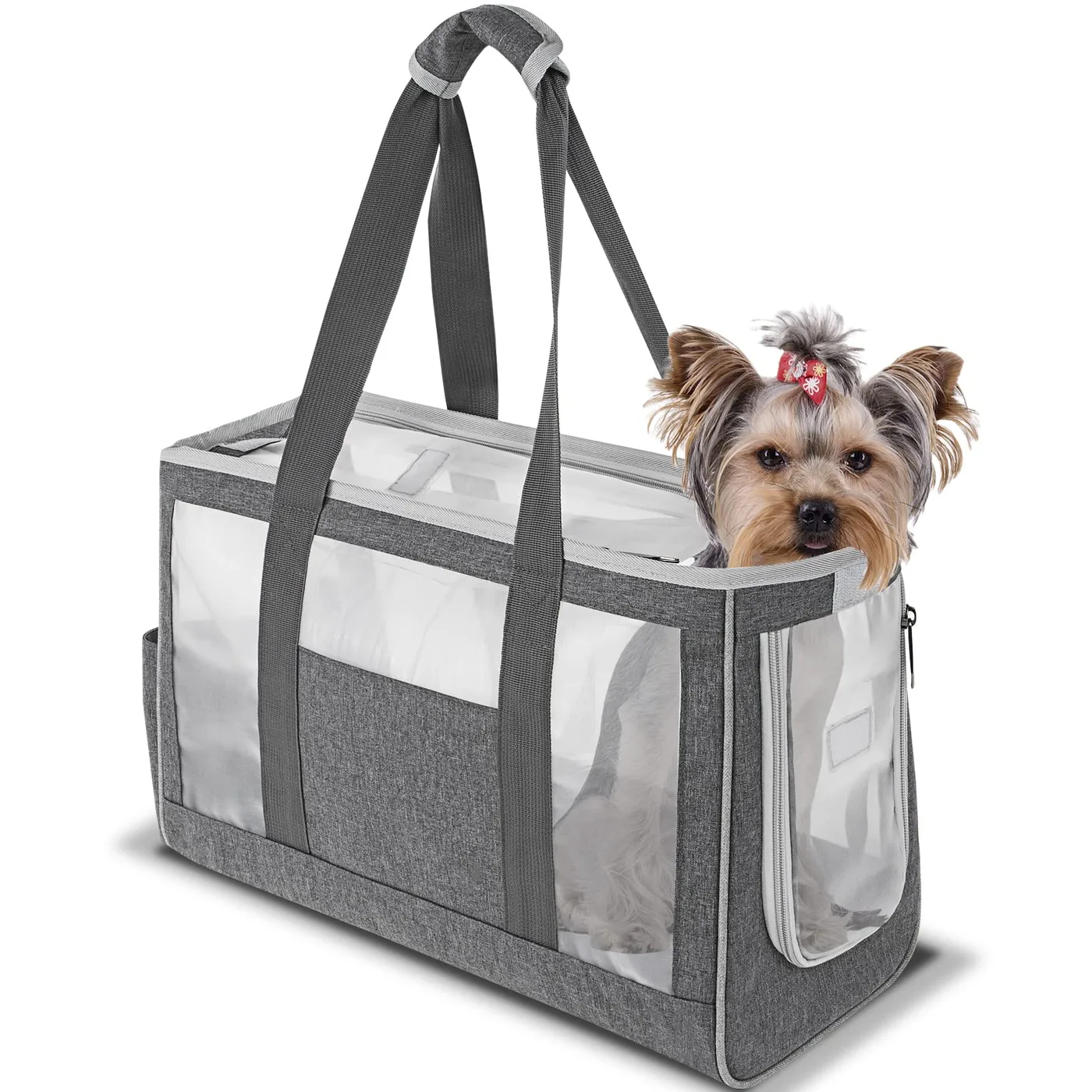
Heat belongs on the wearer-facing side of the strap and nowhere near the carrier interior. An animal confined against a heated surface cannot move away from it and cannot tell you it is too warm, so no heated element should ever form part of the interior floor or wall. Keep the heated zone on the shoulder contact area, keep a thermal break between it and the shell, and verify the interior temperature rise as part of qualification.
The other place heat should not go is across a fold. A strap folds at the adjustment point and at the panel junction; an element that crosses a fold line fatigues and eventually fails open. Lay the element out so that folds fall in the gaps, and mark those gaps on the pattern.
Power Architecture and Runtime Mathematics
Runtime is the specification customers actually care about, and it is arithmetic that most brands get wrong. A 10,000 mAh power bank rated at 3.7 V holds 37 Wh. An element drawing 8 W at 5 V will run for roughly 4.6 hours in theory and about 3.5 hours in practice once conversion losses and the bank's own protection cut-off are accounted for. Publish the practical number, not the theoretical one, because the difference is where complaints are born.
Voltage choice follows from the power source. Five volts from a standard power bank is safe, universally available and cheap, and it lets the customer use a bank they already own. Higher voltage systems heat faster but require a dedicated battery, a custom charger and a more involved compliance path. For a pet carrier, 5 V is the right answer and the one that keeps the product simple enough to support.
Whether to bundle a power bank is a commercial decision more than a technical one. Bundling raises the price and the perceived completeness of the offer, and it lets you control the runtime claim. Not bundling keeps the price lower and the shipping classification simpler, but it puts the runtime claim at the mercy of whatever bank the customer happens to connect. If you do not bundle, specify a minimum bank output on the packaging — 2 A at 5 V is a reasonable floor — and say so clearly.
Capacity planning should start from the use case, not the component. A winter walk is thirty to sixty minutes. A heated strap that runs three and a half hours is therefore over-specified for its actual job, and the cost saved by stepping down to a smaller element or a lower capacity recommendation can go into the cover fabric, where customers will actually feel it.
Control, Zones and the User Interface
The controller is the part of a heated product that customers interact with, and it is where most designs lose their premium feel. A good heated product has one control, three settings, and a clear indication of which setting is active. Anything more complex than that is a product people will not use correctly, and an unused feature is a wasted cost.
Three settings is the right number. A low setting around 34 degrees C for continuous use, a medium around 38 degrees C, and a high around 42 degrees C for the first few minutes of a cold start. Defaulting to medium on power-up is a sensible safety and usability choice, and it means the product is useful even if the customer never touches the control.
Indication should be legible without instruction. A single multi-colour LED — blue, amber, red — communicates the setting instantly and costs almost nothing. It also doubles as a power indicator, which customers appreciate more than brands expect, because the most common question about any heated product is whether it is actually on. A separate low-battery indication is worth adding if the power bank is bundled.
Physical placement of the control matters for both usability and durability. It belongs on the front of the strap, within reach of the opposite hand, and away from any point that flexes sharply or takes load. It should be recessed or protected so it cannot be switched accidentally by a bag strap or a seat belt, and the button should have enough travel to be operated through a glove, because the whole product exists for cold weather.
Finally, brand the controller. It is a visible, touched, photographed component, and a moulded logo or a signature colour there does more for brand recall than the same treatment on a zipper pull.
Think about the cold-start experience specifically, because it is the moment that decides whether the feature gets used again. The product should reach a perceptible temperature within about ninety seconds of being switched on, and the highest setting should exist primarily to deliver that. If the first two minutes feel like nothing is happening, the customer concludes the product does not work and switches it off before it ever reaches temperature. Ramp time is therefore a marketing specification as much as an engineering one.
Safety Engineering and Thermal Protection
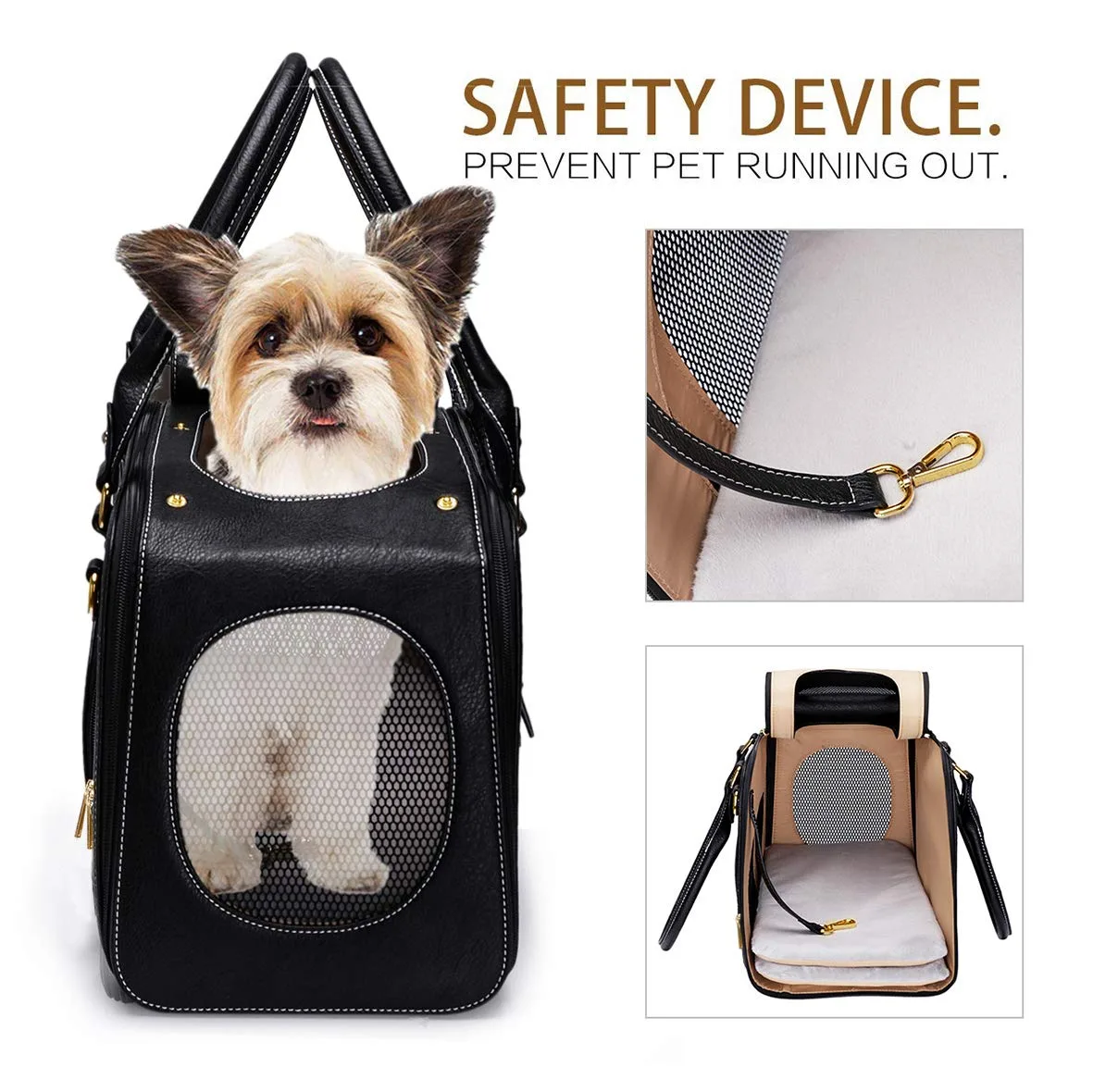
A heated wearable has two failure modes that matter: it gets too hot, and it draws too much current. Both are addressable with off-the-shelf components, and both are the kind of thing that turns a product story into a recall. Neither is optional.
Thermal protection should be layered. A thermistor embedded in the element assembly reports actual temperature to the controller, which reduces or cuts power as the limit approaches. An independent thermal fuse in series provides a hard cut-out that operates even if the controller fails. Relying on software alone is not adequate; relying on a hardware cut-out alone gives a crude on-off behaviour that feels broken. Use both, and specify the trip temperatures explicitly.
Over-current and short-circuit protection belongs on the input side. A power bank will usually provide some, but a product should not depend on the customer's bank being well made. A small protection module on the element harness is cheap insurance and it is what makes the difference between a product that fails safe and one that fails dramatically.
Surface temperature limits need to be written down and tested. Prolonged contact with surfaces above roughly 45 degrees C carries a burn risk, and the risk rises where the wearer's skin is cold, wet or pressed against the surface under a load. Set the maximum steady-state surface temperature at 42 degrees C, verify it against skin-contact conditions rather than in free air, and keep the test report with the batch record. Where consumer safety guidance applies, the material published by the U.S. Consumer Product Safety Commission is the reference a retail buyer will expect to have been considered, and SGS can provide the independent verification that turns a specification into a document.
One more check that is easy to skip: test the product in a hot car, in direct sun, and under a load. A heated strap that is safe on a bench can exceed its limit when it is pressed against a body with no air movement and the ambient is already warm.
Washability and Durability of a Powered Assembly
Washability is the hardest engineering problem in a heated soft product and the one most likely to generate a return. Customers will wash it. The question is not whether, but what happens when they do. Two designs are available: a removable element that unplugs and comes out, and a sealed assembly that stays in and survives the cycle.
Removable is simpler to engineer and easier to support. The element withdraws from a pocket through a closure, the connector is a standard sealed type with a defined mating-cycle rating, and the bag washes like any other bag. The weaknesses are that the connector is a failure point, that customers lose the element, and that the pocket has to be designed so the element sits correctly every time it is reinserted.
Sealed is the premium answer and it requires the whole assembly to be rated. The element is laminated between waterproof membranes, the connector is over-moulded, and the harness exits through a sealed grommet. It survives machine washing to a defined cycle count, it removes the loss problem, and it costs meaningfully more. If you take this route, specify the IP rating for the connector, the cycle count for the wash test, and the failure criterion — and test the finished product, not the component.
Durability beyond washing is about flexing. A strap flexes at the shoulder every time it is put on, and an element harness that runs along the flex line will fatigue. Route the harness along the neutral axis of the strap, secure it at intervals so it cannot migrate, and cycle-test the assembled strap to several thousand bends before signing off on bulk. Quality systems built to ISO 9001 require this kind of verification to be documented, and documentation is what makes a repeat order reproducible.
Cost, MOQ and Programme Planning
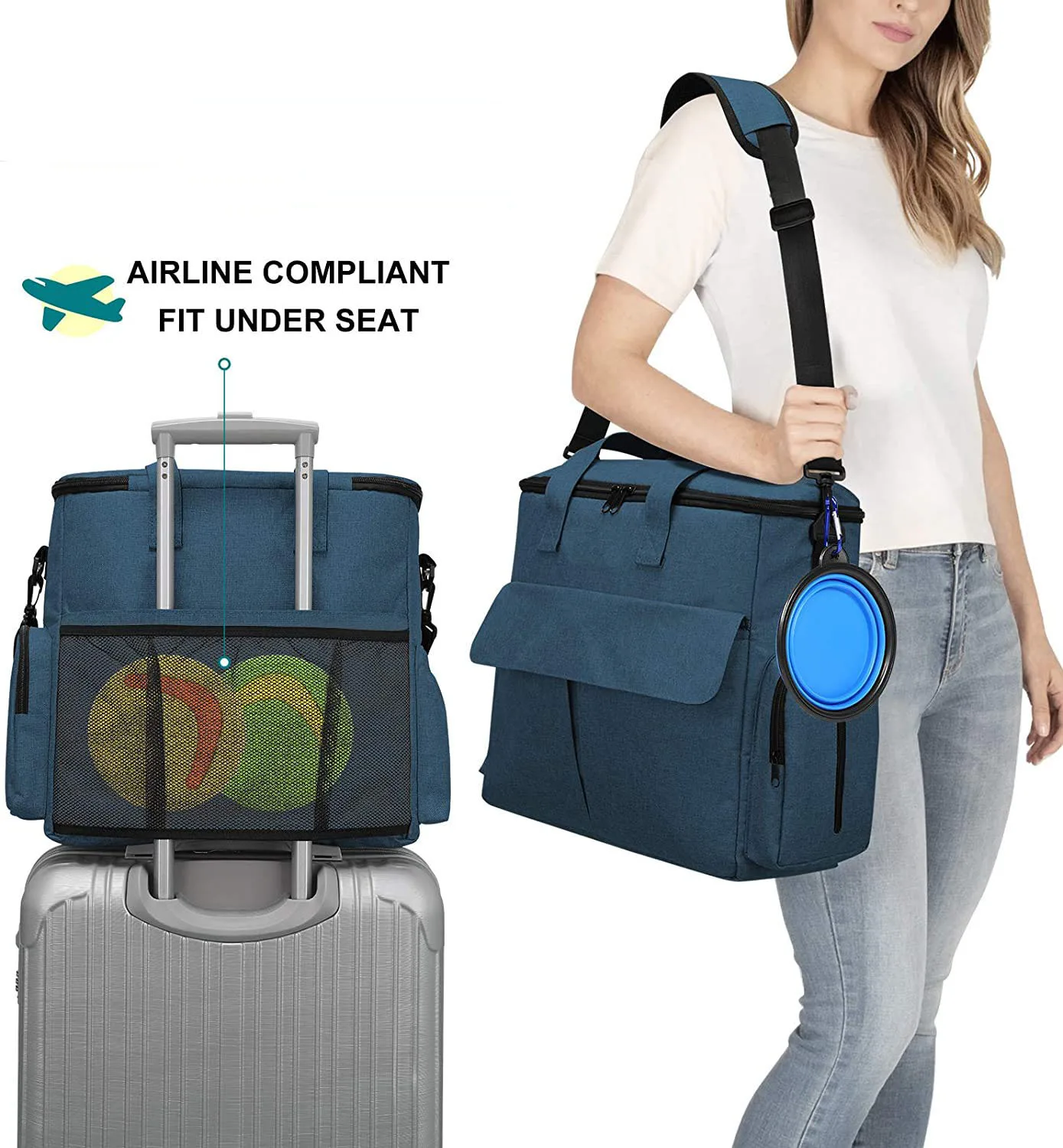
A heated strap costs several times a standard padded strap, and the cost is concentrated in the electronics rather than in the textile. The element itself is moderate; the controller, the protection module, the connector and the harness assembly are where the money goes, and each of them has its own minimum order quantity. That is why heated programmes cluster at the 500-piece level rather than below it.
The table below sets out the four build levels we most often quote, with indicative strap-set cost at a 500-piece programme and the lead-time impact of each.
| Build level | Element | Power | Indicative strap-set cost | Added lead time |
|---|---|---|---|---|
| Entry | Wire, single zone | Customer bank, 5 V | $5.80-$8.40 | 3-4 weeks |
| Standard | Carbon film, single zone | Customer bank, 5 V | $8.20-$12.60 | 4-5 weeks |
| Zoned | Carbon film, two zones | Bundled 5,000 mAh bank | $13.40-$19.80 | 5-6 weeks |
| Sealed premium | Carbon film, laminated | Bundled 10,000 mAh bank | $19.60-$28.50 | 6-8 weeks |
Note that these figures exclude the power bank unless stated, and that a bundled bank carries its own shipping classification and documentation requirements. If you are exporting by air, a bundled lithium cell changes the paperwork and the freight rate, and that has to be in the landed-cost model from the first quote rather than discovered at booking.
Timing is longer than a standard programme and should be planned as such. Sampling is 6-10 working days for the strap, with electronics qualification running alongside and typically adding two to three weeks. Bulk is 35-50 days after sign-off, with branded controllers and custom-shaped elements at the longer end. Inspection to AQL 2.5 covers appearance and assembly, with 100% electrical function testing on heated product because a non-functional unit is a total failure rather than a minor defect. Shipments move FOB Xiamen on T/T 30/70 terms.
For a winter launch, work backwards from the gifting peak. A heated line that arrives after the first cold snap has lost its best selling moment, and unlike a standard bag it cannot be rushed through the electrical qualification stage.
Packaging and instruction design for powered product
A powered product needs better documentation than an unpowered one, and the documentation is part of the product. Include a one-page card covering the settings, the runtime, the wash instruction and the power bank specification, in the box rather than on a website. State plainly that the element must be removed before washing if that is the design, and state the minimum bank output if it is not bundled.
Consider a spare-part SKU for the element. It turns the most likely long-term failure into a second sale, and it protects the review profile of a product that will otherwise be judged on how it behaved in year three.
Bringing a Heated Product to Market
Launch a heated line as a flagship with a name, not as a variant with a feature. The difference is whether the product has an identity customers can ask for by name, and whether the marketing can build on it in year two. A named heating platform can extend into a heated mat, a heated liner and a heated harness; an unnamed variant is a one-season item that gets discounted in February.
Train the retail story around the number that matters. Runtime, not wattage. "Three and a half hours on medium" is a sentence a shop assistant can deliver and a customer can evaluate; "8 W carbon film element" is not. Give the retail channel one number, one safety assurance and one care instruction, and the product sells itself at the shelf.
Price it with confidence. A heated product that is priced at a modest premium over the standard line looks suspicious — customers assume the heat is a gimmick because it cannot have cost much. Price it at two to three times the standard product, justify it with the runtime and the safety testing, and the premium reads as engineering rather than markup.
Finally, plan the second season before the first one ships. Electrical components have long lead times and their suppliers have their own product cycles; locking the element specification for year two during year one production avoids the situation where a successful product cannot be repeated because a component was discontinued. Build the heated strap on the same shared architecture as the USB power pocket system and the standard padded shoulder strap, and the platform becomes repeatable rather than a one-off achievement.
Why brands source here
- Pet carrier programs run since 2014; founding team in sewn goods since 2004
- SGS-verified production floor of 4,950 m² with 137 workers across 7 lines
- Monthly capacity of 200,000 units, audited to BSCI and ISO 9001
People Also Ask
How do heated straps work?
A resistive element converts electrical energy into heat when current passes through it. In a soft product the element is a carbon-loaded film or an insulated wire laid between fabric layers, powered from a low-voltage source and regulated by a controller reading a thermistor.
Are heated pet products safe?
They are when the temperature ceiling is specified, layered thermal protection is fitted and no element forms part of the animal's interior space. Unregulated elements without a cut-out are not acceptable in any wearable product.
Can you run a heated strap from any power bank?
Any bank delivering 2 A at 5 V will work, though runtime depends on capacity. Specify a minimum output on the packaging so customers do not connect an undersized bank and conclude the product is weak.
How much does a heated strap add to unit cost?
Typically $8 to $28 per strap set depending on element type, zoning, controller and whether a power bank is bundled. The electronics dominate the cost; the textile element is a smaller share than most people expect.
Why do heated products fail?
Fatigue at flex points, connector corrosion, and customers washing a non-washable assembly. Routing the harness along the neutral axis, sealing the connector and stating the care instruction clearly address all three.
What is the difference between a heating element and a heating pad?
An element is the resistive component itself; a pad is the element assembled between cover layers with its harness and connector. In a strap product the pad is the unit that is specified, tested and inserted.
Frequently Asked Questions
What temperature should a heated strap reach?
Three settings at roughly 34, 38 and 42 degrees C, with 42 degrees C as the maximum steady-state surface temperature. Prolonged skin contact above about 45 degrees C carries a burn risk, so specify the ceiling, verify it against skin-contact conditions rather than in free air, and keep the report on file.
Carbon film or resistance wire for a heated strap?
Carbon film. It radiates as an even sheet rather than as hot lines, tolerates repeated flexing far better, is thinner and can be die-cut to shape. Wire is cheaper but fatigues at every bend, and a strap bends constantly.
How long does a heated strap run on a power bank?
A 10,000 mAh bank holds about 37 Wh. An 8 W element runs roughly 4.6 hours in theory and about 3.5 hours in practice after conversion losses and the bank's own cut-off. Publish the practical figure, not the theoretical one.
Should we bundle a power bank with the product?
It depends on whether you want to control the runtime claim. Bundling lets you guarantee it and raises the perceived completeness; not bundling keeps the price and the shipping classification simpler. If you do not bundle, state a minimum bank output of 2 A at 5 V on the packaging.
Is a heated strap safe to use near a pet?
Yes, provided no heated element forms part of the carrier interior. An animal confined against a heated surface cannot move away from it, so keep the heated zone on the shoulder contact area with a thermal break between it and the shell, and verify the interior temperature rise during qualification.
Can a heated strap be machine washed?
Only if the whole assembly is sealed and rated for it, with an over-moulded connector and a defined cycle count. Otherwise the element must be removable, and that must be stated clearly at the point of sale because customers will wash it regardless.
What safety components are required?
A thermistor reporting temperature to the controller plus an independent thermal fuse as a hard cut-out, and over-current or short-circuit protection on the input side. Software control alone is not adequate; a hardware cut-out alone gives crude behaviour. Use both.
How many heat settings should the product have?
Three, with medium as the default on power-up. More settings confuse users and add cost without adding perceived value. A single multi-colour LED indicating setting and power status is enough indication.
What is the MOQ and lead time for a heated programme?
MOQ 500 pieces per colourway, driven by the element supplier and the electronics assembly batch. Sampling is 6-10 working days with electronics qualification adding two to three weeks; bulk runs 35-50 days, longer for branded controllers and custom element shapes.
Does a bundled battery change shipping requirements?
Yes. A lithium cell shipped with the product changes the documentation, the classification and the freight rate, particularly by air. Put it in the landed-cost model at the first quote rather than discovering it at booking.
How is heated product inspected?
Appearance and assembly to AQL 2.5, plus 100% electrical function testing. A non-functional heated unit is a total failure rather than a minor defect, so sampling inspection alone is not an adequate control for the electrical function.
Should the heated element be a spare part?
Yes. Offering the element as an accessory SKU turns the most likely long-term failure into a second sale and protects the review profile of a product that will eventually be judged on how it behaved in year three.
Talk to QUANZHOU JUNYUAN BAGS about a pet carrier program: MOQ 500 pieces per colourway, samples in 6-10 working days, bulk production in 35-50 days under AQL 2.5 inspection.
Get a free quote Request a sample