Cooling Straps for Heat Relief: Summer Carrier Development
A cooling strap works by one of three mechanisms, and the one to specify for a pet carrier is evaporative wicking backed by a phase change insert: the wicking layer drops skin temperature 1.5-3.0 degrees C immediately, and a 28 degrees C phase change pack holds that offset for 45-90 minutes before it needs recharging. Avoid gel packs below 20 degrees C and any coolant that can leak. Our production team samples cooling straps in 6-10 working days and runs bulk in 35-50 days to AQL 2.5.
This executive summary covers cooling strap development as a seasonal line extension rather than a novelty add-on. MOQ 500 pieces per colourway is the standard entry point, driven by the minimum run for custom-dyed wicking knit and by the tooling or die-cut minimum for phase change inserts. Sampling takes 6-10 working days from approved artwork and includes a constructed strap with the cooling element fitted, plus a recharge-cycle check. Bulk production runs 35-50 days after sample sign-off, with custom-dyed knit and custom-shaped inserts at the longer end. Finished goods are inspected to AQL 2.5 under documented ISO 9001 procedures at our SGS-verified production base and ship FOB Xiamen on T/T 30/70 terms. Three decisions should be settled before sampling: the cooling mechanism, because it fixes the strap thickness and the care story; whether the element is removable, which decides the packaging and the spare-part plan; and the temperature band, which is a safety question as much as a comfort one. Ordering the whole seasonal programme at once protects both the dye lot and the unit price.
For a custom pet tote or backpack carrier, strap geometry is the first thing to fix - width, padding and load-lifter position decide how the bag carries.
Cooling as a Positioning Claim, Not a Gadget
Cooling is the most over-promised and under-delivered feature in the pet accessory category. Most products that claim it do nothing more than use a lighter colour, and most customers find that out within a week. That is bad for the category and worse for the brand that made the claim, because a cooling promise that fails is remembered far longer than one that was never made.
The fix is to treat cooling as an engineering discipline with a measurable output. There are only three physical mechanisms available: conduction into a cooler mass, evaporation of water from a surface, and reflection of radiant heat. Every product on the market is some combination of these, and once you know which one you are using you can specify it, test it, and describe it honestly. A brand that can say what its cooling does and for how long is in a completely different position from one that says "cooling fabric" on a hangtag.
Commercially, cooling is a season-extending move rather than a niche one. A pet carrier range with a genuine summer solution has a reason to talk to its customers in June and July, which is exactly when most pet accessory brands go quiet. It gives the marketing calendar a second peak, it justifies a premium tier, and it creates a natural reason for a customer who already owns a carrier to buy again.
But it only works if the claim survives ownership. Choose the mechanism first, then design everything else around making that mechanism work reliably for the life of the product, and you end up with a feature that generates reviews rather than refunds.
There is a fourth consideration that sits alongside the physics: the animal inside the carrier. Heat stress in a confined, insulated space is a real welfare issue, and a brand that sells a summer carrier is implicitly making a promise about it. A cooling strap addresses the wearer, not the passenger, and the honest position is to treat the two as separate engineering problems. Ventilation area, mesh panel placement and a light-coloured shell do more for the animal than any strap technology, and a credible summer product solves both.
Phase Change Materials: How They Work in a Strap
A phase change material, or PCM, absorbs heat as it melts and releases it as it solidifies. In a strap it behaves as a thermal buffer: while the material is changing phase it holds a near-constant temperature, which is exactly what you want against skin. The material does not make anything cold; it delays the point at which the strap becomes uncomfortable.
The critical specification is the melting point, and for a wearable product the useful band is 26-30 degrees C. A PCM that melts below 22 degrees C is genuinely cold on contact, which sounds appealing and is a genuine risk: prolonged contact with a surface that cold can cause skin discomfort and, on a pet side, is simply inappropriate. A PCM above 32 degrees C barely activates in normal use. Write the melting point into the specification with a tolerance and require a test report, because this is not something you can judge by hand.
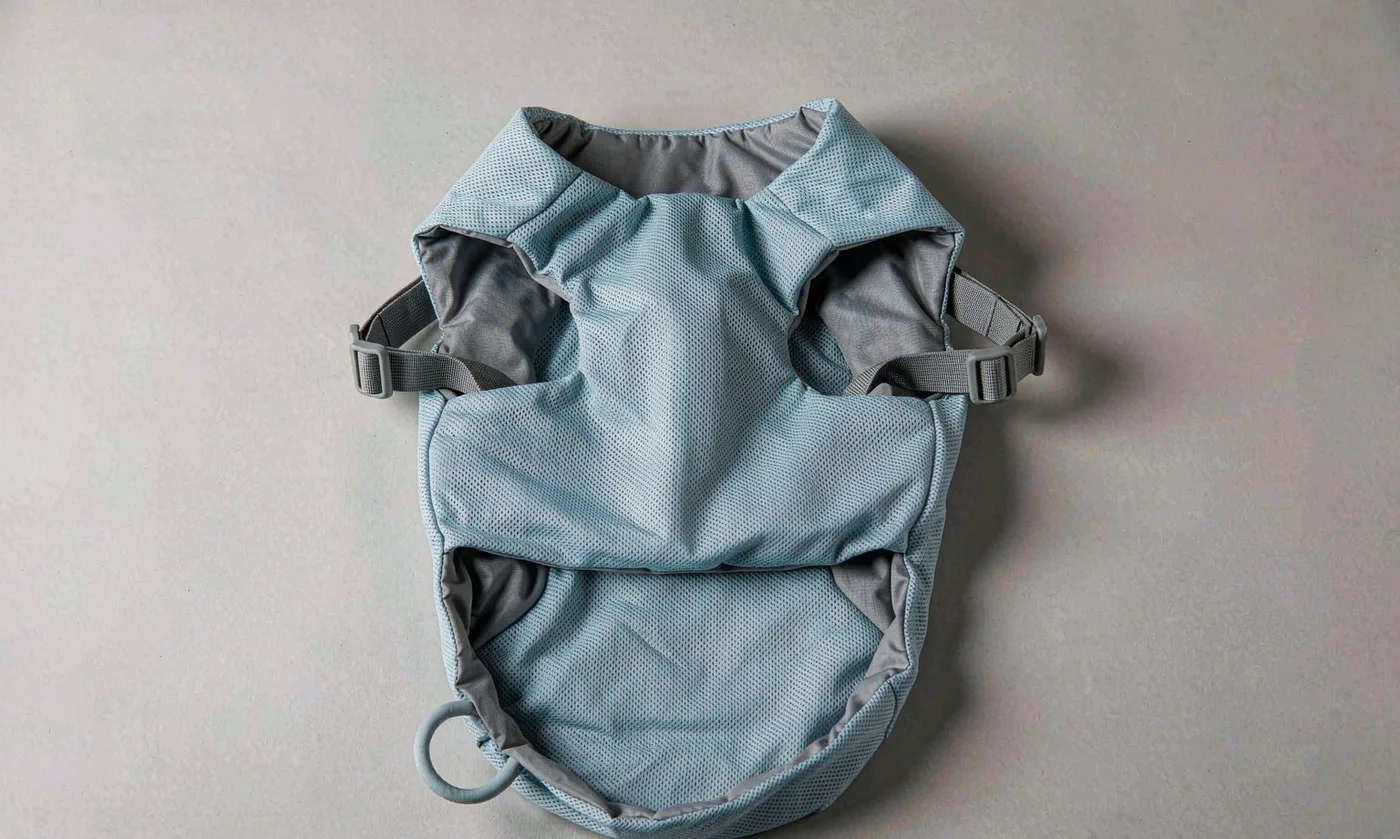
Encapsulation is the second specification. Bulk PCM leaks, separates and eventually stops working, so it is supplied as microcapsules in a coating or as a sealed macro-pack in a welded film. Microcapsules can be coated onto a knit and survive washing reasonably well, but the mass of material per unit area is low and the cooling duration is short. Sealed packs hold far more material and cool for longer, but they add thickness and they must be removable or the garment cannot be washed.
In a strap, the workable configuration is a slim sealed pack of 60-120 g slipped into a pocket on the underside of the strap, positioned so it sits over the trapezius rather than over the collarbone. It should be removable in one motion, because it will be removed for washing, for recharging and eventually for replacement.
Recharging and cycle life
A PCM pack recharges by being cooled below its melting point, which in practice means twenty to thirty minutes in a refrigerator or a few minutes in cold water. State that on the packaging, because customers will otherwise assume the product is broken on second use. Specify a cycle life of at least 500 melt-freeze cycles and ask for evidence, since phase separation is the common failure and it shows up as a pack that stops holding temperature after a season.
Removable versus fixed cooling elements
A removable element costs more to construct and creates a spare-part opportunity. A fixed element is cheaper, thinner and cannot be lost. The decision turns on the care story: if the product is washable, the element must come out, and if it comes out it will eventually be replaced, which is a second sale rather than a complaint. We recommend removable for any carrier positioned above the entry tier.
Where the element is fixed, the whole product becomes surface-clean only and that has to be stated clearly at the point of sale. A customer who machine washes a fixed PCM strap will destroy it, and the resulting review will blame the brand rather than the instruction nobody read.
Evaporative and Wicking Cooling Systems
Evaporative cooling is the oldest method and still the most reliable for a wearable product. Water evaporating from a surface removes heat, and the rate of removal depends on surface area, humidity and air movement. In a strap this translates into a hydrophilic knit that spreads moisture across a wide area, combined with an air-channel structure that lets air move across it. The temperature drop is real and immediate, typically 1.5-3.0 degrees C at the skin in dry conditions.
The advantage is that it needs no recharging beyond water, no special storage and no compliance overhead. The disadvantage is that it is humidity-dependent: above roughly 70% relative humidity the effect falls away sharply, and in a tropical market that can make the feature feel like it does nothing. Be honest about that on the packaging rather than letting a customer in Singapore discover it.
Activation method matters to the user experience. Some systems need soaking in water before use, which is a step customers forget and then blame the product for. Others work from ambient humidity and perspiration alone, giving a smaller effect with no behaviour change required. For a pet accessory, where the buyer is already managing an animal, a system that requires no activation is almost always the right call.
The best result comes from combining both: a wicking knit over a spacer structure gives immediate evaporative cooling, and a phase change pocket behind it extends the duration. The two mechanisms do not interfere, they cover each other's weaknesses, and together they produce a strap that feels cool at first touch and still feels cool forty minutes later.
One practical caution about water and pets. An evaporative system necessarily involves moisture, and a carrier already contains an animal that may paw, lick or chew at anything within reach. Keep the wicking layer on the wearer-facing side of the strap only, keep any water reservoir out of the interior volume entirely, and make sure nothing that holds water can be reached from inside the carrier. It is a design constraint that costs nothing to observe and a great deal to ignore.
The same logic applies to the carrier interior in reverse. Whatever the strap does, the animal's environment is governed by ventilation area and by radiant load on the shell, and both are cheaper to improve than any active system. Increasing the mesh panel area by a fifth, moving one panel out of direct sun and choosing a lighter shell colour will do more for the animal than any cooling technology applied to the wearer. Say so in the product story, because it is true and because it is the part of the claim customers care about most.
Reflective and Radiative Approaches to Heat
The third mechanism is the one most brands ignore and it is the cheapest to implement. In direct sun, radiant load on a dark strap is substantial: a black webbing surface in summer sun can run 15-20 degrees C above air temperature. Changing what that surface does with light is a material decision that costs very little and delivers a measurable improvement before any active cooling is added.
Two options exist. A light colourway with high solar reflectance is the simple one, and it is why technical outdoor products in hot markets are almost never black. Tested reflectance values can be quoted on the packaging, which turns a colour choice into a specification. The second option is a reflective or infrared-reflective finish applied to the face fabric, which allows darker colourways to stay cooler than they otherwise would and is increasingly available as a durable treatment rather than a coating that washes off.
Neither approach conflicts with the other two mechanisms. A light-coloured, infrared-treated, wicking strap with a phase change pocket behind it is a genuinely engineered summer product, and every element of it can be specified, costed and tested. A brand that builds this properly has a claim its competitors cannot make with a slogan.
Do not overlook the shell. If the strap is engineered for heat and the carrier body sitting against the wearer's back is a dark, closed-cell panel, the customer's overall experience is still hot. Cooling should be applied to the whole contact system, or the weakest element will define how the product is remembered.
Integrating Cooling Without Breaking the Silhouette
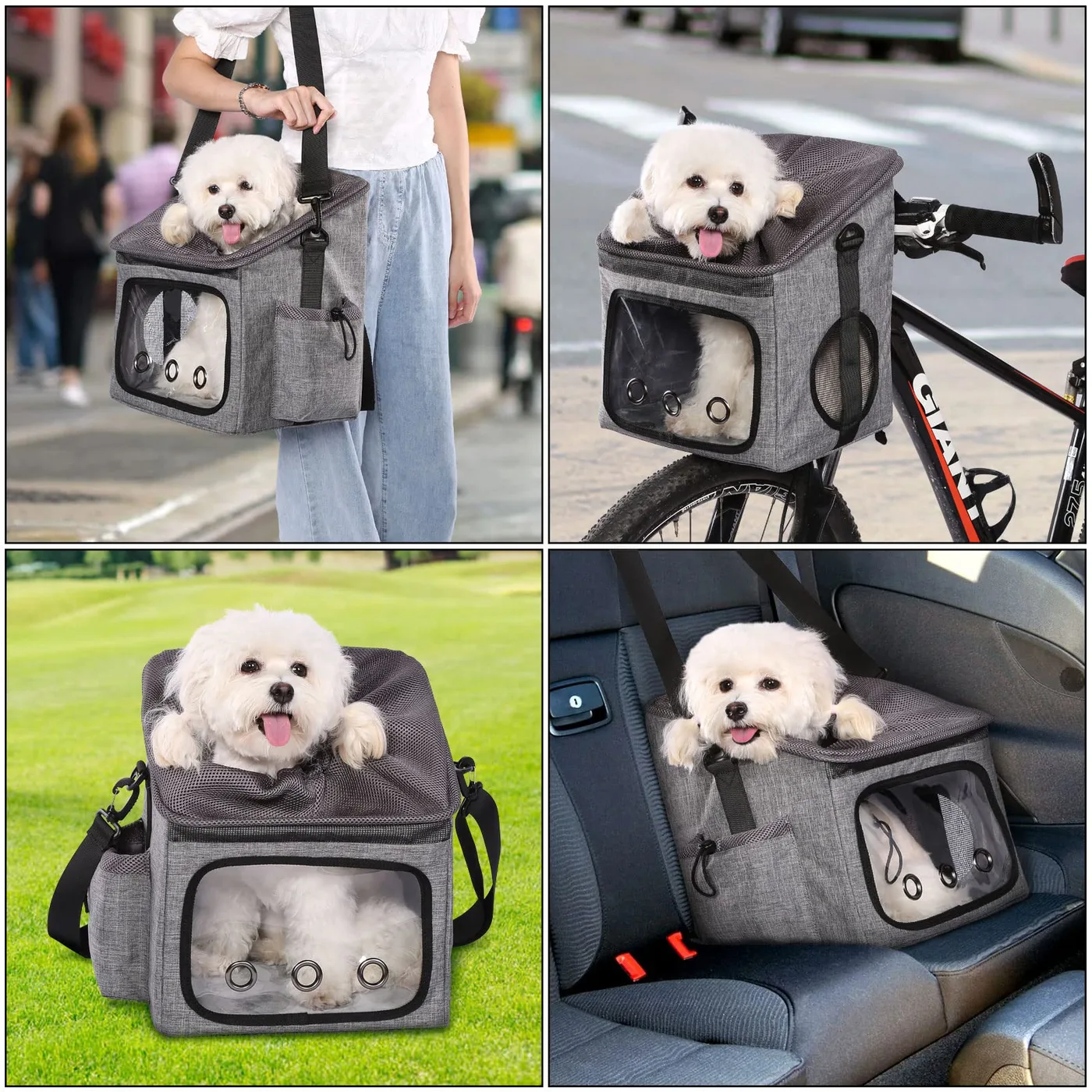
The failure mode of most cooling products is visual. Cooling elements are thick, they bulge, and they turn a clean strap into something that looks like a medical device. Since the strap is the most photographed part of a carrier after the front panel, a bulging strap costs more in lost desirability than the cooling earns in feature value.
The design solution is to distribute rather than concentrate. Instead of one thick pack, use two slim ones positioned symmetrically, or a continuous thin PCM-coated layer that follows the strap's curvature. Distributed elements keep the cross-section close to a standard padded strap and they avoid the hard edge that a single pack creates under a cover fabric.
Placement is the second lever. A strap curves over the shoulder, and the outer face of that curve is where thickness shows least. Putting the cooling pocket on the underside keeps the visible silhouette clean while still putting the cooling where the body contacts. It is a small pattern change with a large visual payoff, and it means the product photographs like a normal premium carrier.
Finally, design the access. A pocket that opens with a hidden zip or a turned edge is invisible in photography and obvious in use. A pocket that requires unfolding two layers and peeling a closure will be used once and then left empty, at which point the brand has paid for a feature nobody experiences. Access should take under five seconds and should be possible with one hand.
The silhouette problem also extends to the shoulder panel. Once a strap carries a cooling pocket, its cross-section grows and the point where it meets the back panel changes. That intersection is where most cooling products look wrong: the strap stands proud of the body and the seam line breaks. Resolve it by extending the pocket taper into the panel rather than stopping it at the seam, so the added thickness disappears gradually instead of ending in a step.
Safety, Compliance and Pet-Side Considerations
Anything that goes into a pet product and contains a chemical needs to be treated as a safety question first. The coolant inside a phase change pack should be non-toxic, and it should be declared. If a pack is punctured, chewed or crushed inside a carrier, the contents end up somewhere near an animal, and the brand that specified it is the brand that answers for it. Require a safety data sheet, require a declaration that the contents are non-toxic, and keep both on file by batch.
Leakage resistance is the practical control. A sealed pack should survive a defined compression and puncture resistance test, and the outer pocket should be constructed so that any leakage is contained rather than released into the carrier interior. A welded seam is better than a stitched one here, and a secondary liner behind the pocket is cheap insurance.
On the wearer side, the temperature band is the safety specification. Anything cold enough to cause discomfort on prolonged skin contact is inappropriate for a product worn for an hour at a time, and it is doubly inappropriate where the wearer may be managing an animal and not paying attention to their own shoulder. Set a floor on the contact temperature and state it in the product documentation. Where a product is sold with any claim touching consumer safety, the guidance published by the U.S. Consumer Product Safety Commission is the reference point your retail buyer will expect you to have considered.
Independent verification closes the loop. Third-party testing through SGS on the coolant declaration, the pack integrity and the finished strap assembly gives a brand owner documents that survive a buyer meeting, and test methods from ASTM International give the numbers a recognised frame of reference.
Cost, MOQ and Programme Planning
Cooling adds cost in three places: the knit, the insert and the construction. The knit premium is modest and behaves like any custom-dyed performance textile. The insert is the real cost driver, because sealed PCM packs are bought in, they have their own minimum order quantities, and custom shapes require tooling. The construction premium comes from the pocket, the access closure and the extra assembly steps.
The table below compares the four configurations we most often build, with indicative strap-set cost at a 500-piece programme and the lead-time impact of each.
| Configuration | Mechanism | Indicative strap-set cost | Cooling duration | Added lead time |
|---|---|---|---|---|
| Wicking only | Evaporative | $1.10-$1.70 | 20-40 min, humidity dependent | 1-2 weeks |
| Reflective finish | Radiant | $1.30-$1.90 | Continuous in sun | 2-3 weeks |
| PCM pocket | Conductive buffer | $3.20-$4.80 | 45-90 min | 3-4 weeks |
| Combined system | Evaporative plus PCM | $4.50-$6.40 | 60-120 min | 4-5 weeks |
Volume helps most on the insert. PCM packs are bought in discrete quantities and the unit price drops sharply at the second tier, so consolidating a season's requirement across two or three products into one purchase order is the single most effective cost lever available.
Timing needs to be planned around the season, not the factory. Sampling is 6-10 working days, insert sourcing runs in parallel, and bulk is 35-50 days from sample sign-off with custom-shaped packs at the longer end. Inspection to AQL 2.5 covers the strap assembly and the fit of the insert, and shipments move FOB Xiamen on T/T 30/70. Work backwards from the first week of the selling season, then add two weeks, because a summer line that lands in August has missed the only window it exists for.
Launching a Cooling Line: Season, Story and Support
A cooling line lives or dies on timing. It has to be on shelf before the first hot week, not during it, which means the design conversation happens in the previous autumn and the bulk order lands in early spring. Brands that treat cooling as an in-season reaction end up launching into the tail of demand and concluding that the feature does not sell, when what actually failed was the calendar.
The story has to be specific. "Cooling" is not a claim; "holds 4 degrees C below skin temperature for sixty minutes" is a claim, and it is one a customer can evaluate, remember and repeat. Put the number on the hangtag, put the mechanism in one sentence on the product page, and put the recharge instruction where it will actually be read. Specificity is what separates a premium feature from a marketing word.
Support matters more here than on a standard product, because a cooling element is the part customers will have questions about. A spare pack available as an accessory SKU turns a potential complaint into a second sale. A one-page care card in the box prevents the most common returns. And a clear statement of what the product does not do — it does not cool in very humid conditions, it does not replace shade or water — protects the brand from the review that says the feature did not work.
Position the cooling line as the technical flagship of the range and let the standard products benefit from the halo. It is much easier to justify a premium across a whole range when one product in it demonstrably does something the others cannot.
Plan the range architecture so the cooling product shares its pattern blocks with the standard line. When the shell, the strap geometry and the hardware are common, the cooling variant is a trim-level addition rather than a new development, which keeps the sampling cost low and the launch date achievable. That shared architecture is what makes a seasonal variant commercially viable at a 500-piece minimum instead of requiring a full programme.
Pair it with the air mesh strap platform for the shoulder system and with a power-compatible pocket architecture if you are building an active-cooling variant, and the summer range becomes a coherent technical story rather than one clever product.
Order and quality terms
- MOQ 500 pieces per colourway; samples in 6-10 working days
- Bulk production 35-50 days after approval; AQL 2.5 inspection standard
- T/T 30/70 terms, FOB Xiamen, full document set per shipment
People Also Ask
Do cooling straps actually work?
Yes, when a real mechanism is specified. Measured skin temperature drops of 1.5-3.0 degrees C are typical for wicking systems and a phase change pack holds a thermal offset for 45-90 minutes. Products that only use a lighter colour deliver nothing measurable.
What is a phase change material in a strap?
It is a substance that absorbs heat as it melts and releases it as it solidifies, holding a near-constant temperature during the transition. In a strap it acts as a thermal buffer rather than a source of cold.
How do you cool a pet carrier in summer?
Combine three passive measures: a light or infrared-reflective outer surface, a wicking air-channel strap against the skin, and a phase change insert for duration. Add ventilation and shade, and never rely on an active powered device near an animal.
Are gel cooling packs safe for pet products?
Only with a non-toxic declaration and a contained pocket. Require a safety data sheet, test the pack for puncture and compression resistance, and add a secondary liner so any leak does not reach the animal.
How many times can a cooling pack be recharged?
Specify at least 500 melt-freeze cycles and ask for evidence. Phase separation is the common failure and it presents as a pack that stops holding temperature after a season of use.
Does colour affect how hot a strap gets?
Significantly. A dark webbing surface in direct summer sun can run 15-20 degrees C above air temperature, which is why technical products in hot markets are rarely black and why solar reflectance is worth specifying.
Frequently Asked Questions
What actually makes a strap cooling rather than just light-coloured?
One of three mechanisms: conduction into a phase change mass, evaporation from a wicking surface, or reflection of radiant heat. If a product uses none of these, it is not cooling. Ask which mechanism is used, at what temperature and for how long, before the claim goes into artwork.
What melting point should a phase change insert use?
26-30 degrees C for a wearable product. Below 22 degrees C the pack is cold enough to be uncomfortable on prolonged contact; above 32 degrees C it rarely activates in normal use. Specify the point with a tolerance and require a test report, because it cannot be judged by hand.
How long does cooling last?
A wicking system gives 20-40 minutes and depends heavily on humidity. A sealed phase change pack of 60-120 g holds its offset for 45-90 minutes. A combined system typically delivers 60-120 minutes of useful cooling before the insert needs recharging.
Does evaporative cooling work in humid climates?
Not well. Above roughly 70% relative humidity the effect falls away sharply. State the limitation on the packaging rather than letting customers in tropical markets discover it, and consider leaning on the reflective and phase change mechanisms in those regions.
Is the coolant inside the pack safe around pets?
It must be, and it must be declared. Require a safety data sheet and a non-toxic declaration from the supplier, keep them on file by batch, and construct the pocket so that any leakage is contained rather than released into the carrier interior.
Can the cooling element be removed for washing?
It should be. A sealed pack cannot go through a machine wash, and a fixed one makes the whole product unwashable. Design access that takes under five seconds with one hand, or the pocket will be used once and then left empty.
How do you recharge a phase change pack?
Twenty to thirty minutes in a refrigerator, or a few minutes in cold water. Print that instruction on the packaging, because customers otherwise assume the product has failed on second use.
Will a cooling strap make the carrier look bulky?
It will if the element is concentrated. Distribute the mass into two slim packs or a continuous thin layer, and place the pocket on the underside of the strap curve where thickness is least visible from the front.
What is the MOQ for a cooling strap programme?
MOQ 500 pieces per colourway, driven by the custom-dyed knit minimum and by the bought-in insert quantity. Consolidating a season's requirement across several products into one order is the most effective way to lower the insert cost.
How long does sampling and bulk take?
Sampling is 6-10 working days including a recharge-cycle check. Bulk runs 35-50 days after sample sign-off, with custom-shaped packs at the longer end, inspected to AQL 2.5 and shipped FOB Xiamen on T/T 30/70 terms.
Should the shell fabric also be treated for heat?
Yes. If the strap is engineered and the back panel is a dark closed-cell surface, the overall experience is still hot. Apply the cooling logic to the whole contact system or the weakest element will define how the product is remembered.
Can we add an active fan or thermoelectric cooler?
Technically yes, and we would generally advise against it for a pet carrier. It adds weight, noise, a power source and a failure mode, and the noise alone is usually enough to distress the animal inside. Passive systems are the better product decision.
Talk to QUANZHOU JUNYUAN BAGS about a pet carrier program: MOQ 500 pieces per colourway, samples in 6-10 working days, bulk production in 35-50 days under AQL 2.5 inspection.
Get a free quote Request a sample