Custom Food Scoop: Measuring
A custom measuring food scoop is specified as an injection-moulded polypropylene or ABS body of 80-500 ml with moulded or printed graduation marks, at MOQ 500 units per colour. The decision that defines the product is whether the graduations are moulded into the tool - accurate and permanent, with tooling cost - or printed afterwards - cheap, flexible, and less durable. Accuracy tolerance should be written into the brief.
A scoop looks like the simplest item in a range and is in fact one of the more exacting ones, because the customer uses it as a measuring instrument and will notice error. Our standard commercial envelope is MOQ 500 units per colour, samples in 6-10 working days, bulk production in 35-50 days after tool and sample approval, and inspection at AQL 2.5. Payment is T/T 30/70, FOB Xiamen.
The brief should settle four things before tooling: material and wall thickness, nominal capacity and tolerance, graduation system and method, and logo method. Two of those four - graduation method and logo method - affect the tool, which means late changes are expensive. Deciding them in week one is the cheapest decision a brand team will make all season.
The economics are unusually transparent once you separate tooling from polymer. A single-cavity tool for a simple scoop is a modest capital item, and a moulded logo and moulded graduations add only a small increment to it. From the second order onward the product costs little more than its material and press time, which is why the scoop is one of the few pet SKUs where investing in better tooling genuinely reduces lifetime cost rather than just improving quality.
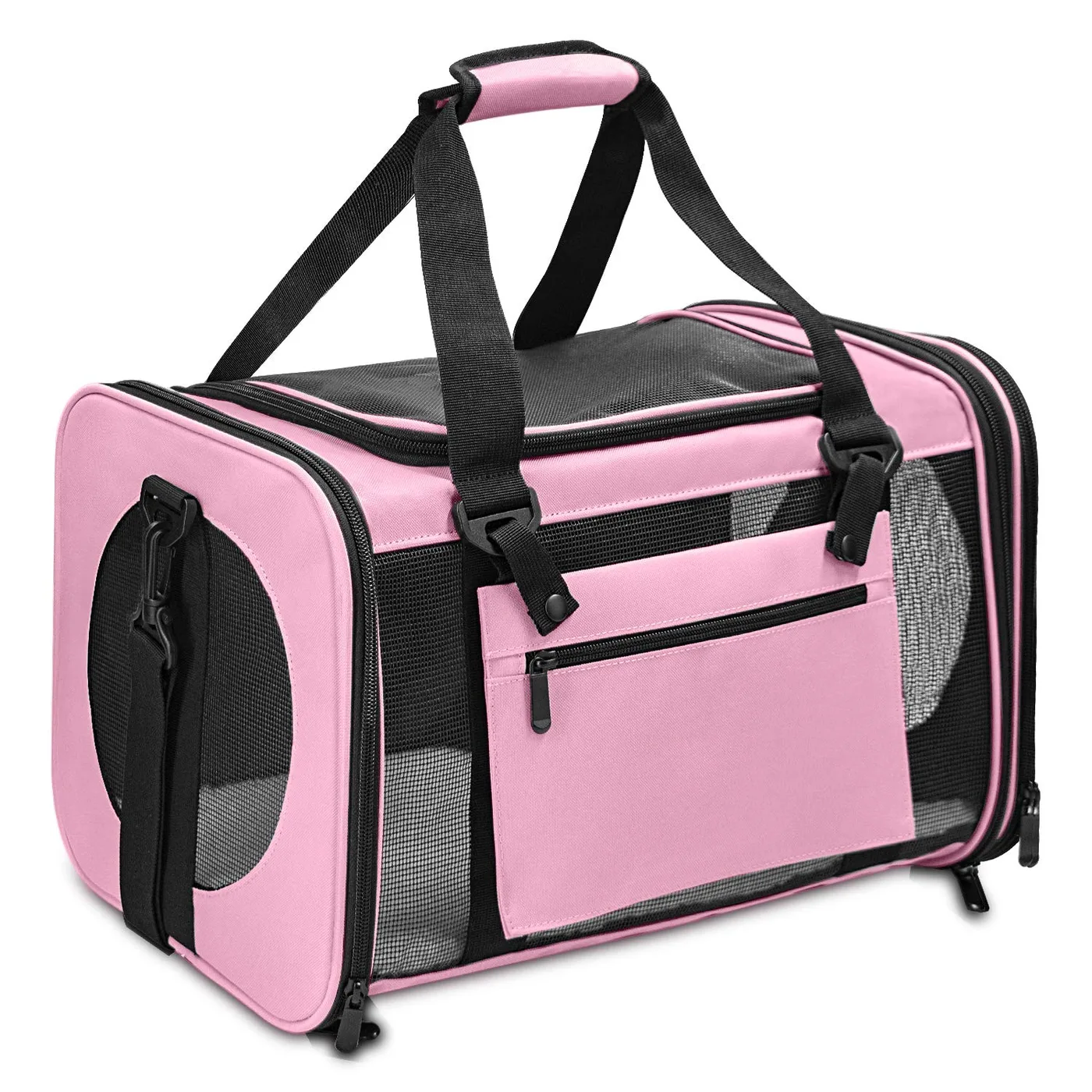
A custom pet bag programme is usually a size ladder rather than a single style, and the ladder is what determines how many colourways you can afford.
The Scoop as a Precision Product in a Design Range
It is tempting to treat a food scoop as a giveaway: a small plastic object, cheap to make, easy to brand. That instinct is wrong in a way that costs money. A scoop is used several times a day, every day, at the exact moment an owner thinks about how well they are caring for their pet. It is a precision instrument in the customer's mind even when it is not one in the engineering, and products that fail that expectation generate disproportionately bad reviews for their price.
Design-led brands should therefore treat the scoop as a trust object. The two things that build that trust are visible accuracy - clear, honest graduations - and material quality that survives dishwasher cycles without clouding or warping. Both are specification decisions, and neither is expensive to get right if they are decided early.
The scoop also carries strategic weight as the connector SKU of a feeding capsule. It is the item that links a storage bin, a food bowl and a travel kit into a single story about portion control. A brand that sells the scoop as part of a measuring system - scoop, bin, bowl and a portion chart on the insert card - sells a solution rather than a piece of plastic, and the whole capsule moves at a higher price.
Differentiation is genuinely difficult here because the functional envelope is tight: a handle, a cup, a flat edge. What separates one scoop from another is the handle section, the surface texture, the colour system and the graduation design. Those are exactly the variables a designer controls, which makes this one of the more rewarding small products to develop.
Finally, consider the scoop as a retention device. Because it is cheap and consumable-adjacent, it is the ideal item to include in a repeat-purchase programme or a subscription box. A scoop that is good enough to keep is a scoop that keeps the brand on the kitchen counter for years.
Injection Moulding: Material and Wall Design
Material choice for a scoop is a balance of stiffness, food-contact status, clarity and cost. Polypropylene is the default: it is food-safe, chemically resistant, dishwasher-tolerant, has a pleasant slight flex, and is among the cheapest engineering polymers available. ABS is stiffer and takes a higher gloss finish, which reads more premium, but it is more prone to stress-cracking and costs more. Tritan or a co-polyester gives glass-like clarity for a measuring product and is the premium choice, at a significant cost premium.
There is also a stainless steel route, usually as a pressed or cast bowl with a moulded or welded handle. It reads professional and is genuinely durable, but it cannot take moulded graduations easily, it is heavy to ship, and it is far more expensive per unit. It suits a top-tier kitchen-style range and little else.
| Material | Stiffness | Dishwasher | Clarity | Cost index | Reads as |
|---|---|---|---|---|---|
| Polypropylene | Medium, slight flex | Yes | Opaque or translucent | 1.00 | Everyday, honest, kitchen-utility |
| ABS | High | Top rack | Opaque | 1.28 | Glossy, appliance-like, premium |
| Co-polyester (Tritan-type) | High | Yes | Glass-clear | 2.10 | Professional measuring, design-led |
| Stainless steel bowl, PP handle | Very high | Yes | Opaque | 2.60 | Professional kitchen, top tier |
Wall design matters more than most briefs acknowledge. A uniform wall of 2.0-2.5 mm moulds predictably and avoids sink marks; varying wall thickness causes visible sink on the outer face and internal stress that leads to cracking at the handle junction. The handle-to-cup junction is the highest-stress point on the product and should be radiused generously rather than drawn as a right angle.
Shrinkage is the hidden specification. Polypropylene shrinks around 1.5-2.0% as it cools, and the tool is cut to compensate - which means the tool is cut for one specific material. Changing material after tooling means the part dimensions drift, and with a measuring product that drift is a functional failure. Lock the material before the tool is cut.
Measuring Accuracy and Graduation Systems
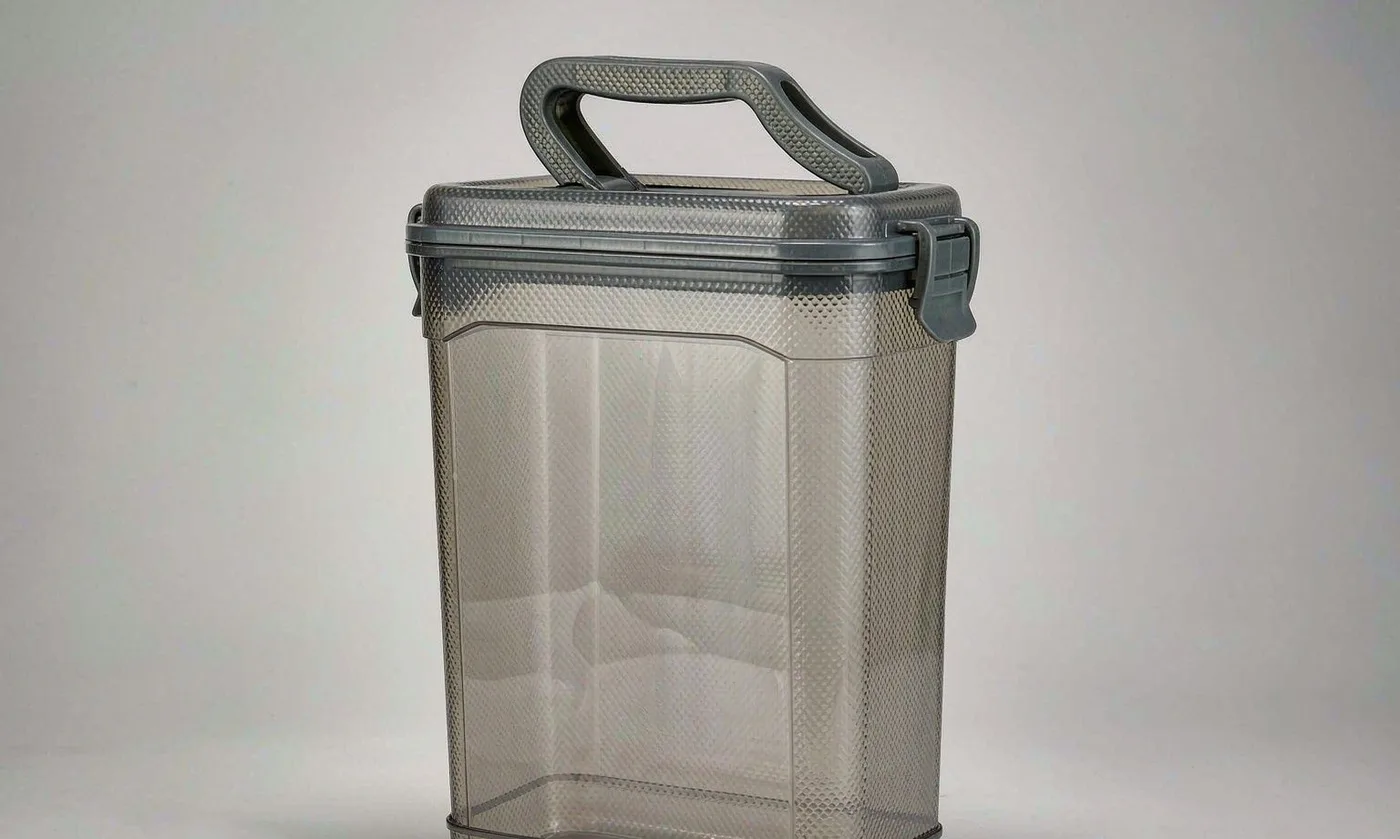
Graduations are what make a scoop a measuring product rather than a cup, and they are where most cheap scoops fail. The design question is what to measure: volume in millilitres and cups, weight in grams, or both. Volume is what a moulded product can honestly deliver, because weight depends on kibble density, which varies enormously between formulas. A scoop that claims gram accuracy is making a claim it cannot keep.
The honest and useful solution is dual marking: a volume scale in millilitres and cups, plus a chart - on the packaging or the insert card - converting volume to approximate weight for the brand's own food. That is truthful, it is genuinely useful, and it creates a reason for the customer to keep the packaging.
Method follows from honesty. Moulded graduations are cut into the tool, are permanent, cannot rub off, and read as a quality feature. Printed graduations are cheap and flexible but sit on a surface that gets scraped by kibble daily and will eventually wear. Pad printing is the best of the printed options and lasts reasonably well on a recessed area.
- Moulded raised or recessed marks: permanent, highest perceived quality, requires tool work and locks the scale at tool-cutting time.
- Pad print on a recessed panel: flexible, low cost, medium durability; the recess protects the ink from scraping.
- Laser mark: permanent on dark materials, single colour, excellent for a minimal aesthetic.
- In-mould labelling: full colour, permanent, requires a label tool and a robot; best for high-volume runs.
Write the tolerance into the brief. A realistic and defensible specification is that the nominal volume at each graduation holds within plus or minus 5%, verified by water displacement on a sample of ten units per production lot. Without a written tolerance, "accurate" means whatever is cheapest to produce, and a scoop that under-delivers by 15% will be discovered by customers who weigh their pet's food.
Two design touches lift the product noticeably. A flat, straight edge on the opposite side from the handle lets the customer level the scoop against the rim of the bag or bin - a genuinely premium feature that costs nothing in tooling. And a high-contrast graduation colour, white marks on a dark body or dark marks on a light body, is what makes the scale readable in a dim pantry.
Ergonomics, Handle Design and Tactile Identity
The handle is the only part of a scoop the customer actually feels, so it is where tactile brand identity lives. Three variables matter: cross-section, length and surface texture. A flattened oval cross-section is comfortable and stops the scoop rotating in the hand. A round cross-section is cheaper to mould and feels generic. A D-shaped or hollow section feels engineered and premium but complicates the tool with a side action.
Handle length should match the intended bin depth. A short handle is fine for scooping from a bowl but will not reach the bottom of a tall storage bin, and the customer will notice immediately. If the scoop is designed as part of a bin system, the handle length should be specified against the bin's internal depth, not chosen aesthetically.
Texture is free differentiation. A moulded texture is produced by etching the tool surface, costs a modest one-off fee, and transforms how the product feels. A fine matte texture reads technical and hides wear. A soft-touch overmould reads premium and luxurious. A polished surface reads cheap unless the material is exceptional, and shows every scratch.
Soft-touch overmoulding deserves specific mention because it is the highest-impact upgrade available in this category. A rigid polypropylene body with a thermoplastic elastomer grip overmoulded onto the handle adds real cost but changes the product's perceived value more than any colour or logo decision. It also gives you a second material colour, which is the easiest two-tone story in the range.
One ergonomic detail is consistently overlooked: a hanging hole. A scoop with a moulded hanging hole at the end of the handle gets hung on a hook or a bin, which keeps it visible and in use. A scoop without one ends up buried in the bag, which is the fastest route to the customer forgetting the brand entirely.
Balance is the ergonomic variable nobody specifies and everybody feels. A scoop should balance at the point where the handle meets the cup, so that a full load does not tip forward in the hand. That is achieved by managing the mass of the handle rather than the cup - a hollow or ribbed handle with a slightly heavier end cap - and it is the kind of detail that cannot be seen in a photograph but is noticed every single time the product is used.
Colour, Finish and Two-Material Moulding
Injection-moulded parts give excellent colour consistency, and that reliability is worth exploiting with a deliberate palette. Specify against Pantone references and approve a moulded chip, because gloss level changes perceived shade substantially: a high-gloss part reads darker and more saturated than the same pigment in a matte texture.
Masterbatch versus compound is a cost decision that shows up at 500 units. A masterbatch - concentrated pigment dosed into natural polymer at the press - is cheap and flexible but gives slightly less consistency and is impractical for small, exact shades. A pre-coloured compound gives precise, repeatable colour and usually carries a minimum order quantity from the polymer supplier, which is one reason MOQ is quoted per colour.
Two-material moulding is the strongest visual tool here. A body in the core neutral with a grip, a rim or a graduation band in the signature colour makes the product look designed at a fraction of the cost of a new shape. It requires either a two-shot tool or an overmould tool, both of which are more expensive than a single-material tool but are amortised over the life of the SKU.
Finish should be decided alongside colour. In this category a matte or lightly textured surface is almost always the right answer: it hides the scratches that kibble inevitably causes, it grips better when wet, and it photographs without the specular highlights that make glossy plastic look cheap. Reserve high gloss for the premium co-polyester route, where clarity is the selling point.
Colour system discipline applies here as everywhere: one core neutral, one signature colour, one rotating seasonal accent, with identical names across the scoop, the bowl and the bin. A capsule that shares names and shades across three very different product forms reads as a range to the shopper and as a brand to the retailer's buyer.
Logo Tooling and Marking Methods
Logo method on an injection-moulded part is a tooling decision that must be made before the tool is cut, because retrofitting a logo into a finished tool is possible but restrictive. There are four realistic routes, and the right one depends on run length and on how long the SKU will live.
A moulded logo - engraved into the tool so the mark appears raised or recessed on the part - has no unit cost and lasts forever. It is the correct choice for any scoop planned to run multiple seasons. The constraint is that the tool is cut once: a logo redesign means a tool modification, typically modest but not free.
Pad printing is applied after moulding, handles up to four spot colours, and requires a plate and a fixture. It suits brands that expect to change artwork seasonally and brands testing a mark before committing to tooling. Hot foil or heat transfer gives a metallic or full-colour finish for a premium look at higher unit cost.
| Method | Setup cost | Unit cost | Durability | Change flexibility |
|---|---|---|---|---|
| Moulded (engraved in tool) | Tool modification | None | Permanent | Low - tool re-cut needed |
| Pad print | Plate + fixture | Low | Medium | High - artwork changes freely |
| Hot foil / heat transfer | Die or film | Medium | Medium-high | High |
| Laser mark | Fixture | Low | Permanent | Very high - digital artwork |
Artwork constraints for moulded marks are specific: keep stroke widths above 0.8 mm, avoid sharp internal corners that will not fill, and keep the mark away from the gate and from any thin wall section where it could cause a sink mark on the opposite face. For pad print, supply vector artwork with Pantone call-outs and specify the recess, because ink on a raised surface that contacts kibble will abrade.
Placement should follow use, not aesthetics alone. The best position on a scoop is the outer face of the cup wall, which is visible when the scoop stands upright in a bin, and which is the surface photographed in a bundle shot. The handle top is the second choice and works well for a moulded mark that doubles as a grip texture.
Packaging: Blister, Card or Bulk
Packaging for a scoop is a choice between three formats with very different economics. A printed backer card with the scoop banded or clipped to it is the retail standard, gives good shelf communication, and is cheap. A full blister or clamshell protects the product and allows hanging on a peg, but costs more, is harder to open, and increasingly conflicts with retailer packaging policies. Bulk packing in a printed carton is the e-commerce route and the cheapest of all.
The card should carry the content that the product cannot: the capacity, the graduation scale explained, the volume-to-weight chart, and the range cross-sell. A portion chart in particular turns a $4 product into a genuinely useful object and is the single highest-value piece of print in the whole capsule.
Sustainability pressure is real in this category, and plastic clamshells are increasingly a liability. A recyclable card with a paper band is the safest route and is now acceptable to most major retailers. If a blister is unavoidable for security reasons, specify a recyclable mono-material rather than a laminate.
Bundling lifts margin more here than in almost any other category. A scoop clipped onto a storage bin, or packed into a travel kit, converts an accessory into part of a solution and justifies a materially higher combined price. Design the clip feature into the scoop early so the bundle geometry works without an adhesive fix.
Two practical details close the packaging spec. Print the capacity on the front of the card in characters large enough to read from a metre, because that is the first question every shopper has. And colour-code the card to the product so a shelf block reads as a palette rather than as stock.
One more consideration applies specifically to e-commerce, where the scoop is usually sold as an add-on. Because the product is cheap relative to shipping, it converts best when it is pre-attached to a higher-value item rather than sold alone. Designing a simple clip or sleeve that lets the scoop ride along on a bin or inside a kit turns a marginal standalone listing into a reliable attach-rate line.
Sampling, Compliance and Cost Structure
Sampling a moulded scoop has one distinctive feature: the first real sample comes from the tool, and once the tool is cut, dimensional changes are expensive. That means the pre-tooling stage deserves more attention than usual. A 3D-printed prototype in the intended geometry is worth the small cost, because it lets the team judge handle feel and cup balance before any steel is cut.
Once the tool exists, allow 6-10 working days for first shots and 6-10 working days for a coloured, marked production sample. Insist on verifying actual volume by water displacement on the first shots, because shrinkage compensation on a measuring product is the one specification that cannot be judged by eye.
Compliance is straightforward but must be documented. Food-contact status of the polymer and any colourant needs a declaration; US obligations are administered by the U.S. Consumer Product Safety Commission, EU chemical obligations by ECHA, and California's Prop 65 regime published by OEHHA may require a warning depending on pigment. Independent verification through SGS is fast and gives retailers a fileable document.
Bulk runs 35-50 days after approval, with inspection at AQL 2.5. The defect list should cover short shots, sink marks on visible faces, flash at the parting line, graduation illegibility, and - critically - volume accuracy verified by displacement on a sample from each lot. That last check is what separates a measuring product from a cup.
On cost structure, the honest summary is that the tool dominates the first season and the polymer dominates every season after. A brand confident in the design should invest in a good tool with a moulded logo and moulded graduations, because the unit cost advantage compounds across every subsequent order. A brand still testing its range should use a cheaper tool with pad-printed marks and accept the higher unit cost in exchange for the flexibility to change.
Why brands source here
- Pet carrier programs run since 2014; founding team in sewn goods since 2004
- SGS-verified production floor of 4,950 m² with 137 workers across 7 lines
- Monthly capacity of 200,000 units, audited to BSCI and ISO 9001
People Also Ask
How many grams are in a cup of dog food?
It varies by formula, typically ranging widely between kibble densities. That is exactly why a scoop should measure volume and the brand should supply a conversion chart for its own food rather than printing gram marks.
What size scoop do I need?
Match the scoop to the portion size. An 80-120 ml scoop suits small-breed feeding, 250 ml is the everyday size, and 500 ml suits large breeds and multi-pet households.
Are plastic scoops dishwasher safe?
Polypropylene and co-polyester scoops are dishwasher safe on the top rack. ABS tolerates less heat and may stress-crack over time, so check the material before claiming dishwasher safety on the card.
Why do measuring scoops vary so much between brands?
Because most are made to a nominal shape rather than a verified volume, and polymer shrinkage changes the finished capacity by one to two percent. A written tolerance and a displacement test are what make a scoop honest.
Can a scoop be used for wet food?
Yes, and a flat levelling edge helps. A smooth interior radius is important for wet food, because a sharp wall-to-base corner traps residue and is difficult to clean.
Should a scoop be colour-coded by portion size?
Yes, if you run multiple capacities. Colour-coding by size is the fastest way for a customer to grab the right scoop in a busy kitchen and is a genuine reason to run a palette rather than a single shade.
Frequently Asked Questions
What is the MOQ for a custom measuring scoop?
MOQ is 500 units per colour. Colour is quoted per run because a pre-coloured polymer compound carries its own minimum from the material supplier and because changing colour requires a press purge.
Should graduations be moulded or printed?
Moulded for any scoop intended to run multiple seasons - the marks are permanent and cannot rub off. Pad printing is the right choice for short runs or for brands still finalising their scale, particularly when applied in a recessed panel.
How accurate should a measuring scoop be?
Specify plus or minus 5% at each graduation and verify by water displacement on ten units per lot. Without a written tolerance, accuracy becomes whatever is cheapest to produce.
Can a scoop measure grams as well as millilitres?
Not honestly, because kibble density varies by formula. The correct solution is a volume scale plus a conversion chart for your own food on the packaging or insert card.
Which material should we use?
Polypropylene for everyday ranges - food-safe, dishwasher-tolerant and economical. ABS for a glossy premium look, co-polyester for glass-clear professional measuring, and stainless for a top-tier kitchen range.
How long does sampling take?
6-10 working days for first shots from the tool and 6-10 working days for a coloured, marked production sample. A 3D-printed pre-tooling prototype is strongly advised to settle handle feel before steel is cut.
Can we change the logo after the tool is cut?
Yes, but it requires a tool modification. If you expect artwork to change seasonally, specify pad printing or laser marking instead of a moulded mark.
What inspection standard applies?
AQL 2.5 with a defect list covering short shots, sink marks, flash, graduation legibility and volume accuracy verified by displacement on a sample from each lot.
Do we need food-contact documentation?
Yes. Obtain a food-contact declaration for the polymer and colourant, and confirm market obligations - CPSC in the US, ECHA in the EU, and California Prop 65 where applicable to pigments.
Is soft-touch overmoulding worth the cost?
If the scoop is a premium SKU, yes. A thermoplastic elastomer grip changes perceived value more than any colour or logo decision and gives you a second material colour for a two-tone story.
How should the scoop be packaged?
A printed backer card with a paper band is the safest retail format and is increasingly preferred to plastic clamshells. The card should carry capacity, the graduation scale, a volume-to-weight chart and the range cross-sell.
What is the bulk lead time?
35-50 days after tool and sample approval. The tool dominates first-season cost while polymer dominates every season after, so investing in good tooling pays back across repeat orders.
Talk to QUANZHOU JUNYUAN BAGS about a pet carrier program: MOQ 500 pieces per colourway, samples in 6-10 working days, bulk production in 35-50 days under AQL 2.5 inspection.
Get a free quote Request a sample