Custom Exercise Pen: Outdoor Play
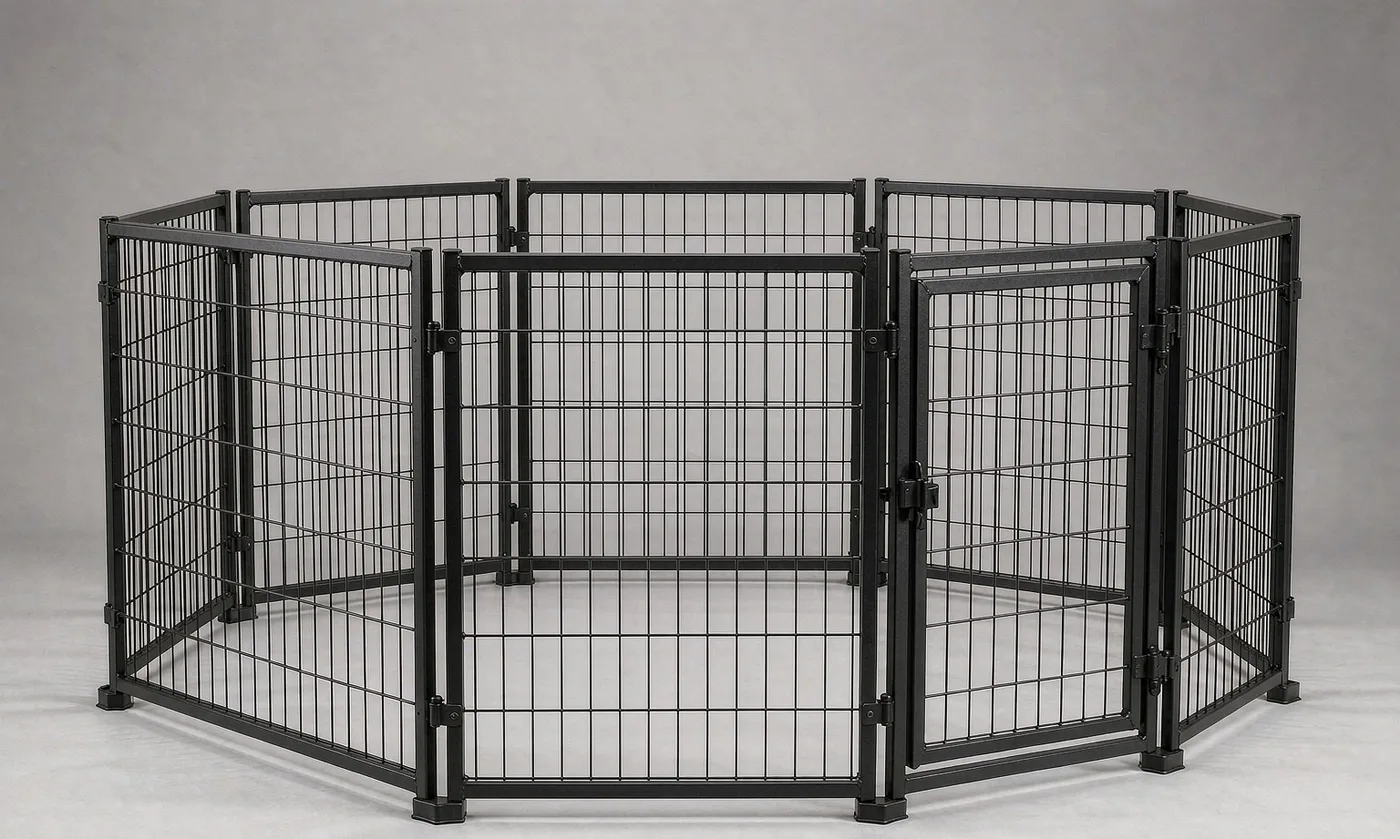
A custom exercise pen for outdoor play is normally built as 8 to 16 interchangeable panels at 600-900 mm height, powder-coated to a Pantone-matched shade, with a MOQ of 500 units per colour. Eight panels give a 1.8 m round enclosure for small breeds; sixteen panels cover roughly 2.4 m of running length. Panel gauge, coating build and latch design are the three decisions that set your retail price band.
Outdoor play pens are a system purchase, not a single-SKU purchase, and the commercial envelope has to be fixed before the first sketch. Our standard terms are MOQ 500 units per colour, samples in 6-10 working days, bulk production in 35-50 days after written sample approval, and incoming inspection at AQL 2.5 with a documented measurement report on every lot. Payment runs T/T 30/70 against FOB Xiamen, which keeps freight and duty fully in your control.
From a design standpoint the brief should answer four questions first: how many panels in the base configuration, what height tier, which coating system, and where the logo lands. Answer those and the tooling is usually limited to a screen-print screen, a laser fixture and a carton die-line - no hard tooling, no long lead time. That is why an outdoor pen programme can move from concept to shelf in a single season when the artwork discipline is tight.
The commercial logic behind a modular pen is that one approved panel unlocks three price points. Because the panel is the same part, an 8-panel, a 12-panel and a 16-panel carton share tooling, colour and inspection criteria, and the retailer sees a coherent three-step range rather than three unrelated products. Add a two-panel extension pack and a shade cover and the same module yields five SKUs from one approval cycle, which is the most efficient range expansion available in outdoor pet products.
A custom cat carrier is restrained by behaviour rather than by weight, so locking sliders and bound internal seams matter more than load ratings.
Where an Outdoor Play Pen Sits in a Brand Architecture
An outdoor exercise pen is one of the few pet products that behaves like furniture in a planogram. It carries a high unit price, it occupies real floor space, and it signals what the rest of the range stands for. When a shopper sees a colour-consistent pen, gate, carrier and travel set on the same shelf, they read a brand; when they see four unrelated shapes in four unrelated greens, they read a distributor catalogue. That difference is made in the design brief, long before production.
For most private label programmes the pen earns its place as the destination SKU of an outdoor capsule. It is the item that justifies the endcap, the item the retailer photographs for the seasonal mailer, and the item that pulls the lower-priced accessories along with it. A typical capsule might pair the pen with a indoor playpen, a room-divider gate, a camping shelter and a travel kit. Each SKU shares the Pantone palette, the logo lockup and the hang-tag language, so the capsule reads as one collection across five very different product forms.
From a margin view, pens are attractive because the perceived value is driven by finish and presentation rather than by raw material volume. Two pens with identical steel weight can sit $20 apart on the shelf purely on coating quality, latch feel and carton print. That gap is where brand work pays. The corollary is that a weak finish is punished just as visibly: orange peel on a powder coat, a rattle in the latch, or a carton that arrives crushed will cost more in returns than the saving ever returned.
Seasonality matters too. Outdoor structures sell into a narrow window in most temperate markets, which is why the design calendar is usually worked backwards from the shelf date. Launching an outdoor capsule means artwork locked in late winter, samples approved before the spring trade shows, and bulk arriving early enough to be photographed and merchandised before the first warm weekend.
The practical conclusion for brand teams: treat the pen as the visual anchor of the outdoor story and let every other SKU inherit its colour, hardware finish and typography. A capsule anchored by one strong structure outsells the same SKUs introduced piecemeal, because retailers buy a story and shoppers buy a set.
Panel Geometry: Specifying a System, Not a Single Size
The fastest way to turn one pen into a range is to define a panel module and then vary the count. A module is a single welded panel with a fixed width, height and connector logic. Once the module exists, 8-panel, 12-panel and 16-panel sets are simply different cartons of the same part, which keeps tooling flat and lets you offer three price points without three engineering programmes.
Standard module widths cluster around 600 mm, 700 mm and 800 mm, paired with heights of 600 mm, 750 mm and 900 mm. The 600 mm height suits small breeds and looks right in a living room; the 900 mm height is the outdoor workhorse and the one most retailers want for medium breeds. Wire spacing is the next decision: a 40 mm x 140 mm mesh reads light and airy, while a tighter 25 mm x 100 mm mesh reads secure and premium but adds weight and coating area, and therefore cost.
Door panels deserve their own spec. A single-door layout is cheapest; a door-plus-door layout lets two pens be joined into a run; a walk-through door with a drop pin is the retail-preferred option because it photographs well and feels considered. Whichever you choose, the latch is the single part shoppers judge by hand, so it is worth spending the extra $0.30 on a spring-loaded pin with a rounded knob rather than a bent-wire hook.
- 8 panels / 600 mm: about 1.8 m round footprint, entry price band, suits apartments and small breeds.
- 12 panels / 750 mm: the volume configuration, works as round, octagon or rectangle, best carton efficiency.
- 16 panels / 900 mm: roughly 2.4 m of run, the premium outdoor SKU, usually sold with ground stakes and a sun-shade top.
- Add-on 2-panel packs: the highest-margin line extension, because the consumer has already bought the base system.
Two more geometry notes change the whole product experience. First, fold-flat engineering: a pen that folds to 60 mm thick without tools ships far better and is far more likely to be bought by an online shopper. Second, connector tolerance: if the panel pins allow more than about 2 mm of play, the assembled structure visibly leans, and no amount of brand work recovers from a leaning product in a showroom photograph.
Material and Coating Choices for Outdoor Exposure
Outdoor pens fail in one of three ways: rust at a weld, chalking of the coating, or deformation of the frame. All three are material decisions, and all three are visible within a single season. The baseline substrate for a mid-market pen is low-carbon steel wire and tube, typically 3.0-4.0 mm wire with 0.8-1.0 mm wall tube for the uprights. Going thinner saves real money but the structure will not survive being dragged across a patio.
Coating is where the range is differentiated. A single-layer powder coat at 60-80 microns is the industry default and looks excellent out of the carton; it will chalk and fade after two to three seasons of direct sun. An e-coat primer under the powder topcoat roughly doubles salt-spray performance and is the specification we recommend for any SKU that will be marketed as outdoor. Galvanised substrate before coating is the premium option and is only worth it for coastal markets.
| Finish system | Build | Salt-spray target | Cost index | Best use |
|---|---|---|---|---|
| Single powder coat | 60-80 μm | 240 h | 1.00 | Indoor or covered patio, promotional price band |
| E-coat + powder | 20 μm + 70 μm | 480 h | 1.18 | Standard outdoor SKU, most private label programmes |
| Hot-dip galvanised + powder | 45 μm + 70 μm | 720 h+ | 1.42 | Coastal markets, premium outdoor collections |
| Anodised aluminium frame | 10-15 μm oxide | n/a (no red rust) | 1.65 | Lightweight premium range, design-led brands |
Verification matters as much as specification. Adhesion should be checked to a cross-cut tape method and corrosion resistance to a neutral salt-spray method; both are published as standard test methods by ASTM International, and quoting the method number in your tech pack is the cheapest way to stop a coating being quietly downgraded. Third-party verification through SGS is worth adding on the first lot of any new colour, because metamerism - the same formula reading differently on tube versus wire - is common and only shows up under controlled lighting.
Finally, think about the feel of the material. A matte fine-texture powder reads technical and outdoor; a satin smooth finish reads domestic and premium; a high-gloss finish shows every handling mark and should be avoided on a product that gets folded and unfolded weekly. Finish choice is a brand decision masquerading as an engineering one.
Colour Systems: Pantone, Gloss Level and the Outdoor Palette
Colour is the cheapest brand asset in the whole programme and the one most often wasted. The discipline is simple: nominate a Pantone reference, agree a gloss level, and require a physical drawdown panel rather than a digital render. Powder coatings shift noticeably between batch and substrate, and the only defensible approval is a coated metal chip signed off under a controlled light box.
Nominate your brand colour to Pantone standards, then accept that powder will land within a tolerance rather than exactly on target. A realistic acceptance band is a delta-E of roughly 1.5 against the approved chip for a solid shade, and looser for metallics and textures. Asking for perfection here pushes cost up without any measurable benefit on shelf.
Gloss level is the underrated variable. Measured on a 60-degree gloss meter, a matte outdoor pen sits around 15-25 GU, a satin around 40-55 GU, and a gloss above 80 GU. Matte hides the weld marks and handling scuffs that are inevitable in a wire product, which is why most successful outdoor ranges specify matte or fine texture even when the rest of the brand is glossy.
The palette itself should be built as a three-tier system. One core neutral - charcoal, warm grey or deep bronze - anchors the range and is re-ordered every season. One signature brand colour carries identity and appears on door panels, latches and hang tags. One seasonal accent rotates annually and gives the retailer something new to photograph without re-engineering the product. If a fabric shade panel or canopy is included, that textile should carry OEKO-TEX certification, because shoppers read textile certification labels far more readily than metal specs.
Naming is part of the system. Retailers and marketplaces index on words, so "Slate Grey" and "Sage" outperform internal codes on search. Give each colour a consumer-facing name, keep it consistent across the pen, the gate and the travel set, and print it on the carton panel where the planogram faces the aisle.
Logo Execution on Wire, Tube and Flat Plate
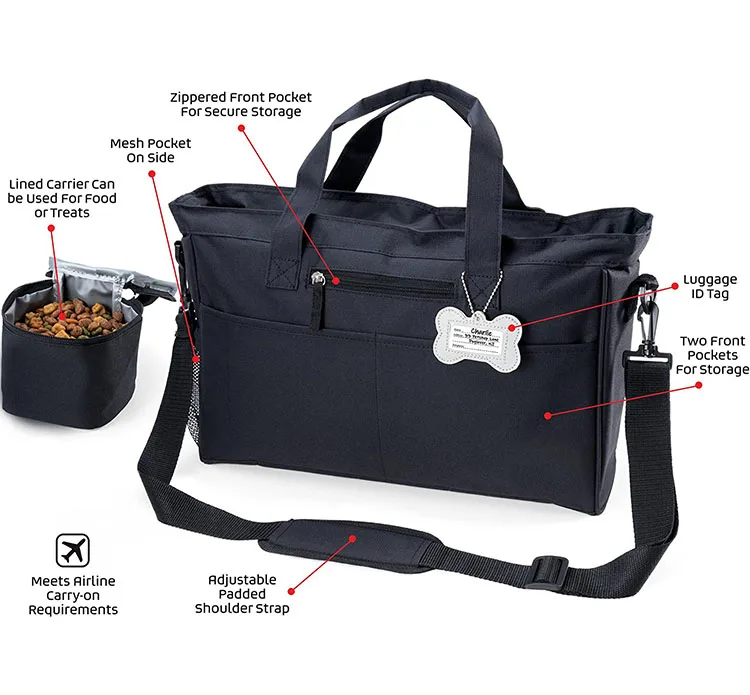
A pen gives you four very different surfaces, and each one rewards a different logo method. The flat steel plate above the door is the premium position: it accepts a laser-etched or chemically etched metal badge with crisp edges and no colour limitation. The upright tube takes a screen print or a heat-transfer decal. A fabric shade cover or carry bag takes embroidery or a woven label. The carton and hang tag take full-colour print and carry the brand story.
Screen printing on powder-coated tube is the volume default. It is cheap, it holds two or three spot colours cleanly, and it can be applied after coating so the artwork does not constrain the finish. Its weakness is abrasion: a screen-printed logo on a panel edge that rubs against another panel in the carton will scuff, so placement should sit above the contact zone.
| Method | Typical setup | Colour limit | Durability | Reads as |
|---|---|---|---|---|
| Screen print on tube | Screen per colour | 1-3 spot | Medium | Sporty, technical, good value |
| Heat-transfer decal | Film + fixture | Full colour | Medium-high | Illustrated brands, seasonal artwork |
| Laser-etched metal badge | Fixture only | Single (metal tone) | Very high | Premium, heritage, outdoor gear |
| Embroidery on shade cover | Digitising | Up to 6 threads | High | Soft goods, lifestyle brands |
| Woven label on carry bag | Loom setup | Up to 8 threads | High | Apparel-adjacent, fashion brands |
Artwork discipline saves weeks. Supply vector files, not rasterised logos; keep stroke weights above 0.8 mm at final size for screen print; and specify Pantone references for every ink rather than CMYK builds. A logo that is redrawn by the printer to make it printable will not match the rest of your range.
One placement rule worth enforcing: the primary logo should be visible at eye height on the assembled pen and on the front panel of the carton when the carton is stacked flat. If the logo only appears on the top cap of a box that is stacked four high, you have paid for branding nobody sees.
Packaging Engineering for a Bulky, Heavy SKU
Outdoor pens are the classic case where packaging cost is a smaller line than freight damage cost. A 16-panel 900 mm pen can weigh 14-18 kg; at that weight the carton is structural, not decorative. Specify a double-wall corrugate with a burst strength appropriate to the load, add corner protection on the top and bottom panels, and require a drop test on the first production carton before the lot ships.
Flat-pack efficiency drives your landed cost more than carton print does. Reducing the folded thickness by 30 mm can move a container from 420 units to 480 units, which is a double-digit change in freight per unit. Work with your structural designer to nest panels in a single layer rather than two layers, and to place the hardware bag in the void beside the latch rather than on top of the coated surface.
Print is worth the spend because the carton is the primary retail impression for a bulky item that is often sold unassembled. Four-colour print on the two largest faces, a clear assembly illustration on one side, and a colour chip of the actual shade on another side will outsell a brown box with a label. Add a carry handle rated to the carton weight and a clear "contains steel - heavy" icon; both reduce in-store damage and returns.
Inside the carton, three printed pieces carry disproportionate brand weight: a folded instruction sheet with real illustrations rather than icons only, an insert card that introduces the rest of the capsule, and a parts checklist that makes missing hardware immediately obvious. The checklist in particular reduces the customer-service load that bulky outdoor products generate.
Sustainability claims should be specific and verifiable. "Recyclable corrugate carton, soy-based inks, no plastic bag" is defensible and printed-checkable; "eco-friendly packaging" is not, and in several markets it is now a compliance exposure rather than a marketing line.
Also specify the markings that make the carton work in a distribution centre. A barcode on two adjacent faces, the colour name in characters large enough to read from a pallet, and the panel count printed as a numeral rather than buried in a description all reduce mis-picks. Mis-picks are the hidden cost of a multi-configuration range: if the 8-panel and 16-panel cartons look identical in the stockroom, the retailer will put the wrong one on the feature and the sell-through data will mislead everyone.
Retail Display and Visual Merchandising for Outdoor Structures
An assembled pen is a two-square-metre commitment that most retailers will not make. The sellable unit is therefore a folded display model - one pen assembled at reduced panel count, or a half-height display version - plus a carton stack beside it. Design for that reality: the display configuration should be assemblable in under five minutes with the tools in the carton and should photograph convincingly at the reduced size.
Colour blocking on shelf is the strongest lever available. Grouping the three colourways in vertical blocks, with the signature colour in the centre, reads as a collection at ten metres. Alternating colours reads as clearance. Give the retailer a planogram drawing with the block order specified, and print the same order on the carton markings so the stack builds itself correctly in the stockroom.
Photography briefs should be written before samples are made. For outdoor structures the shots that convert are: one assembled hero at three-quarter angle with the door open, one detail of the latch and logo plate, one folded-thickness shot beside a tape measure, and one in-context shot on grass or decking. The folded-thickness shot is the one most brands forget and the one that answers the online shopper's real objection, which is storage.
Hang-tag and label language does the last mile of the sale. Keep it to three facts and one promise: panel count, assembled diameter, height; and the promise that the system extends with add-on packs. Anything longer is not read at shelf. Full technical detail belongs on the carton and on the product page, not on the tag.
Marketplace listings need a different treatment from shelf. Because the shopper cannot touch the structure, the listing has to answer the tactile questions in words: what the coating feels like, how loud the latch is when it drops, whether the pen can be moved by one person, and how long assembly takes. Brands that write those four sentences into every pen listing see measurably fewer returns than brands that only list dimensions.
Finally, plan the end of the season before the start of it. Outdoor structures are awkward to store and expensive to carry over, so agree with your retail partner in advance whether unsold stock returns, moves to a clearance aisle, or converts to an online-only listing after the seasonal window closes. Deciding this in May is a commercial conversation; deciding it in September is a write-off.
Sampling, Compliance and the Launch Calendar
The sampling sequence for a pen is short because there is no hard tooling. Round one is a prototype built from stock panels in the nearest available colour, used to validate geometry, latch feel and fold-flat thickness. Round two is a colour-and-logo sample on the real substrate with the real coating, and it is the sample that gets signed. Allow 6-10 working days per round and budget for two rounds; a third round usually means the brief was incomplete rather than the product being difficult.
Compliance should be scoped in parallel, not after. For the US market, check the general product safety obligations administered by the U.S. Consumer Product Safety Commission and the state-level chemical warning regime published by California OEHHA, since coated metal and any PVC components can trigger warning requirements. For the EU, coating and textile components fall under the chemical regime administered by ECHA. Getting these decisions into the tech pack avoids the worst outcome in this category: a finished lot that cannot be shipped to the market it was designed for.
Production runs in 35-50 days from sample approval, depending on season and on whether the coating line is running your colour. Inspection is at AQL 2.5 with a defined critical-defect list - sharp edges, latch failure, coating holidays at welds - that inspectors can apply without judgement. Book inspection before the container loads, not after; a pen is one of the hardest products to rework once it is on the water.
The calendar that works for a northern-hemisphere outdoor launch looks like this: brief and palette locked in January, prototype and colour samples in February, range review with retail buyers in March, bulk production in April, and stock on the shelf by late May. Working backwards from that shelf date is the only reliable way to hit the selling window, because coating line capacity tightens sharply from March onward.
Two commercial habits make the difference in this category. Order the add-on two-panel packs in the same production slot as the base pen, so the colour match is guaranteed; and hold back roughly 5% of the first lot as display and photography stock, because retailers ask for assembled samples before they commit to a planogram.
Why brands source here
- Pet carrier programs run since 2014; founding team in sewn goods since 2004
- SGS-verified production floor of 4,950 m² with 137 workers across 7 lines
- Monthly capacity of 200,000 units, audited to BSCI and ISO 9001
People Also Ask
What size exercise pen is best for outdoor use?
For most medium breeds, 12 panels at 750 mm height gives enough run space without dominating a garden. Go to 900 mm height for jumpers and to a 16-panel layout where the pen is the primary containment solution rather than supervised play space.
Are outdoor exercise pens rust-proof?
No coating is truly rust-proof, but an e-coat primer under a powder topcoat roughly doubles corrosion performance versus single-layer powder, and a galvanised substrate extends it further. Performance is quoted in salt-spray hours and should be verified per colour.
Can exercise pens be customised with a logo?
Yes. The flat door plate takes a laser-etched metal badge, the upright tube takes screen print or heat transfer, and soft components take embroidery or woven labels. Each method has a different minimum stroke weight and colour limit.
How much does a custom exercise pen programme cost to start?
The main variables are panel count, wire gauge, coating system and carton print. Because pens need no hard tooling, the upfront cost is artwork, screens and a carton die-line rather than moulds, which keeps the entry cost modest for a private label launch.
Do exercise pens need assembly?
Yes, and assembly experience is part of the product. Modular panels with tool-free connecting pins and a clear illustrated instruction sheet reliably outperform bolted designs on review scores.
What is the lead time for bulk outdoor pen orders?
Bulk production runs 35-50 days after written sample approval. Coating line capacity is the usual constraint from March onward, so booking production early is more effective than negotiating the lead time.
Frequently Asked Questions
How many panels should our first outdoor pen SKU have?
Start with 12 panels at 750 mm. It is the configuration that works as a round, an octagon or a rectangle, it ships efficiently, and it covers the widest range of breeds without committing you to the premium price band of a 16-panel set.
What is the MOQ for a custom outdoor exercise pen?
MOQ is 500 units per colour per configuration. Because panels are modular, you can distribute that 500 across 8-panel, 12-panel and 16-panel cartons as long as the panel module and colour are identical.
Can we match our brand Pantone on a powder-coated frame?
Yes, within a practical tolerance. Expect a delta-E of about 1.5 against an approved physical chip for solid shades, and looser for metallics and textures. Always approve a coated metal drawdown rather than a screen render.
How long does sampling take for a pen programme?
Two rounds is normal: 6-10 working days for a geometry prototype and 6-10 working days for a colour-and-logo sample on the real substrate. There is no hard tooling, so the cycle is governed by artwork readiness rather than by tooling build.
Which coating system should we choose for coastal markets?
Specify hot-dip galvanised substrate before powder coating for coastal or high-humidity markets. E-coat plus powder is sufficient for most inland outdoor use, and single-layer powder should be reserved for indoor or covered-patio SKUs.
What inspection standard applies?
Incoming inspection runs at AQL 2.5 with a written critical-defect list covering sharp edges, latch failure and coating holidays at welds. A measurement report on coating thickness and panel dimensions accompanies every lot.
Can we add our logo to the panels as well as the door plate?
Yes. Screen print or heat-transfer works on the upright tube, and a laser-etched badge works on the flat door plate. Keep the logo above the panel contact zone so it is not abraded in the carton.
How is a bulky pen packed for export?
Fold-flat, single-layer nesting in a double-wall carton with corner protection and a rated carry handle. Cartons are drop-tested on the first production lot because freight damage, not carton cost, is the dominant expense in this category.
Do we need compliance testing for coated metal structures?
Yes. General product safety obligations apply in the US, California Proposition 65 warnings may be required for coated or PVC components, and EU chemical restrictions apply to coatings and any textile parts. Scope these in the tech pack, not after production.
Can we order add-on panel packs later in a matching colour?
You can, but the safest route is to order them in the same production slot as the base pen. Powder batches vary slightly, and a later run in the same formula will not always be a visual match.
What retail price band should we target?
Most private label 12-panel outdoor pens land in the mid band, with the 16-panel 900 mm version at the top. Finish system and carton print, not steel weight, are what justify the step up between them.
Is a fabric shade cover worth adding?
If your brand reads lifestyle rather than technical, yes - it lifts perceived value and carries an embroidered logo well. Specify an OEKO-TEX certified textile and a UV-resistant thread so it does not fade ahead of the frame.
Talk to QUANZHOU JUNYUAN BAGS about a pet carrier program: MOQ 500 pieces per colourway, samples in 6-10 working days, bulk production in 35-50 days under AQL 2.5 inspection.
Get a free quote Request a sample