Car Shape Pet Carrier: Vehicle Design Programmes
A car shape pet carrier is a soft-sided carrier styled as a vehicle body - curved bonnet, raked cabin, wheel arches at the base - generally 44-52 cm long and rated for 6-9 kg. The form needs a curved perimeter frame plus moulded wheel feet, and at MOQ 500 it adds roughly USD 2.10-4.30 per unit over a rectangular shell of comparable internal volume.
The vehicle silhouette is the hardest of the themed shapes to make look intentional, because a car is a machine with a recognised proportion and customers detect errors in it instantly. A paw that is slightly wrong still reads as a paw; a car with the wrong stance reads as a blob with wheels. The design work is therefore proportion first and decoration second: wheel position, bonnet length and cabin rake decide whether the product looks designed, and only afterwards does livery colour or trim add personality. Programmes that respect that order produce carriers that sell to adults as well as to gift buyers; programmes that invert it produce novelty that photographs well and reviews badly.
- Sampling: digitised pattern with a stance review on a flat surface in 6-10 working days.
- Minimums: MOQ 500 pieces per colourway; wheel feet and arch panels use dedicated tooling.
- Schedule: bulk runs 35-50 days from approved sample, longer if custom wheel mouldings are tooled.
- Quality: stance, wheel alignment, seam burst and print registration are inspected to AQL 2.5.
- Terms: T/T 30/70, FOB Xiamen, units boxed so wheel feet are not compressed in transit.
Private label pet bags and carrier programmes share one packaging standard here, so a mixed order does not add a second carton size or handling charge.
Stance: the proportion that decides whether it reads
Vehicle design has a vocabulary for this, and it is worth borrowing. Stance is the relationship between wheel position, body height and overhang, and it is the first thing anyone reads on a car - before colour, before detail, before branding. A carrier with the wheels too far inboard looks like a loaf; wheels too far out look like a toy.
Three ratios do most of the work. Wheelbase to overall length should sit around 0.60-0.68 for a friendly, compact reading; lower than that reads stretched and higher reads stubby. Overall height should be roughly 0.35-0.42 of length, because a vehicle body is inherently long and low and a carrier that is naturally tall fights the reference. Front overhang should be shorter than rear, which is the detail that separates a car from a van in the mind's eye.
Bonnet length is the second signal. A visible bonnet - roughly 20-25 percent of total length - establishes the car reading; without it the object is a box with a windscreen. The bonnet should drop slightly toward the front, and that drop is what allows the pet's headroom to be concentrated where the pet actually is, at the centre and rear.
Cabin rake is third. An upright windscreen reads as a van or a bus; a rake of 25-35 degrees from vertical reads as a car. The cost of that rake is internal volume at the front, which is why the cabin should be positioned toward the rear of the shell with the bonnet absorbing the lost space.
Then the wheels. Diameter relative to body height should be about 0.28-0.34, and they must be visible from a three-quarter view - wheels hidden under the body line disappear, and without visible wheels the whole reference collapses. Wheel arches, even implied ones cut into the base panel, are what make wheels read as wheels rather than as feet.
Wheels as structure, not decoration
On a bag, wheels are usually feet. On a car carrier they are both feet and identity, which means they have to do structural work that decorative elements are not normally asked to do.
The ground-contact question comes first. Four moulded feet at the corners keep the unit off wet floors and give the wheel positions a physical anchor, but four feet on an uneven surface rock. The practical answer is four wheels sized generously - 25-40 mm diameter - plus a flat reinforced base panel between them, so the unit is stable whether it stands on all four or settles onto the panel.
Material choice follows load. EVA mouldings are light, cheap and quiet, and they deform permanently under sustained point load, so they suit smaller programmes. TPE and rubber give better recovery and grip and cost more. Rigid plastic wheels look the most like a car and are the least forgiving on hard floors; they belong to display-led premium lines rather than to everyday carriers.
Attachment is where cheap programmes fail. A wheel riveted or screwed through a single fabric layer tears out under a loaded drag; the correct construction puts a reinforcement plate inside the base panel and fastens through both. Every wheel is also a lever arm when the unit is dragged, so the fastening has to resist shear, not just pull.
| Wheel solution | Unit cost add (USD) | Load behaviour | Reads as | Suits |
|---|---|---|---|---|
| Moulded EVA foot | 0.45 - 0.80 | Deforms over time | Soft, friendly | Small breeds, value lines |
| TPE tyre on boss | 1.10 - 1.70 | Recovers well | Car-like | Mid-market retail |
| Rigid plastic wheel | 1.80 - 2.90 | Rigid, noisy | Toy-like | Display and gift |
| Decorative print only | 0.10 - 0.25 | No function | Graphic | Print-led programmes |
Finally, decide honestly whether the wheels need to roll. Rolling wheels on a pet carrier raise questions about containment and control, and most programmes are better served by fixed feet shaped like wheels. If they do roll, they need a brake or a deliberate reason, because a carrier that moves when a pet shifts inside it is not a feature.
Cabin, glass and ventilation without breaking the form
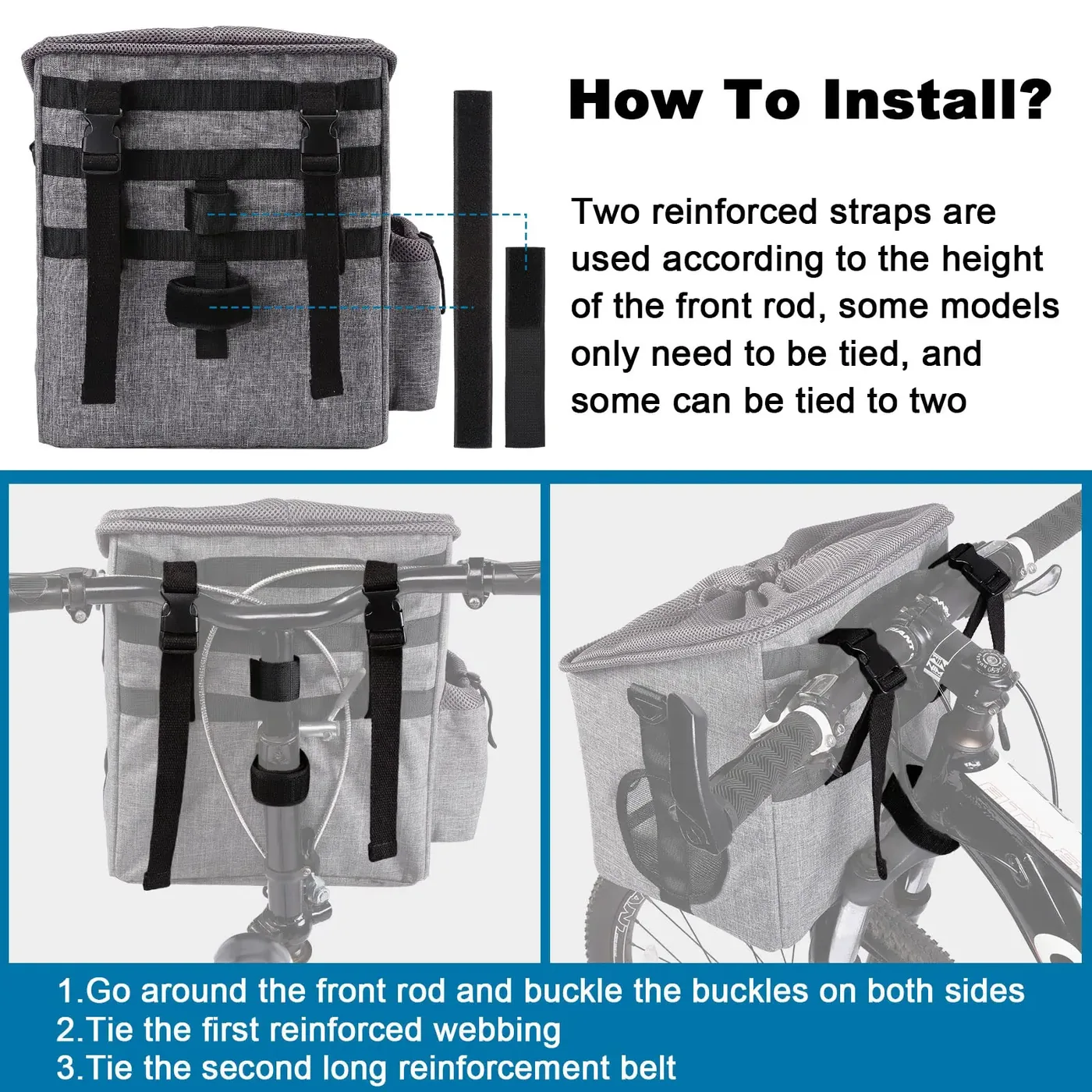
A car body has a greenhouse - the glazed upper volume - and it is the part of the reference that conflicts most directly with the ventilation requirement. Resolving that conflict well is what separates a credible vehicle carrier from a closed box with wheels.
The windscreen and side glass should be mesh. That is the obvious move and it works, because a raked windscreen is a large surface at the front where airflow is useful and where a pet can see forward. Rear glass can be a lighter mesh or a printed panel, since the rear of a carrier is usually against the user's body or a car seat.
Open area is the number retailers ask for. A vehicle shape can achieve roughly 25-35 percent open area on two faces if the cabin glass is genuine, which is sufficient for a soft carrier of this class. Below about 18 percent, expect questions, and expect them late, at the point where changing the pattern is expensive.
Pillar treatment is the detail that makes glass read as glass. Narrow fabric pillars between glazed panels mimic a car's A, B and C pillars, they cost nothing beyond sewing time, and they give the structure continuous load paths through the cabin - which matters, because a large mesh field removes the fabric that would otherwise hold the roof line.
Dark mesh is the practical default. It reads as tinted glass, it hides the interior, and it reduces the visual noise that makes shaped carriers look busy in photographs. Light mesh reads as insect screen and makes the product look cheaper than it is.
Headlights and taillights are the one decorative element that reliably earns its place, because they give the object a face and a direction. Execute them as a small applique or a printed panel rather than as an applique plus embroidery plus trim, and keep them symmetric, because asymmetry on a face is read as a defect rather than as style.
Car safety crossover: seatbelt paths and restraint
A vehicle-shaped carrier invites a question that no other shape invites: can it travel in a car safely? Answering that properly is worth doing, because it is the question that produces both the best reviews and the most damaging ones.
The mechanical requirement is a path for a seatbelt across the carrier. A sleeve or two webbing loops on the top face, positioned so the belt crosses the body rather than the opening, let the unit be secured on a seat without threading anything through the pet's space. It adds a few cents of webbing and it converts the product from carried to secured, which is a genuine selling point rather than a claim.
Restraint of the animal is separate and is the more sensitive subject. An interior tether with a structural anchor is standard; what matters is that the anchor is on a load path to the base panel and not to a decorative seam. Programmes that want external credibility should look at the testing protocols published by the Center for Pet Safety, which is the reference serious retailers cite when they ask how a product behaves in a vehicle.
Claims need care. A shaped soft carrier is not a crash-tested restraint device, and no private label programme should imply that it is. The honest and commercially sufficient statement is that the carrier can be secured by a seatbelt and contains the pet within the seating area - which is true, useful and defensible.
Finally, plan the base for car use. A flat, scuff-resistant underside keeps the unit from sliding on leather and protects the wheel feet from the abrasion of a boot floor, which is where most of the wear on this shape actually happens.
There is a merchandising dividend here as well. A carrier that can be genuinely secured in a vehicle answers the objection that shaped products are decorative, and it lets a retailer place the item in a travel or safety-adjacent set rather than in novelty. That placement decision, made by someone else, is worth more than any amount of styling, and it costs one webbing sleeve to earn.
Livery, colour and the trademark problem
Vehicle design carries a legal edge that other shapes do not. Car silhouettes, grille shapes and especially badges are protected, and a carrier that reads as a specific marque is a problem for both the brand and the retailer.
The safe approach is a generic vehicle archetype: hatchback, estate, camper van, classic rounded city car. These are categories rather than properties, and they give designers enough room to build a distinct product. A grille should be an abstract shape rather than a recognisable one, and badges should be the customer's own brand, never an imitation of anything else.
Livery is where personality lives and where brand identity is cheapest. Two-tone bodies - a roof colour over a body colour - read immediately as automotive and give a second colour placement that belongs to the design. Racing stripes, roof racks rendered as grab handles, and contrast wheel-arch binding all work because they are automotive conventions rather than brand properties.
Colour specification should follow the discipline used throughout a custom programme: body and trim referenced to Pantone standards with an approved lab dip, because a two-tone body is the least forgiving colour arrangement in the category - two nominally matching panels from different lots are glaringly obvious when they sit directly on top of each other.
Consider a colourway strategy rather than a single colour. Three livery options across one body - a neutral, a saturated and a pastoral - cover most retail preferences and cost only the fabric change, since the tooling is shared.
Interior volume inside a vehicle body
A car shape wastes space in a predictable pattern: the bonnet is unusable, the raked windscreen removes headroom at the front, and the wheel arches intrude at the base. Designing the interior means deciding where the pet lives within that compromised volume.
The answer is the centre and rear. The usable floor rectangle should be defined from the rear axle line forward to the base of the windscreen, and the specification should quote that rectangle rather than the exterior length. A 48 cm car carrier with a long bonnet may offer only 34 cm of usable floor, which is a small-breed product sold under a medium-breed size impression - and that discrepancy is what generates size-related returns.
Floor flatness is non-negotiable. Wheel arch mouldings must sit outside the framed base panel, not inside it, so the interior floor is a clean rectangle. Where a design insists on interior arch forms, they should be shallow enough that a pet can lie across them without bracing.
Headroom should be quoted at the centre of the usable rectangle, not at the highest point of the cabin. Quoting the peak makes the specification look better and the product behave worse, and it is the single most common source of sizing disputes in shaped carriers.
Access is best through the rear or through a large side panel. A front-entry car carrier means opening through the bonnet, which contradicts the reference and usually produces an awkwardly small opening. Rear or side entry also keeps the face - headlights and grille - intact as the design surface.
Finishing details matter here more than elsewhere because the interior is visible through tinted mesh from several angles: a dark lining, a removable washable pad, and no exposed foam edges behind the glazing.
Positioning: toy-like or premium, and why not both
Vehicle-shaped pet products occupy two very different shelves. One is playful and toy-adjacent, sold on charm and price. The other is aspirational - a camper van or heritage silhouette in muted colours, sold to adults who like cars and like their pet. Trying to serve both with one product produces something that satisfies neither.
The toy-adjacent route favours saturated colour, exaggerated stance, larger decorative elements and lower material cost. It sells at volume, it is highly photographable, and it competes on price, which means the specification should be built backwards from a target retail and every decorative element has to justify its cost against that number.
The aspirational route favours accurate proportion, restrained colour, tactile materials and real hardware. It sells at lower volume and much higher margin, it rewards accuracy over exaggeration, and it is the route that supports a brand rather than a SKU. Material choices here - wool blends, textured weaves, metal zip pullers - carry the positioning as much as the shape does.
Two signals tell customers which shelf they are on within about a second: wheel realism and colour saturation. Soft moulded feet and bright primary colour read toy-ish; defined tyre shapes and muted colour read premium. Programmes should pick one combination deliberately rather than arriving at it by accident.
Packaging and photography then have to agree with the choice. A premium car carrier presented in a glossy full-colour box with cartoon illustration undermines itself, and a playful one in a plain mailer looks cheap. The pack is part of the positioning statement, not a container.
One practical test resolves the question faster than a focus group: put the product on a plain white background beside a similarly priced non-novelty carrier and photograph both from two metres. If the vehicle shape looks like a prop next to a serious product, it is a toy-adjacent item and should be priced and packaged as one. If it holds its own, the premium route is open. That test costs an hour and prevents the most expensive mistake in this category, which is premium cost structure behind a playful position.
Durability, testing and where this shape fails first
Vehicle shapes fail in consistent places, and knowing them means sampling can be directed rather than exploratory. Wheels are first: fastenings tear out under drag, and mouldings deform under sustained load. Wheelbase corners are second: the base panel flexes between the wheels if the board is too thin. The bonnet seam is third, because it is a convex curve that takes abrasion every time the unit is set down.
Testing should therefore be specific. A loaded carry test at the rated weight, a drag test across a hard floor at the wheel positions, a base deflection check, and abrasion on the bonnet and wheel-arch areas. Standard drop and seam procedures published through ASTM provide the method; the acceptance criteria are the brand's to write, and they should be written before sampling rather than after a failure.
Base specification deserves a number. A framed board of 6-8 mm with the wheel fixings through a reinforcement plate is the sensible minimum for a 9 kg rating; below that, deflection between the wheel positions becomes visible as a sagging underside, which reads as poor quality even when nothing has broken.
Print and trim durability is the last area. Applied panels on a convex bonnet flex constantly and lift at the edges if the adhesive or stitch density is marginal. Heat-transfer film with a stated wash and rub performance, or stitch-down applique, both survive; a lightly pressed decorative panel does not.
Incoming inspection then verifies stance, wheel alignment, seam burst and trim adhesion to AQL 2.5, and the whole set is documented so that a second colourway or a second season starts from a proven construction rather than from memory.
Planning a vehicle family
A single car carrier is a novelty; a garage is a range. The vehicle archetype is unusually well suited to series planning because there are several legitimate body styles that share one construction platform, and because customers collect them.
The platform approach holds the chassis constant - base panel, wheel positions, reinforcement, mesh specification - and varies the upper body: hatchback, estate, camper van, pickup. Development cost per variant drops to pattern and trim because the structural decisions are already proven, and the shared platform means one spare-part and one testing file cover the whole family.
Sizes work within the platform too. Two sizes sharing wheel components and reinforcement, with the body pattern graded, give a retailer a category rather than an item. Hold the stance ratios constant across sizes rather than the absolute dimensions, so the large size does not become a bus and the small one a toy.
Colourway rotation is the cheapest growth lever, exactly as with other shaped families: three liveries per body, MOQ 500 each, shared tooling. Limited runs around a motif - a rally livery, a seasonal roof colour - create collectability without new construction.
Our production team has run sewn goods programmes since 2014, and the pattern that holds across all of them is simple: the families that last are built on one proven platform with the variation confined to surfaces, while the ones that fail redesign the structure with every launch and re-learn the same lessons each season. The test for whether a platform is genuinely shared is simple: if a new body style requires a new base board, a new wheel or a new reinforcement layout, it is not a variant, it is a new product - and it should be budgeted and sampled as one rather than smuggled in as a colourway.
Order and quality terms
- MOQ 500 pieces per colourway; samples in 6-10 working days
- Bulk production 35-50 days after approval; AQL 2.5 inspection standard
- T/T 30/70 terms, FOB Xiamen, full document set per shipment
People Also Ask
Why does my car carrier look like a loaf?
Almost always wheel position. Wheels too far inboard remove the stance; bring the wheelbase to roughly 0.60-0.68 of overall length and make the wheels visible from a three-quarter view.
Are rolling wheels worth the cost?
Rarely for pet containment. They add cost, noise and control questions. Fixed moulded feet shaped as wheels deliver the visual reference without the risk.
Can a car shape still meet ventilation requirements?
Yes, if the cabin glass is real mesh with fabric pillars. Around 25-35 percent open area on two faces is achievable and sufficient for this class.
Should I put headlights on the design?
Yes - a face gives the object direction and reads well in photographs. Keep them symmetric and execute them as one element rather than layering several.
How do I stop the base sagging between wheels?
Increase base board thickness to 6-8 mm and run the wheel fixings through an internal reinforcement plate so the load spreads beyond the fastening point.
Can one platform cover several body styles?
Yes, and it is the efficient route. Hold base, wheels and reinforcement constant and vary the upper body pattern only; development cost per variant drops sharply.
Do muted colours sell better than bright ones?
They sell to a different buyer. Muted colour with accurate proportion reads premium; saturated colour with exaggerated stance reads playful. Both work separately, rarely together.
Frequently Asked Questions
How much does a car shape pet carrier cost?
Approximately USD 11.40-16.80 per unit at MOQ 500 depending on wheel solution and livery complexity, falling to about USD 7.90-11.60 at 5,000 units.
Do the wheels need to roll?
Usually no. Fixed feet shaped like wheels are safer and quieter, and a carrier that moves when the pet shifts is not a feature. If they roll, add a brake or a clear reason.
What stance ratios should I specify?
Wheelbase to length around 0.60-0.68, height around 0.35-0.42 of length, front overhang shorter than rear, and wheels 0.28-0.34 of body height.
How is ventilation handled on a car body?
Make the windscreen and side glass genuine mesh with fabric pillars between panels, achieving roughly 25-35 percent open area on two faces. Below 18 percent expect retailer questions.
Can a car carrier be secured with a seatbelt?
Yes, with a sleeve or two webbing loops on the top face so the belt crosses the body rather than the opening. It is a genuine selling point if the anchor runs to a structural point.
Is it a crash-tested restraint?
No, and no private label programme should imply it. The defensible statement is that the carrier can be secured by a seatbelt and contains the pet within the seating area.
Are there trademark risks with car shapes?
Yes if the design reads as a specific marque. Use generic archetypes - hatchback, estate, camper van - with abstract grilles and your own branding.
How much internal space does a car shape lose?
Considerable. A 48 cm unit with a long bonnet may offer only about 34 cm of usable floor, so quote the usable rectangle rather than exterior length.
Where should the pet enter?
Rear or side. Front entry means opening through the bonnet, which contradicts the reference and produces an awkwardly small opening.
What fails first on this shape?
Wheel fastenings under drag, then base flex between wheel positions, then abrasion on the bonnet seam. Test those three specifically at rated load.
What base specification is needed?
A framed board of 6-8 mm with wheel fixings through a reinforcement plate. Thinner boards visibly sag between the wheel positions under load.
Should the carrier be playful or premium?
Pick one. Wheel realism and colour saturation are the two signals customers read in about a second; mixing them produces a product that satisfies neither shelf.
How long does a vehicle programme take?
Samples with a stance review in 6-10 working days, then 35-50 days bulk from approved sample. Custom wheel mouldings extend the schedule.
Talk to QUANZHOU JUNYUAN BAGS about a pet carrier program: MOQ 500 pieces per colourway, samples in 6-10 working days, bulk production in 35-50 days under AQL 2.5 inspection.
Get a free quote Request a sample