Leather Patch: Debossed Branding for Custom Pet Carriers
A debossed leather patch is the strongest premium signal available in pet carrier branding, costing about USD 0.45 to 2.30 per unit at 500 pieces. A 1.2 to 2.0 millimetre full-grain or microfiber patch is pressed at 60 to 90 degrees Celsius under 8 to 12 tonnes to a depth of 0.4 to 0.8 millimetres, holds the impression permanently, and develops a patina that makes the mark look better after two years than on day one.
Executive summary
Debossing works because it is subtractive. Instead of adding colour to a surface, it presses the brand into the material, so the mark has no ink to fade, no thread to abrade and no film to peel. It is quieter than a printed logo and more expensive, and it communicates exactly the right thing on a premium product: restraint, material investment and permanence.
The specification is a chain of small decisions, each of which shows in the finished part: material, thickness, temper, deboss depth, edge finish, stitch pattern and dye fastness. Commercial terms are constant across decoration routes: MOQ 500 pieces per colourway, samples in 6-10 working days, bulk production 35-50 days after approval, and AQL 2.5 inspection on every shipment. Our production team qualifies leather and coating chemistry at an SGS-verified production base audited to BSCI and ISO 9001, and documentation is filed against the restricted-substance framework published by the European Chemicals Agency.
For a custom cat carrier the ventilation question is where the mesh sits, not how much there is: high side panels plus a shaded front zone keeps airflow without visual exposure.
Debossing as a Premium Signal
Luxury branding tends toward subtraction. The most expensive products in almost every category mark themselves by removing material rather than adding it, because a pressed or engraved mark implies that the material itself is worth marking. A debossed logo on leather carries that implication automatically, and it is the reason a patch costing a dollar can make a product feel like it costs thirty dollars more.
There is a tactile dimension as well. A customer running a thumb across a debossed mark feels the edge of the impression, and touch is a stronger quality signal than sight in soft goods. That is difficult to convey in a photograph and impossible to convey in a line sheet, which is precisely why it works in a retail environment where the product can be handled.
Debossing also ages in the brand's favour. A print degrades toward failure; a pressed mark in leather softens, catches light differently and develops patina. On a product that will be carried for years, that ageing behaviour turns the logo into evidence of ownership rather than evidence of wear, and it is one of the few branding decisions that improves with use.
The limitations are honest. Debossing needs material thickness to work, it cannot reproduce fine detail, it is relatively expensive, and it requires a panel stable enough to sew onto. It is the wrong choice for a brightly coloured playful brand and the right choice for anything positioned as heritage, outdoor, or considered design.
One more consideration shapes the decision: debossing is quiet. On a product where the brand wants to be announced, print or a patch will do that job better. Where the brand wants to be discovered, debossing is unmatched.
Leather Choices: Full Grain, Top Grain, PU and Microfiber
Material choice drives cost, appearance and ageing more than any other decision in this method. Full grain is the top cut of the hide with the natural grain intact: it is the strongest, it develops the best patina, and it costs the most. It also varies naturally, which means no two patches are identical, and a brand that wants absolute uniformity should know that before choosing it.
Top grain has the surface lightly corrected and finished, which removes some character and gives a more consistent appearance at a lower price. It is the practical default for a branded patch, because it accepts a deboss cleanly and looks consistent across a production run. Below that, split leather and bonded leather are cheaper still but they lack the fibre structure to hold a crisp impression, and we do not recommend either for debossing.
PU leather and microfiber leather are the engineered alternatives. Microfiber, a non-woven polyurethane-impregnated structure, is the more interesting of the two: it debosses crisply, it is completely uniform, it is more abrasion resistant than most natural leather, and it has a consistent hand across the whole run. It does not develop patina, but for a brand that wants consistency rather than character it is arguably the better material.
- Full grain: best patina, strongest, natural variation, highest cost
- Top grain: consistent, debosses cleanly, the practical default
- Microfiber: uniform, very durable, vegan, no patina, excellent consistency
- PU coated split: lowest cost, poor impression retention, avoid for debossing
- Cork or apple leather: plant-based options, distinctive, limited colour range
Vegan positioning deserves a note. Microfiber and the plant-based materials allow a brand to use a leather-look patch without animal content, and the visual difference at product scale is small. Where a brand makes a public claim about materials, the patch must agree with it, because it is one of the first things a customer touches.
Whichever is chosen, specify the finish. A matte, semi-aniline finish looks natural and premium; a heavily pigmented, high-gloss finish looks synthetic and reduces the perceived value of the deboss.
Deboss Versus Emboss Versus Foil
Three marking methods compete for the same patch. Deboss presses the design into the surface, producing a recessed mark that is read by shadow. Emboss raises the design above the surface, which is more assertive and, on a soft material, less durable, because raised areas take the abrasion. Foil stamping presses a metallic or pigmented film into the surface with heat, producing a bright, precise mark that sits essentially flat.
Deboss is the default for good reasons. It is the quietest, it is the most durable because the mark is protected inside the material, and it reads best on a natural or matte finish. Depth matters: 0.4 millimetres is subtle and can disappear on a textured grain, while 0.8 millimetres is bold and unmistakable. The usual specification is 0.5 to 0.7 millimetres, which reads clearly without weakening the material.
Foil is the right choice when legibility of fine detail matters or when a metallic accent is wanted. Gold, silver, gunmetal and matte pigment foils all work on leather and microfiber, and a foil mark on a debossed ground, combining both methods, is a genuinely premium treatment. The caution is abrasion: foil sits on the surface, so it belongs on areas that will not be rubbed.
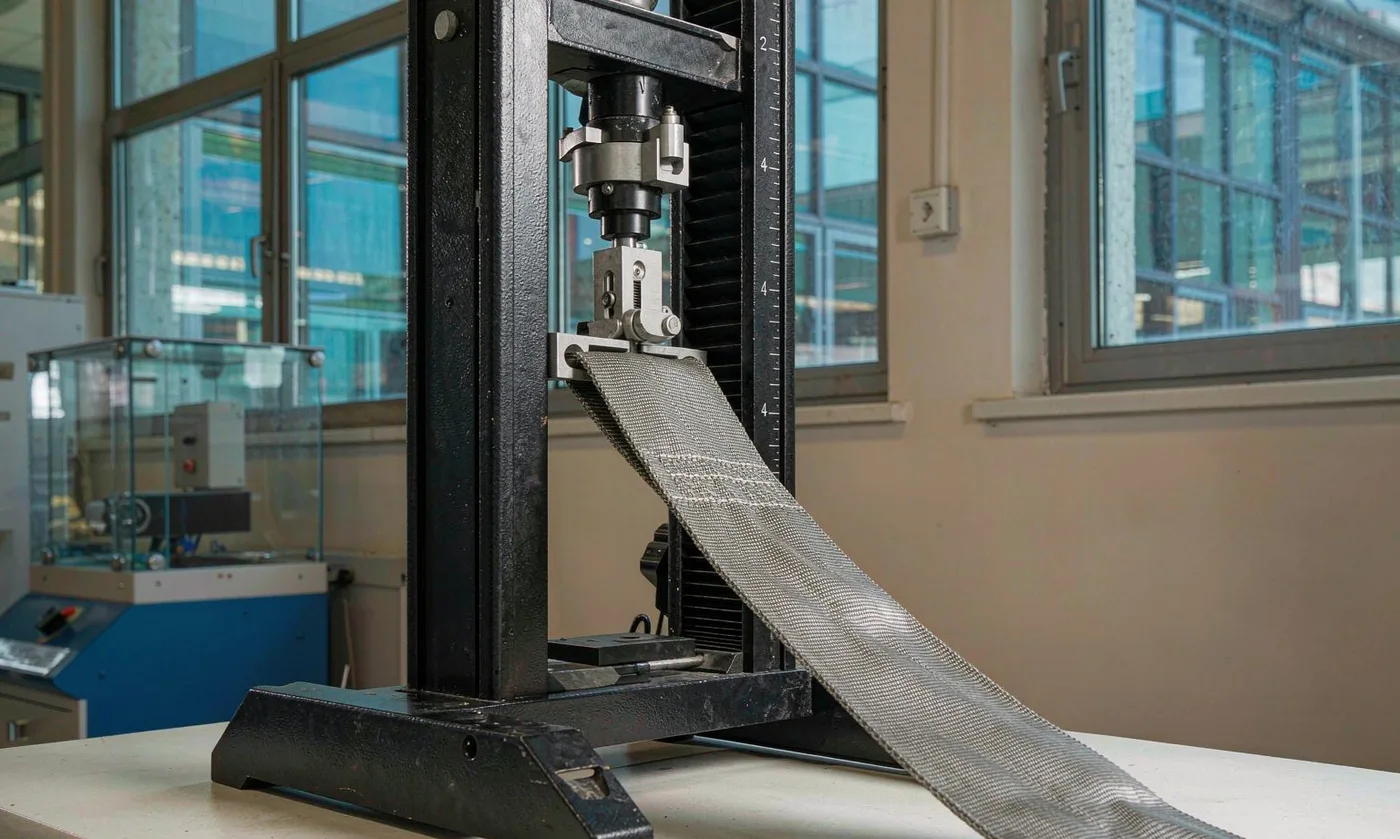
Heat and pressure settings decide whether any of these work. Leather is pressed around 60 to 90 degrees Celsius under 8 to 12 tonnes, depending on area and thickness; too little heat and the impression relaxes out within weeks, too much and the finish glosses or the material scorches. Both are visible on a sample and both are preventable with a proper press trial.
One more technique deserves mention because it is underused: a blind deboss, meaning an impression with no colour contrast at all, read purely through shadow. On a dark material it is nearly invisible until the light catches it, which is the most restrained branding available and the one most often seen on the most expensive products.
Finally, consider combining methods deliberately. A debossed wordmark with a small foil accent, or an embossed border around a debossed centre, gives depth that a single method cannot achieve, and it costs one extra pass.
Thickness, Temper and Edge Finish
Patch thickness sets both the possible deboss depth and how the patch behaves on a soft panel. Below about 1.0 millimetre there is not enough material to hold a defined impression. Above about 2.4 millimetres the patch becomes a rigid plate on a flexible product, which creates a stress point at the corners and can feel like a foreign object. The working range is 1.2 to 2.0 millimetres, and 1.4 to 1.6 is the sweet spot for most carrier applications.
Temper, meaning how firm or soft the material is, is the second variable and it is often overlooked. A firm temper holds a crisp impression and looks precise, but it resists conforming to a curved panel. A soft temper drapes better and feels more luxurious, but the impression is slightly less defined. On a carrier, where panels are padded and curved, a medium-soft temper usually gives the best result.
Edge finish is where a cheap patch reveals itself. A raw cut edge looks unfinished and will fray on fabric-backed materials. Edge paint, applied in two or three coats and sanded between them, gives a smooth sealed edge that matches or contrasts with the face. A folded and stitched edge is more expensive and more durable, and it is the treatment used on the best products. A burnished edge, slicked with friction and wax, suits natural full grain and a heritage position.
- Raw cut: cheapest, looks unfinished, frays on backed materials
- Edge paint: two to three coats, sealed, matches or contrasts, the default
- Folded and stitched: most durable and most expensive, premium read
- Burnished: natural look, suits full grain and heritage positioning
Corner radius deserves a specific mention because it is the most common defect. Sharp square corners on a sewn patch lift and curl within weeks; a radius of 3 to 5 millimetres prevents it and looks more considered at the same time.
Finally, specify the backing. A patch sewn onto a lining needs a clean back with no exposed adhesive, and a heat-pressable patch needs a backing compatible with the shell, tested with a peel test on the production fabric.
Stitch Pattern and Attachment
The stitch is half the design. A perimeter stitch 2 to 3 millimetres from the edge is the standard, and it can be tonal, which reads quiet and premium, or contrasting, which reads crafted and slightly utilitarian. Both are correct; what matters is that the choice is deliberate and consistent across the range.
Stitch density matters more than most buyers expect. Six to eight stitches per centimetre is the usual range: fewer looks handmade and rustic, more looks machine-made and precise. On a heritage-positioned product, a slightly lower density with a heavier thread is the right call. On a technical product, a higher density with a fine tonal thread disappears into the material, which is often the point.
Thread material should match the patch. Polyester is the safe default and the most durable; a cotton or cotton-wrapped polyester thread gives a more natural matte appearance that suits full grain leather, at some cost in longevity. Bonded nylon is the strongest and is used where the patch takes real load.
Attachment itself is usually a perimeter stitch sewn through the panel, which is secure and visible, or a heat-pressed application for a seamless look. Rivets and eyelets are the third option, and they suit an industrial or technical position where the hardware is meant to be seen. Whichever is chosen, the panel behind the patch must be stable: a rigid patch on loose padding will rock and eventually tear its stitches.
One placement caution applies to pet products specifically. A patch on an interior surface will be chewed, so patches belong on exterior panels, away from the opening, with no loose corners to catch a claw. That is a design rule rather than a preference, and it prevents most of the damage claims in this category.
Colour, Dye Migration and Care
Leather colour is matched by dyeing rather than by mixing, so the process is closer to thread selection than to ink formulation. Expect a close match with small deviation, approved on a physical swatch under neutral lighting. Dark shades are straightforward; very light shades on natural leather are the hardest, because the hide's own variation shows through and no dye lot is perfectly uniform.
Dye migration is the risk that catches programs out. A deeply dyed patch, particularly in red, navy or black, can transfer colour onto a light shell under pressure, humidity or heat, and the result is a permanent stain on the product it was meant to brand. The standard check is a colour-fastness rub test in both dry and wet conditions, and any dark-on-light combination should be tested before approval rather than after.
Care behaviour differs by material and should be stated on the care label. Natural leather should not be machine washed: it stiffens, loses finish and can crack. It is wiped clean and occasionally conditioned. Microfiber and PU patches tolerate washing better, though repeated machine cycles will eventually dull the deboss and lift the edge paint.
Chemical compliance is part of the specification. Leather, particularly chrome-tanned leather, is screened for hexavalent chromium and for restricted dyes, and retailers ask about it routinely. We hold documentation against the framework published by the European Chemicals Agency and, where a retailer requests it, certify against the textile standard published by OEKO-TEX, which turns a lengthy questionnaire into a same-day answer.
One final colour consideration: consider how the patch ages against the shell. A natural leather patch on a navy shell will darken over two years, and that shift should be anticipated rather than discovered, because it changes the look of the product permanently.
Cost Tiers and Positioning
Patch cost spans a wide range and the tiers map cleanly onto product positioning. Understanding where each tier sits lets a brand spend deliberately: a premium tier can carry an expensive patch because the margin supports it, while a core tier should carry a cheaper one that still looks considered.
| Tier | Material | Thickness | Unit at 500 (USD) | Positioning |
|---|---|---|---|---|
| Entry | PU coated split | 1.0 - 1.2 mm | 0.22 - 0.45 | Core line, high volume |
| Mid | Microfiber leather | 1.2 - 1.6 mm | 0.45 - 0.95 | Main line, consistent look |
| Upper mid | Top grain leather | 1.4 - 1.8 mm | 0.85 - 1.55 | Premium line |
| Premium | Full grain leather | 1.6 - 2.0 mm | 1.30 - 2.30 | Heritage and gift |
| Specialty | Cork or plant-based | 1.2 - 1.6 mm | 0.95 - 1.85 | Sustainability story |
Two cost levers sit outside the material. Size is roughly linear, so reducing a patch from 70 by 40 millimetres to 55 by 30 saves around 35 percent of the material cost. Attachment is the second, with a perimeter stitch adding USD 0.10 to 0.22 per unit in labour and a heat-press application costing less but requiring substrate testing.
Program terms are constant: MOQ 500 pieces per colourway, samples in 6-10 working days, bulk 35-50 days, and AQL 2.5 inspection. A custom deboss die is a one-time charge, typically USD 120 to 260, and it is retained for the life of the program, which makes a patch design that survives several seasons progressively better value.
The most reliable way to control cost is to standardise the patch across the range. One die, one size, one material, used on every product, spreads the tooling across the whole collection and makes the family unmistakably coherent.
Building a Premium Tier Around the Patch
A debossed patch is the cheapest way to create a visible tier difference, because the perceived gap between a printed mark and a pressed leather one is far larger than the cost gap. A brand can take an existing silhouette, change the patch, the lining colour and the hang tag, and present a premium version at a substantially higher price with no change to the tooling or the pattern.
The execution needs to be coherent, though. A premium patch next to cheap hardware looks like an afterthought, so the tier change should extend to the visible details a customer touches: the zip pull, the binding, the lining and the label. The patch leads, but it cannot carry the tier alone.
Storytelling is where the patch earns its cost. A material with a provenance, a full grain that will patina, or a plant-based alternative with a genuine sustainability story gives the product page something to say, and a debossed mark is the natural place to hang that story. It is the difference between a feature and a claim.
A premium tier also protects the core range. With a clearly better version available, the mid-tier product stops being compared against cheaper competitors and starts being compared against the brand's own top product, which is a far more favourable comparison. That is a pricing effect rather than a materials one, and it is often the real reason to build the tier.
Two rules keep a premium tier credible. Keep the patch design identical across tiers and vary only the material, so the tiers look related rather than random. And keep the premium patch off the entry product, because once a customer sees the expensive patch on the cheap product, the tier collapses.
Sampling and Approval
Approve a leather patch on the assembled product, because the material behaves differently on a panel than in the hand. The checklist below is what we work through before bulk release, and it fits into a single session with a sample, a loupe and a ruler.
- Deboss depth: measured at 0.5 to 0.7 mm, consistent across the motif
- Definition: every edge of the impression crisp under magnification, no soft shoulders
- Dimension: finished size within 1 mm, corner radius to specification
- Edge: paint smooth and even, or fold clean, no raw fibres visible
- Colour: matches the approved swatch under neutral lighting
- Rub test: dry and wet colour fastness passed, especially dark on light
- Stitch: density to specification, no skipped stitches, corners secure
- Flex: patch bends with the panel without rocking or lifting
Two items on that list predict most problems. Rub fastness on a dark patch against a light shell is the first, because dye migration is permanent and appears weeks after delivery. Corner lift is the second, and it is a radius and temper problem that shows up after flexing rather than on day one.
Request two versions of the first sample where the design allows: one at the minimum depth and one at the maximum. Seeing the two side by side settles the depth question in minutes, and it costs nothing extra because the die is already cut.
Request three physical patches from sampling: one applied to the production panel, one loose for colour reference, and one filed with the material declaration. Those three are what an inspector compares bulk against at AQL 2.5, and they are what allow a reorder two seasons later to match.
Done well, a debossed patch is the quietest and most durable brand statement a carrier can carry, and it is the one that still looks right after years of use.
Order and quality terms
- MOQ 500 pieces per colourway; samples in 6-10 working days
- Bulk production 35-50 days after approval; AQL 2.5 inspection standard
- T/T 30/70 terms, FOB Xiamen, full document set per shipment
People Also Ask
What is the difference between debossed and embossed?
Deboss presses the design into the surface so it reads by shadow, and it is the more durable choice because the mark is protected inside the material. Emboss raises the design above the surface, which is more assertive but takes more abrasion.
How deep should a deboss be on leather?
Typically 0.5 to 0.7 millimetres. Around 0.4 millimetres is subtle and can disappear on a textured grain, while 0.8 millimetres is bold and unmistakable.
Can vegan leather be debossed?
Yes, and microfiber leather debosses very crisply. It is uniform, highly abrasion resistant and consistent across a run, though it does not develop the patina that natural full grain does.
Will a leather patch stain a light-coloured bag?
It can if dye migration is not tested. Deeply dyed patches, particularly red, navy and black, are checked with dry and wet rub fastness tests before approval on light shells.
Can a debossed patch be machine washed?
Natural leather should not be; it stiffens and cracks. Microfiber and PU tolerate washing better, though repeated cycles dull the deboss and lift edge paint, so care instructions should state wipe clean.
How thick should a leather patch be?
Between 1.2 and 2.0 millimetres, with 1.4 to 1.6 the usual choice. Below 1.0 there is not enough material to hold an impression; above 2.4 it becomes a rigid plate on a flexible panel.
Is a debossed patch worth the extra cost?
Where the product is positioned as premium, usually yes. The perceived gap between a printed mark and a pressed leather one is much larger than the cost gap, which is why it is the cheapest way to create a visible tier.
Frequently Asked Questions
What is the MOQ for a debossed patch program?
MOQ is 500 pieces per colourway. The deboss die is a one-time charge of USD 120 to 260 and is retained, so the value improves with every season the design runs.
How long does sampling take?
Sampling runs 6-10 working days once the die exists. A new die adds 10 to 15 working days before the first pressed sample can be made.
What is the bulk production window?
Bulk is 35-50 days after written sample approval. Natural leather sits at the longer end because cutting, edge painting and curing add operations.
Which inspection standard applies?
Every shipment is inspected to AQL 2.5, checking deboss depth, definition, edge finish, colour and stitching against the retained applied sample.
Can you add a foil stamp to a debossed patch?
Yes. A foil mark on a debossed ground is a genuinely premium treatment and costs one extra pass. Foil sits on the surface, so it belongs on areas that will not be rubbed.
Do you offer plant-based leather options?
Yes, including cork and other plant-based materials. They deboss well, have a distinctive appearance and support a sustainability story, with a more limited colour range than leather.
How do you prevent corner lifting?
With a corner radius of 3 to 5 millimetres, a medium-soft temper and a secure perimeter stitch. Sharp square corners on a sewn patch lift within weeks.
Can you match a specific brand colour?
Leather is dyed rather than mixed, so the match is close with small deviation, approved on a physical swatch under neutral lighting. Very light shades on natural leather are the hardest to match.
Is the leather compliant for EU and US retail?
Yes when documented. We hold documentation for chrome and dye restrictions against the European framework and can certify to the OEKO-TEX textile standard where a retailer requests it.
Can a patch be placed inside the carrier?
We advise against it. Interior patches will be chewed and can present loose corners to a claw, so patches belong on exterior panels away from the opening.
What artwork do you need?
A vector file with outlined fonts, exact dimensions, preferred deboss depth, material, colour reference and attachment method, plus the panel it will sit on.
How should the product be cared for?
Wipe clean and condition occasionally for natural leather. Microfiber and PU tolerate light washing, but the care label should still recommend wiping to protect the deboss and the edge paint.
Can one die serve several products?
Yes, and it should. One patch design used across a range spreads the tooling cost and makes the family look coherent, which is why we recommend standardising the patch early.
Will the patch colour change over time?
Natural leather will darken and develop patina, which is usually desirable and should be anticipated. Microfiber and PU hold their colour far more consistently across the life of the product.
Talk to QUANZHOU JUNYUAN BAGS about a pet carrier program: MOQ 500 pieces per colourway, samples in 6-10 working days, bulk production in 35-50 days under AQL 2.5 inspection.
Get a free quote Request a sample