Custom Conditioner: Coat Care
A custom conditioner program runs at MOQ 500 units per formula and shade, with filled and decorated samples in 6-10 working days. The build that reads as coat care rather than as a shampoo duplicate is a 250 ml bottle with a higher-viscosity fill, a pearlised or tinted body, and a closure that differs from the shampoo by silhouette alone. Bulk production takes 35-50 days after sample approval.
Executive summary. Conditioner is the second SKU in almost every grooming capsule and the one brand teams most often get wrong, because the temptation is to re-use the shampoo artwork with a different word. Our production team specifies it as a distinct object: a different fill viscosity, a different dispensing behaviour, a different surface finish, and a deliberate 30 percent colour shift so the pair separates at three metres on a shelf. Commercial terms stay constant — MOQ 500 per formula and shade, samples 6-10 working days, bulk 35-50 days, release at AQL 2.5.
The coat-care story is carried by three things a customer can feel within ten seconds: slip between the fingers, rinse speed, and the residual scent on a dry coat. We write all three into the brief as measurable targets rather than adjectives, then match the closure orifice and the label varnish to a formula that is genuinely thicker than the shampoo it sits beside. The carton is designed as a pair from the start, so the two bottles lock together visually and physically in a bundle.
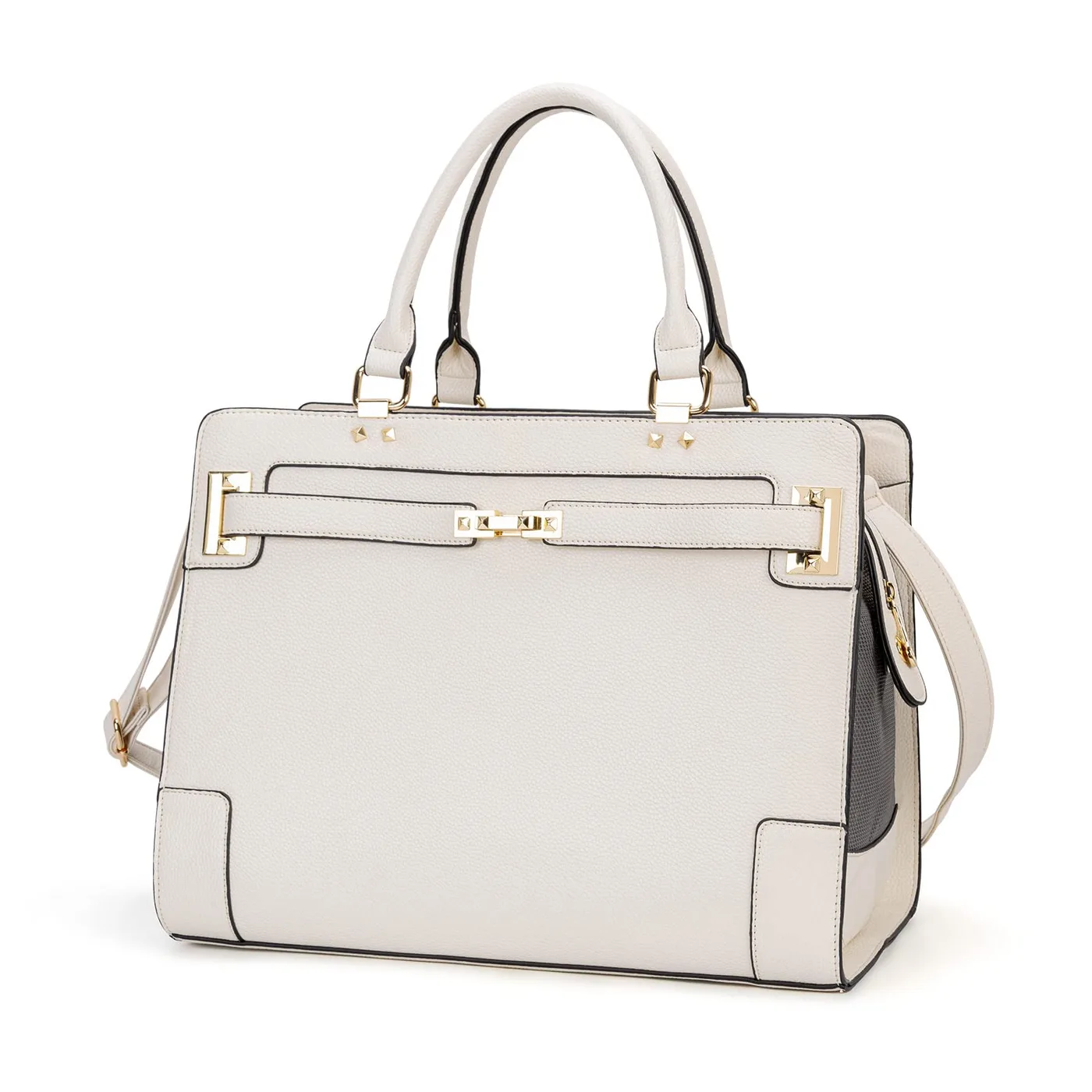
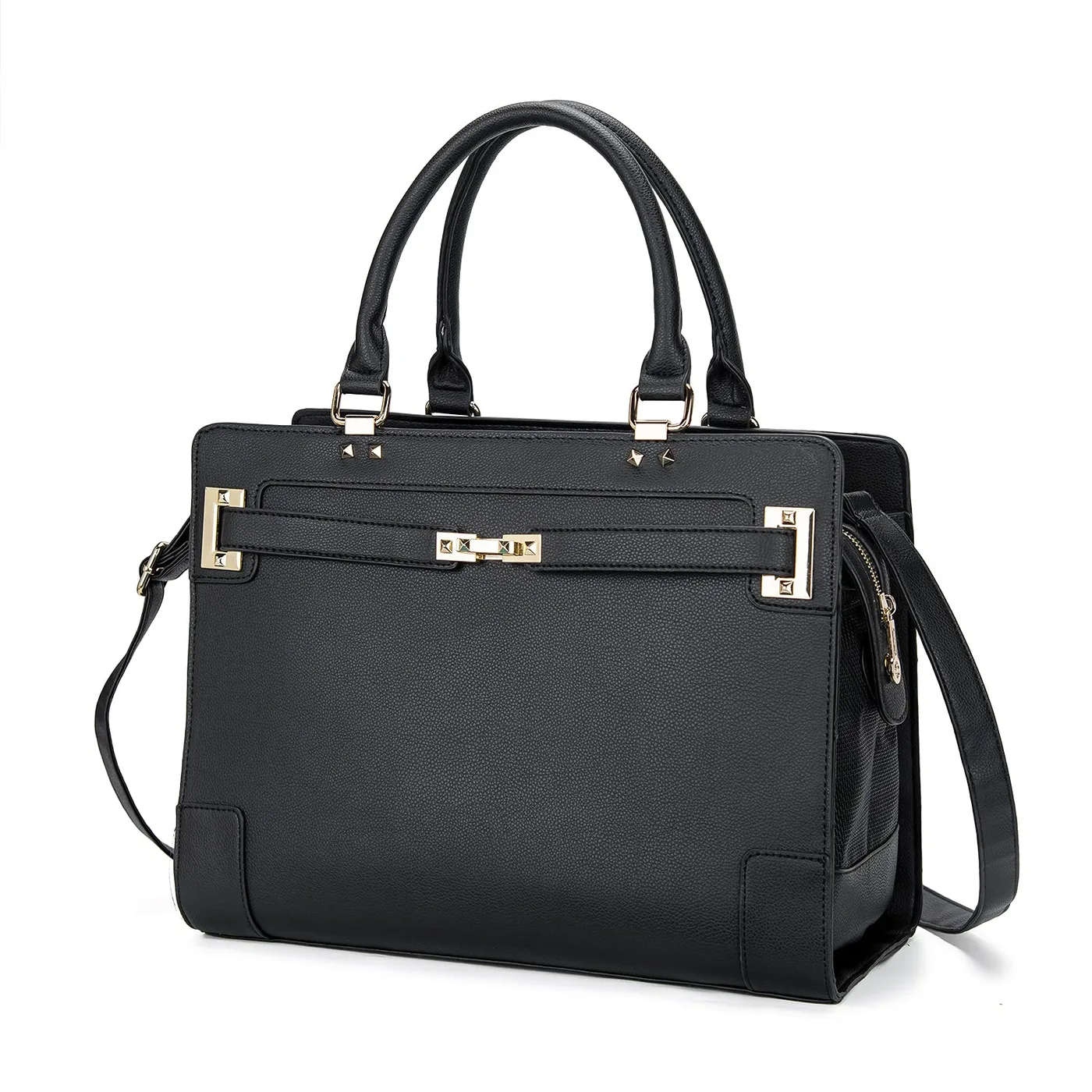
A private label pet carrier keeps the buyer artwork on the panel while the compliance text and country-of-origin marking follow the destination market.
The conditioner that completes a wash system
A shampoo sells the cleaning moment; a conditioner sells the twenty minutes after it. That difference is why the second SKU in a grooming capsule usually carries the higher repeat rate. A customer who buys one bottle is trying a brand. A customer who buys the pair is running a routine, and routines are what create a reorder calendar rather than a repurchase decision.
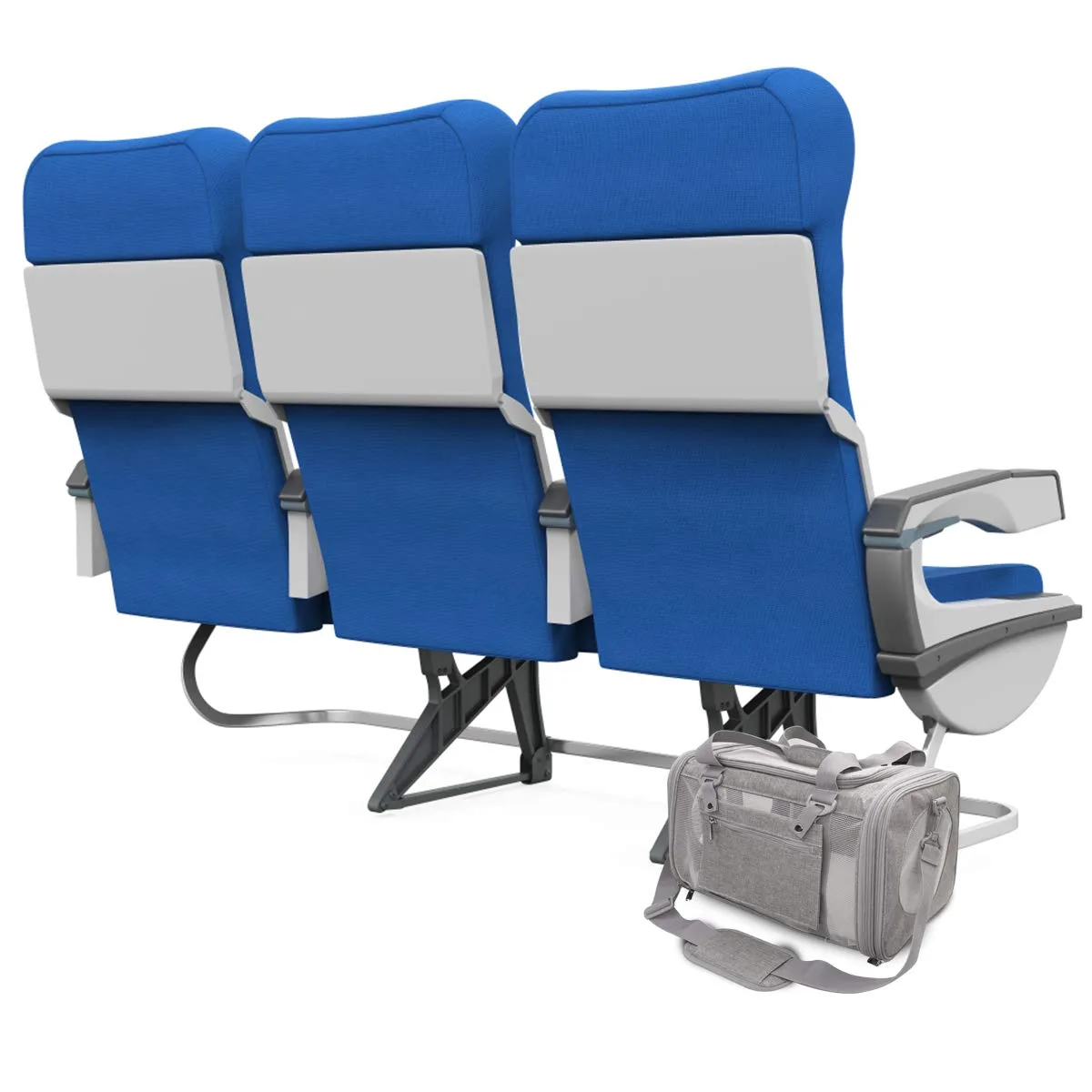
For a carrier brand the logic is even more direct. Travel dries a coat: cabin air, hotel air-conditioning, a long car journey, and a change of water all leave fur dull and static. A coat-care product that names that moment — the arrival, not the bath — gives you a reason to place the bottle inside the bag at the point of sale and a reason for the customer to reach for it on the second night of a trip.
Design the SKU as a system component from day one. That means agreeing the relationship before the artwork: which bottle is taller, which is darker, which carries the wordmark at full size and which carries it at 70 percent, and which one the hand reaches for first. A pair designed together looks intentional. A pair designed sequentially looks like a reprint, and customers read that difference even when they cannot name it.
There is also a margin argument that brand teams underestimate. A conditioner is perceived as a treatment, and treatments support a price premium that cleansers do not. In blind shelf tests across personal care, the second-step product in a two-step routine typically commands 10-18 percent more than the first-step product at identical fill volume. Build the pair, price the pair, and let the second bottle carry the margin.
One more reason to design the pair deliberately is that it changes the retail conversation. A buyer reviewing a single bottle is comparing it against a category; a buyer reviewing a system is comparing it against a competitor's range. The second comparison is far easier to win, because very few private-label pet brands have done the work of making two bottles look and behave like one idea. A brand that arrives with a coherent pair, a shared palette, and a documented reason for every difference is offering the buyer something she can merchandise rather than something she has to price.
Rinse behaviour, slip, and the sensory brief
The formula brief for a coat conditioner is a sensory document before it is a chemical one. Three targets matter, and all three are measurable: slip, rinse time, and residual scent. Slip is the lubricated feel when the product is worked through damp fur, and it is what a customer judges within three seconds of the first application. Rinse time is how long the water runs clear, and it is the difference between a product that feels efficient and one that feels like work. Residual scent is what remains on a dry coat an hour later, and it is the brand memory.
Write each as a number. Slip can be specified as a sensory panel score against a reference sample, rinse time as seconds under a standard flow rate, and residual scent as a panel rating at 60 minutes on a dry coat. Vague briefs produce vague products, and a vague product cannot be defended when a retailer asks why it costs more than the competitor's.
Viscosity is the variable that connects the sensory brief to the hardware. A conditioner is typically two to four times thicker than the shampoo it pairs with, and that thickness dictates the closure: a disc-top orifice that dispenses a 2,000 cps shampoo beautifully will starve an 8,000 cps conditioner, and the customer will blame the brand, not the orifice. Specify viscosity and orifice as one line item, and test the pair at the temperature extremes the product will actually see.
Scent pairing across the system
The conditioner should carry the same accord as the shampoo at a slightly lower load, because the second step is where the scent lingers. Matching the accord exactly and dropping the load by roughly a third gives a clean, layered result; using a different accord produces a muddy one. Treat fragrance as a system property, not a per-SKU choice.
Palette drift between production lots
The colour system that looks correct at approval will drift by the third reorder if it is not policed. Resin pigment lots vary, board coating varies seasonally, and ink is mixed fresh each run. None of those variations is a defect on its own; accumulated across three shipments they produce a shelf row in which the shampoo and the conditioner no longer look related, which is exactly the failure the shared palette was meant to prevent.
The control is cheap and it has to be established at the first run. Retain a sealed physical standard from the approved sample, hold one copy with the brand and one with the production team, and require a measured comparison against it at every reorder. Record the delta-E result rather than a pass or fail, because a trend line tells you when a supplier's process is moving before the number crosses the tolerance.
Set the acceptance policy at the same time. A lot that measures within tolerance but at its edge should still be accepted if the alternative is a stockout, and it should be flagged so the next run is corrected. A policy written in advance turns a subjective argument into an administrative one, and that is the only kind of argument worth having in the week a shipment is due.
Tint, opacity, and letting the liquid carry colour
Colour in a conditioner does not have to live only on the label. A pearlised or lightly tinted liquid is one of the few places in a pet range where the product itself can be part of the brand palette, and it is a far cheaper way to differentiate two bottles than custom tooling. A warm ivory tint says conditioning; a cool pearl says detangling; a clear formula says gentle. Choose by the position you want, not by what is available.
Opacity is a design decision with a stability cost. A fully opaque pearlised body hides fill-level variation, which matters because a slightly under-filled bottle is the most common visual complaint in this category. It also hides any separation in the formula, which is a benefit for shelf life and a risk if the emulsion is not stable — the customer will not see a problem, she will experience one. If you choose opalescence, require an accelerated stability result before artwork lock.
Declare the tint as a Pantone-adjacent reference even though no Pantone standard exists for a liquid. Specify a visual standard sample retained by both sides, a lighting condition for comparison, and an acceptable range rather than a single point. You can anchor the surrounding system against the references published by Pantone, and the label, cap, and carton should all be measured against that anchor so the tint reads as part of the family rather than as an accident.
Bottle pairing and the two-bottle artwork problem
Shelf differentiation is a distance problem. At arm's length, any two bottles with different words are distinguishable. At three metres — the distance at which a shopper decides whether to approach a fixture at all — only silhouette, colour field, and cap shape still communicate. Design for three metres and the close-up will take care of itself.
The reliable method is to vary one variable strongly rather than three variables slightly. Give the pair a shared geometry and then change the colour field by roughly 30 percent in lightness or saturation, plus one structural cue: a taller shoulder, a wider cap, or a matte-versus-gloss finish. Two bottles that differ in all three variables read as two brands; two bottles that differ in one read as one brand with two jobs.
Cap colour is the cheapest and most effective cue available, because it is a stock component in most cases and it sits at the top of the silhouette where the eye lands. A shampoo with a white cap and a conditioner with a colour-matched cap in the hero Pantone reference will separate instantly on a shelf and cost almost nothing to achieve.
Decoration across a pair
Artwork for a pair is not two artworks; it is one grid with two fills. Set a fixed position for the wordmark, the product descriptor, the volume callout, and the legal panel on both bottles, and lock that grid before any copy is written. The alternative — designing each bottle independently — produces two labels that look related in a PDF and unrelated on a shelf, because the eye compares positions rather than typefaces.
Print method should be identical across the pair even if the volumes differ. Mixing a film label on one bottle with a shrink sleeve on the other introduces a gloss differential that reads as a quality drop on the cheaper one, and it doubles the number of approvals. Pick the method that suits the smaller or more curved bottle and apply it to both.
The one place to allow asymmetry is the descriptor line. "Shampoo" and "Conditioner" are different lengths, different shapes, and different visual weights, and forcing them into identical type sizes makes one look cramped. Set the descriptor in the same family at the optical size that fills the same measure, and the pair will look balanced without looking mechanical.
The three-metre test
Shelf differentiation can be measured, and it should be measured before a tool is cut rather than after a shipment lands. Set the two bottles on a shelf at eye level, step back three metres, and photograph them. Then look at the photograph at actual size and ask a single question: can you tell which is which without reading either label?
If the answer is no, the pair is under-differentiated and no amount of copy will fix it. The three variables that survive that distance are silhouette, colour field, and cap shape, and the cheapest of them by a wide margin is cap colour. Changing a stock cap to a colour-matched one costs little, needs no new tooling, and usually resolves the test on its own.
Run the test twice more: once under warm retail lighting and once in a photograph taken with a phone at arm's length, which is how most customers actually see the product. A pair that separates under studio light and merges under warm light is a pair that merges on the shelf, and that is the condition the packaging will live in.
Coat-care specification matrix
| Spec line | Shampoo (step one) | Conditioner (step two) | Design reason |
|---|---|---|---|
| Typical fill | 100 ml and 250 ml | 250 ml and 500 ml | The second step is used more generously per wash, so the size ladder should start one step higher |
| Viscosity band | 1,500-3,000 cps | 6,000-10,000 cps | Thickness signals treatment and supports a higher RRP; it also dictates orifice size |
| Closure | Disc-top, 3 mm orifice | Disc-top 5 mm or lotion pump | Matched orifice prevents the "won't come out" complaint that kills reorders |
| Body colour | Clear or lightly tinted | Pearlised ivory or brand-tinted | Opacity hides fill-level variation and reads as care rather than cleaning |
| Cap colour | Stock white or black | Hero Pantone reference | Cheapest high-impact differentiator at three metres |
| Fragrance load | 100 percent of reference | 60-70 percent of reference | Second step carries the lingering scent; lower load avoids a cloying result |
| Label finish | Matte varnish | Matte varnish with spot gloss on the mark | One tactile cue separates the pair without a second print setup |
| Inspection | AQL 2.5 | AQL 2.5 plus viscosity check per batch | Viscosity drift is invisible on the line and obvious to the customer |
The matrix is a starting grid, not a rulebook. A brand positioning at the top of the category may run both steps in frosted resin with pumps; a travel-focused brand may run both in 100 ml with disc-tops and put the entire differentiation budget into cap colour and tint. What matters is that the choices are made together and written down together.
Colour fastness and the test plan behind the palette
A beautiful colour system that migrates, rubs off, or fades is a liability rather than an asset, and in a two-bottle system the failure is doubled: one bottle fading makes the pair look mismatched, which is worse than either bottle fading alone. Fastness testing is therefore not a compliance chore but a brand-protection measure.
Three protocols matter for a wash range. Rub fastness covers a label or carton that is handled with wet hands; light fastness covers a carton on a sunlit boutique shelf; and water or condensation fastness covers a label exposed to a hot shower. Test methods and rating scales for all three are published by AATCC, and a specification that names the method and the minimum accepted rating turns a subjective argument into a pass or fail.
Independent verification closes the loop. Third-party testing and audit work through a body such as SGS gives a retailer's technical reviewer a document from someone other than the seller, which is worth more than any number of internal reports. For brands selling into Europe, substance obligations sit under REACH, and the declaration should be requested at sampling rather than at shipment.
Carton, bundle, and the gift architecture
The pair carton is where a wash system becomes a gift. A two-bottle carton with a die-cut window, a shared front panel, and a single brand story converts two functional purchases into one present, and it lifts the average order value more reliably than any discount. The structural options are limited by the shipper: a reverse-tuck carton holding both bottles side by side is the cheapest to pack, while a rigid tray with a sleeve is the most persuasive on a shelf and the most expensive to freight.
Plan the bundle at the artwork stage, because a carton designed for a single bottle rarely adapts. If a bundle is even a possibility, draw the pair die-line first, derive the single cartons from it, and keep the front-panel grid identical across all three. The cost of drawing the pair version up front is negligible; the cost of redrawing after launch is a second tooling charge and a second approval cycle.
An insert card is the cheapest part of the gift architecture and the most read. A single card that explains the two-step routine in three lines, carries the scent name, and points to the rest of the range does more for retention than a printed leaflet, because it is short enough to be read while the bath is running.
Stability, paperwork, and the AQL 2.5 release gate
A filled emulsion carries a stability obligation that a simple surfactant solution does not. At minimum, commission an accelerated stability check covering separation, colour drift, odour change, and viscosity drift, and require a real-time result before the second production run. A conditioner that separates at month four will not be recalled by a retailer; it will simply not be reordered, which is a slower and more expensive failure.
Documentation for the pair should be produced as one file. An INCI panel per SKU, a shared lot-code convention, a safety assessment per destination market, and a technical file that covers both products make the range reviewable in one pass. Retailers review ranges, not bottles, and a submission that respects that is approved faster.
Release is at AQL 2.5, general inspection level II, with defect classes written before the run. Critical defects are leakage, wrong fill volume beyond tolerance, missing or unreadable lot code, and visible separation. Major defects include label misregistration beyond 1 mm, delta-E outside tolerance, cap scuffing, and viscosity outside the specified band. Minor defects are carton rub marks invisible at arm's length.
Sampling and bulk scheduling for a pair
Both bottles should be sampled in the same round. Filled and decorated samples are produced in 6-10 working days, and reviewing them side by side is the only way to catch a differentiation failure before tooling is committed. Bulk then runs 35-50 days, and the two SKUs should be scheduled on the same resin and closure procurement so that they land in one shipment and can be bundled immediately.
Launch cadence for the second SKU
The sequencing question — launch the pair together or stagger them — has a clear answer for most brands: launch together if the channel is gifting or boutique, stagger by eight to ten weeks if the channel is direct-to-consumer subscription. A boutique buyer wants to see a system, because a system merchandises. A subscription customer wants one product to fall in love with before being offered the second.
If you stagger, design the second launch as a completion rather than a new product. The artwork grid, the scent name, and the carton structure should all be visibly continuous, and the copy should reference the routine the customer already has. Launching a "new" product that looks new throws away the equity built by the first.
Either way, hold back roughly 8 percent of the run for samples and set the reorder trigger at 45 percent sold. Conditioner is consumed faster than shampoo in most households, so the two SKUs will not run out together, and a partial stockout on the second step is the fastest way to break a routine you have just spent two launches building.
Why brands source here
- Pet carrier programs run since 2014; founding team in sewn goods since 2004
- SGS-verified production floor of 4,950 m² with 137 workers across 7 lines
- Monthly capacity of 200,000 units, audited to BSCI and ISO 9001
People Also Ask
What does a conditioner actually do for a pet coat?
It restores slip and reduces static after the cleanser has stripped the surface oils, which is why travel — cabin air, hotel air-conditioning, different water — leaves a coat looking dull. The customer-visible benefits are easier combing, less static, and a residual scent on the dry coat.
How do I make two bottles from one brand look different on a shelf?
Vary one variable strongly rather than three slightly. Keep the geometry shared, shift the colour field by about 30 percent, and add one structural cue such as a coloured cap or a matte-versus-gloss finish.
Is a pump or a disc-top better for conditioner?
A pump gives dose control and a premium silhouette; a 5 mm disc-top gives lower cost and better survival in a parcel network. Match the choice to viscosity first and to channel second.
Why is conditioner priced higher than shampoo?
It is perceived as a treatment rather than a cleanser, and treatments carry a premium in every personal-care category. Thicker viscosity and a pearlised body reinforce that perception at the point of use.
Can I use one label design for both bottles?
Use one grid with two fills, not two separate designs. Fix the position of the wordmark, descriptor, volume callout, and legal panel on both, and let only the descriptor type size vary to fill the same measure.
How much of a run should be held back for samples?
Around 8 percent. Conditioner is consumed faster than shampoo in most households, so hold a little more of the second step and set the reorder trigger at 45 percent sold.
Frequently Asked Questions
What is the MOQ for a custom conditioner?
MOQ 500 units per formula and shade, quoted with the matched bottle, closure, and printed carton. Sampling the conditioner alongside the shampoo in the same round is recommended so the pair can be reviewed side by side.
How long do samples take?
Filled and decorated samples are ready in 6-10 working days once the formula direction, fragrance load, and artwork are confirmed. Custom-coloured closures add three to five working days.
What is the bulk lead time?
Bulk production runs 35-50 days after sample sign-off, depending on resin availability and whether the closure is a stock component or a colour-matched order.
Should the conditioner use the same bottle as the shampoo?
Usually yes, with a different size and a different cap colour. Shared geometry makes the pair read as one brand, and the differentiation budget is better spent on cap colour, body tint, and label finish than on separate tooling.
Why does viscosity matter so much for a conditioner?
Because it controls both the sensory read and the dispensing. A formula thickened for a treatment feel will not flow through an orifice sized for a thinner shampoo, and the customer experiences that as a product that will not come out.
Can the liquid itself be tinted to my brand colour?
Yes, within stability limits. Pearlised and lightly tinted bodies are common and effective, but an opaque body should be supported by an accelerated stability result before artwork is locked.
Should the conditioner fragrance match the shampoo?
Yes. Use the same accord at roughly 60-70 percent of the load. The second step is where the scent lingers on a dry coat, and matching the accord produces a layered result while a different accord produces a muddy one.
How is colour difference between the two bottles controlled?
By anchoring the whole system to a Pantone reference and specifying a delta-E tolerance, normally 2.0 for hero colours, then verifying with measured drawdowns from each substrate supplier rather than by visual comparison.
What inspection standard applies?
Release is at AQL 2.5, general inspection level II, with critical, major, and minor defect classes defined in the specification. A per-batch viscosity check is added for conditioner because drift is invisible on the line and obvious to the customer.
Is stability testing required?
Recommended for any emulsion. An accelerated check covering separation, colour drift, odour change, and viscosity drift catches the failures that otherwise show up as a quiet non-reorder four months after launch.
Can the two bottles ship as a bundled gift carton?
Yes. Draw the pair die-line first and derive the single cartons from it, so the front-panel grid is identical across all three structures and a bundle can be added without a second tooling charge.
What are the payment and shipping terms?
T/T with a 30 percent deposit and a 70 percent balance before shipment, quoted FOB Xiamen. Scheduling both SKUs on one procurement cycle keeps them landing in a single shipment.
Should I launch shampoo and conditioner together?
Together for boutique and gifting channels, where a system merchandises; staggered by eight to ten weeks for direct-to-consumer subscription, where one product should win the customer before the second is offered.
Talk to QUANZHOU JUNYUAN BAGS about a pet carrier program: MOQ 500 pieces per colourway, samples in 6-10 working days, bulk production in 35-50 days under AQL 2.5 inspection.
Get a free quote Request a sample